Patch 0.7: Bring the World Alive and Flavorful
Restitutor Demo · published · build 23275359
Hello,
I am happy to present Patch 0.7 - hopefully this update is the last playtest patch before the public demo. It expands the historical setting, adds regional flavor, and greatly deepens the content for Lugdunensis across 192–400 A.D.
The playable timeline remains 192–400 A.D. Additional content will arrive in future updates.
You may continue playing past 400 A.D., but scripted historical content becomes limited.
Chronicle System
The new Chronicle records major political and military developments, giving your campaign a sense of unfolding history.
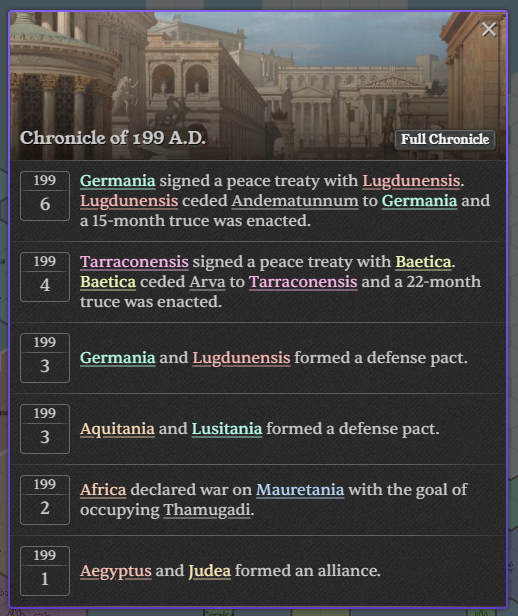
- Tracks alliances, defense pacts, war declarations, peace deals, land cessions, and more
- Includes a chronological archive with year‑based filters
- A configurable “Recent Events” popup summarizes the last 1–10 years
- Designed to make the world feel more reactive and historically grounded
Mission System Rework
The old Mission Tree has been replaced with a dynamic, event‑driven system.
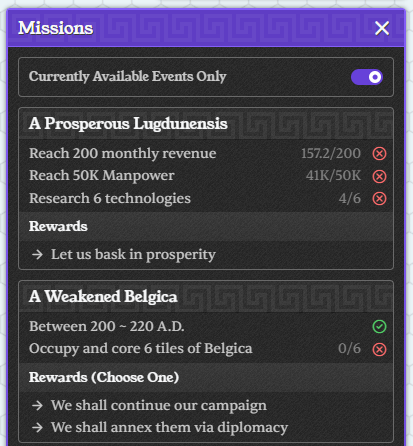
- Missions now appear as contextual events based on world state and player decisions
- The new Missions Panel lists all available events and requirements
- Each event offers multiple reward choices
- Mission availability changes dynamically as the campaign evolves
Christianity Mechanic
Christianity now spreads gradually rather than through a single late‑game event.
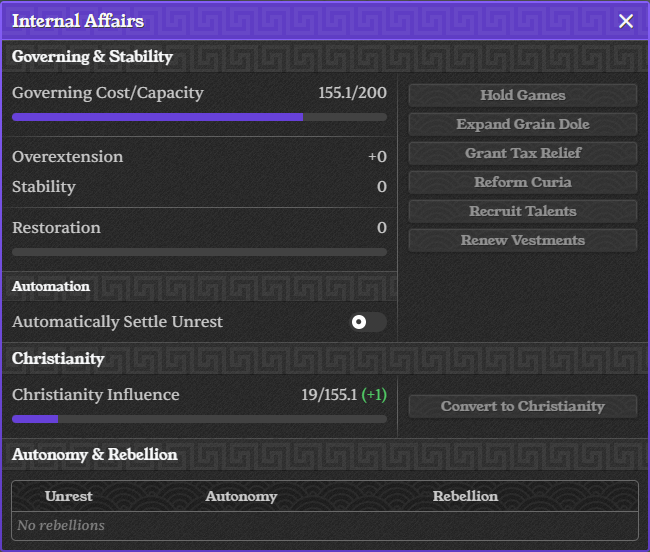
- Provinces gain 1 Christianity Influence per year
- Events may increase Influence or raise yearly gain
- When Influence reaches a province’s Governing Cost, it becomes eligible for conversion
- Delaying conversion imposes growing penalties
- Models the slow, uneven spread of Christianity across the empire
Restoration Mechanic
A new system replaces mission‑based governing capacity rewards.
- Every 5 annexed and cored tiles grant 1 Restoration
- Each Restoration provides 10 base Governing Capacity
- Administrative growth now scales with territorial consolidation
Regional Content: Lugdunensis (192–400 A.D.)
Lugdunensis (192–250)
The second century closes in turmoil. After the death of Commodus, the empire stumbles from one crisis to another.
In Lugdunensis, the old rhythms of provincial life begin to fray as imperial authority weakens.
- The Severan dynasty rises and falls amid intrigue and military unrest
- Border tensions with Belgica escalate, offering chances for diplomatic or military expansion
- The once‑proud Lugdunum mint declines, symbolizing the fading prestige of the region
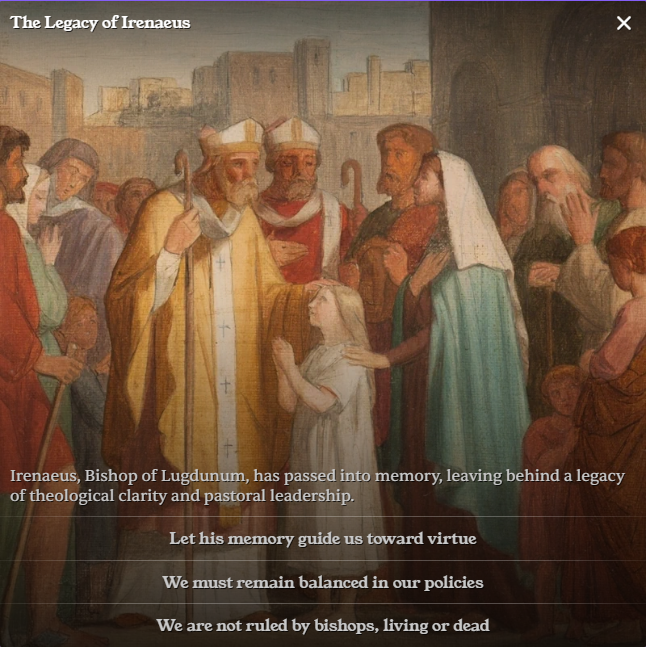
- Christianity spreads quietly; pilgrims gather at the memory of Irenaeus, stirring both devotion and unease
Lugdunensis (250–300)
The empire fractures. In the chaos of the Third‑Century Crisis, Lugdunensis stands at a crossroads between collapse and ambition.
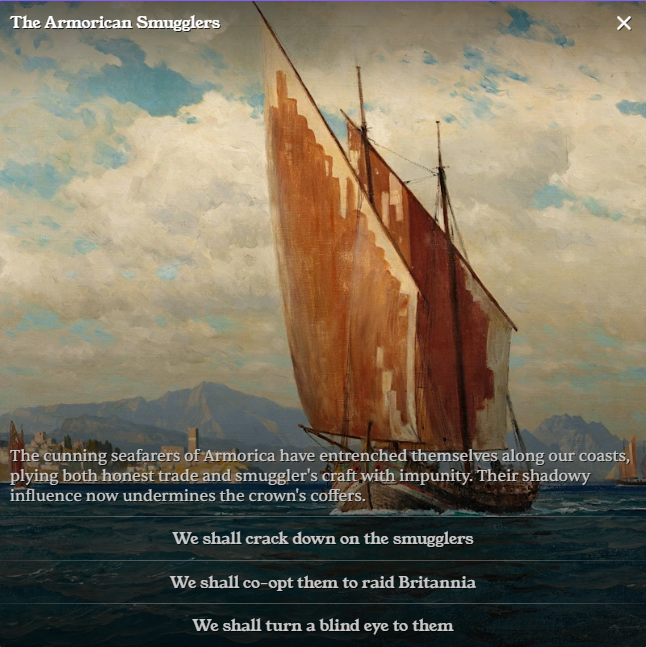
- Imperial authority collapses; rival emperors carve the empire into competing realms
- Lugdunensis may seize the moment to form the Gallic Empire by unifying Aquitania, Narbonensis, Belgica, and Germania
- Natural disasters and Armorican unrest test the stability of any new Gallic state
- Aurelian’s reconquest and Diocletian’s reforms slowly restore order
- Lugdunum’s influence wanes as the Loire frontier grows more strategically important
Lugdunensis (300–350)
A new age dawns. The persecutions of Diocletian give way to the rise of Constantine, reshaping the spiritual and political map of the empire.
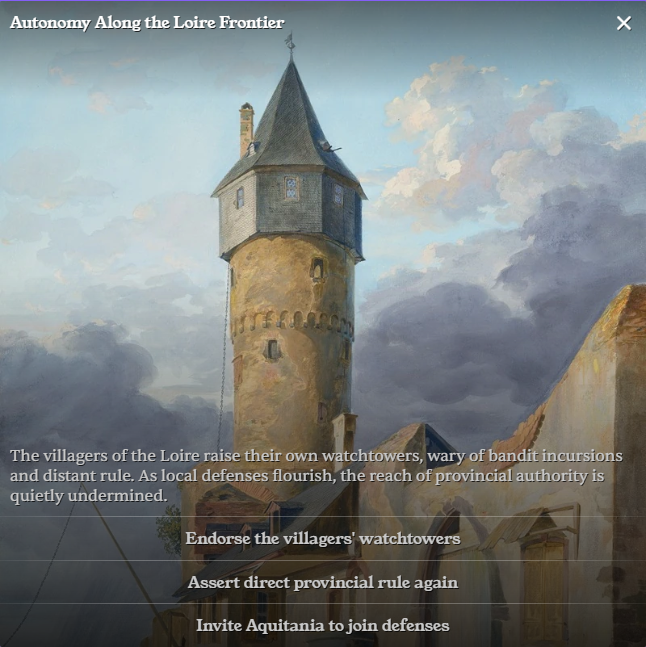
- The Diocletian Persecution casts a long shadow before Constantine’s ascent
- The Edict of Milan brings religious tolerance and shifts imperial focus toward Constantinople
- Bishops rise as civic leaders while old senatorial families retreat from public life
- Armorican communities push for greater autonomy
- A strengthened Gallic Empire may extend its reach into Britannia and Hispania
Lugdunensis (350–400)
The fourth century closes with upheaval and transformation. Old gods fade, new faiths rise, and the empire itself begins to split.
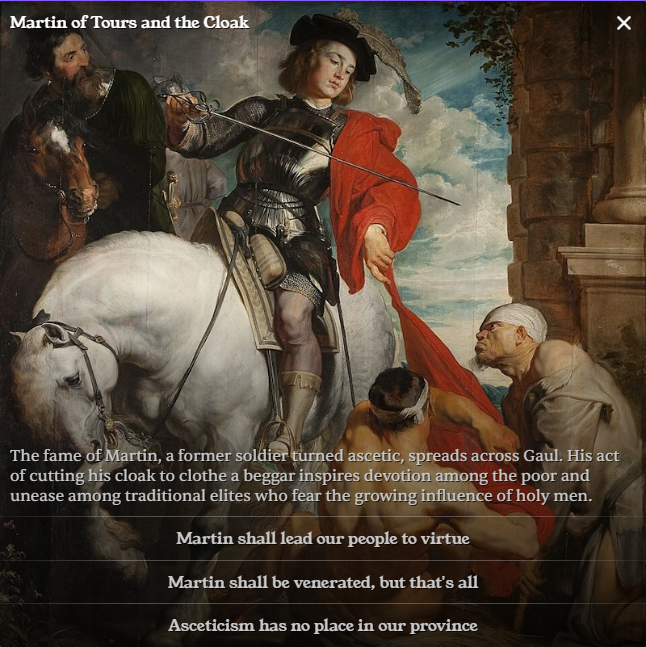
- The last pagan emperor fails to halt Christianization; the disaster at Adrianople shakes the empire
- Theodosius I restores stability and declares Christianity the state religion
- After his death, the empire divides permanently into East and West
- Martin of Tours becomes a symbol of charity and spiritual authority in Gaul
- Refugees fleeing the Rhine frontier bring instability, opportunity, and cultural change
These historical and regional events will help you to achieve your game goal. But remember: history sets the stage, but your decisions determine the outcome.