Hello, Vikings!
Halloween is approaching, and while the holiday itself doesn't have much to do with Vikings, it is quite strongly associated with death. This inspired me to create a devlog with a slightly darker theme, about death and burial in the Viking world.
Many concepts about what happens to people after death have been forgotten or misrepresented over the years. Surely all of you have heard of Valhalla - the hall of the slain, where the Valkyries took their fallen warriors, where they feasted and competed in anticipation of Ragnarök. Another place that some readers are aware of is Helheim ruled by Hel, where those who died of sickness, old age and cowards were said to end up. Sailors dying at sea with their treasures ended up in the Coral Caves of Rán. Some of the dead were created as Draugr - a type of undead being. But who among you has heard of Fólkvangr ("the field of the people" or "the field of warriors")? It was ruled by Freyja, and half of the warriors killed in battle were sent there, which the goddess selected together with Odin. The discovery was quite a surprise to me. I wondered if the idea of Fólkvangr came about as a result of the integration of the Aesir and Vanir pantheonsand why was it almost forgotten compared to Valhalla, which we have all heard about after all?
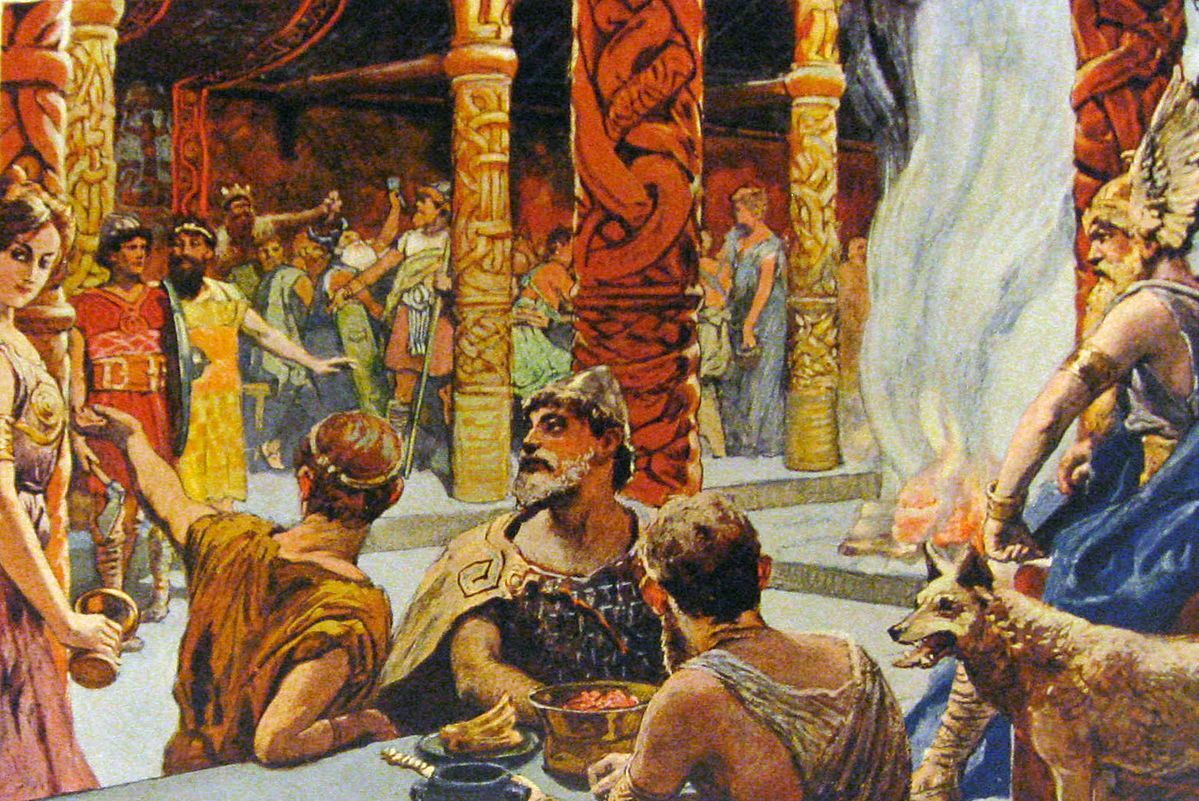
There are worse places to go when you die, Valhalla (1905) by Emil Doepler
So much for the widely understood hereafter. However, the body of the deceased must be taken care of first. What were their funeral traditions like, apart from the fact that most of them involved lavishly drunken feasts ;) The first thing that comes to mind is a dead Jarl resting on a boat, which was then set on fire and pushed out onto the water. While the custom of burning boats existed (I recommend Ahmad ibn Fadlan's description) it was much more common to bury the dead in boats. However, a ship is a precious thing, so boat-shaped burial mounds were often created. However, the rituals described above had to be earned. The greys were buried in ordinary graves. Depending on the region and period, bodies were either buried whole or cremated first and then the vessel with ashes was buried. There were also "deviant burials" where corpses ended up in the grave with their heads cut off or placed face down. Although the density of the latter on Gotland may indicate a unique funerary tradition, rather than an attempt to humiliate the deceased or protect them from their spirit. Another unique curiosity is the grave of G511 at Repton. The marks on the femur indicate a severe wound that most likely resulted in the left testicle and penis. Which would explain why he was buried with a boar tusk between his thighs.
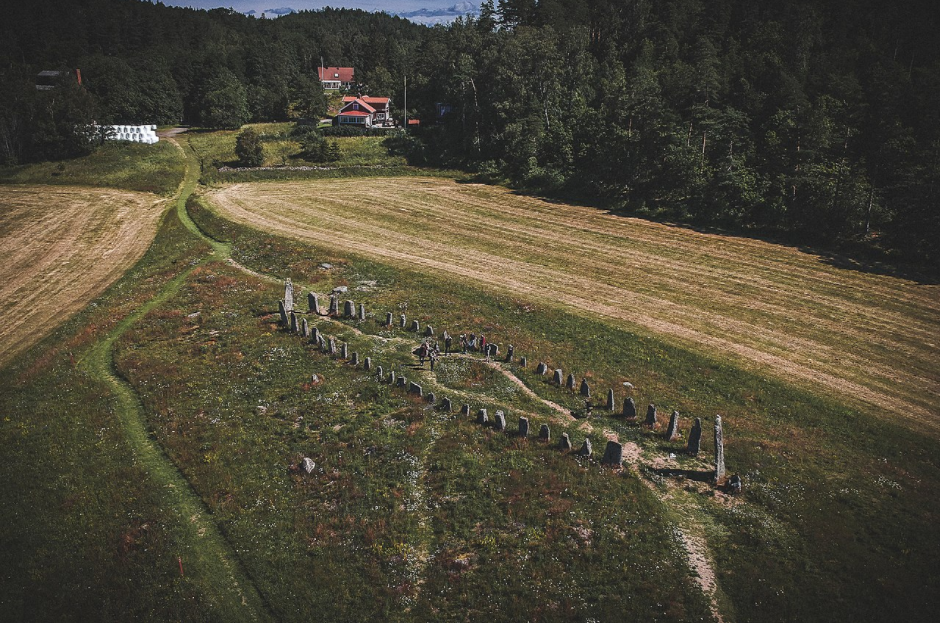
Example of stone ship Blomsholm, Sweden. Credit: Paula Molander CC BY-SA 4.0
Regardless of the method used, funeral gifts were placed in the graves. The dead were buried with objects and weapons that belonged to them or that could be useful in the hereafter (in the case of cremation these were also burned). Craftsmen were given their tools, commanders board games like Tafl, women jewelry and house keys. The amount of treasures gathered in the famous Oseberg Ship is staggering: household and agricultural tools, silks, clothes, buckets, tapiseries and even a sleigh and a cart (interestingly, supposedly the only one found)! Mention should be made of the remains of many animals - horses, dogs and oxen - which were also found there. Not only animals but also slaves were sacrificed to the dead (again I refer you to Ahmad ibn Fadlan if you haven't already) to serve their masters after death. As Christianization progressed, exhumations were reportedly made to re-bury the deceased, this time in Catholic rites. Harald Bluetooth is said to have done so at Jelling with the corpse of his father Gorm.
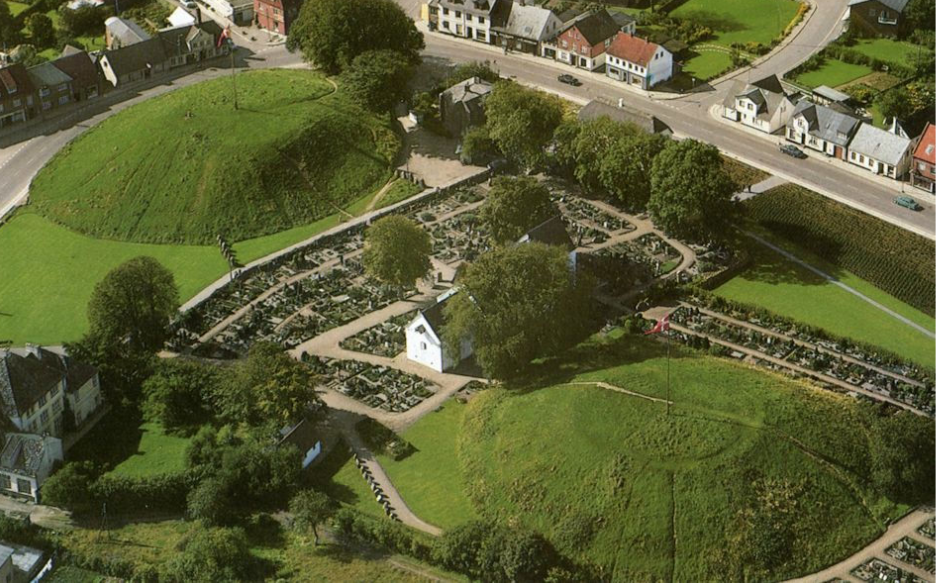
Jelling Royal Necropolis, credit: http://viking.archeurope.com
It would seem that with so many afterlife and various rituals the dead were not given much attention later on. Nothing could be further from the truth. In honor of those who passed away, poems were composed (e. g. Sonatorrek) or runic stones were erected dedicated to their life and circumstances of death. Hundreds of years later, the sagas were written down - stories that had been passed down through oral tradition. Evidently, however, the respect they showed to their own did not translate to strangers. An example is the Neolithic burial mound of Maeshowe - famous because of the 30 runic inscriptions with which it has been "beautified".
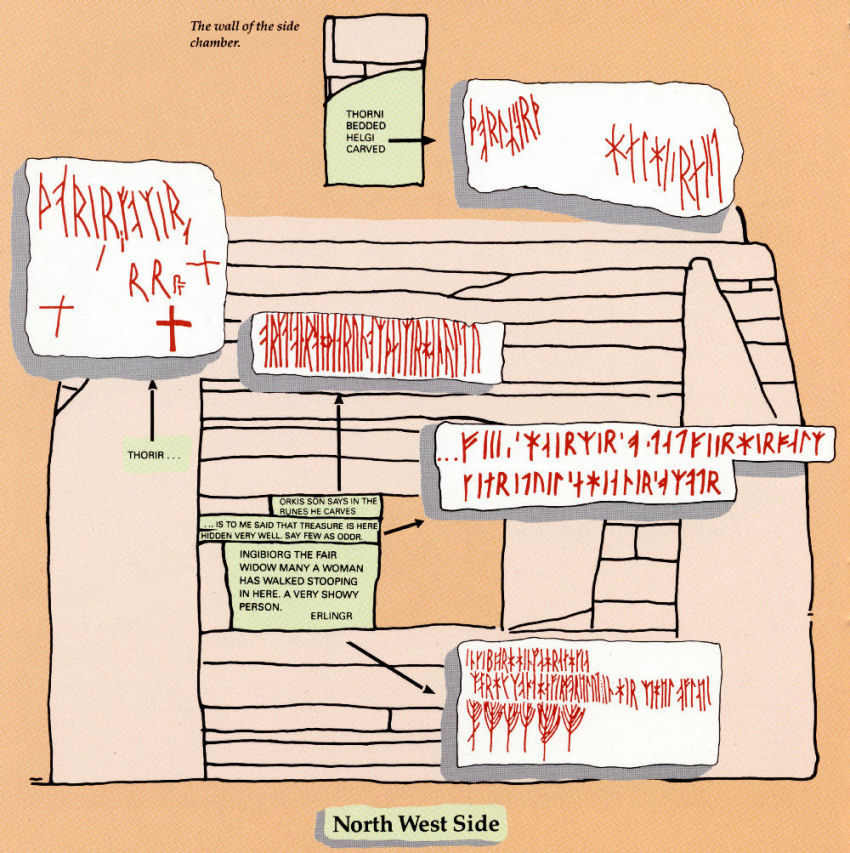
Some things never change ;) Credit: http://viking.archeurope.com
Okay, that would be it for today. I hope you enjoy this theme! Or maybe you have some interesting facts about death and burial in the Viking world? If so, share them in the comments!
Happy Halloween and see you soon!