Introducing myself with Demo 2.0.
Hello. I’m STEEL, Design Director on Ember and Blade.
This is my first time greeting players directly through a Director’s Note.
With Demo 2.0, we’ve reworked the game’s core, with a particular focus on the action systems. Rather than wrapping this up in a few lines of patch notes, I wanted to use this Director’s Note to explain directly what we changed and why, and to hear your valuable feedback.
Why Demo 2.0?
The harshest feedback from the previous demo focused on core gameplay, with comments like:
“It’s not bad, but the action feels a bit dull, and there aren’t enough active choices for the player.”
This was also a major point of internal debate for the dev team, as we struggled to balance intuitive controls with a strong identity as an action game. The combat was satisfying on a basic level, but the simplistic control scheme lacked depth, and there weren’t many meaningful decisions to make in combat beyond occasionally inserting heavy attacks between light attacks.
Even switching weapons didn’t meaningfully change how the player engaged in combat. We concluded that this wasn’t something that could be fixed with VFX tweaks or balance adjustments alone.
So, at the core of combat, we’ve added two new elements: combos and stamina. This system makes you choose which attack to link at every moment, with a cost attached to each decision.
To support this, we completely reworked each weapon’s action set. We built entirely new VFX specifically for combos, redesigned the camera work to enhance impact and hit feel, and refined boss targeting rules and input buffering for a smoother experience.
Once the core changed, everything layered on top of the original action system began to fall out of sync. We reworked Blessings from the ground up, starting with how they’re obtained. For monsters, we rebuilt everything from hit reactions to death animations, which ultimately led us to replace the AI logic as well. As a result, we couldn’t leave map routes, UI, or balancing untouched either.
In the end, we revisited almost every part of the game, and the overall play experience in this demo has changed significantly. The tempo and controls now have a stronger sense of rhythm, and the decisions you make when facing the same enemy have become far more varied. That’s why we’re calling this update Demo 2.0.
1. Combos and Stamina
These were the elements we spent the most time on in this update, and they form the two pillars that create the action’s tempo and control feel.
First is combo branching. Depending on the order in which you chain light and heavy attacks, you’ll flow into different combos, each with its own motion and attack range. These combos can even interrupt elite enemies’ attacks. This was designed so that players don’t just attack whenever an enemy appears, but can actively navigate combat across a variety of battlefield situations.
Next is stamina. Dashing and heavy attacks consume stamina, different combo types consume different amounts, and once it’s fully depleted you enter an exhausted state until it recovers.
We’ve significantly enhanced the effects and combat visuals of combos, but we judged that if they could be used infinitely at any time, players would end up repeating only the single best combo, and the whole point of having multiple combo branches would be lost.
That doesn’t mean you’re locked into these constraints forever. Through meta progression, you can increase your stamina recovery speed and max stamina, and there are Arcana that fundamentally alter how you manage stamina.
Certain Arcana restore stamina when your dash attack hits, while others actually increase your attack speed or movement speed when the gauge is empty. We’ve designed the system to support both precise, stamina-conserving builds and aggressive, stamina-draining ones.
2. The Weapons Available in This Demo
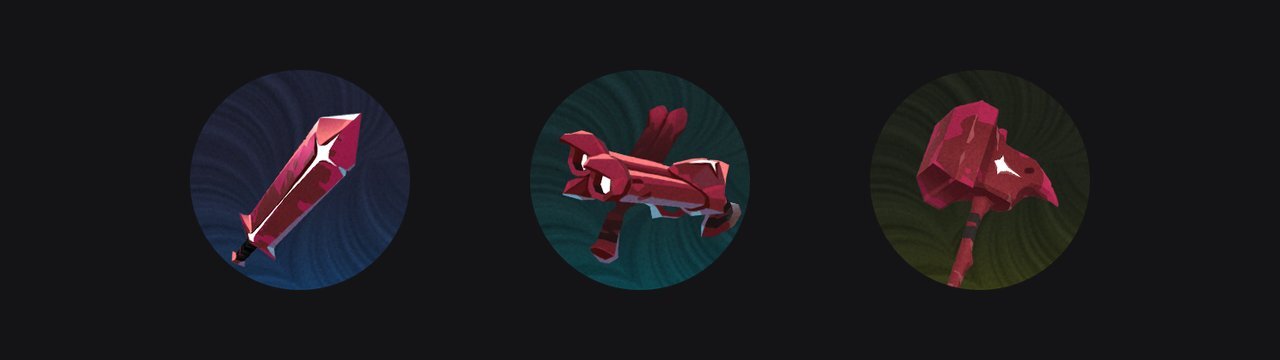
In the full game, we’re preparing a total of six weapon types, and in this demo you can try out three of them: Sword, Hammer, and Shotgun.
- Sword: The most basic weapon. It offers a diverse set of combos, enabling reliable responses in any situation.
- Hammer: A weapon that lets you combine wide-area attacks, charging, and rushes into combos. It’s slow but powerful.
- Shotgun: A new weapon making its debut in this demo. It’s a ranged projectile weapon, and the most stylish and powerful one we’ve crafted during this action overhaul.
We recommend giving all three weapons a try, one by one. Each weapon offers a different kind of action experience.
3. Blessing Link
Blessings are a core pillar of progression in Ember and Blade, letting you mow down hordes of enemies. In the previous demo, most Blessings were auto-casting skills that triggered on their own once acquired.
They were flashy and powerful, but they lacked a sense of involvement—you didn’t really feel like you were using them. That’s where the new Blessing Link system comes in, designed around our reworked action system.
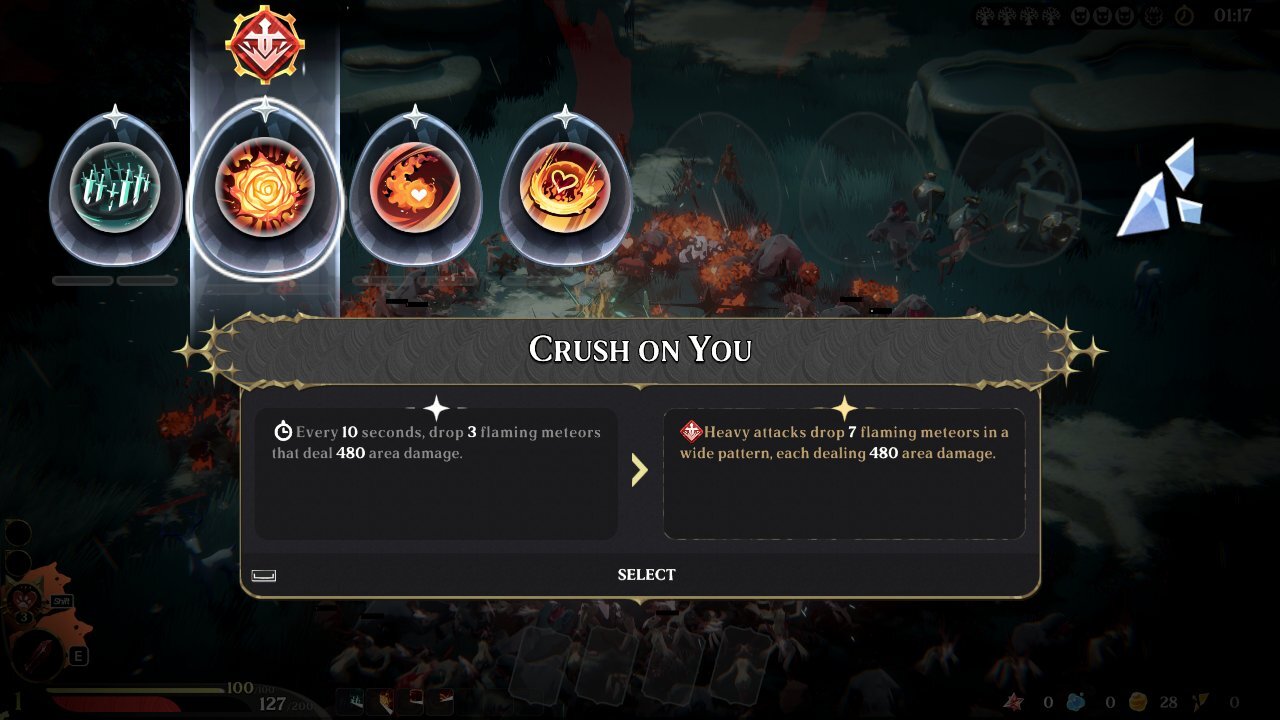
By linking a Blessing to your Light Attack, Heavy Attack, or Dash, the Blessing activates whenever you perform that action. The key point is that the same Blessing behaves differently depending on which action it’s linked to.
Its firing pattern, number of projectiles, area of effect, and other properties all vary, so you can decide whether to link it to Light Attacks to push enemies quickly, or to Heavy Attacks to unleash a powerful single hit.
Blessing Links are obtained by defeating special elites that spawn at set intervals and carry a link. Give it a try in-game to see how it feels.
We’ve also added Set Bonuses. Collecting all Blessings from the same angel grants bonus stats. We’ve included angel tags and synergy indicators in the selection UI so you can intuitively create a variety of different builds.
4. Enemy Reactions and Breaks
I believe hitting enemies well is only half of the story; how enemies react when hit is just as important to the game’s impact and hit feel.
First, we’ve improved enemy reactions. With new motion and system overhauls, enemy reactions and knockbacks now feel much more natural. You can knock them off cliffs or blow them into water, and if a flying enemy hits a wall, they’ll bounce off. In other words, terrain such as cliffs, water edges, and walls can now be actively used as part of combat.
We’ve also introduced a new Break Gauge for boss fights. Displayed as a bar beneath the health bar, it depletes as you land attacks; when fully depleted, the enemy enters a Break state. While in this state, the enemy’s actions are briefly halted, and damage dealt to them is significantly increased.
Stronger attacks deplete the Break Gauge more quickly, and the existing Flash Counter also interacts with it. This enables tactical combat where you watch the gauge and decide when to press the attack, alongside judging whether to spend stamina on heavy attacks. We’ve also put extra emphasis on the visual presentation when Break triggers.
On top of that, we’ve clarified the rules for fighting elites. Their super armor lets them withstand Light Attacks, but Heavy Attacks and Dash Attacks will interrupt their actions. Depending on the enemy’s pattern, you’ll need to choose whether to cancel their attacks or create distance.
In addition, we’ve added effects that cause enemies to shatter when defeated, and improved their behavior logic so their movement in various situations feels much more natural.
Watch on YouTube
Watch on YouTube
5. Removal of Secondary Weapons
The Crossbow served as an automatically firing secondary weapon. We know how satisfying auto-attacks can be in the survivor genre, so we debated keeping them until the very end. However, as we reworked the action system, we concluded that they no longer fit the direction we wanted to take.
We decided to position the game less as “the game that fights for you” and more as a Musou action game where you drive the combat with your own hands. From that perspective, an automatically firing crossbow no longer aligned with the new weapon actions we’re introducing.
This will be disappointing news for those who enjoyed using it, but putting together builds is now more intuitive, and you can still create auto-attack–style builds through Blessings.
6. Sanctuary
The Sanctuary is a space where you can stay between expeditions to pursue permanent progression and engage with meta-game systems. In the previous demo, there wasn’t much to do beyond simple upgrades, but with this demo we’ve improved it to allow for a wider range of interactions.
First, we’ve reworked the Grace of the Arbor (permanent progression) and Runes to align with the new action system. We’ve also enhanced the Codex. As you progress, various entries are unlocked; instead of showing long explanations during combat, you can check them whenever you’re curious, and they also function as a collection element.
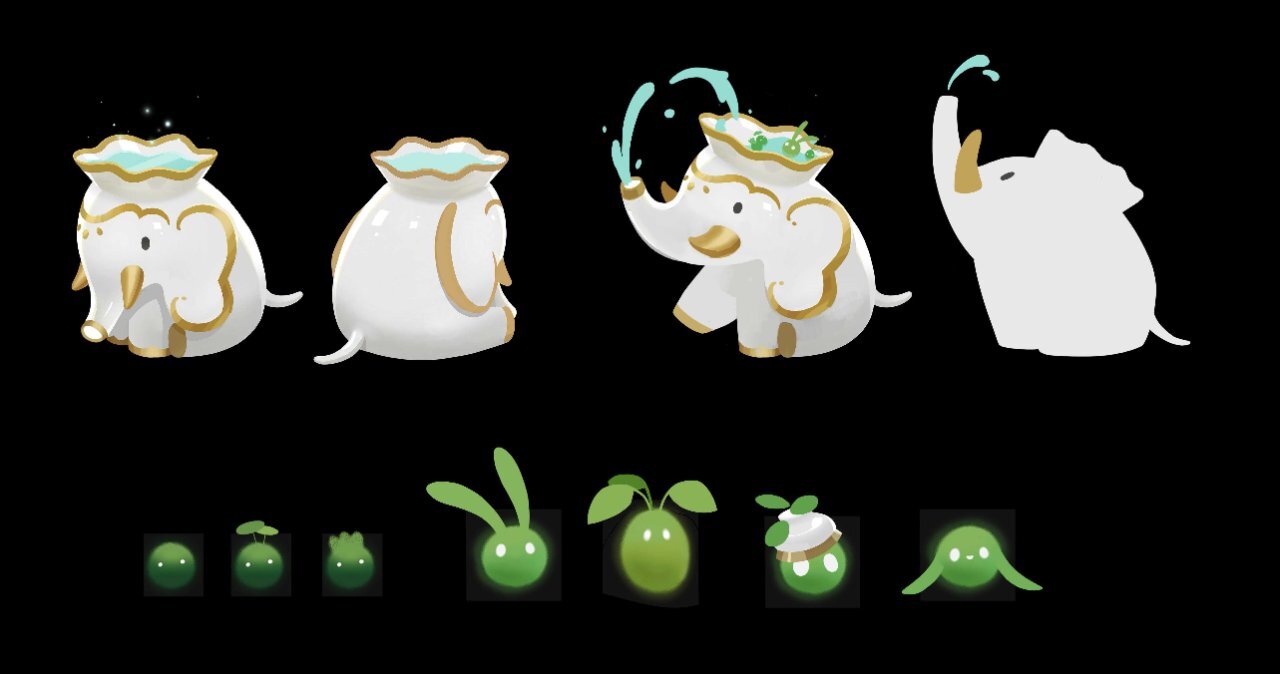
We’ve also added marimos (mini golems) that roam around the Sanctuary. They travel in groups, and when you enter the Sanctuary they come up to greet you, play with toys, and even react to Fenix’s actions. The Sanctuary’s atmosphere also cycles through day → night → dawn, so the scenery changes slightly each time you return from an expedition.
7. More to come
The Demo 2.0 update doesn’t end here. After launch, we plan to roll out additional updates, including hotfixes to stabilize the build, and to work on the following items:
We’ll improve the visual presentation of Blessing Links.
This was the biggest new system in this update, but we feel the current visual presentation still has room to improve. We’re working on making the visual feedback when your Blessing triggers clearer and more impactful, so it’s easier to see and feel.
The Scarecrow in the Forge will be replaced with Baphomet.
It’s a small change, but personally the one I’m most excited about. We’ll replace the Scarecrow currently standing in the Forge with a model of Baphomet, the first boss. You’ll be able to try out new weapons and combos on it, and sharpen your Flash Counter timing and evasion against its attacks.
Watch on YouTube
Watch on YouTube
Share a Story
Demo 2.0 needs your honest, unfiltered feedback. We’d find it more helpful if you focus on what fell short rather than what you liked. Even small things are worth mentioning.
We’ll read every single piece of feedback you leave with care.
Thank you for taking the time to read this lengthy post.
STEEL
Design Director, Ember and Blade