This update focuses on hauntings, adjusting how they scale to reward more careful play during longer expeditions, as well as adding them to convergences from phase 3 onward.
It also includes new content, balance adjustments, quality of life improvements, and bug fixes.
As usual, all applicable changes are also in the demo.
Haunting Changes
First off, hauntings will now start appearing during convergence from phase 3 onward. They behave similarly to foray hauntings, but most are global, and trigger off actions anywhere on the map.
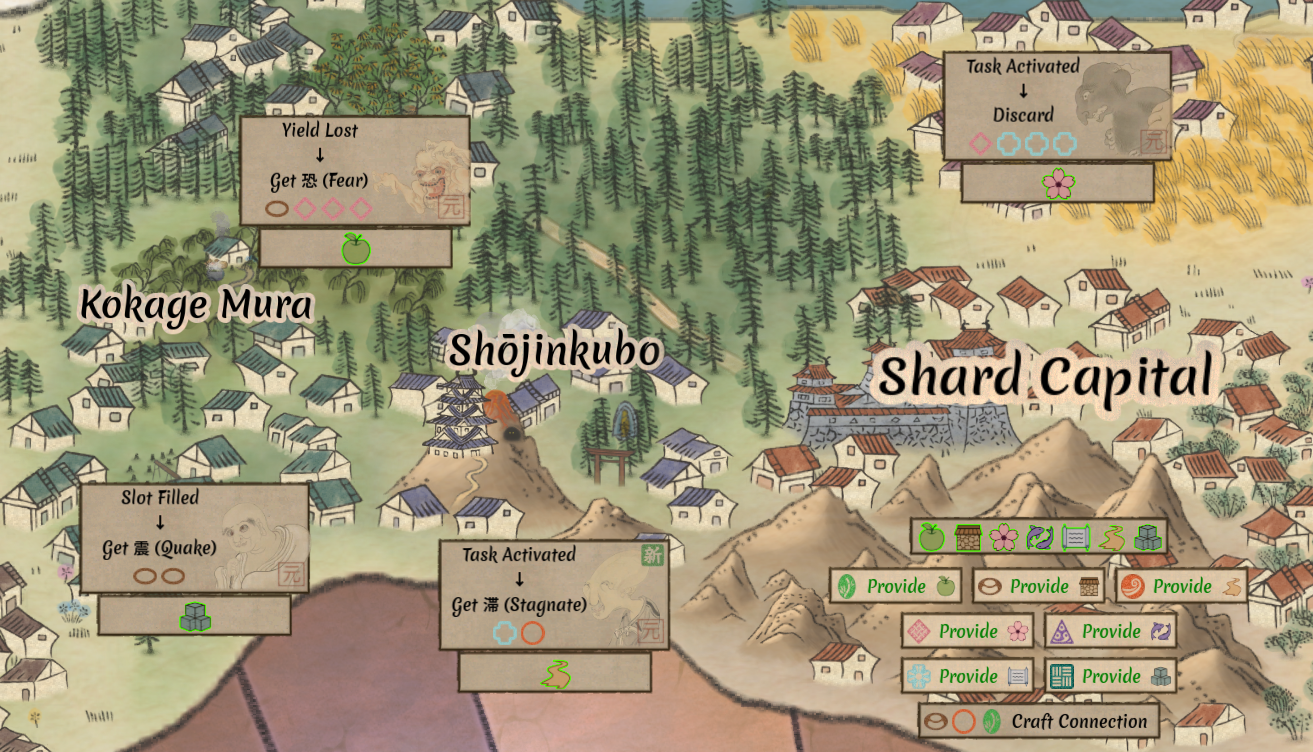
Second, the way haunting difficulty scales has changed. Previously, they scaled in two ways:
- Haunting spawn chance scaled over a predefined curve based on foray number.
- Haunting slot count increased by one with each phase.
Starting with this version, the scaling is more controllable by the player:
- The base haunting spawn chance is 15%. With every 100 points of total shard yields, it increases by 1%. The current chance can be viewed in the stats UI, accessible from the pause menu.
- All hauntings start with one slot. Each haunting has an associated yield, and gains a slot for every 200 points of that yield, up to 8 slots in forays and 4 slots in convergences.
This is meant to reduce the appeal of the shotgun approach of grabbing every possible source of yields, as exemplified by the Crane builds. That is still a perfectly reasonable tactic for earlier phases, but it now comes at the cost of increased hauntings in later phases, rewarding more careful approaches.
Since total shard yields aren't a purely positive resource anymore, landmarks no longer consume them - you just need to have enough of the given yield to activate them.
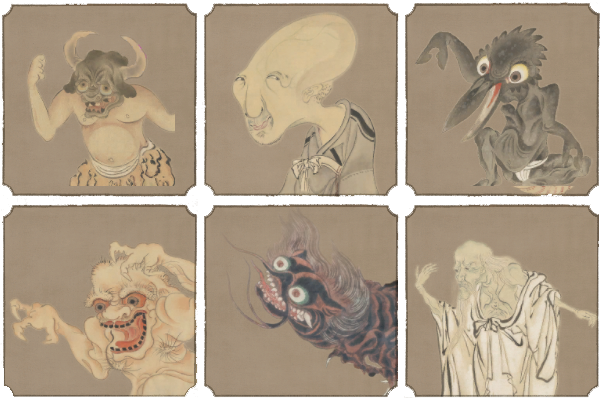
There are also 6 new hauntings with new effects to keep things interesting.
New Content
There is a modest amount of new content, including 13 new survey encounters, one shard culture, one event, 7 glyphs, and 2 relics.
Balance Changes
Glyphs
- Thanks:
- Bless Harmony
- ADDED: Target Harmony
Relics
- Ancient Bark: Granted Safety 10 -> 5. Renamed to Timeworn Bark to distinguish from Ancient Bone.
- Tuft of Horsehair: Gives at most 50 Harmony at a time to avoid uncontrollable haunting scaling.
- Weaver's Comb: Maximum hand size increase is capped at 3.
- Clay Teapot: Hand Size: +1 -> +2, but triggers only once per stage.
- Stone Needle: Hand Size: +2 -> +1.
- Cicada Shell: Restored Inspiration: 20% -> 10%.
- Cart Wheel: Satisfied Amount: 3 -> 6.
- Added 4 existing relics to the pool used by the Endless Ruin.
- Several relics have had their rarity tag adjusted. This affects how they are chosen whenever random relics are offered.
Animal Companions
- Dragon: ability can now be used up to 3 times per stage, with one extra radiance slot per use.
- Deer: now always chooses the development that would give the highest total goal yields, and the tooltip now shows which development would be targeted.
Survey Preparation
- Yield Loss Reduction: 50% -> 40% per stack.
- Inspiration Loss Reduction: can no longer be activated twice.
Other
- Foray goals from the end of phase 3 onward have been increased slightly.
- The choice which gives the Glowing Ember relic in the event What the Fire Leaves now requires one more stability essence.
Quality of Life Improvements
- Added the ability to view the glyph catalog (inscription) UI from the pause menu.
- Added a listing of queued explorer trips to the pause menu.
- Added tags to development tooltips when the player has a talisman relic.
- Adjusted glyph tooltip positioning in the glyph reward menu to not cover other options.
- Updated yield and inspiration change labels in events and encounters to display the final value after applying relic and survey preparation effects.
- Updated glyph search to also consider glyph tags (animal, plant, emotion, etc.).
- Made the initial Carp companion event prioritized over other companion events as it is part of the main story.
- Improved formatting for dictionary entries in tooltips.
- Updated the expedition end screen to include the current animal companion.
- Hid the Publisher settler quest until the relevant skill is available.
- Clarified many tooltips.
- Relics are now sorted by rarity in the museum.
- Using a landmark now saves the game afterwards.
- Reloading a convergence now zooms to the capital instead of starting at minimum zoom.
Bug Fixes
- Fixed visual artifacts in shard culture and trip buttons on higher resolutions.
- Fixed a resource leak that could cause visual artifacts on some systems after prolonged sessions.
- Fixed several text wrapping issues, most noticeable when higher font scaling is enabled.
- Fixed survey preparation buttons not updating state when a yield is gained as a result of activating another preparation option.
- Fixed framerate issues triggered when tooltips with embedded glyphs or relics don't fit their default position.
- Fixed being able to accept multiple copies of the Clumsy Scholar quest during the related main quest.
- Fixed Craft Connection in the capital being able to grant unique glyphs.
- Fixed kanji practice questions sometimes being cut-off when using hover-on-zoom.
- Fixed the revealed skill icon in the explorer trip menu.
- Fixed several failure modes in the Diligent Surveyor settler quest.
- Fixed sites manually placed on the map disappearing on game reload.
- Fixed the art origin stamp in shard culture pages having an incorrect hitbox.
- Fixed the Retry Foray button in the pause menu not being available during events.
- Fixed the Moistened Sleeves event linking to the wrong source in the art viewer.
- Fixed stroke count showing incorrect numbers for already inscribed glyphs.
- Fixed several UI layering issues.
- Fixed several incorrect furigana annotations.
- Fixed awkward grammar in some events and cultures.
- Fixed several typos.
Question: Would you mod it?
As some of you may know, I plan to open-source the game in the coming months. That may open the door to adding modding support, but before investing the work needed for it, I'd like to gauge interest.
I am considering several alternatives:
- Modding UI: this would allow players to create mods with one-off items like glyphs, events, quests, and cultures by mixing and configuring existing elements. This would be through a custom UI that requires minimal game dev experience.
- Custom Godot Tool: this would allow players to create content including custom scripts using the same tools I use, and to export the result as mods using a custom tool. This would require basic Godot experience and wouldn't allow changing how existing game systems or content works.
- Godot Mod Loader: this would integrate the Godot Mod Loader library, which allows modders to alter the game in almost any way. However, creating even simple content mods would require an in-depth understanding of Godot and the loader's API.
If you are interested in modding the game, which approach would best serve you? If I don't receive enough feedback on this, I'll probably shelve modding support for the foreseeable future.
P.S. New Bundle
You can now get Worlds Upon The Wind together with another new building-themed roguelite, Feed the Scorchpot, at a 10% discount. If you already have one, you can get the other at a discount.