Hi, Tamers! Welcome to the very first entry in our Downbelow Field Notes series!
Our goal with these updates is to bring you along for the ride as we explore and build the world of Temtem: Pioneers. We want to share exciting progress, give you a peek behind the curtain at what exploring the Downbelow will actually feel like, and laugh together at a few bizarre mishaps along the way.
For those of you who are more visual, you can find the video here!
In this first edition, we’re diving into the subterranean world to look at how we’re constructing the Downbelow’s cave system, adding explosive visuals to new biomes, bringing natural soundscapes to life, and refining the look and feel of moment-to-moment exploration.
Let's dig in!
Environmental Effects
Every region of the Downbelow has its own distinct identity, and making these ecosystems feel reactive as you explore the surface is key to immersion. So, let’s look at how we’re treating the visuals in distinct regions a bit differently!
Harvesting Volcanic Flora
In the lava-laden stretches of the Downbelow, even the trees are filled with molten magma! (Is it hot in here, or is it just me?) When gathering materials from these fiery plants out in the wild, standard wood chips and dust didn't capture the danger of the environment. By showing active lava splashes as you chop the trees, every strike feels punchy, hot, and distinctly volcanic: bask in the fierceness of the environment with these visual effects!
Splish Splash
Whether you’re wading through shallow streams, crossing rivers, or exploring flooded caverns, the way your character and all your Temtem interact with the water should feel natural without cluttering your view during combat or exploration. We’ve been tuning those splash visuals and wanted to show off some of the before and afters. Here are two early explorations we did:
Watch on YouTube
Watch on YouTube
For the current version, we moved away from high-noise, overly splashy shapes in favor of cleaner, softer motion that grounds your movement naturally. You can see that here:
Anyone else wants to splash around now? No? Just me?
The Sounds of the Frontier
Sound is a critical part of immersion, and plays a great deal in how we experience games! To make the open environments and uncharted terrain feel warm, tactile, and alive, our audio team relies heavily on organic, physical recordings rather than purely synthetic sounds. It’s time to explore how they make that happen and give you a sneak peek at the process!
Bringing Temtem Voices to Life
To give returning Temtem like Houchic (#32) a refreshed yet familiar voice in Pioneers, we took its classic audio from the original Temtem game and expanded on it by manually performing the voice through a synthesiser (Phase Plant) to combine sine waves, as you can see in the video below. By actively bending the pitch in real-time with a pitch wheel and running the audio through a chain of modulation effects (like phasers and flangers), we captured its signature 'Mental and playful' vibe and brought the Tem to life.
Practical Foley: Custom Footsteps
To make stepping across sand, gravel, and stone feel authentic as you travel across the region, we built custom, physical Foley boxes filled with real earth and sand. For those unfamiliar, foley sounds are recorded in a studio, but meant to imitate everyday sounds, like footsteps, rustling leaves, clangs, and all sorts of other sounds that we take for granted around us.
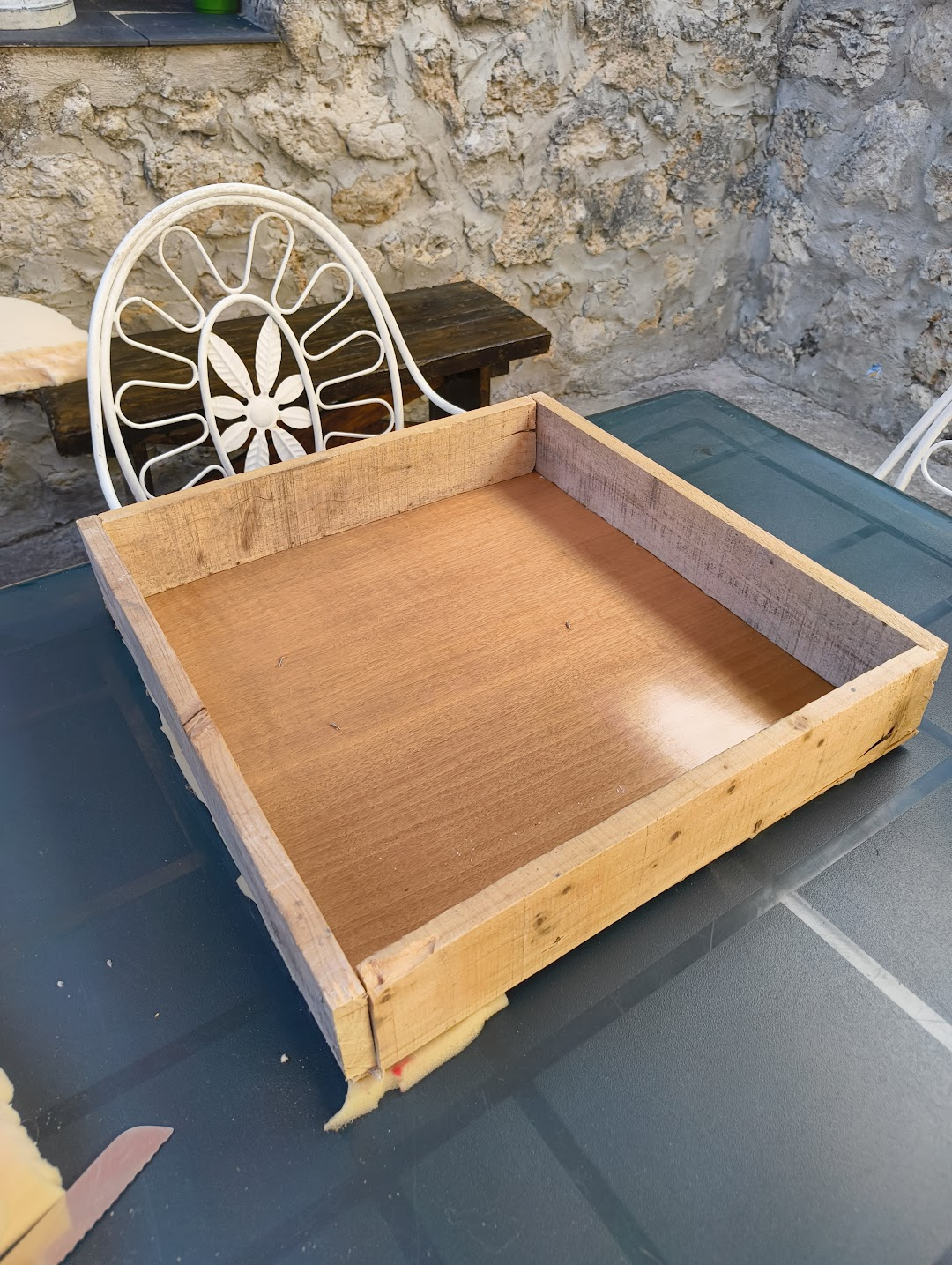
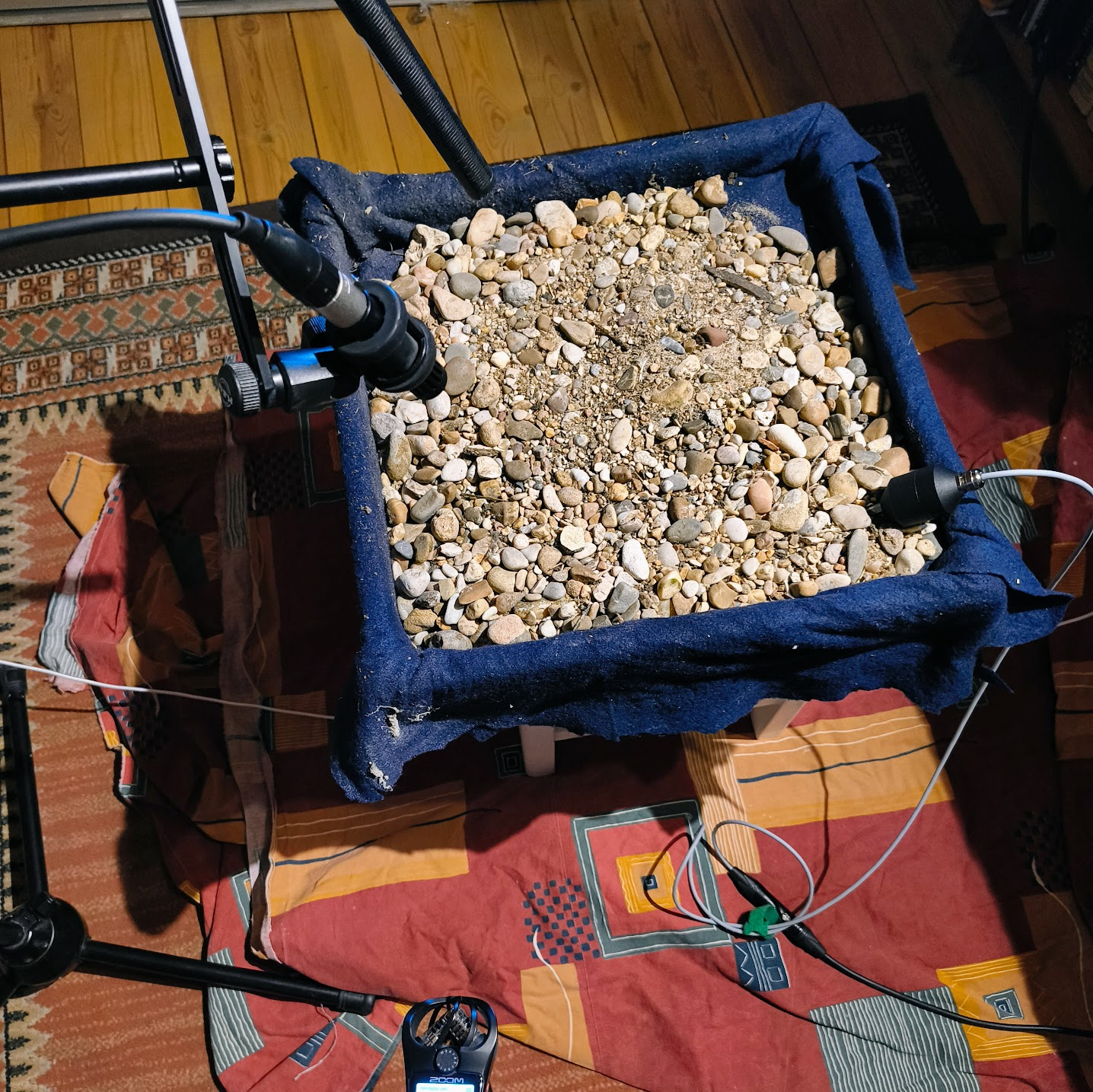
By performing footstep motions by hand and recording them through multi-mic setups, we created a massive library of organic surface impacts. We then layer these inside our audio engine to produce endless variations, so footstep sounds stay varied and organic as you hike through the wilderness. Just like in real life, minus the sweating!
Atmosphere & Music
Music in the Downbelow is designed to lean heavily into atmospheric exploration during travel, punctuated by classic Temtem rhythmic energy when battles trigger.
Composer Damián Sánchez, whom you might know from the Immortal Redneck, Temtem and Temtem: Swarm’s OSTs, is once again creating the OST for Pioneers. He’s creating a score packed with organic instruments to mirror the sense of discovery as you explore the Downbelow. Check out this behind-the-scenes look at how the instruments came together for our trailer score. Also, have you ever seen these many flutes before?
Mapping the Landscape: How Caves Come to Life
The Downbelow is an uncharted frontier full of wide open spaces, hidden nooks, and secrets waiting to be uncovered. While much of your journey takes place above ground, on the surface, it also has extensive cave systems that play a big role in exploration. So much so that we’re treating them as their own distinct biome!
When it comes to creating those caves we faced a tough situation: the Design team wanted a lot of caves, but manually creating that many was outside of what our production times could allow. We also knew we didn’t want all the caves to be and feel the same, since it would ruin the fun of discovery and exploration to see the same copy-pasted room 10 times!
That’s where the Technical Art department came in, devising a clever tool to procedurally generate the caves!
From the beginning, the idea was to generate rooms that had previously been created by the Design team, and then have the Art team step in to decorate and dress them up. After that, the different rooms could be placed next to each other and mixed up. It was a good middle point between variety and artistry: making them entirely procedural would not meet our quality standards, and making them entirely by hand would ruin the planned development time.
The initial iteration was a system that arranged rooms randomly, and then adjusted them a bit so that corridors wouldn’t be super long, or the caves boring and dull. The system would connect the doors through organic splines, making sure the corridors wouldn’t intersect.
The biggest issue with this system is that corridors would sometimes appear in weird, forced angles because there wasn’t enough space; that wasn’t up to our quality standards, and it would require a lot of time to polish, so we chose to try a new approach where the system would generate the corridors as individual pieces, using a hexagonal grid.
For this second and final iteration, the entrance to the cave is placed on the edge of the grid, and we connect the rooms that fit our prerequisites: fitting inside the grid in any of their possible positions and rotations, and not having any door leading to a wall or to the edge of the grid.
Once we took this approach, we noticed that, with enough variety in rooms and corridors, and with the option to alter them as they’re placed, we could create arrangements that were as unique and organic as the first attempt, but much easier for us to obtain good results.
Plus, this system can generate many options very quickly, and we can choose the most interesting ones to later adjust and edit by hand.
We’re still working on having some rooms appear more often than others, giving the map different heights, dressing the rooms through procedural generation –to ensure there’s no two rooms that look the same–, and in adjusting the floor in the rooms, which is mostly flat for now. Nevertheless, this system has been approved by design, so as they assign the requirements for each cave we’ll use final assets to dress them up, making sure there’s enough variety.
Frontier Bloopers: When Things Fail
Building a new frontier is hard work, but sometimes things go wonderfully wrong. Here are a few hilarious bugs caught these past couple of months. Hope you find them as funny as we do!
That wraps up our very first Downbelow Field Notes! We hope you enjoyed this look at how the world, systems, and sounds of Temtem: Pioneers are coming together, and this peek into the processes behind the curtain.
Stay tuned for future Field Notes as we dive even deeper into uncharted territory. Don't forget to Wishlist Temtem: Pioneers on Steam and the Epic Games Store to support the team and stay updated on every new discovery!
https://store.steampowered.com/app/2961930/Temtem_Pioneers/
See you soon, Tamers, and Temtem up!