Hello Looters!
This time we talk about the main element of our game alongside exploration - combat. These two are the main components of the gameplay loop. You clear the area of enemies and then you explore.
Enemy Design Philosophy
As you may know from the previous logs, The Looter is a shooter game with melee combat as the last resort/utility usage. The basic combat loop is the enemy moving towards the player and our job is to kill it before it reaches us. If it manages to do so we can use a melee weapon or dodge to get away and finish the job from a distance. This is the behavior of the basic cannon fodder enemies. Even though just changing the basic parameters like speed, health or size of the enemy makes a significant difference in how to approach the enemy, we tried to make enemies as interesting and unique as possible.
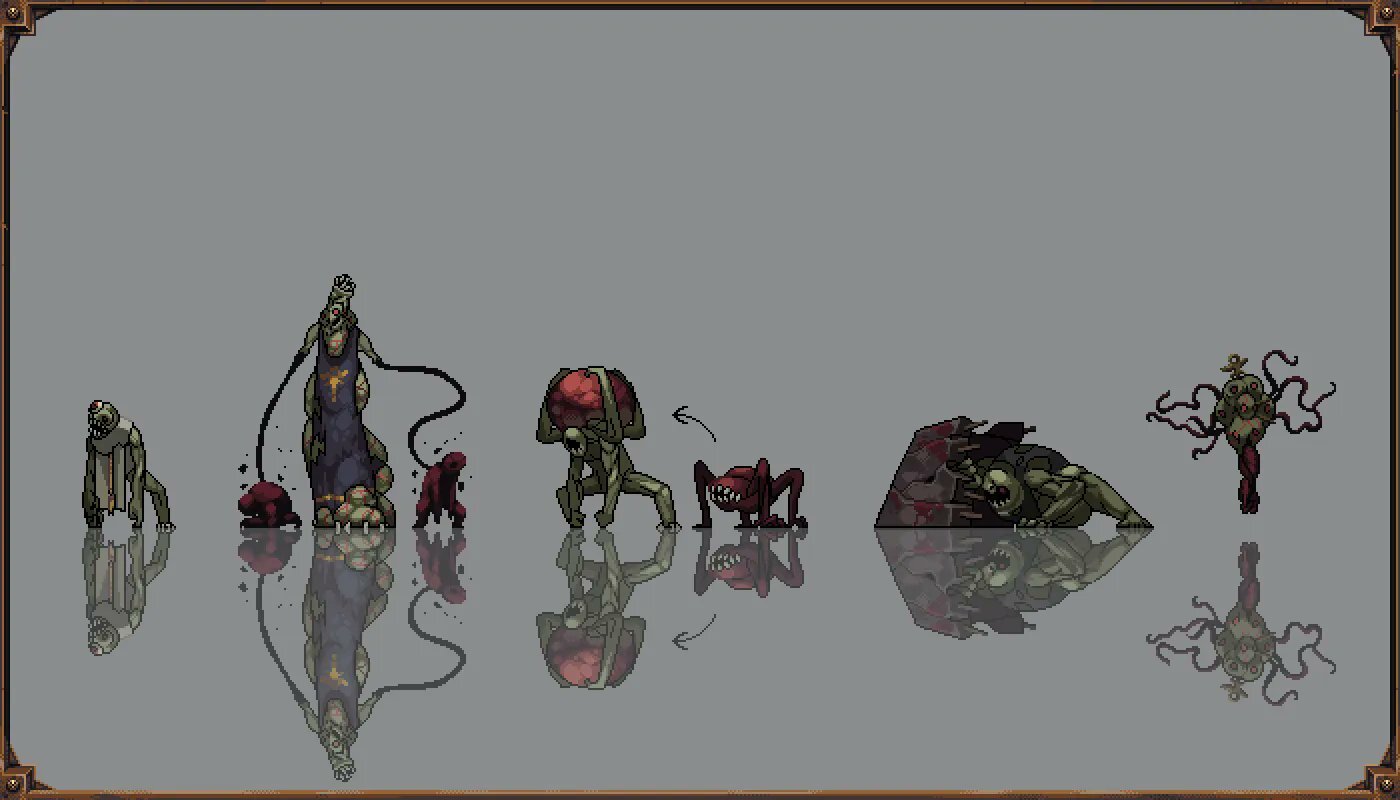
Main enemy types
- Walking enemy - walks from left to right or waits in place. When the player is in aggro range, it chases the player and attacks
- Flying enemy - flies between points on the scene. When the player is in range, it attacks the player
- Ranged enemy - usually stays in place. When the player is in range, it shoots projectiles towards the player
Unique enemy mechanics
- Buff - some mobs can get buffed, which increases their speed and damage
- Poison - some mobs inflict a poison status effect on the player
- Shield - mobs have some sort of an armor that makes some parts of the enemy invincible to bullets. The player is required to aim for the “uncovered” points
- Basic stealth - some enemies will ambush you from hidden spots or hide in the ground
Main enemy stats
Every mob in our game shares these mechanics.
- HP - self-explanatory, how many hit points the enemy has
- Stun HP - most of the enemies have vital points, like a humanoid's head or a spider’s soft belly. When the player manages to hit those points, the enemy's Stun Meter fills significantly. The Stun Meter will also fill when you hit the enemy outside the vital point but with the 2/3 reduction penalty. When it is full, the enemy goes into a stun state and is vulnerable to the player’s finisher moves. Example: An enemy has 100 HP and 24 Stun HP. The pistol deals 12 HP damage. If you hit the enemy x2 (2x12 = 24) in the vital point or x1 in the vital point and x3 outside the vital point (1x12 + 3x4 = 24), you stun it
- Stun Multi - some enemies will receive extra stun damage when hit in the vital point
- Mini Stagger - when you normally hit the enemy, it will not interrupt its movement. This might be annoying, making the guns feel weak. We decided to add a mini stagger mechanic. Enemies have a variable that counts how many times they have been hit, and when the number of hits equals that variable, the enemy’s movement is interrupted, it goes into a short stagger phase, and gets knocked back a little. This mechanic makes guns (especially shotgun) feel more powerful and helps to manage multiple enemies
- Burn Multi - a burn effect can be applied to enemies and makes them lose HP over time. Some enemies receive more damage than the others
Visual Design + Inspirations
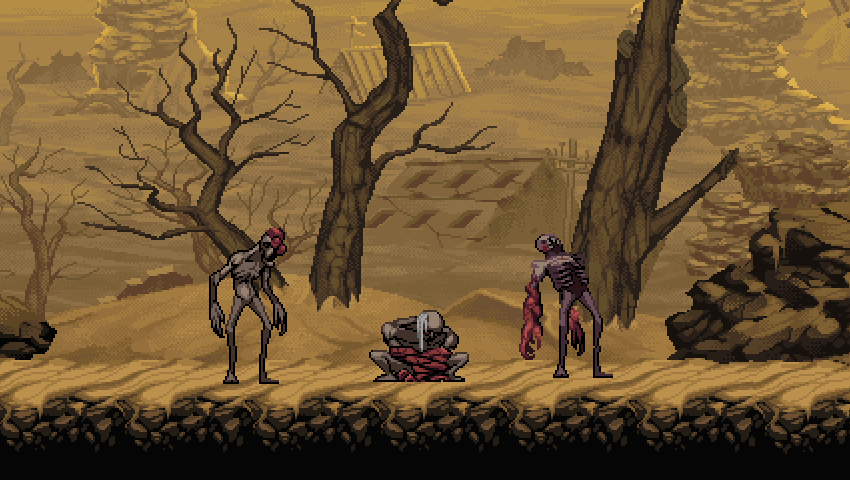
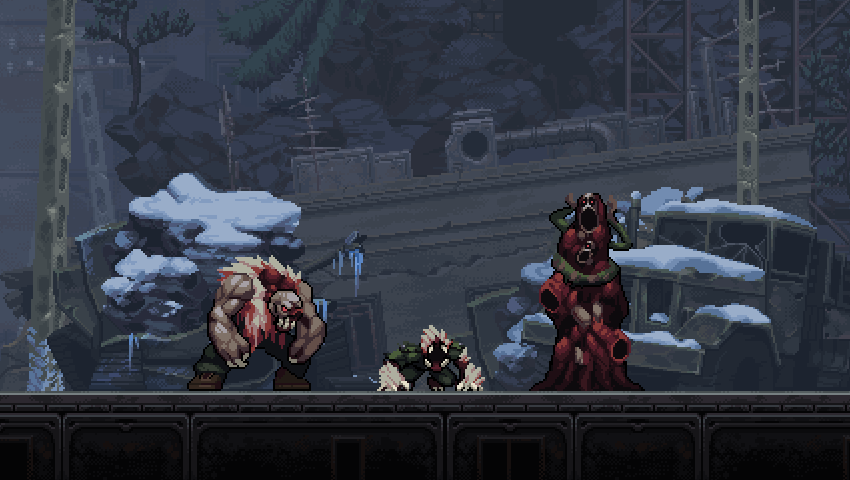
At the beginning of the project, the main idea was to take a common Joe or Jane and make them into the enemy. Basically, something bad happened in the game’s world and it affected the people and animals a great deal and made them turn on each other. Malformed bodies, off-putting hybrids, nightmares with pasted-on faces - works like Resident Evil, Annihilation, Berserk among many others come to mind.
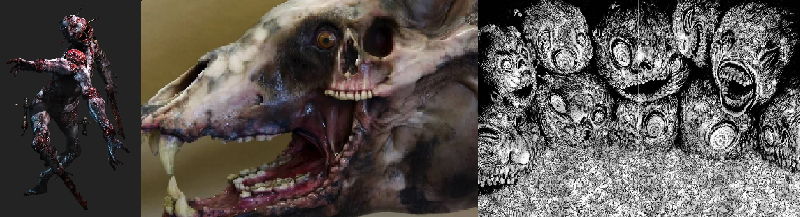
The core thoughts were to make sure the enemies look menacing, dangerous, sometimes uncanny and disturbing, as well as make them seem more ferocious and mutated as the game progresses and the player visits new biomes.
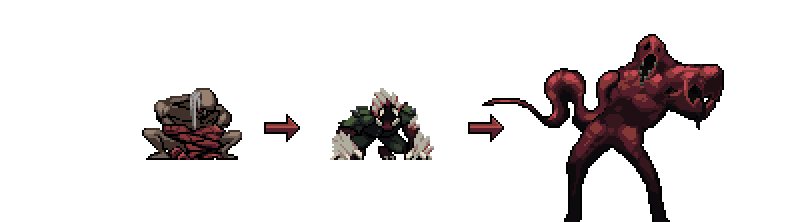
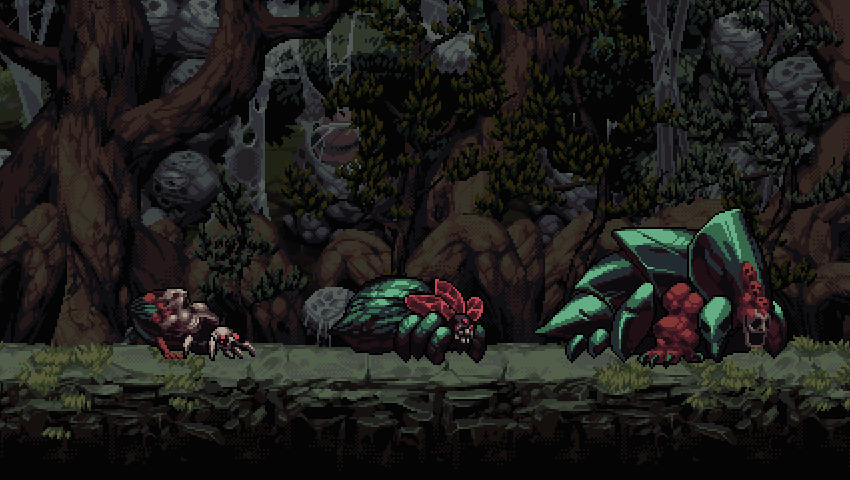
I think we managed to achieve that, while also making the enemies clearly match the biomes they are in, as well as connecting all of them through specific details and color palettes so that you can tell they have the same roots of the mutation. Here are some examples:
Gameplay Role
Enemies are an important part of the whole gameplay loop. You fight them so you can explore the areas in peace. You explore so you can find items that improve your damage, grant new skills like finishers or burn damage that can be used to fight enemies more efficiently.
One may argue that you could just run past all enemies, trigger the story events, beat bosses and finish the game like this. You could definitely do this but it does not lower the importance of the enemies, as they will be there to make your journey more difficult.
Biggest Design Challenges
The biggest challenge in enemy development is avoiding immersion-breaking bugs. Don’t get me wrong, all bugs are bad and have to be fixed but some of them are just hard to predict. The most annoying one is when the enemy is “flickering” - frantically changing direction while staying in one place, which just looks awful. Let’s have a look at the example.
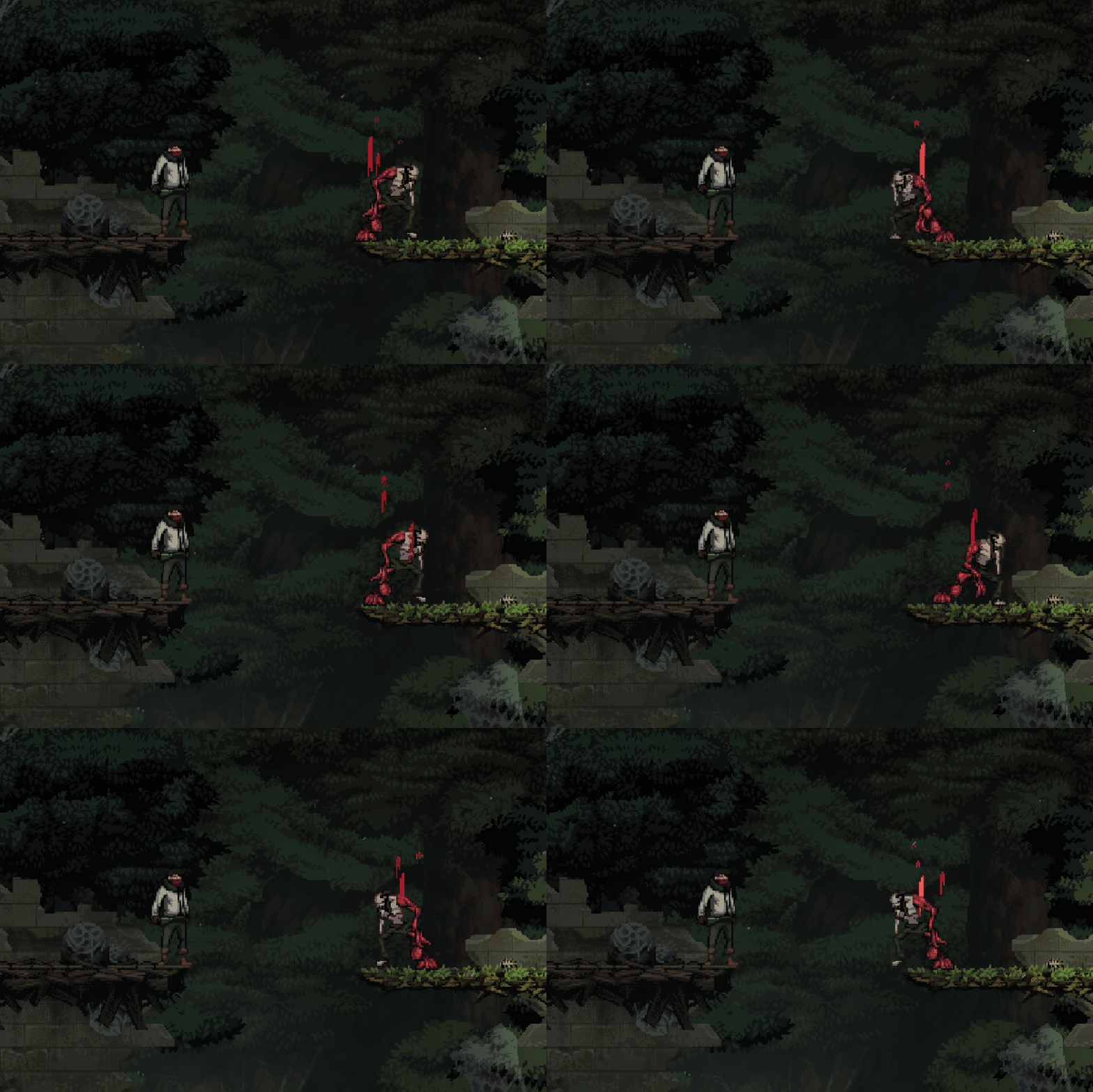
This bug is caused by a case that had not been thought of during the enemy design process. At the beginning, enemies were tested to perform on flat surfaces and this case was unknown
Why does this happen?
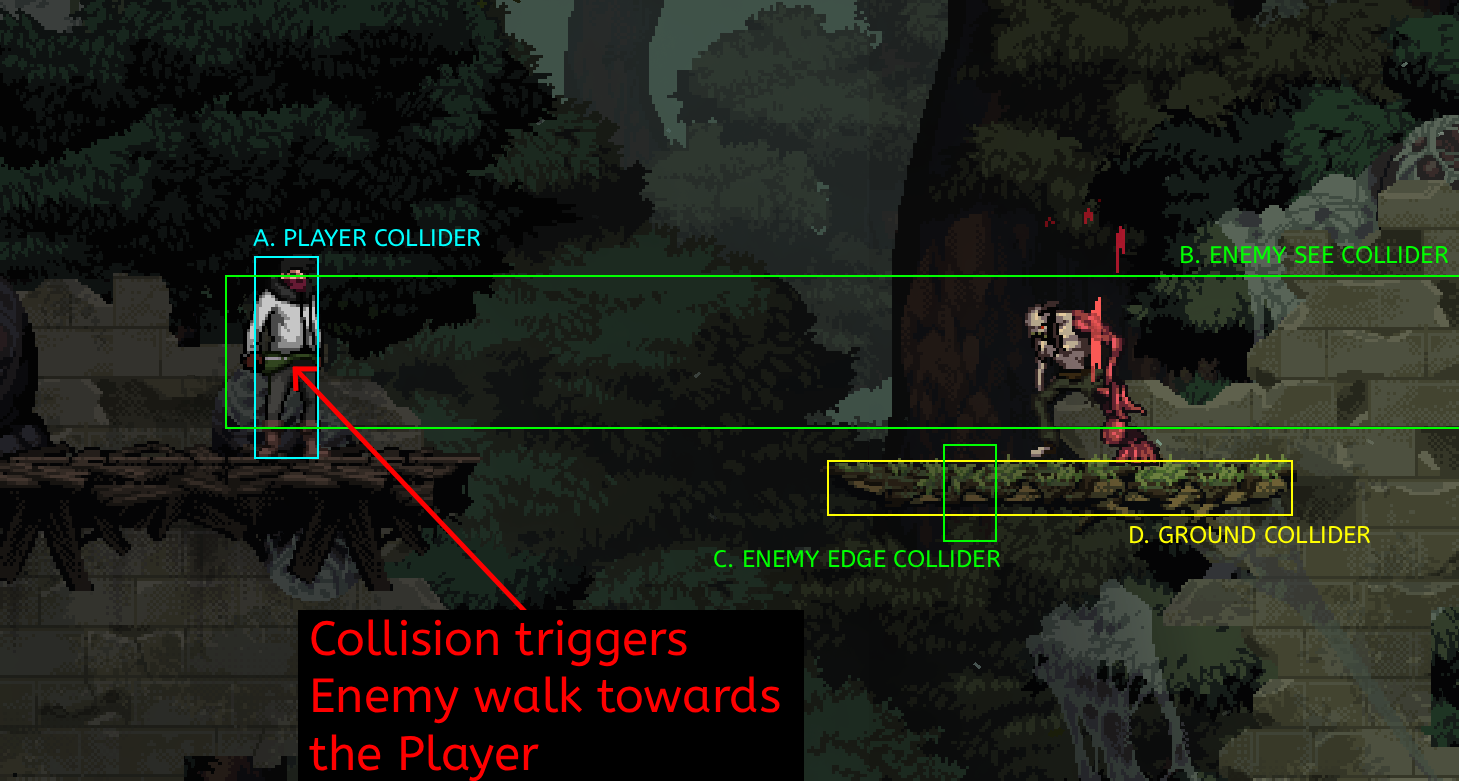
Step 1: The enemy has two colliders (in fact, it has way more, but in this case, we will focus just on those two). Enemy See Collider B checks for the Player Collider A, and when the collision occurs, it triggers the enemy to turn towards the player and start chasing him.
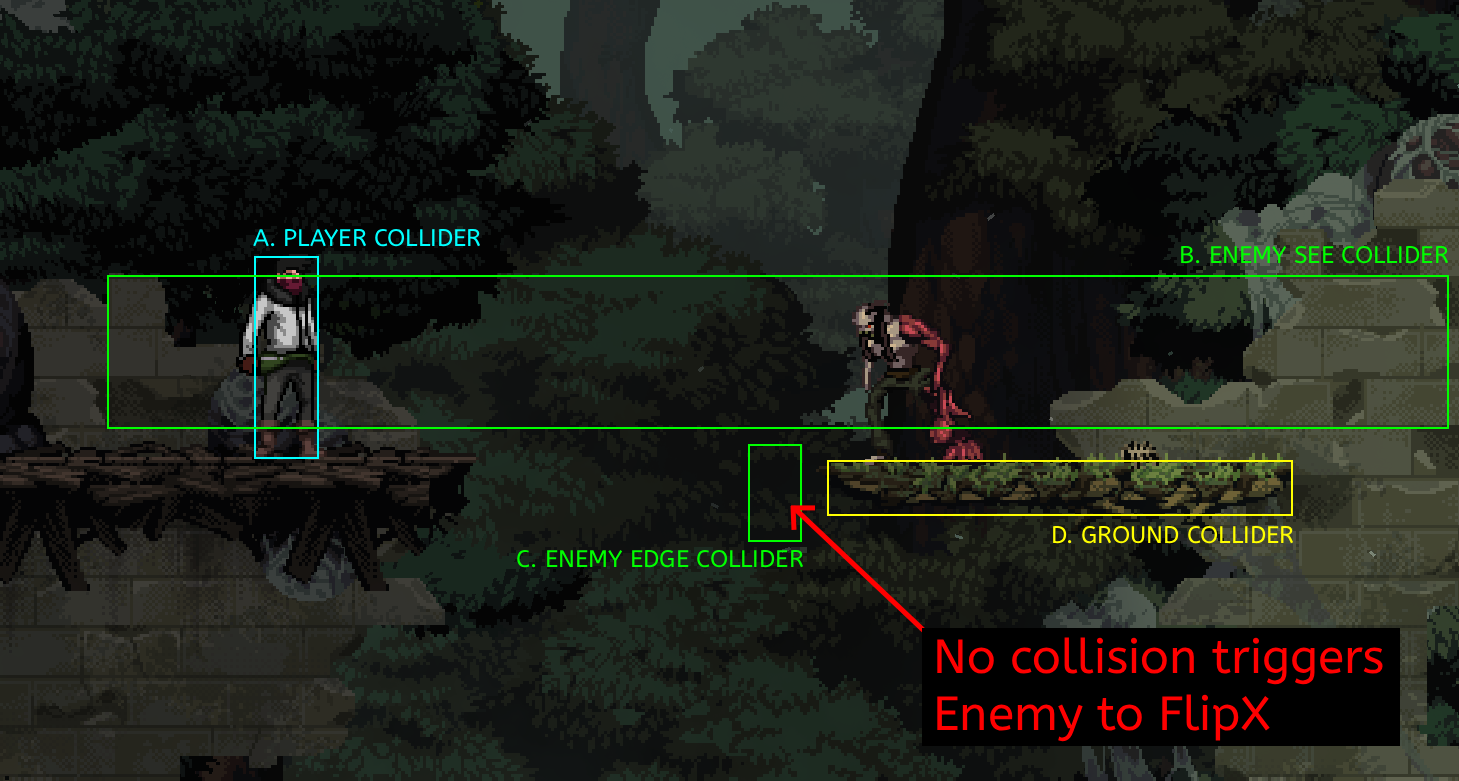
Step 2: Enemy Edge Collider C checks for the collision with the Ground Collider D. When there is no collision between the two, it triggers the enemy to turn around.
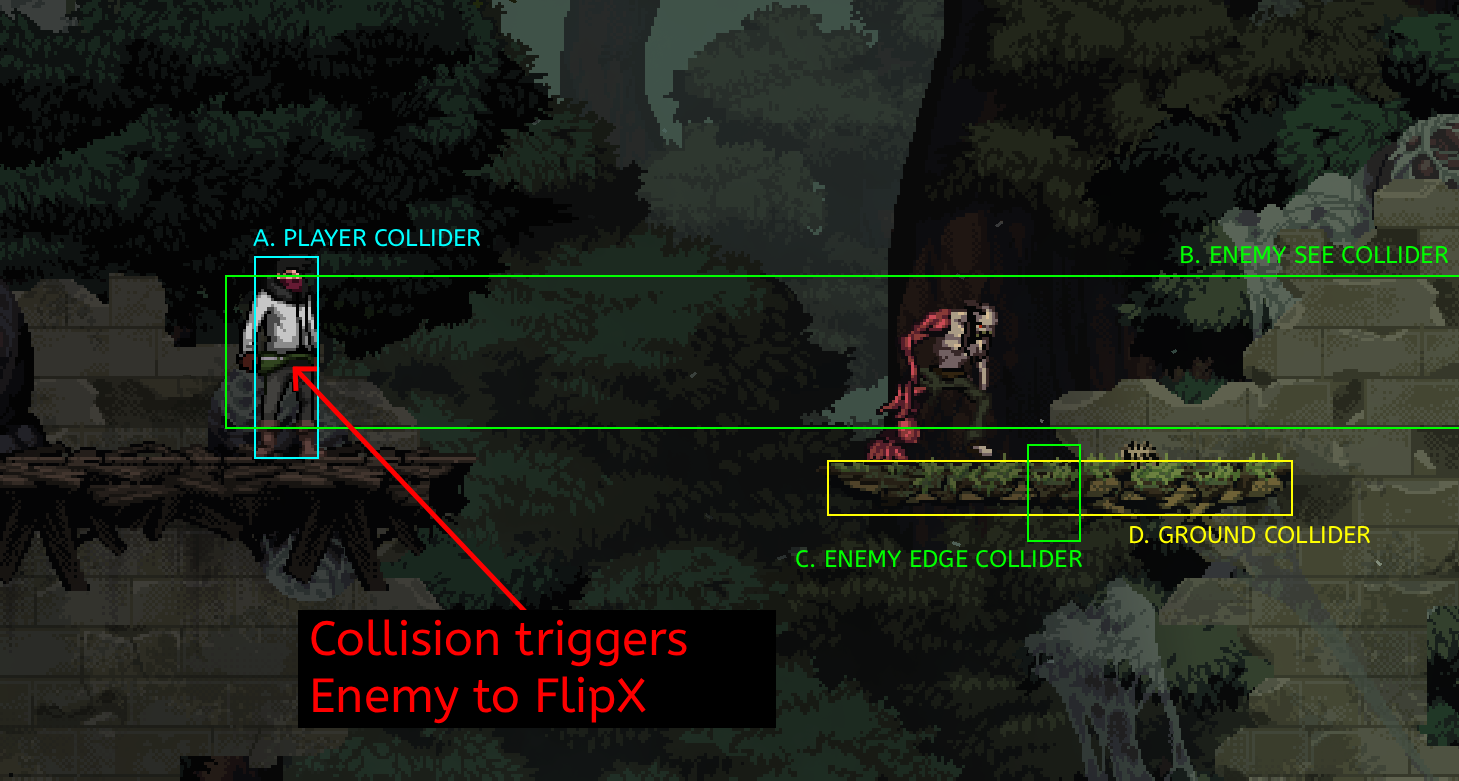
Step 3: When the enemy turns around, Collider B immediately registers collision with A and causes the enemy to turn around, and we’re at Step 2 again, trapped in the infinite loop unless the player moves away.
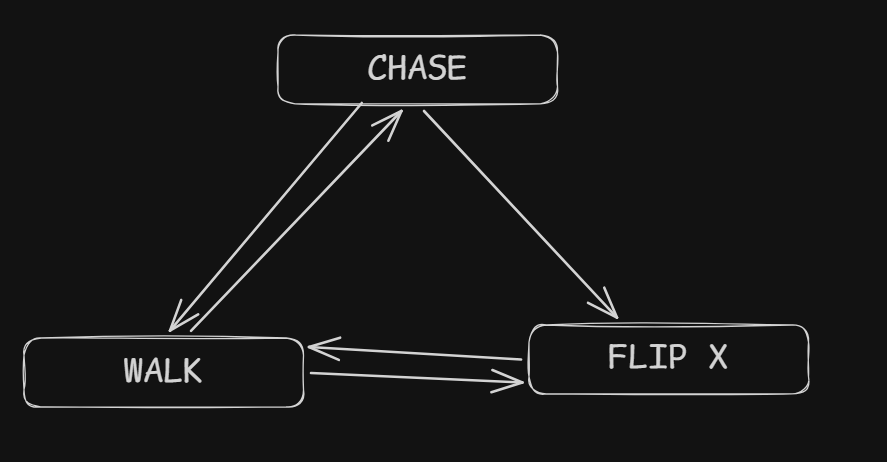
Simplified flow of the states described in Steps 1, 2, 3
One of the solutions here is to reduce the collider B size and “trim” it on the back. This however will make the enemy deaf to the player walking behind him which is not ideal.
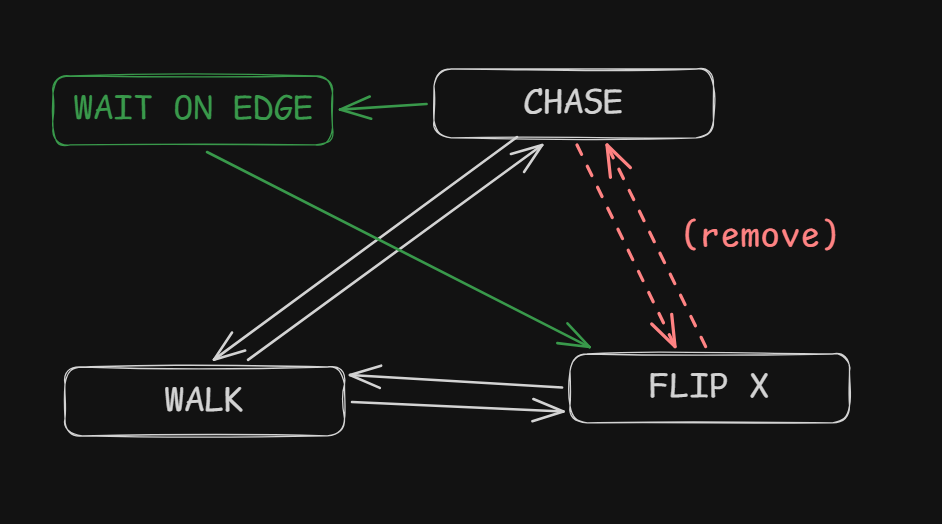
Finally we added the “Wait on Edge” stage. Transition to this stage is triggered when collision C is not occurring with ground D and B also collides with the player A.
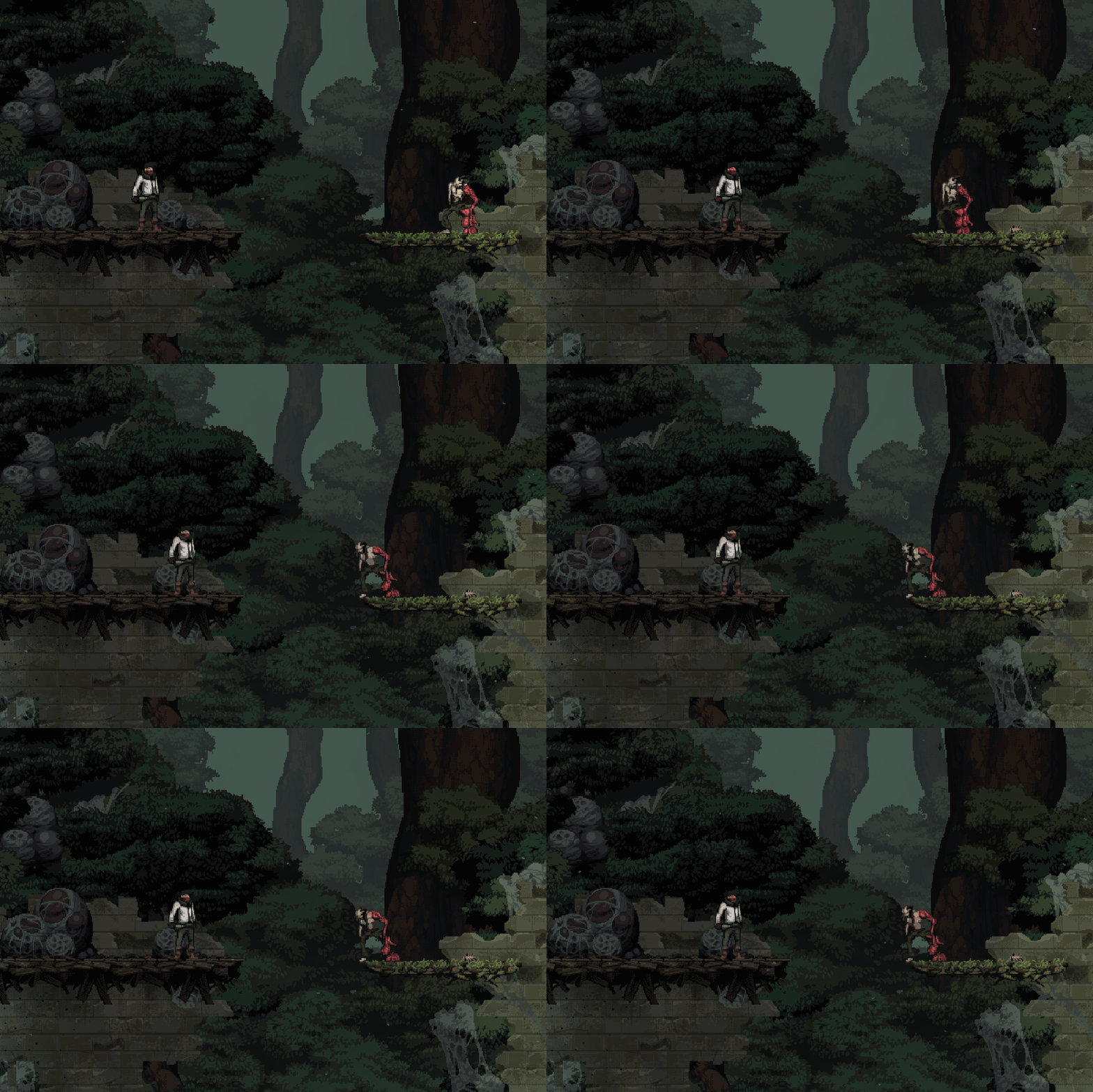
Now the enemy politely waits on the edge instead of making frantic moves
We had many bugs like this, caused by not predicting all possible cases. Some of them were harder, some easier to foresee, and this one was the best to illustrate how designing even simple mechanics can create some peculiar and unexpected bugs.
Three Enemy Examples
Let me share our favourite enemies we have in our game:
Jaga
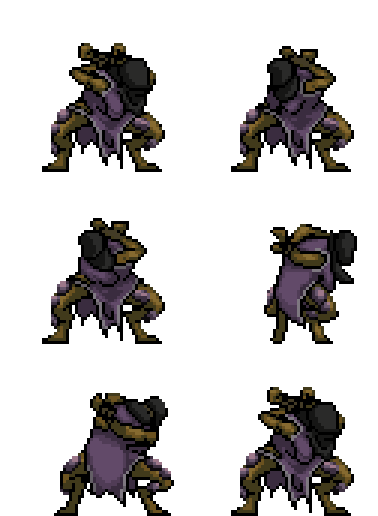
This one is amongst the oldest of all the monsters in The Looter - I feel like she withstood the test of time, both with her design and mechanics. My favourite part of her design is how she can take the player by surprise by blending into the background in a very grim way. Having her hands tied behind her back, she is forced to attack with powerful jumps. The hood covering her head makes her move erratically, trying to sense her prey. Her clothing is pretty interesting - in Poland it’s called "podomka" - a piece of garment used mostly in the past by women for housework.
Weaver
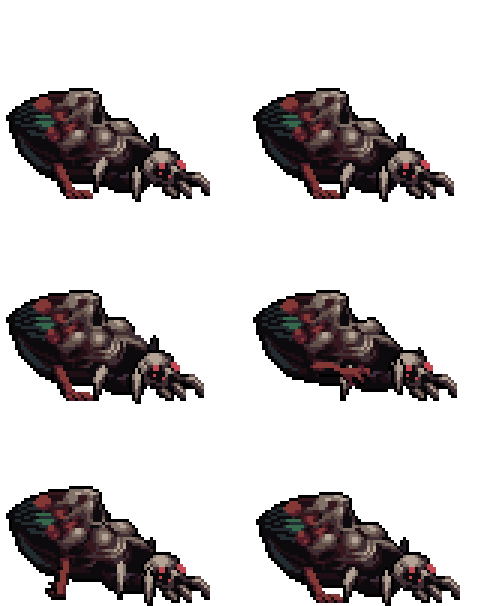
While this one is pretty straightforward mechanically - either he spits web projectiles and stops you in your tracks or shoots poison projectiles and makes your life miserable while you search for an antidote - I think his visual design came out great. A distorted human body fused with the back of a spider hits those unsettling notes we aimed for.
Avaritia
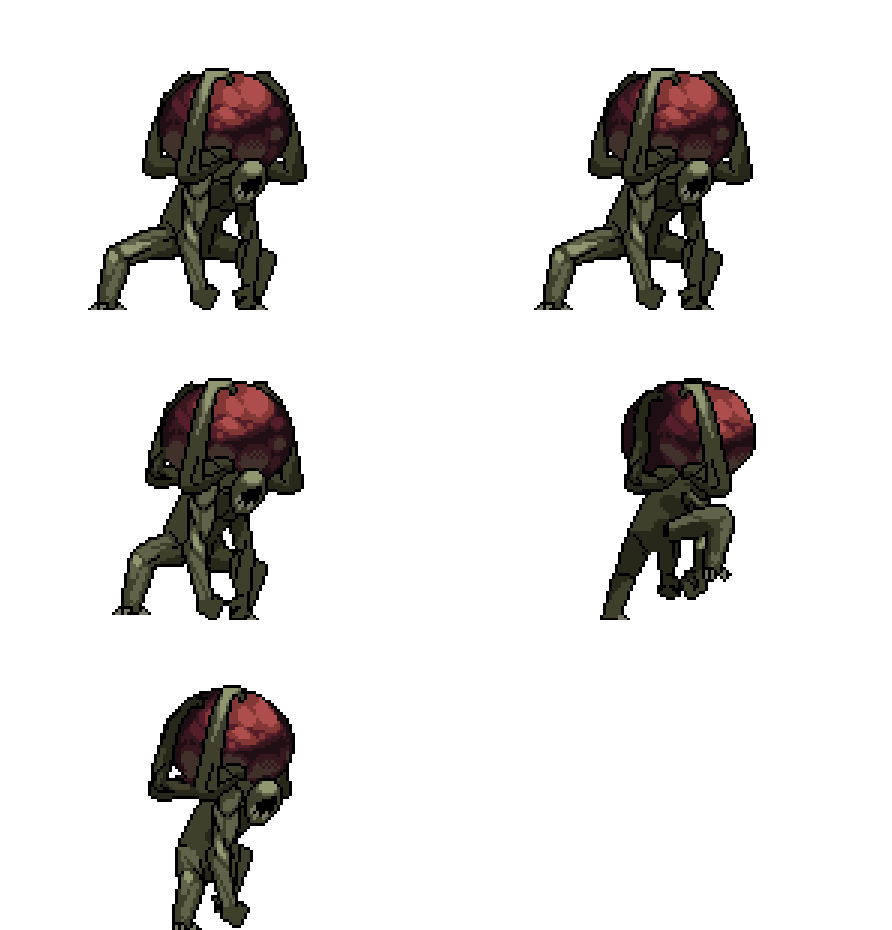
I chose this one specifically for his move - a charge that starts slow but is deadly and hits like a train. This guy has been inspired by Sloth from Full Metal Alchemist. I feel like he came out very satisfying in gameplay. He also has a neat gimmick where the player has to choose whether he wants to take the long road and kill him by shooting his main body, or the short road by taking out the thing he carries - the latter choice spawns something very fast and nasty, so beware.
Bosses / Stronger Encounters
Bosses are the big enemies placed at the end of each chapter/biome. Our boss design philosophy was that the bosses are kind of the final exam for the chapter. We wanted boss fights to contain the gameplay mechanics from the previous chapter.
Another important aspect of boss design is to have some sort of gimmick or unique mechanic for most of the bosses. For example:
- Big Spider Mother Boss - you have to destroy the legs to make it vulnerable to actual damage-dealing attacks.
- Warlord Boss - uses ice spears as shields and obstacles for the player, jumps with devastating attacks.
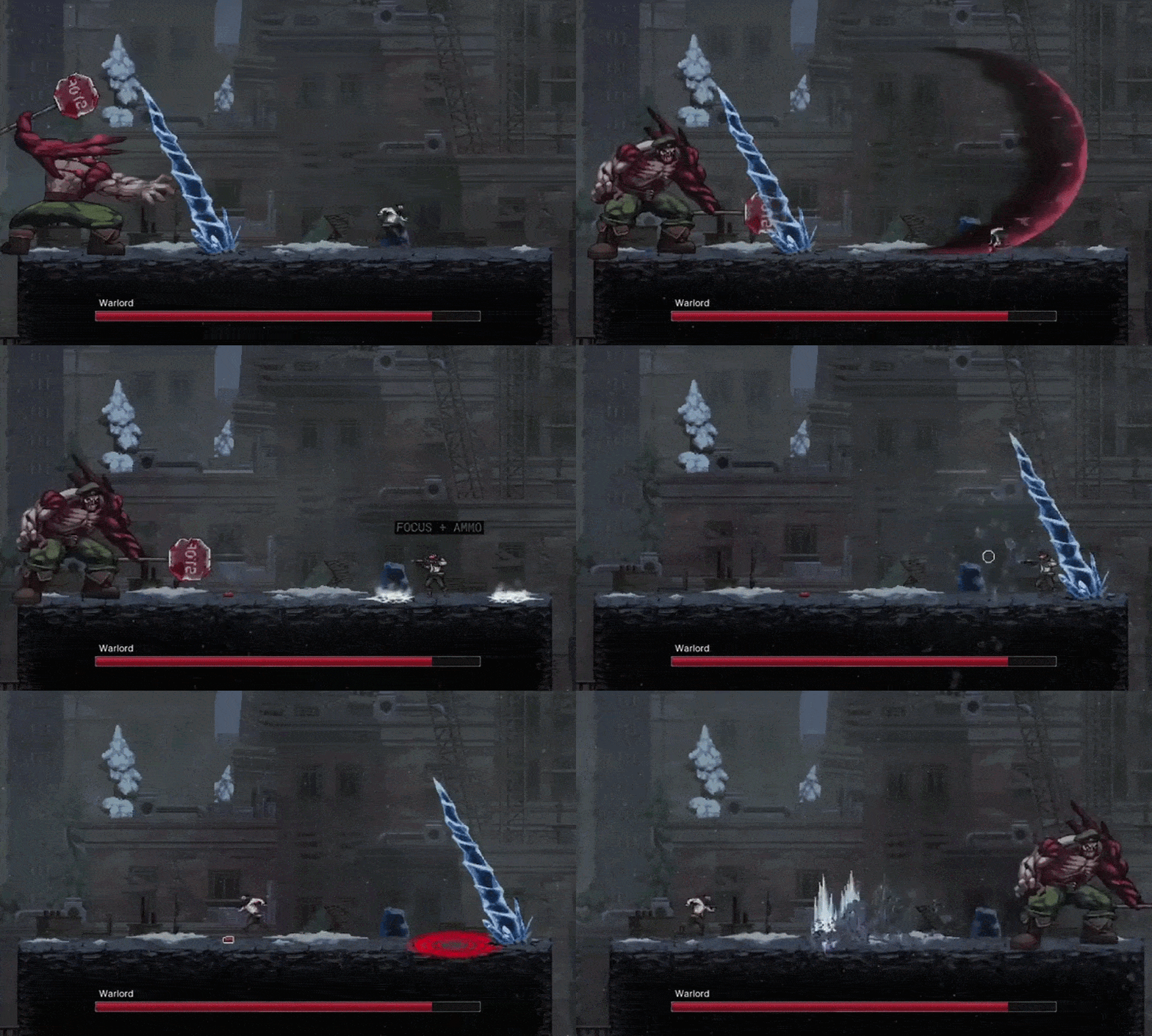
We also tried to make most of the mechanics and combat tactics available during the boss fights so most of the bosses will be vulnerable to stun / critical hits and burn status will be applicable.
So, that will be all for now. We hope you had fun reading this more in-depth kind of bestiary!
https://store.steampowered.com/app/1163020/The_Looter/