Smoke, glass and a black hole
AURA gains three new styles, and Tunnel was rebuilt from the ground up.
Smoke breathes a fine ribbon out of every note's pitch column on a real fluid simulation rather than particles. A hard strike blows a circle clear like a stone hitting water, and letting go pulls that displaced smoke visibly back in, exactly where your velocity sent it. Every held key turns its own vortex: press harder and it spins faster, open the timbre and it grows wider, bend and it reverses and travels with the pitch.
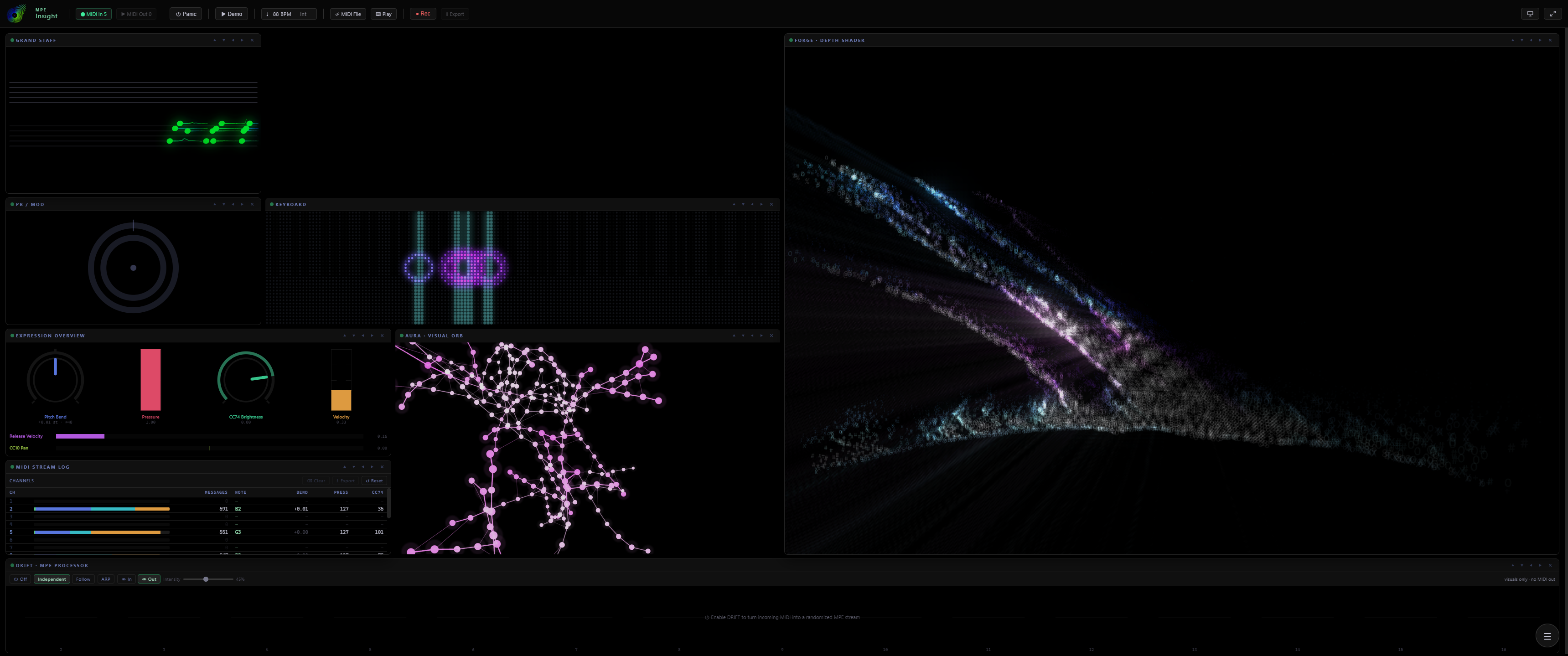
Shatter turns AURA into a sheet of glass with a memory: every note is a knock, every knock opens one more stage of the break, and the cracks never heal. Lean on a held key and the glass gives way in strobe-like jerks, bend a held note and the damage marches sideways across the pane, and only when a knock can find no glass left does the whole sheet go in a white blink.
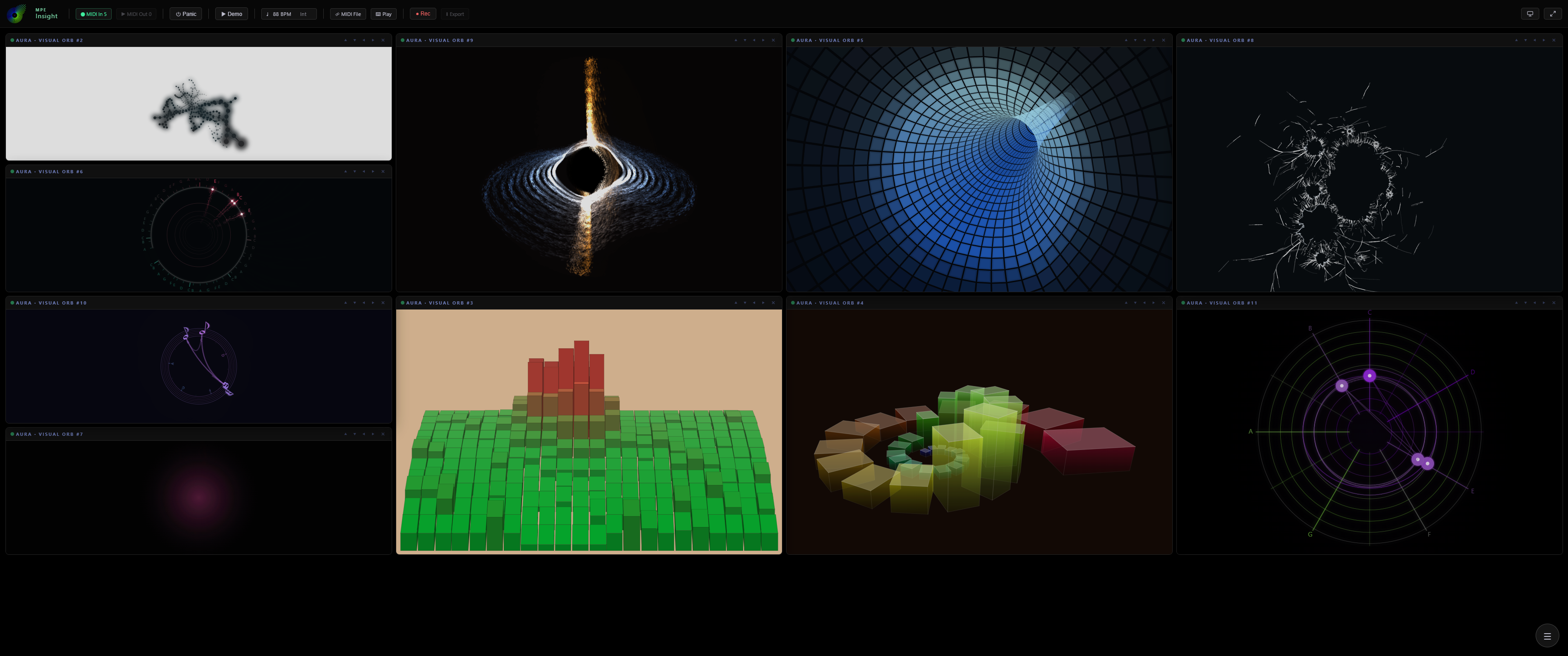
Black Hole hangs two discs of silky orbiting streams around a pure black horizon, crossing along one seam where they trade colors. What you play poses the scene, and a bend bows the inner streams around the body while the pose stays put.
Watch on YouTube
Tunnel is new work under an old name: a flight through a tiled tube of light with no end in sight, curving away mid frame and leaving through the edge, and because the shell is translucent you can follow the pipe running on behind its own wall. Pressure is thrust, a full bend lays the exit out on the horizon left or right, and every strike sends a wave of light down the wall towards you.
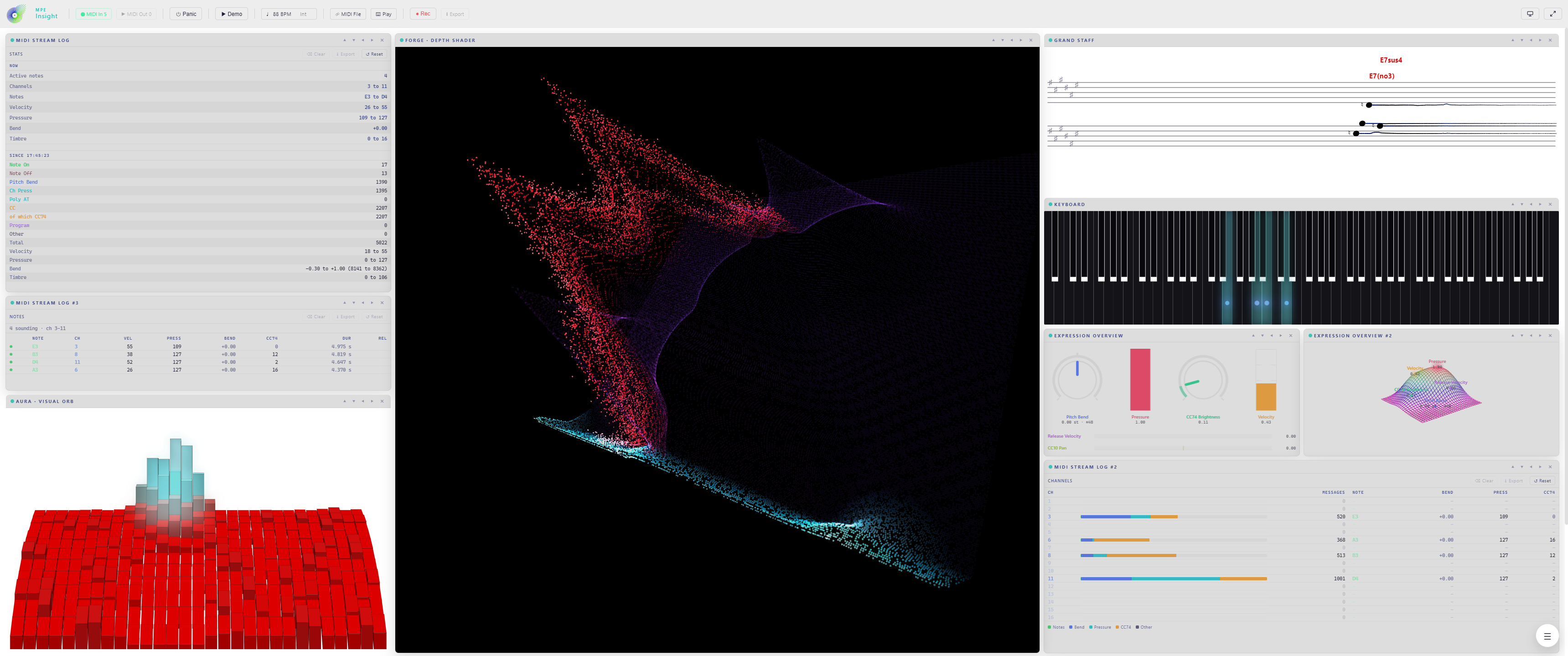
The bend wheel now moves the whole picture. On an MPE instrument your notes live on member channels while the wheel sends on the master channel, and the synth adds the two together. Now the visuals do too: pull the wheel and a held chord travels as one, while a finger glide next to it still bends only its own note. It is summed in semitones rather than wheel positions, so what you see is the interval you hear, not a wheel exaggerated twenty-four times over.
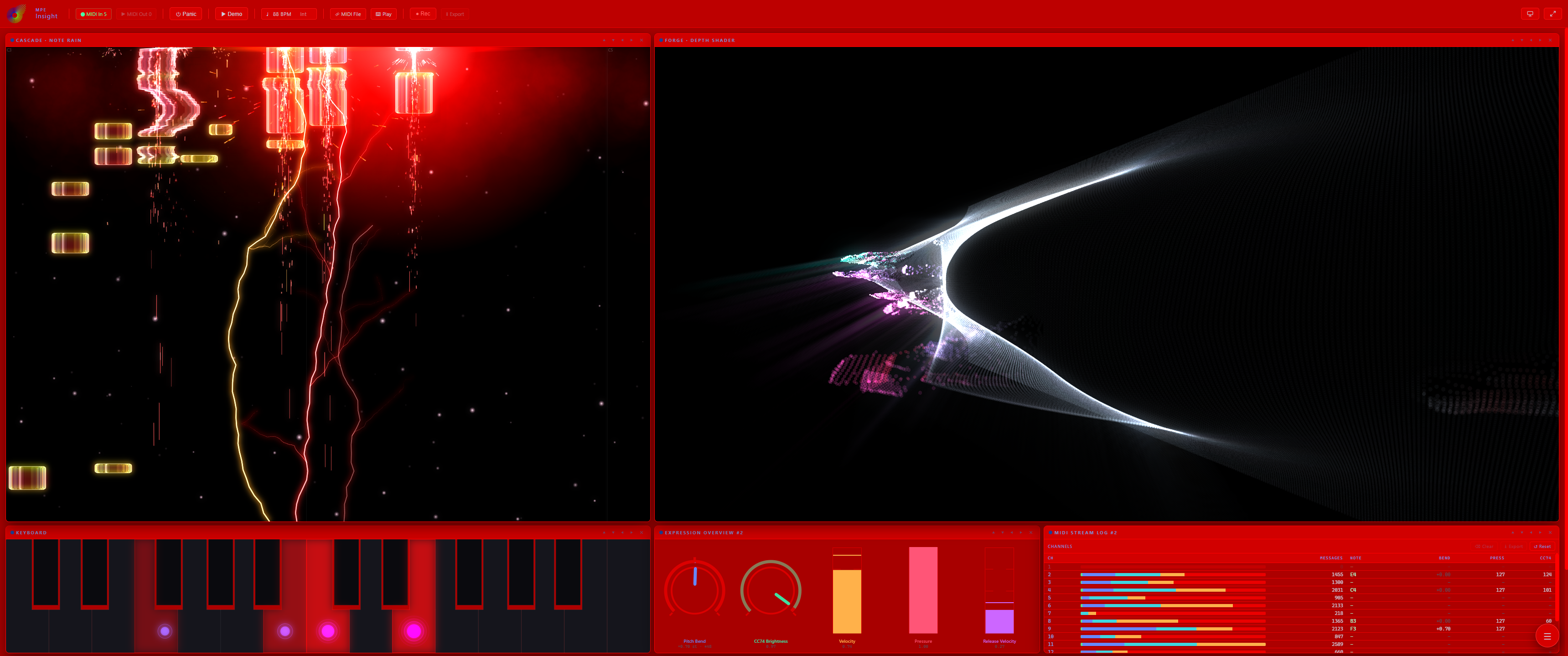
Stage View clears the stage with one shortcut. Toolbar, frames and titles go, your layout fills the screen and the cursor fades away, on the second display when one is connected. Esc brings the workspace back exactly as it was, and everything keeps playing while you are out there.
Watch on YouTube
DRIFT was rebuilt around five lanes instead of four fixed ones: point any lane at Pitch, Pressure or any continuous CC, and give it its own color. Each lane picks how its voices relate: CHAOS is the old free-for-all, PARALLEL breathes the chord as one block, ORBIT walks the voices around the cycle, SPLIT sets them against each other. Each lane can take its rate from the host tempo instead of Hz, the arp got real shuffle from straight to hard dotted, and every readout now names what actually leaves the port rather than where the knob sits.
Also new
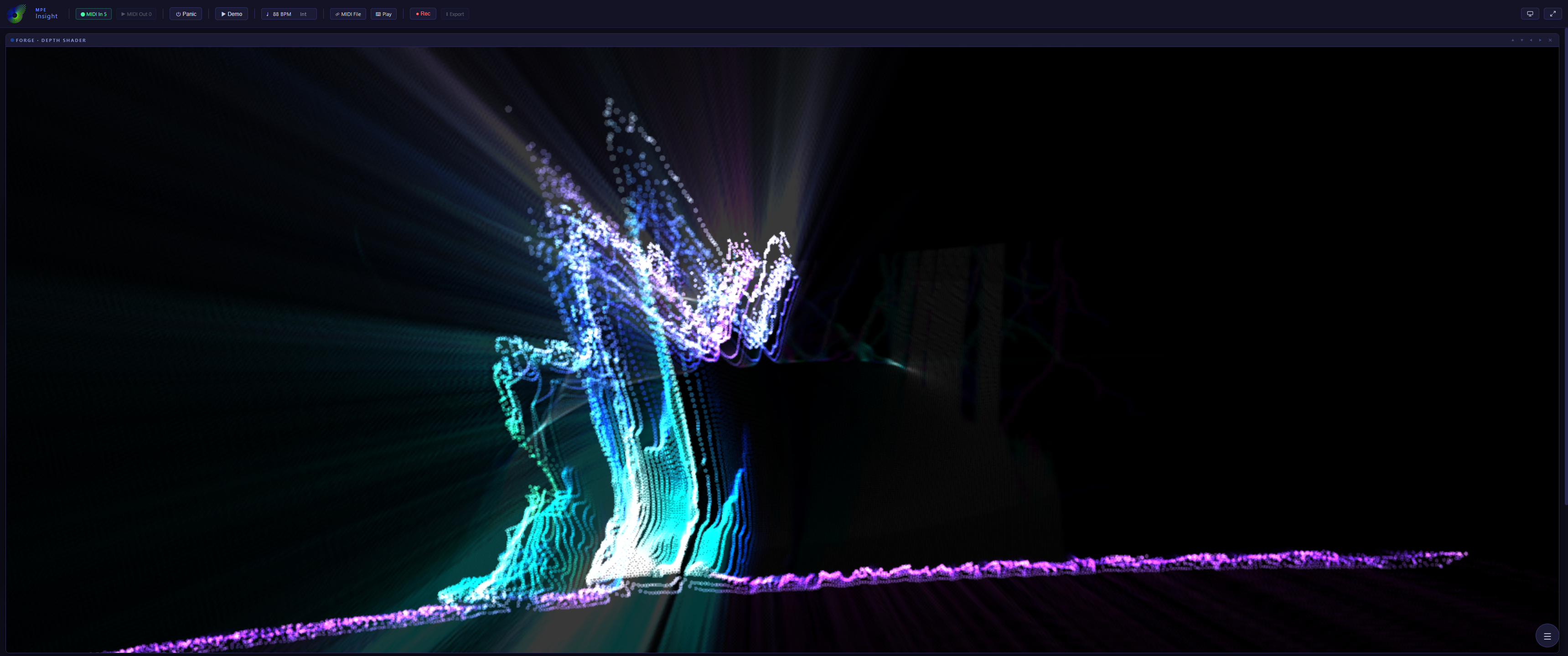
- Point Cloud grew hands: turn, tip and lean the cloud to any pose and it holds, while Speed keeps a named motion running. The dolly reaches back to -200%, and a source that does not match your panel's shape is no longer clipped at the picture's own edge
- Color key and Hue key on every FORGE effect, not just as a global switch, so one effect can chase brightness while its neighbor holds a place on the picture
- CASCADE's Step color driver moves every note one slot along a palette, and repainting the palette recolors the notes already on screen
- Hold Shift while dragging any slider and the value moves one step at a time, with the center detents out of the way
- A consistency pass over every settings panel: each module picks its view the same way, menus line up on one column app-wide, and controls that do not apply right now gray out instead of vanishing