Hey everyone,
If you've been following the game here on Steam, you've mostly seen static screenshots of hex grids and character models. But lately, I’ve been spending almost all of my time deep in the combat engine, trying to answer one big question: how do I make a classic paper-and-pencil gamebook feel good as a digital PC game?
In the original Blood Sword books, your imagination does all the heavy lifting. You roll the dice, do the math, and picture the sword strike in your head. In the early drafts of the combat, having characters just stand there while numbers changed in a log felt incredibly flat. I needed the game to visually communicate the weight of those dice rolls.
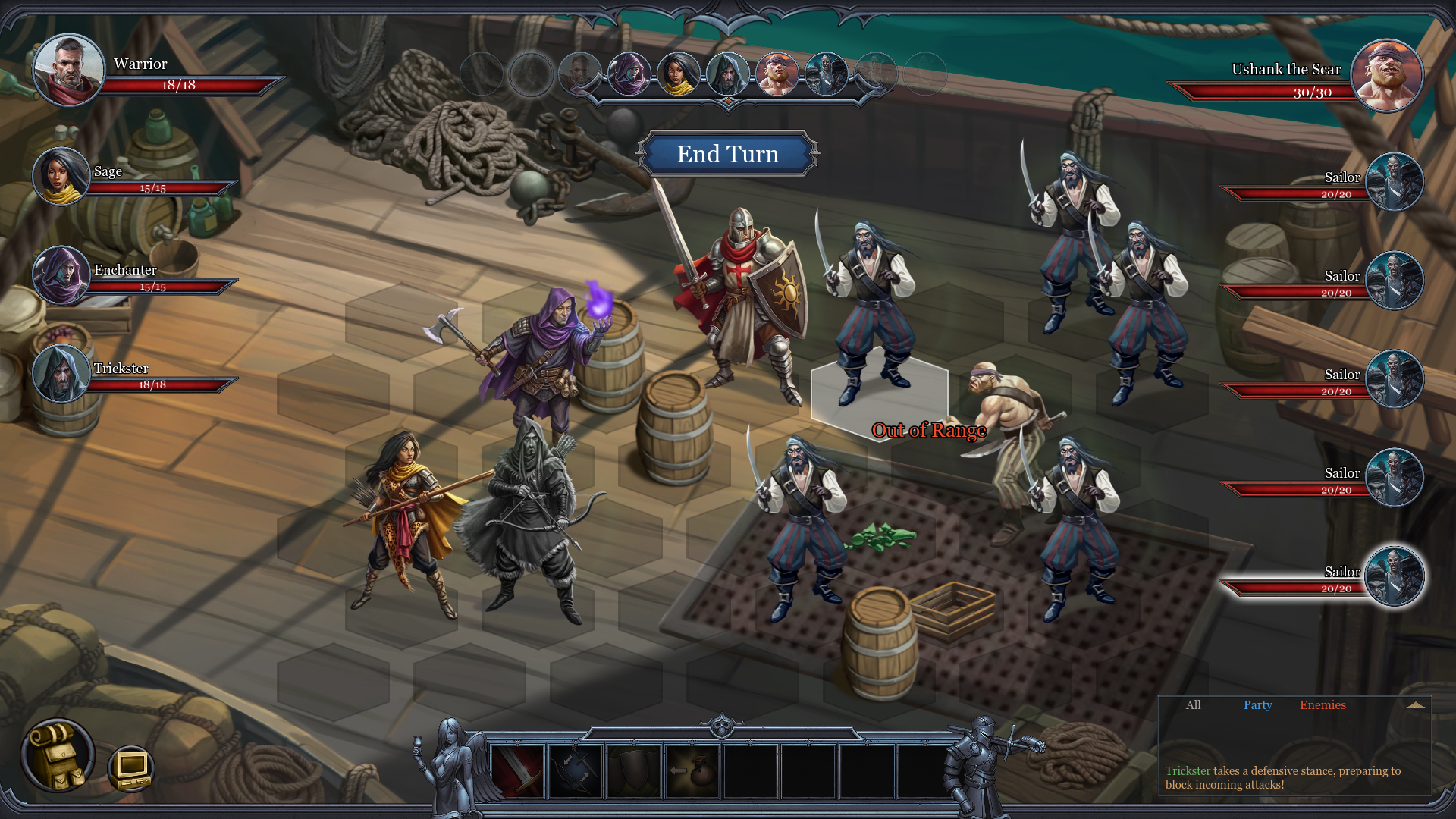
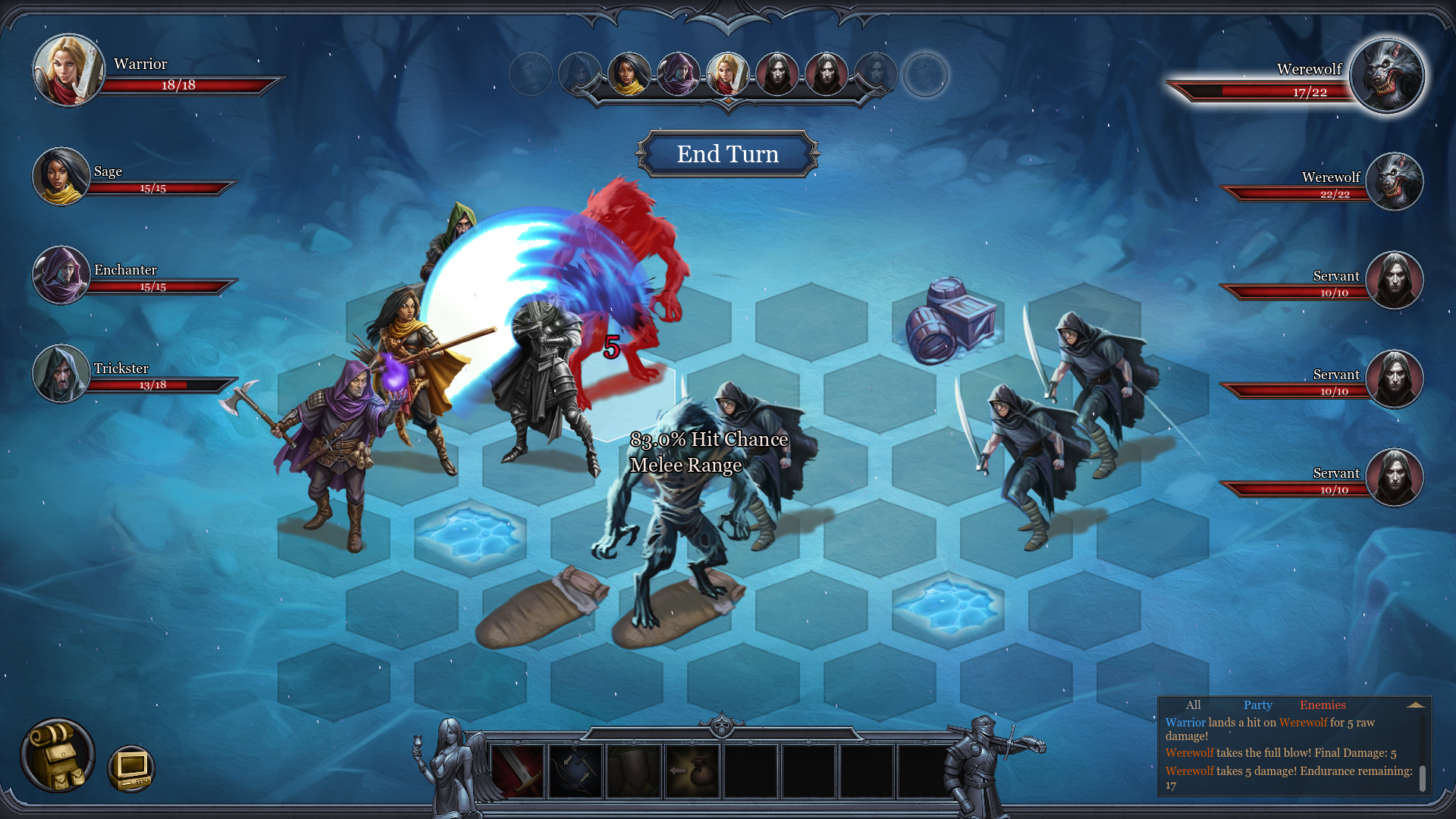
I recently spent a good chunk of time just working on the physical feel of the hits. Now, when a character takes damage, they flash red - and that flash actually scales in intensity depending on how devastating the hit was. I've also been hooking up specific visual effects and audio queues; you'll hear the difference between a sword clanking off armor, a blunt strike, or a creature's claws swiping through the air. To make sure you don't miss the details while watching the action, I built a floating text system so dodges, blocks, and exact damage numbers pop up right over the fray.
Another big challenge for me as a solo dev is the interface. Tactical RPGs can easily turn into a mess of spreadsheets and menus, and I really want to keep the screen focused on the environment. During my own playtesting, I got annoyed having to constantly open my full inventory to drink a potion mid-fight. To fix this, I expanded the main Action Bar and built a little slide-out "drawer" that holds 12 quick-consumables. I also made the whole UI automatically slide off the screen when the AI is taking its turn, which makes the battles feel much more cinematic.
But a tactical game isn't just about looking nice; it has to respect the rules. Adapting the tabletop combat mechanics into strict code has been a puzzle. For instance, I wired up the logic that prevents you from firing a bow at point-blank range (you'll need to step back or switch to a melee weapon). Another old-school rule I implemented is the Defend action. Instead of using modern "opportunity attacks," you cannot just run away from an adjacent enemy to kite them - you must have used Defend the previous round to safely disengage or flee the battle. When you try to make a ranged attack the game will indicate if you're out of arrows or lack the Archery skill, rather than just stopping your turn. Small choices matter now, too - swapping weapons mid-fight, using Defend, using an item, etc will cost you a precious Action, so you have to plan ahead.
Because information is so vital for planning those turns, I overhauled the way you view the battlefield. Instead of clicking around to find stats, your mouse is now an active scanner. You can hover over enemies, map props, or the hex cells themselves, and a detailed tooltip will float right beside your cursor, breaking down movement points, unit details, and dynamically coloring any negative modifiers you're suffering from. To back this up, I've also added a comprehensive, color-coded combat log that expands vertically, allowing you to scroll back to the start of the fight and track the entire history of every strike, spell, block, and status effect.
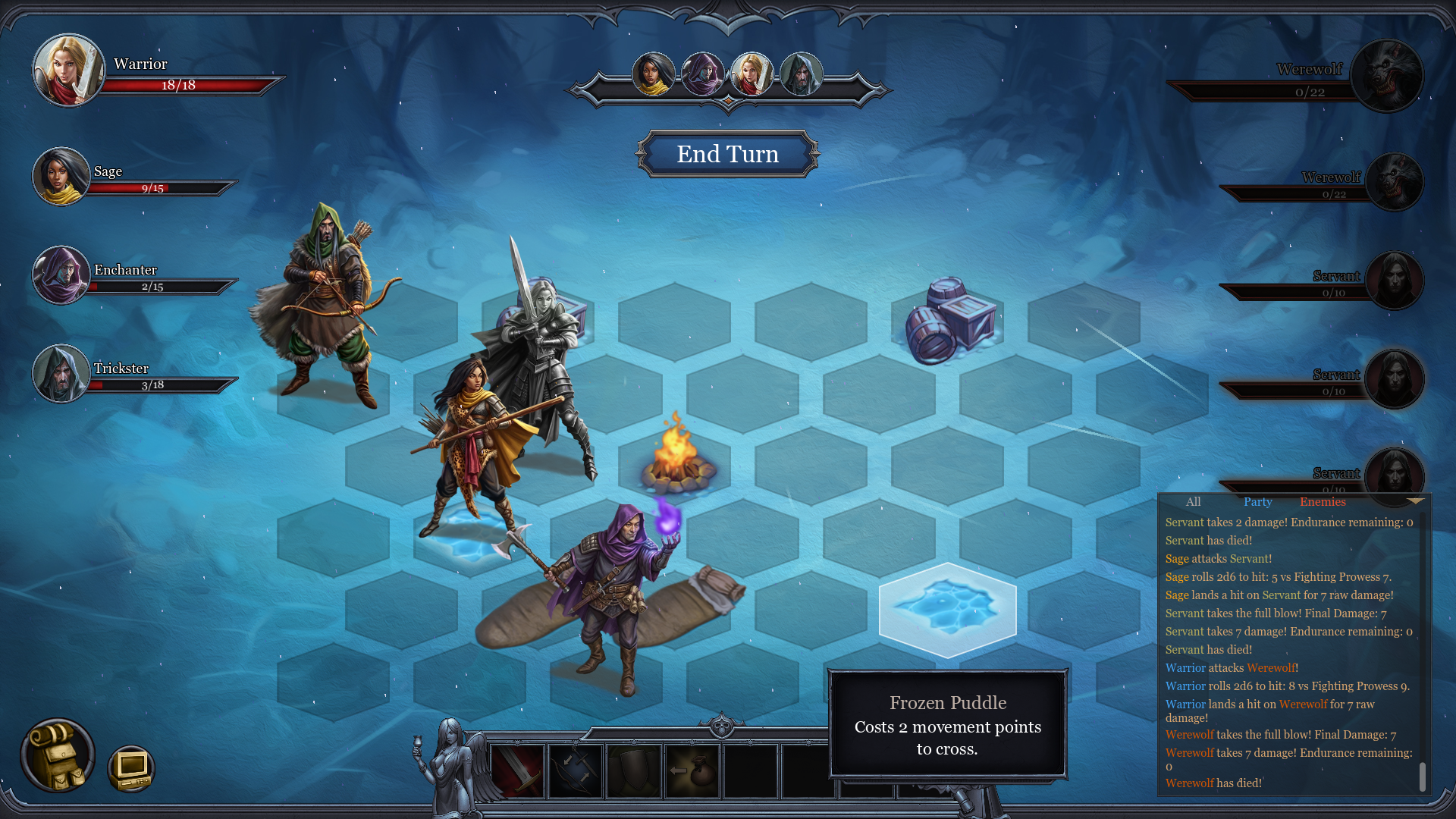
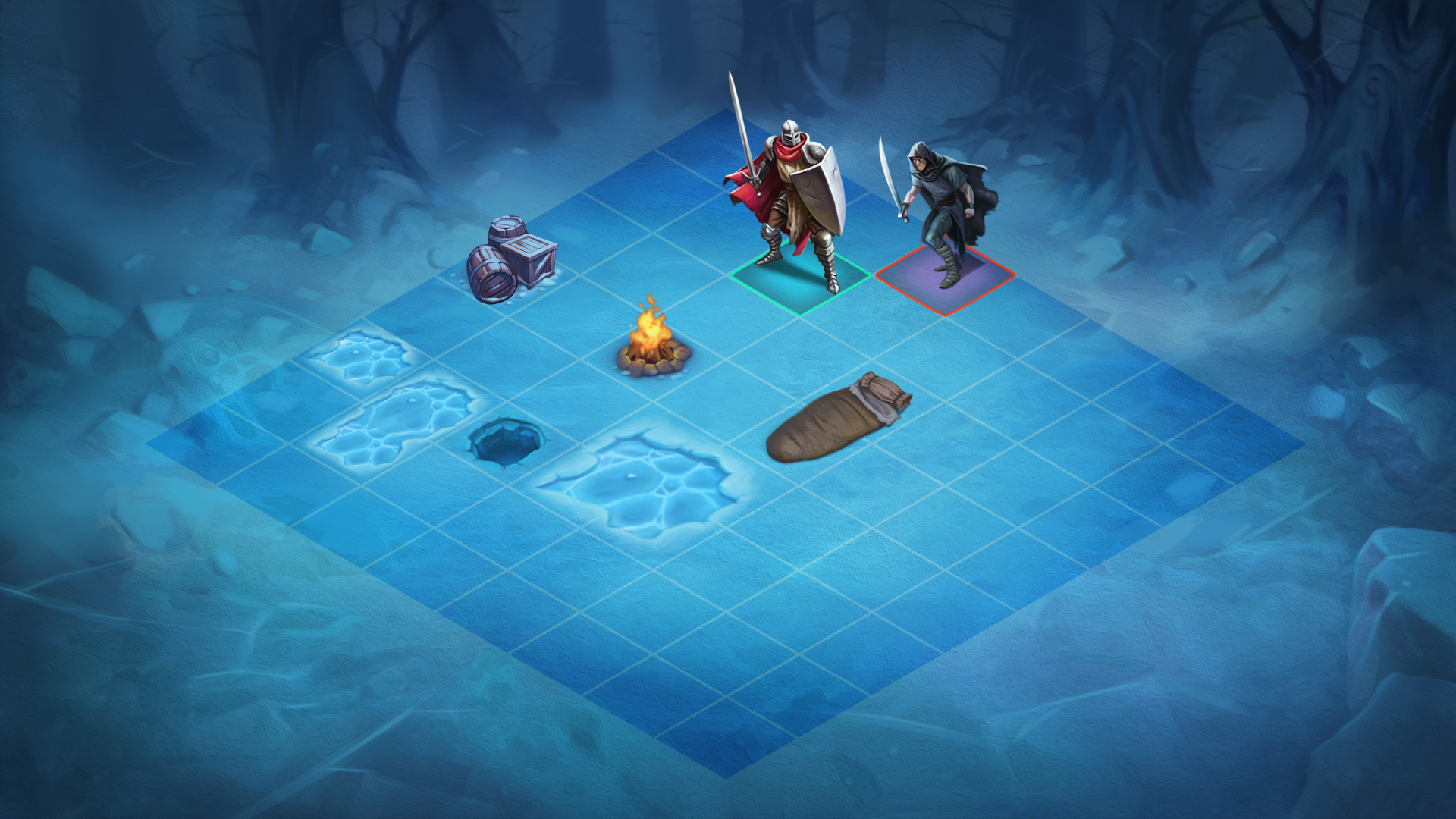
Speaking of those hex grids, in the game's early design days, I actually explored using square grids. This was meant to match the maps printed on the pages of the original books and was heavily inspired by the tight battlefields of Into the Breach. But once I tried hexagons, everything just clicked. The truth is, on small battlefields (64-100 cells max), hexes allow for much more interesting positioning. They fit the game's slightly isometric visual style perfectly and help create that nostalgic Heroes 3 experience we all crave. You can check out an old concept from the early square-grid versions below:
As of writing this, I'm just wrapping up the next big adapted system: the magic system - specifically drafting out how the Enchanter's spells from the books will work on the grid. It was a daunting task, but a really exciting one which I cannot wait to share with you!
Thanks for being on this journey with me and for all the wishlists and support!
https://store.steampowered.com/app/3645170/Blood_Sword/