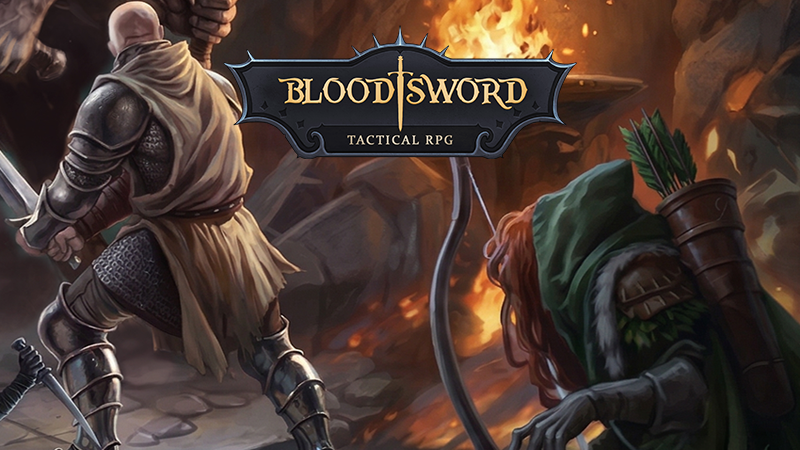
I know it’s been a while since my last update, and honestly, the silence wasn't part of any master marketing plan. Over the last month, half my family came down with Chickenpox. Balancing the roles of a dad, a makeshift nurse, and an indie developer meant something had to give. Naturally, I couldn't stop the development train, so I just put my head down, drank too much coffee, and kept grinding out code in the quiet hours. Writing posts on my socials had to take a back seat.
But the silence was productive! Here is a look at the heavy lifting going on behind the scenes to make Blood Sword tick.
Usables and Avoiding Insta Deaths
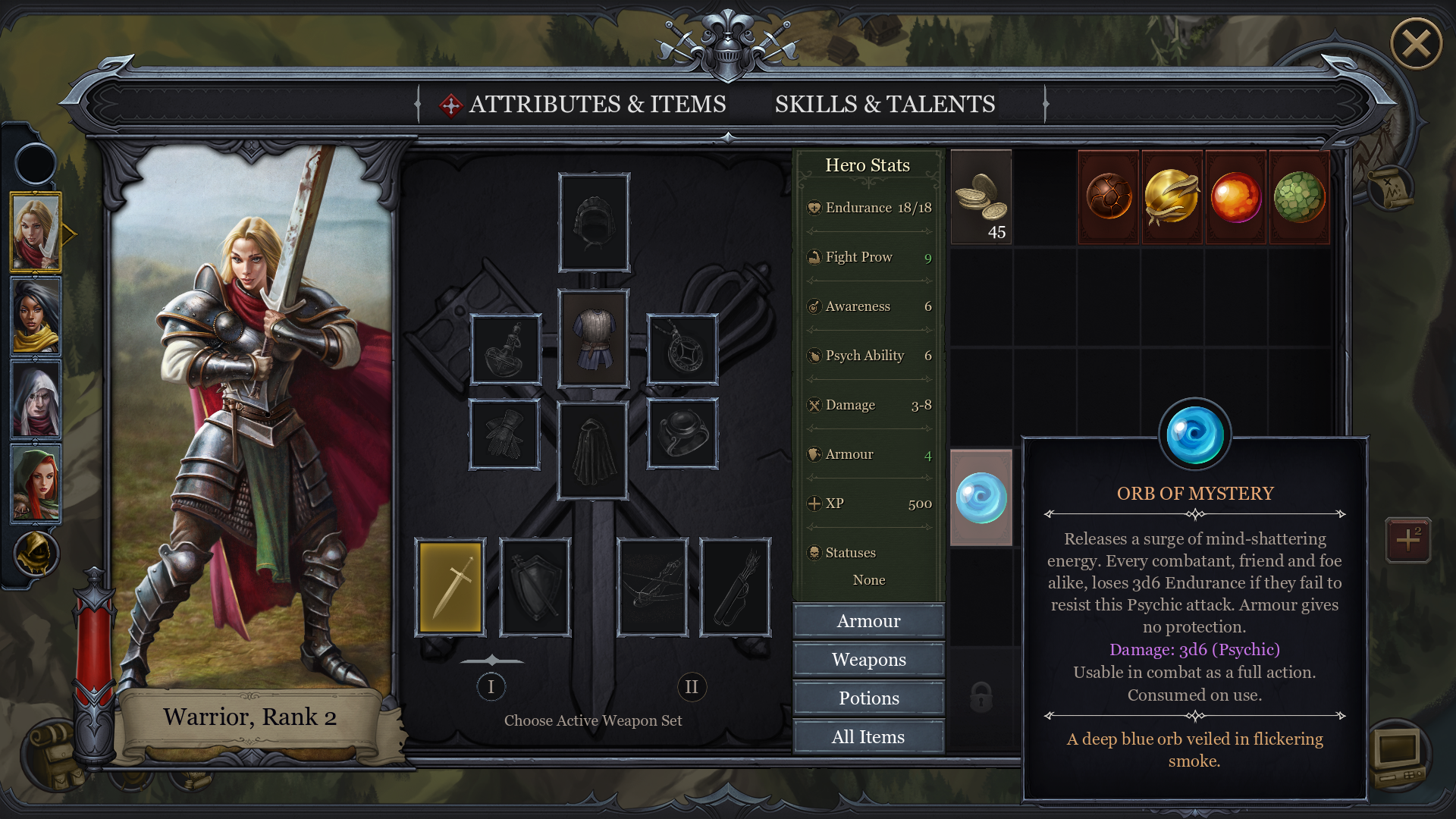
Loot in Blood Sword is rarely just a +1 sword. It’s a Vial of Black Liquid, an Emerald Scarab, or a mysterious Birch Bark Scroll.
I’ve introduced a unified UsableComponent that handles items you can pop both in combat and during exploration. We've got the Maeve Potion working, and completely reworked the Orb of Bestowing, Orb of Fire, and Orb of Plague into functional, usable items with custom sound effects so they feel satisfying to trigger.
But here is where the candid reality of indie dev kicks in: not everything on paper works on a screen. I spent some time fixing the Mystery Orb item and the Psychic damage type specifically to avoid what I can only describe in my commit logs as "fixed gg insta death." In a book, an instant-death gotcha is a funny "turn to paragraph 14" moment. In a video game, it just makes the player want to uninstall. Balancing the literary integrity of the original text with modern, fair game design (think the brutal-yet-fair nature of Darkest Dungeon) is a tightrope walk.
And yes, if you lose the Scabbard of the Blood Sword, it will now properly trigger a main quest failure. Don't lose the scabbard. I warned you.
Blurring the Line Between Combat and Story
In most RPGs, combat and narrative exist in separate silos - you fight the monsters, then you read the dialogue. Gamebooks don't work like that. Fleeing a fight, trying to magically enthrall an enemy mid-battle, or using an environment trick can instantly pivot the combat back into a story paragraph.
To support this, I've built out a comprehensive Encounter Actions Database. It maps specific narrative triggers directly into the combat grid. This means we now have fully implemented mechanics for special actions that can instantly interrupt an active encounter and branch you straight back into the story system. If the book says you can pull a lever mid-battle to drop a portcullis on a Snow Vampire, the grid now seamlessly talks to the Ink story engine to make that happen.
The Adaptation Trap: Adapting the Sage’s Healing
This brings me to the absolute crux of adapting a gamebook: you simply cannot transfer mechanics verbatim. The Sage’s healing ability is the perfect example.
In the original book, the rule states that every single time you turn to a new paragraph, you can pause, sacrifice an amount of your own Endurance, roll 1d6-2, multiply the result by your sacrificed health, and then manually distribute the resulting points among the party.
On paper, it’s a neat risk/reward math puzzle. In a video game? It is a pacing nightmare. Forcing the player to stop, interact with a UI prompt, and crunch formulas at every single node of dialogue would completely destroy the flow of the narrative.
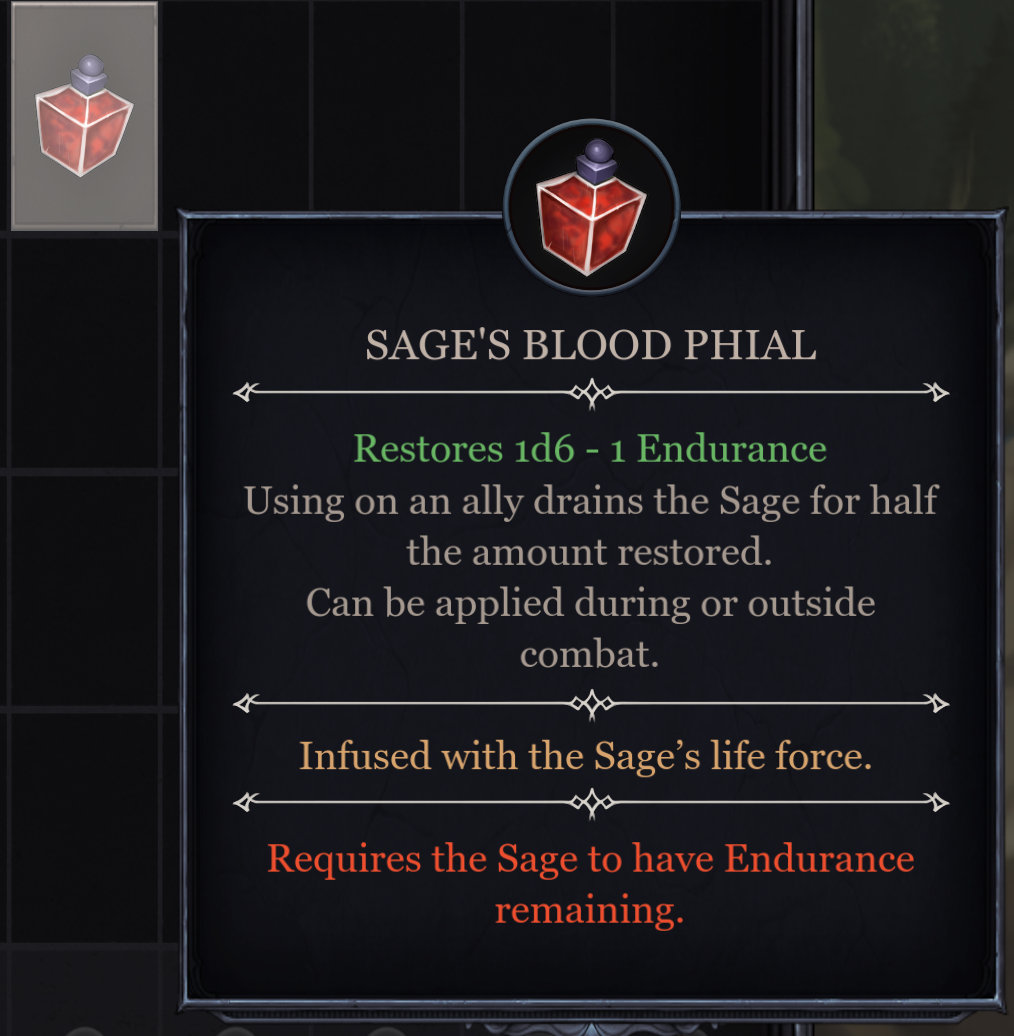
So, I had to redesign it from the ground up while keeping the spirit of the mechanic intact. I leaned into the fiction: now, whenever the party travels between locations, the Sage uses that downtime to meditate, actively drawing out their own life energy from the cosmic flux and sealing it into a tangible, consumable item. The engine places this "bottled life force" into their inventory with the proper but subtle notification message. When the Sage finally pops it in or outside of combat to save an ally, my newly built SageLifeForceComponent takes over. It calculates the exact amount of health restored (strictly checking max health caps so you aren't penalized for over-healing) and dynamically drains the Sage’s own Endurance for half that amount. It preserves the brutal, sacrificial triage of the original text but turns it into a tactile, frictionless system.
Oh, and did I mention you can also upgrade and change this consumable via the passive skill tree?
Quality of Life and User Experience
Behind the scenes, the game is getting significantly smarter. As an engineer, I want a buttery-smooth experience, so I refactored our combat encounters to load their data on demand rather than preloading the entire database into memory. Even for a 2D RPG, memory management matters.
I know UI friction is the bane of many gamers, so I’ve spent time adding a ton of much-needed keyboard navigation: you can now cycle through the Character Sheet tabs seamlessly using Tab, and hit 1-4 to instantly select specific party members. Less clicking, more surviving.
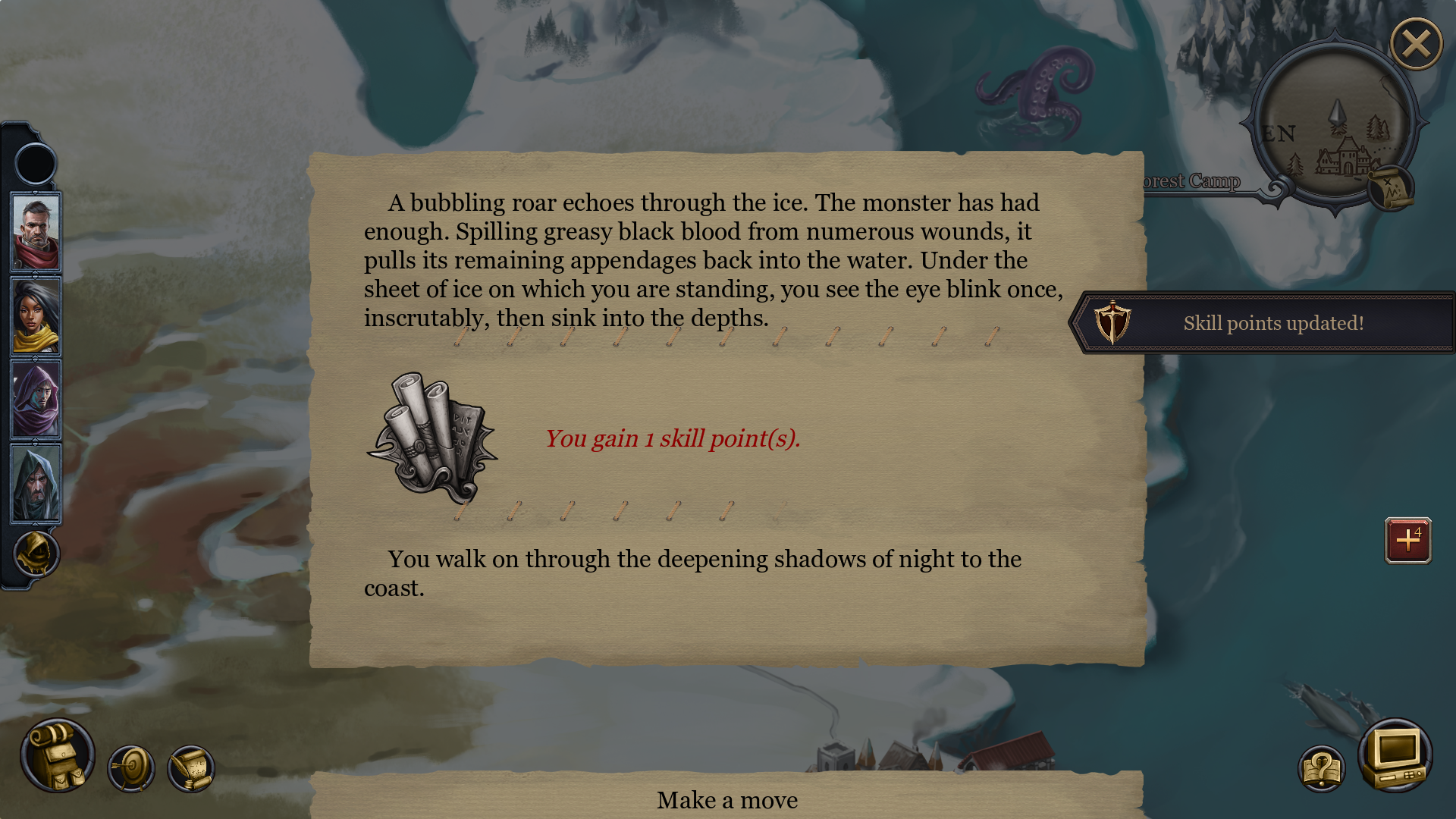
I've also heavily overhauled how information is conveyed. The system now actively flags Unspent skill points via dedicated UI notifications and story pop-ups so you never forget to level up.
Developing an indie RPG is an exercise in building a massive, intricate clockwork machine while it's actively ticking - even when life throws a virus at your household. I am getting very close to having all the foundational gears fully locked in, turning the narrative of Blood Sword into an uncompromising tactical experience.
If you enjoy old-school RPG mechanics and want to support a one-man studio, please consider adding Blood Sword to your Steam wishlist. Every single click helps this journey continue.
https://store.steampowered.com/app/3645170/Blood_Sword/
More updates soon. Right now, I need to get back to the codebase while the house is still quiet. Talk to you later! ⚔️