Dev Interview: The Story Behind Star Fire: Eternal Cycle
Star Fire: Eternal Cycle · published
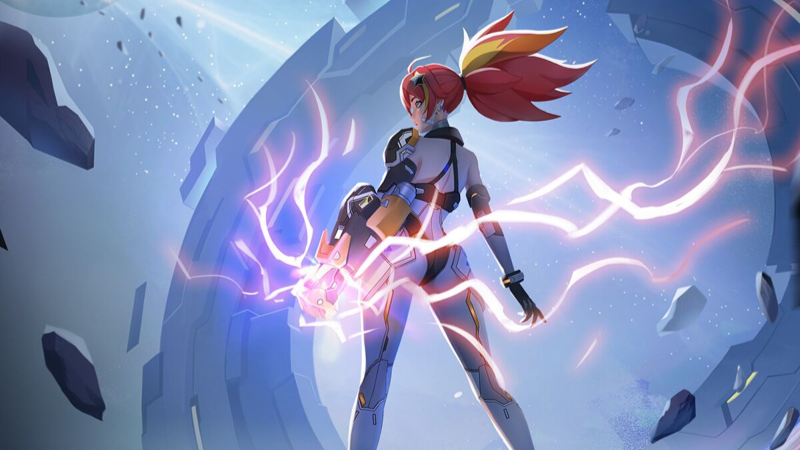
Note: This interview was originally published on December 24, 2024, by Grape Games — one of China’s leading video game media outlets. We’ve translated it into English and are sharing it here with the Steam Community ahead of the upcoming Star Fire: Eternal Cycle demo.
Faced with the shutdown of projects or even entire departments, what would you choose — transfer to another team and stay in the company, or take the severance package and pursue something new? Jensen, the producer of Star Fire: Eternal Cycle, clearly chose the latter.
At this year’s WePlay Expo, I visited the Star Fire booth and had a hands-on experience with their demo.
This side-scrolling roguelike action game lets players attack, dodge, and move freely while combining primary and secondary weapons to create unique builds. As players progress through monster rooms, challenge rooms, and reward chambers, they accumulate power to survive increasingly intense boss battles.
If we were to compare it to existing roguelikes, Star Fire: Eternal Cycle shares a similar feel to Hades, especially in its focus on fluid combat and precise dodging.
At the same time, Star Fire incorporates deep build mechanics—stats, attack types, skill effects—adding layers of strategy to the action core.
Between play sessions, I had a brief chat with Jensen. Unlike many indie devs who are fresh graduates or junior designers, Jensen is a veteran with over a decade of experience at top-tier studios. He once led development on Metal Revolution at NExT Studios, which secured a $3 million publishing deal from Yoozoo Interactive.
Since leaving Tencent last year, Jensen formed a six-person team and has fully devoted himself to developing Star Fire. Over the past two years, not only has the team taken no salary—they’ve poured nearly RMB 1 million into the project.
The game is still in development and expected to release in 2025.
But why leave a major studio to go indie? Why choose the ultra-competitive roguelike genre for their debut title? And how has Jensen’s mindset changed over time?
To answer these questions, I visited the Star Fire team at their studio, Free & Salty Fish (a direct translation from Chinese), and had an in-depth conversation with Jensen.
01
Unorthodox Beginnings
I was curious — why name the studio “Ethereal Fish”?
Jensen explained that he wanted the team to work in a relaxed and unburdened state, just like the studio’s name implies. Their goal isn’t to chase success at all costs, but to enjoy doing what they love — and if they make some money along the way, great. As long as the work is fulfilling, everything else will follow naturally.
Ironically, this laid-back philosophy is in stark contrast to what originally drew Jensen into the industry more than a decade ago: the belief that making games was an easy way to make money.
At the time, China’s single-player PC games were in decline, the mobile game boom hadn’t yet taken off, and online MMORPGs like World of Warcraft and ZT Online dominated the market.
According to Jensen, he got into the industry through a rather unorthodox path.
The story begins when he dropped out of high school. One day, he spotted a newspaper ad recruiting “game developers.” Intrigued, he followed up, only to learn that the ad was actually for a paid game development training course, not a job.
Though disappointed, Jensen still enrolled — desperate to break into the gaming industry and earn a living. He trained for less than half a year, learning the basics of game animation.
To help students get hands-on experience (and perhaps to make use of free labor), the school set up its own outsourcing company, offering a pipeline from training to employment. The pay was low, but Jensen said he gained valuable experience during that time.
After training, he joined a small studio doing animation outsourcing. Then came a job at Giant Network, followed by five years at Kingsoft, where he worked on titles like JX3 Online and Swordsman World (mobile). Around 2017, he landed at Tencent.
One of the projects he contributed to at Tencent was the mobile version of Fantasy Westward Journey.
Over the years, Jensen had worked on both mobile and MMO projects, but eventually he realized that animation alone no longer satisfied his creative ambitions.
On the one hand, animation has limitations in game development — it always serves the game’s larger systems. On the other, the industry culture frustrated him. Despite nearly a decade of experience, he often found himself taking orders from freshly graduated junior designers.
It was during his time at Kingsoft that Jensen began studying game engines in his spare time. Unity was just gaining traction, and he dove into online tutorials to self-learn.
He taught himself how to make a character move, attack, and interact with enemies. To test his progress, he built several small demos.
One of them — a side-scrolling mobile fighting game — stood out. Having previously worked on League of Stickman, a small but successful action title, Jensen initially wanted to build something similar.
But he quickly realized that the mobile action platformer space was crowded and ultra-competitive. Instead, he pivoted toward making a pure fighting game.
As an animator, he’d long dreamed of creating a fighting title. At the time, only a few fighting games like Shadow Fight existed on mobile. He played them and thought, “The controls feel terrible. I can definitely do better than this.”
That demo eventually evolved into Metal Revolution, which would become the sixth officially greenlit project at NExT Studios.
02
Metal Revolution
After joining Tencent, Jensen continued developing his fighting game demo in his spare time while also attending internal knowledge-sharing sessions.
It was during one of these sessions — a lecture on overseas publishing strategies — that he met Moliba, the presenter. She was surprised to see someone from the art department attending, since such events were usually filled with designers and programmers, not artists.
Later, Moliba transferred from Tencent’s global publishing division to NExT Studios. One day, Jensen saw a recruitment post from her on WeChat and reached out. She introduced him to Steven Wu (Wu Yujun), the head of NExT’s Shenzhen branch at the time.
Jensen presented his fighting game demo to Steven, who was impressed by how polished and visually striking it was. Steven believed it had real potential and wanted to develop it into a full project.
So around 2018, Jensen officially joined NExT Studios.
Early on, Metal Revolution was developed as a mobile game. For ease of testing and showcasing, the team also packaged a PC version. To their surprise, the PC version received strong feedback at events and from players.
After further internal validation, they decided to launch on PC first, with mobile and possibly console versions to follow, depending on the market response.
According to Jensen, Metal Revolution — a hardcore, niche 1v1 mech fighting game — faced internal skepticism from the beginning. During the first internal review, he and the evaluators couldn’t reach a consensus. Ultimately, the game’s strong visuals and satisfying combat effects helped it secure official greenlight status. But that was just the first of many challenges.
As the studio matured, NExT realized that letting every team pursue purely creative projects wasn’t sustainable. They reorganized: a select group of employees with strong creative drive formed a special incubator team, while others shifted to more commercially driven, top-down projects focused on retention, monetization, and GaaS (Games as a Service) models.
Under this new structure, Metal Revolution had to adjust its roadmap — setting KPIs, calculating ROI, and adding character progression systems. It also transitioned back from PC to mobile.
Jensen felt this pivot was fundamentally misaligned with the game’s DNA. From the outset, Metal Revolution was never designed to chase commercial trends. Now, it was being pressured to meet KPIs. Its monetization relied on selling characters, but the fighting game audience was too niche to support aggressive revenue goals.
Still, despite the challenges, Metal Revolution managed to land a significant milestone: it secured a $3 million publishing advance from Yoozoo Interactive.
In August 2021, the game launched in open beta across 12 South American countries, topping the free game charts on Google Play in Brazil and beyond. It had also received a publishing license in China and secured a domestic publisher.
Unfortunately, Metal Revolution may never officially launch in China.
At the end of 2022, NExT’s general manager Shen Li suddenly left the company. Starting in 2023, NExT began a wave of restructuring: the creative incubator was disbanded, its head Zhang Zhechuan resigned, the producer of SYNCED moved to another team, and vice president Gu Yu also departed. Jensen’s Metal Revolution team was among those affected.
During our conversation, I noticed that Jensen struggled to recall specific dates — when he entered the industry, how long he’d worked, when he joined NExT, and how long the project took.
“I’m not very sensitive to time,” he admitted.
Except for one date: April 17, 2023 — his last day at NExT.
03
Star Fire: Eternal Cycle
Looking back, Jensen believes there were two main reasons Metal Revolution was ultimately canceled: first, organizational restructuring at the studio; second, the game’s revenue didn’t meet expectations.
He broke it down for me: based on Tencent’s internal cost structure, a 10-person team at RMB 1 million per person annually meant the game cost at least RMB 10 million per year. With nearly five years of development, the total cost was likely over RMB 50 million. YooZoo’s $3 million advance? It only covered about two years.
So why did he choose to walk away rather than transfer to another team? Jensen explained:
On one hand, even if he joined another team, he would likely remain “just a cog in the machine.” One person’s impact is limited. But if a group of like-minded people came together and started something of their own, the value they could create might be entirely different.
On the other hand, intellectual properties (IP) can grow with time. Take Street Fighter, for example. It started decades ago and gradually gained a devoted fanbase through sequels. Jensen wanted to build something like that too.
So, with his severance package in hand, Jensen left the high-paced tech hub of Tencent’s Science Park and rented a 100-square-meter office in the outskirts of Shenzhen’s Guangming District for RMB 10,000 per month. There, he began his new life — as a "free and salty fish."
Each morning, after dropping his kid off at school, Jensen arrives at the office around 7 or 8 a.m., working until 5 or 6 in the evening. “If I feel inspired, I’ll stay longer. If not, I’ll go home and take care of my kid.”
For his team, the daily routine isn’t that different from working at a company. Back at Tencent, Jensen led a team with a hands-off style: as long as people delivered, he gave them freedom. Now, with his own studio, it’s much the same — no fixed hours, just get the work done.
He even set up a play area in the office for his kid to hang out.
As for the new project, the team chose to make a roguelike action game. They felt that traditional genres like fighting games or MMORPGs were already saturated and hard to break into. Roguelikes, being newer and more immersive, offered a better chance to hook players.
Plus, their background in fighting game development gave them confidence in the action gameplay. Ironically, this experience also tripped them up at the beginning.
Take basic attacks, for example. Initially, they added hit-stop effects to give each strike a satisfying impact — a common technique in fighting games. But players complained that the animations felt stiff and the controls unresponsive.
That’s when the team realized something important: the design priorities for fighting games and roguelike action games are fundamentally different. The former requires strict frame data, animation timing, and combo limitations. The latter emphasizes speed, fluidity, and freedom of movement — in short, the difference between 1v1 combat and 1vMany.
Translation (left to right): Early Build · Mid Build · Current Build
One of the hardest challenges over the past two years has been balancing action and build mechanics.
Jensen cited two contrasting examples: Hades, which leans more toward action — players can clear the game with just solid gameplay and minor build decisions; and Warm Snow, which is more about constructing an overpowered build, where the right card combo can trivialize combat.
These games offer very different experiences. By tweaking the ratio of action to build depth, developers can craft roguelikes that cater to different player preferences.
Jensen’s team is now focused on playtesting and gathering feedback to strike the right balance in their own game.
Of course, even without KPIs or PowerPoints, the team isn’t free of pressure.
About three or four months ago, they reached out to publishers, but the feedback was underwhelming. After reflecting on it, Jensen concluded that the product simply wasn’t good enough.
They redirected their anxiety into improving the game, iterating non-stop for nearly two months. Eventually, just by releasing a new gameplay video, they drew the attention of multiple publishers — who now came to them, not the other way around.
“Our takeaway was: if your game is awesome enough, you don’t need to chase people down — they’ll come to you. So our job is to make the game awesome, period.”
To date, Ethereal Fish Studio has not accepted any investment or publishing deals. Over the last two years, the team hasn’t earned a cent — in fact, they’ve invested nearly RMB 1 million of their own money into the project.
Naturally, some might wonder: is this lifestyle really sustainable? What if their savings run out? What if the game fails — will they all go back to corporate jobs?
Jensen acknowledged those concerns. But he believes their timeline is still within reason. Most indie games take between 1.5 to 3 years to develop. They’re approaching the 2-year mark, which feels like a healthy median. But if it drags on to five years? “That would be a problem,” he said.
From day one, Jensen made sure every team member understood the risks. “Risk and reward go hand in hand. If we succeed, we split the profits. If we fail, we share the losses. If someone isn’t ready for that, then the best choice is to stay at a company.”
04
Final Thoughts
Jensen told me that, compared to when he first left Tencent, his mindset hasn’t changed much. If anything, he’s just enjoying the process more now — because he feels like he’s growing stronger every day.
In contrast to the corporate environment — where KPIs, managers, and publishers constantly impose constraints — he now receives player feedback and can immediately make adjustments. If something doesn’t feel right, he can fix it overnight.
After attending WePlay, he found himself losing sleep — not from stress, but from the flurry of player feedback that sparked countless ideas. He couldn’t stop thinking about how to improve the game.
In the comments section of their Bilibili page, many players have offered suggestions and ideas for improvement.
At the end of our conversation, I asked Jensen, “What’s your expectation for this game?”
“To be honest,” he said, “we just want to stay afloat. As long as we can survive, we’re good. We’re not expecting to launch a mega hit right out of the gate. First we live — then we build. And hopefully, we can keep doing what we find meaningful.”
The journey’s just beginning. Look forward to the Star Fire: Eternal Cycle demo this August — and see what Jensen and the team have been building from the ground up.
Link to the original article in Chinese: https://mp.weixin.qq.com/s/eaZSLuVcRjTFhV6w7Kac6g
Follow Jensen on X: https://x.com/jensenhu3
Follow Star Fire: Eternal Cycle on X: https://x.com/StarFire_game