It’s been 14 months since we've started working on the next project. The main difference between then and now is the clarity (and a growing pile of different assets). We started with a vague idea – a game inspired by Battle Brothers, the way AoD was inspired by Fallout, meaning not a clone – then started defining the systems and game flow, and the original concept started (and will continue) changing and evolving with every iteration, taking very clear and hopefully distinctive form.
If you’re wondering about the design process, vague doesn’t mean that we didn’t know what kind of game we wanted to make. It means that we didn’t have the answers to a million questions:
- Relationship between weapons and attacks and their properties. In AoD, for example, weapons’ bonuses were very minimalistic, defined mainly by the weapon skill (all weapons of the same type had the same passive effect that increased with the skill). Most attacks were available to all weapons with some exceptions. What do we keep? What do we discard? How do we improve the system?
After three iterations we ended up with something very interesting (that I hope you'd love) but I would have to dedicate the entire update just talking about the attacks and weapons, and how they work together to form a strong combat system. - Stats, skills, backgrounds, and many other things that are part of the combat system. Like damage range. When you read 8-12 damage range, what does that tell you? That if you wack someone really good, that’s 12. If the bastard is slippery and your aim was a bit off, then it’s 8. Otherwise, maybe 9-10. Basically, the traditional damage range is driven by the imaginary accuracy represented by a random roll. Why not drop the range then and let the actual accuracy (and the graze mechanic from Colony Ship) define the damage modifiers and create dynamic (once you factor in the feats) weapon ranges?
- Quests. That’s a big one. After some experimenting, we dropped procedurally-generated design and decided to stick with hand-crafted quests. And yes, the amount of content will always be a concern, but the current design seems to work very well and can be scaled up if necessary. The players will have the final say, of course.
- Spellcasting. That's a major new system that can make or break the combat system, encounter design, and the entire game, so we're proceeding with care. We'll go with 9 spells, hopefully enough to cover all your tactical needs in different scenarios.

- The spells are upgradable; for example, Godfire starts as a simple firebolt spell at level 1, but then:
You unroll the parchment, expecting a long-winded explanation full of pompous warnings and ancient litanies. Instead, you find strange, interlinked diagrams, precise and deliberate, forming geometries your mind refuses to grasp.The longer you stare, the more the lines seem to shift and bleed from the parchment, though you know the ink hasn’t moved.You’re about to give up when the unholy shapes imprint themselves into your mind all at once, burning there as when staring into the desert sun for too long. It’s only a fragment of something vastly greater, yet it changes you all the same.A trained magus would know exactly what was altered. All you know is this: from now on, your fire won’t just burn flesh, it will soften metal, warping armor like wax.
Now each attack adds a permanent damage to armor’s DR on top of the fire damage. From this perspective, the game will offer many different effects rolled into 9 spells, when and if fully upgraded.How do you upgrade the spells? Exploration only. You’d have to explore ancient ruins and other places of ill repute. We don’t expect any player to fully upgrade all spells in a single playthrough, and the highest upgrades will be locked behind tough optional fights (no pain, no gain).So, what do you need to do to become a spellcaster? Magic feats, taken at the expense of melee or ranged combat feats. Thus, whether you play a fighter who can only cast a couple of minor spells per fight, a proper fighter/mage, or a full mage is entirely up to you. - Feats. Here we can lean heavily on Colony Ship but with more nuanced combat feats to support a much, much larger variety of melee builds. You’ll gain 10 feats (level 1 to 10), at level 11 you’ll automatically gain the Veteran feat which will slowly grow in power with each level. We don’t expect anyone to reach level 20, but level 14-15 should be doable.
 There are also background feats (pictured above) and event feats such as (Mad) Alchemist or Undying (lose half HP permanently, gain regeneration), so you'll have plenty of tools to craft interesting characters.
 - How to handle more impactful and unique dialogues and text-adventure elements revolving around long-forgotten rituals, talking to things from the other side, playing with undead hearts, making new friends?
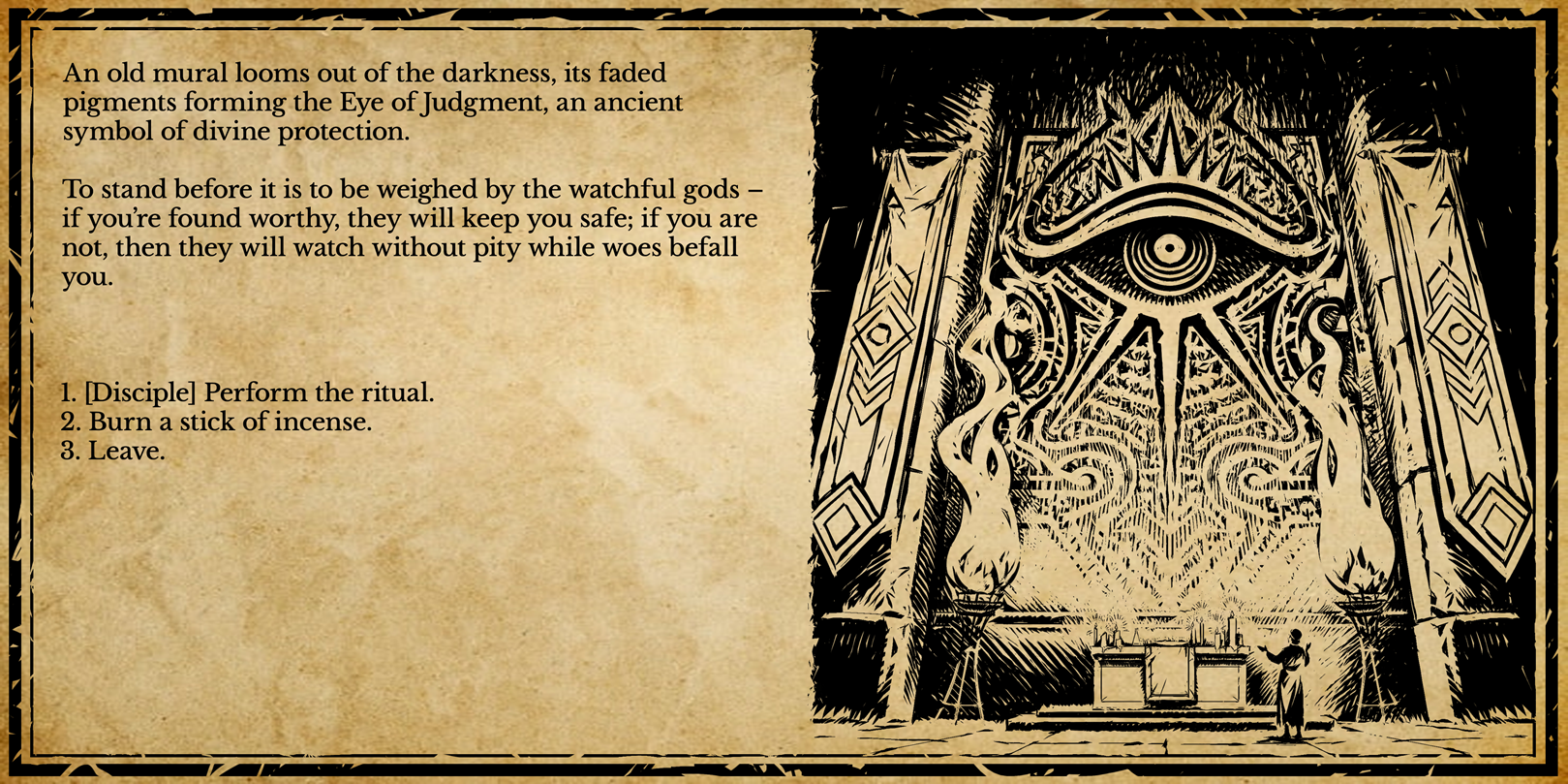
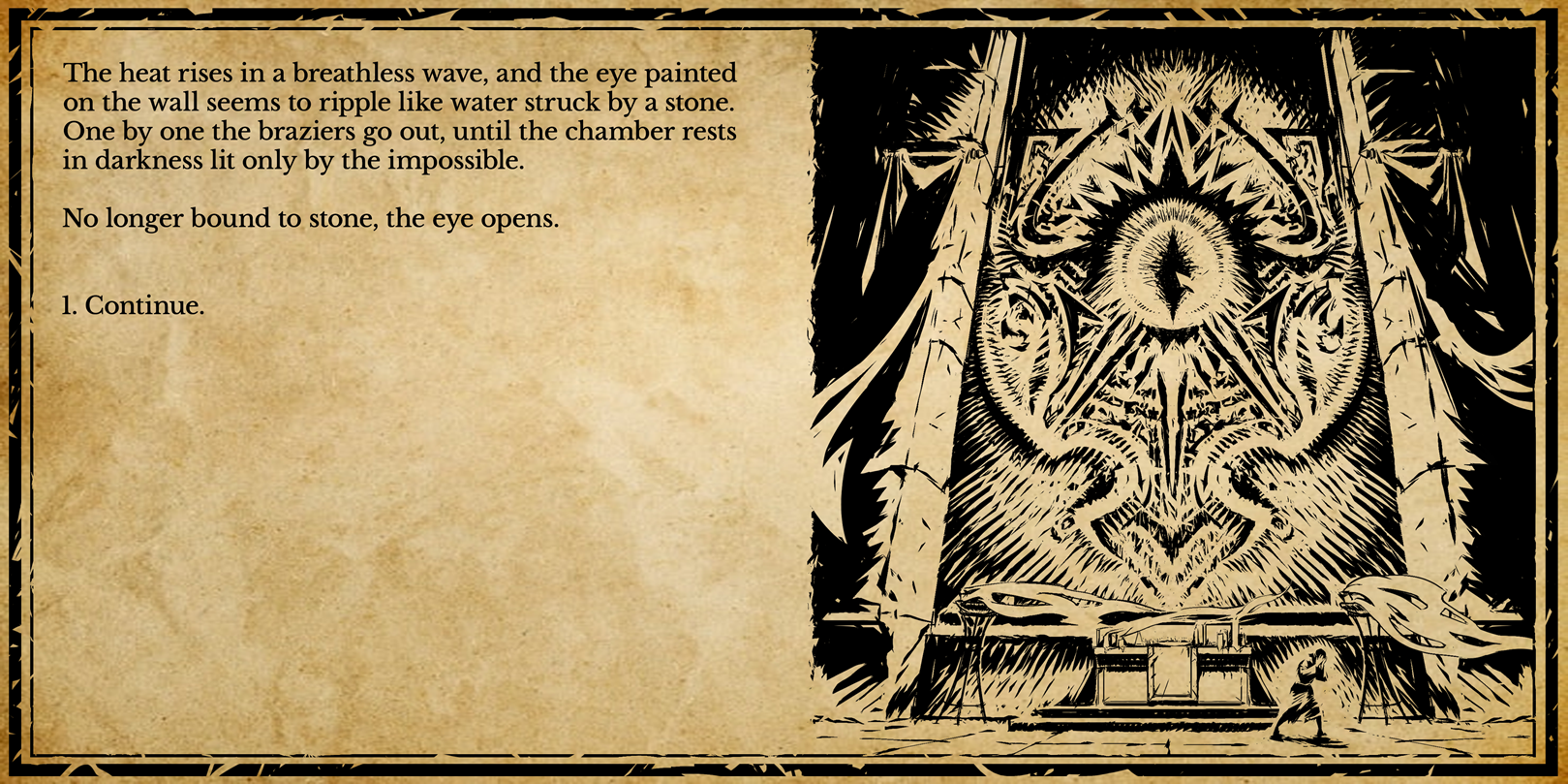
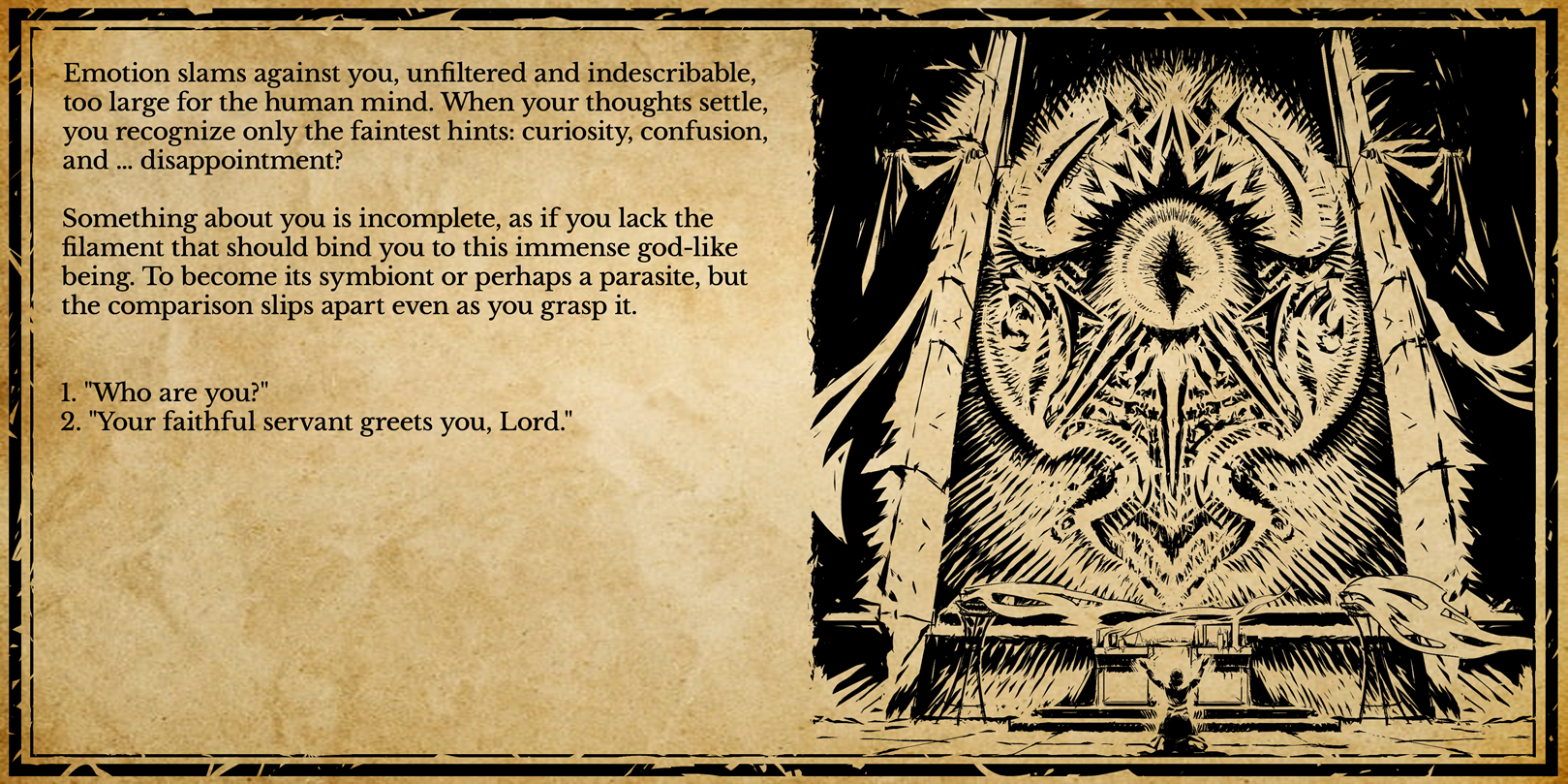 ^ one of the many subplots (that would modify the endings) you'd be able to stumble upon
Heralds of the Third Apocalypse will have different, mutually exclusive questlines and branches, rich lore, plenty of choices, and very different endings. At this point the odds are still 70/30 and will remain so until we have a playable build with most systems (ideally by the end of the year).
Colony Ship remains our main budget generator, and while future sales are hard to predict and harder to rely on, we should be able to get to the alpha stage, at least.
Many people ask about supporter editions and donations; while we appreciate your generosity, the best way to support us is to leave a review, no matter how brief. Reviews boost visibility and influence sales, and we'll need all the help we can get there,
Thank you in advance. If you have any questions, we'll be happy to answer.