Hello everyone!
My name is Jan, and for many years I have been working as a game designer at Blue Brain Games, where my team and I strive to push the boundaries of our players’ gaming experience. I had a long-term desire to create a game in virtual reality, but the real breakthrough came when I got my hands on the original Oculus Quest 1.
This revolutionary piece of technology immediately captivated me with its ability to offer a wireless gaming experience as a truly standalone device. It was the beginning of an adventure that inspired me to delve into the world of VR and start experimenting with what this technology could achieve. For over a year, I spent my free time creating small technical demos, gaining valuable experience in this rapidly evolving field.
When the day finally came and our team decided to create a VR game, it was clear that my previous experience and knowledge would be invaluable. Thanks to this preparation, I became the lead designer for The House of Da Vinci VR.
Steps into the Unknown
But the desire to create something in virtual reality was not the only motivation for us. We initially thought that since there was already a complete version of the game for traditional "flat" devices, the transition to VR would be quick and easy. However, as you might suspect, the reality was entirely different. The VR version ultimately became a full-fledged game that we had to create almost from scratch.
But, let's go back to the beginning. We came up with several requirements based on our own VR gaming experiences. For example, interactive objects shouldn’t be too far apart nor too deep within the scene to allow the game to be played seated. We had to simplify some of the more complex puzzles because if a player couldn't solve the task quickly enough, they could become frustrated, and wearing the headset only magnified this feeling. Another key point was having functional physics for the virtual hands. While in other games, hands often passed through objects, we wanted to address it better. These were, of course, just a few examples.
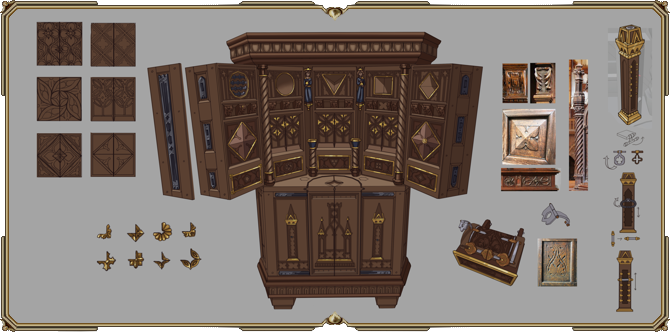
Then I began designing "on paper." Unlike my previous work on the HDV trilogy, where design was developed alongside prototypes, this project required thorough research. Since this was an adaptation of an existing game, it was necessary to determine what we would use, change, or omit and to what extent.
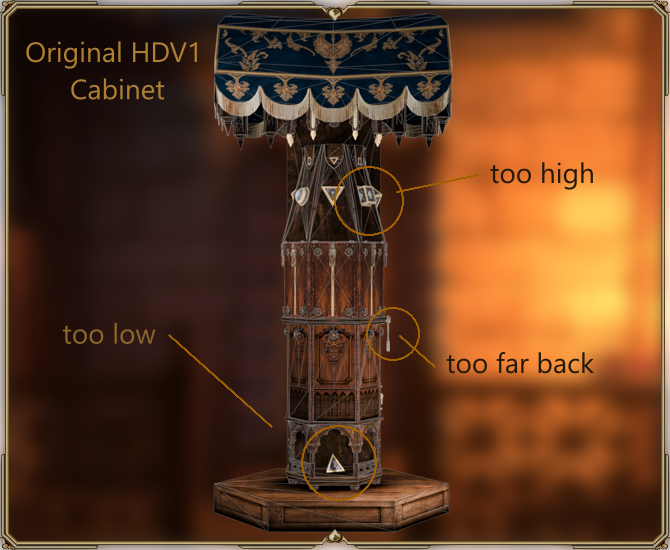
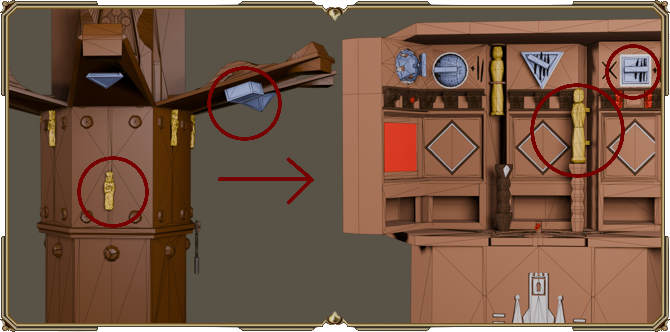
I proceeded systematically. First, I played a specific chapter of HDV1 on PC and analyzed what could be fun, annoying, or unpleasant in VR. Then I imported all the original models and textures into 3D software and displayed them on the then-new Quest 2. This allowed me to test the distances and accessibility of interactive objects at a given location or puzzle. Based on these experiences, I created documents with screenshots of the original models and described changes. These documents became the foundation for further design and prototype development, not only for me but also for the other designers on the team.
The Birth of a Brand New Game
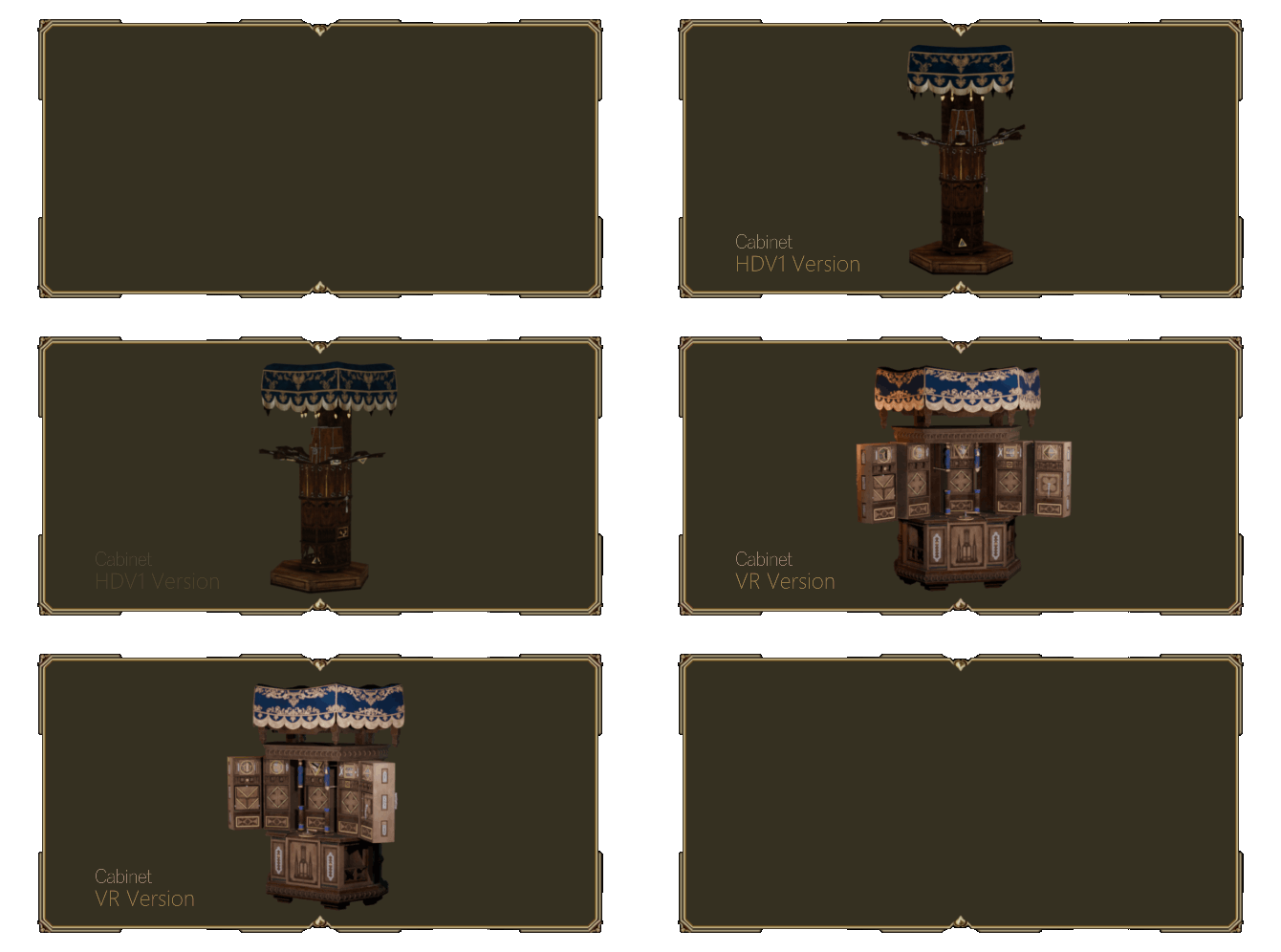
After this phase, it seemed possible to reuse a large portion of the original game for HDVVR. However, as soon as we started creating the first prototype, it became clear that we needed to look at this as a new stand-alone game. I began working on Leonardo's workshop, specifically the catapult on the table at the beginning. I checked the previously done documentation. At that point, I realized that it was just a basic outline for the changes that needed to be made.
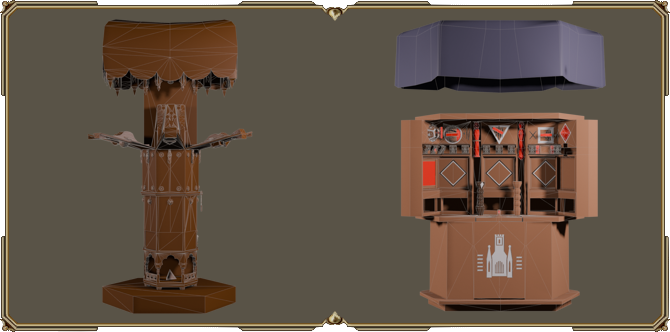
Every tiny adjustment of a lever or a wheel caused a butterfly effect. One change led to another, often requiring the redesign of the whole mechanism. The original object quickly became a completely new object with new interactions. This process repeated itself throughout the entire game. With each new puzzle or mechanism, the brand-new game took shape, and I eagerly anticipated the moment when our programmers would "bring our prototypes to life" so I could finally pull some levers.
We also had to address other issues, such as inventory, special powers, or hints. On that, we usually worked with the whole team, but after several months, the development of individual chapters reached a point where the designers could work independently and apply similar adjustments to their respective chapters. When coders showed us the first playable parts of the game and everything worked, I knew we were on the right track. We could do it!
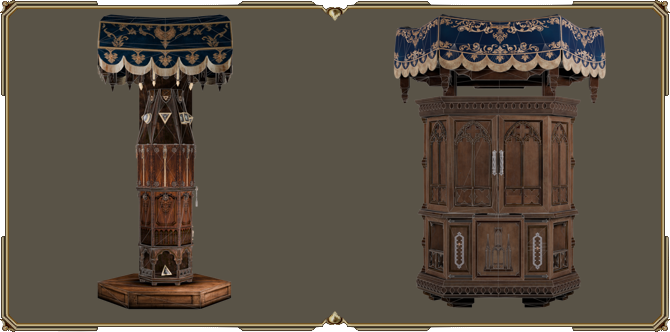
We've Got It
Although we faced numerous challenges, such as setting the right size and distances of objects, tweaking control speed, and ensuring all interactions were comfortable and understandable, the design and prototype development proceeded with efficiency. While some of these obstacles required significant effort, overcoming them always taught us something new.
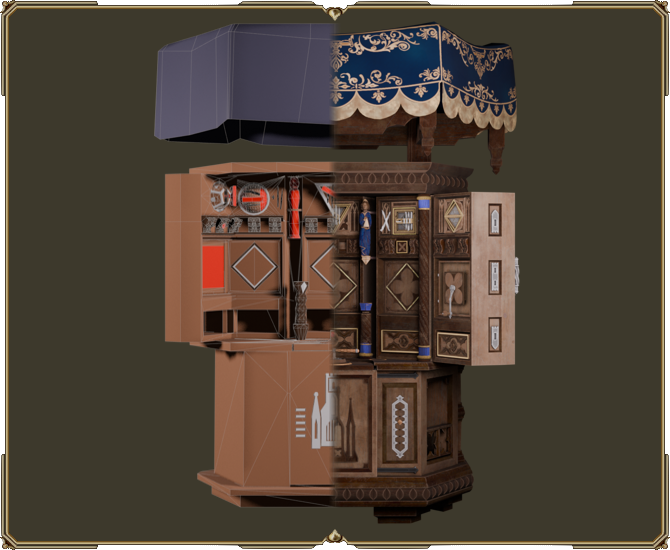
As an experienced designer at Blue Brain Games, I can say that working on this project was an enjoyable and refreshing experience, even though it required hard work. Seeing our already legendary The House of Da Vinci not only in a new guise but from an entirely different gaming perspective is immensely satisfying. We firmly believe that this new version of the game will appeal to you as well.
Jan
Lead Designer
Blue Brain Games