Hi everyone, and welcome to another Dandelion Void devlog. Today we’re going to be showing off the evolution of our Root Whipper enemy, culminating in a brand-new model!
Spoiler label: this post goes into detail about one of the enemies you will encounter in Dandelion Void
Worm’s eye view
Those of you who have seen some of the creator coverage of Dandelion Void (i.e. MrAtomicDuck and Splattercatgaming!) will be familiar with the vine antagonists who dangle from the ceiling and swing themselves at the player. These are tentatively called “Root Whippers,” and they are one of the newer enemies in our build.
All game design is iterative, and our workflow at Manzanita Interactive team is especially focused on rapid prototyping. The first versions of the Root Whipper were quite bare-bones, with just enough functionality for us to do early playtests with. As we got a feel for how the enemy worked, we successively added polish and complexity until they reached their current state.
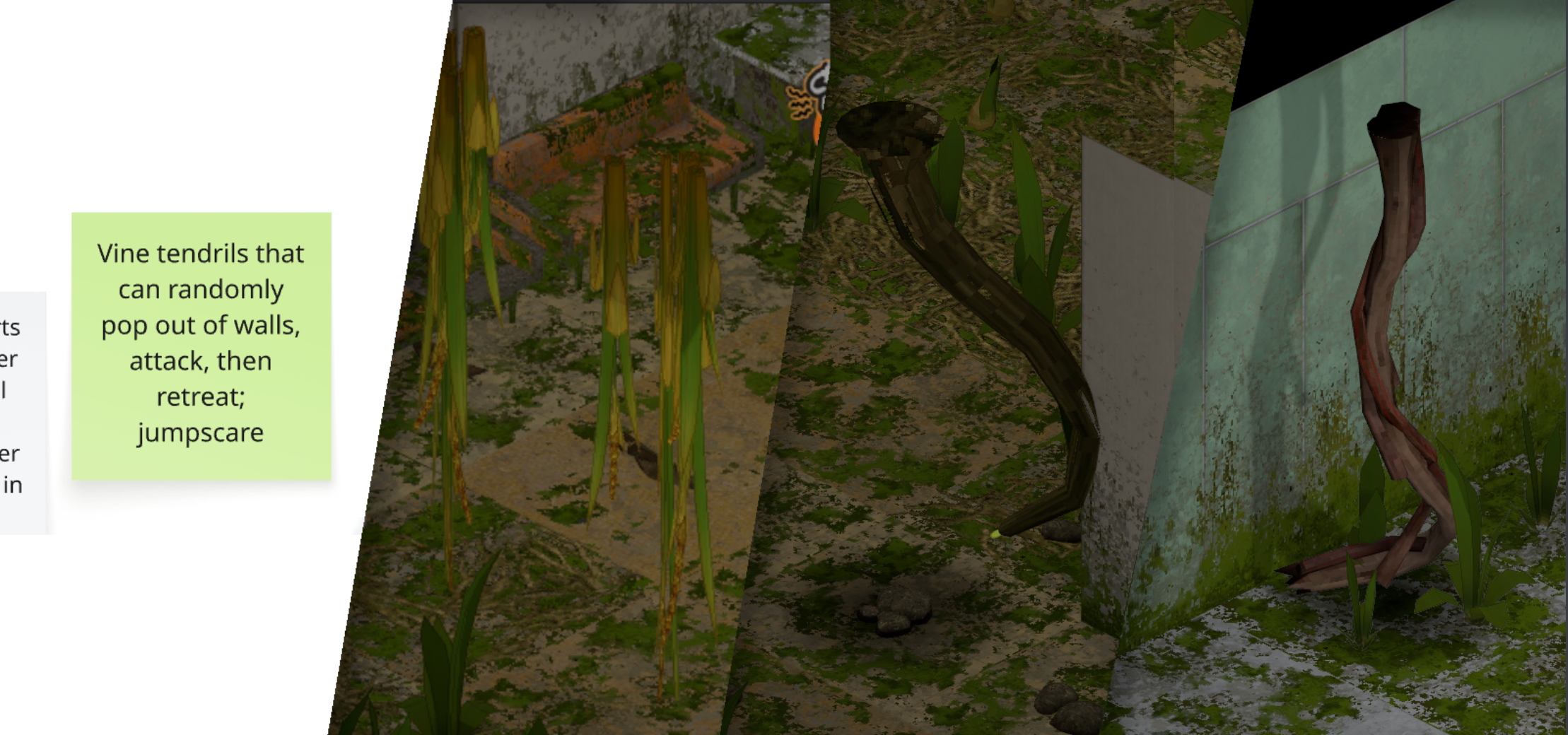
From left to right: a digital sticky-note describing the creature, the original placeholder Root Whipper using repurposed art, the “programmer art” root whipper, and the brand new root whipper model!
The history of this creature can be separated into four phases:
- Concept: our original intentions for the creature, as discussed amongst the team
- Placeholder Art Prototype: an extremely simple version of the creature that used a repurposed asset from another part of the project
- Programmer Art Prototype: a more functional prototype using bespoke, but still temporary art made by a programmer (me)
- First Production Quality: the first version of the enemy that is no longer considered a prototype. There’s still more work to be done, but we are happy with the overall quality level.
Let’s break these into more detail!
Phase 1: Concept
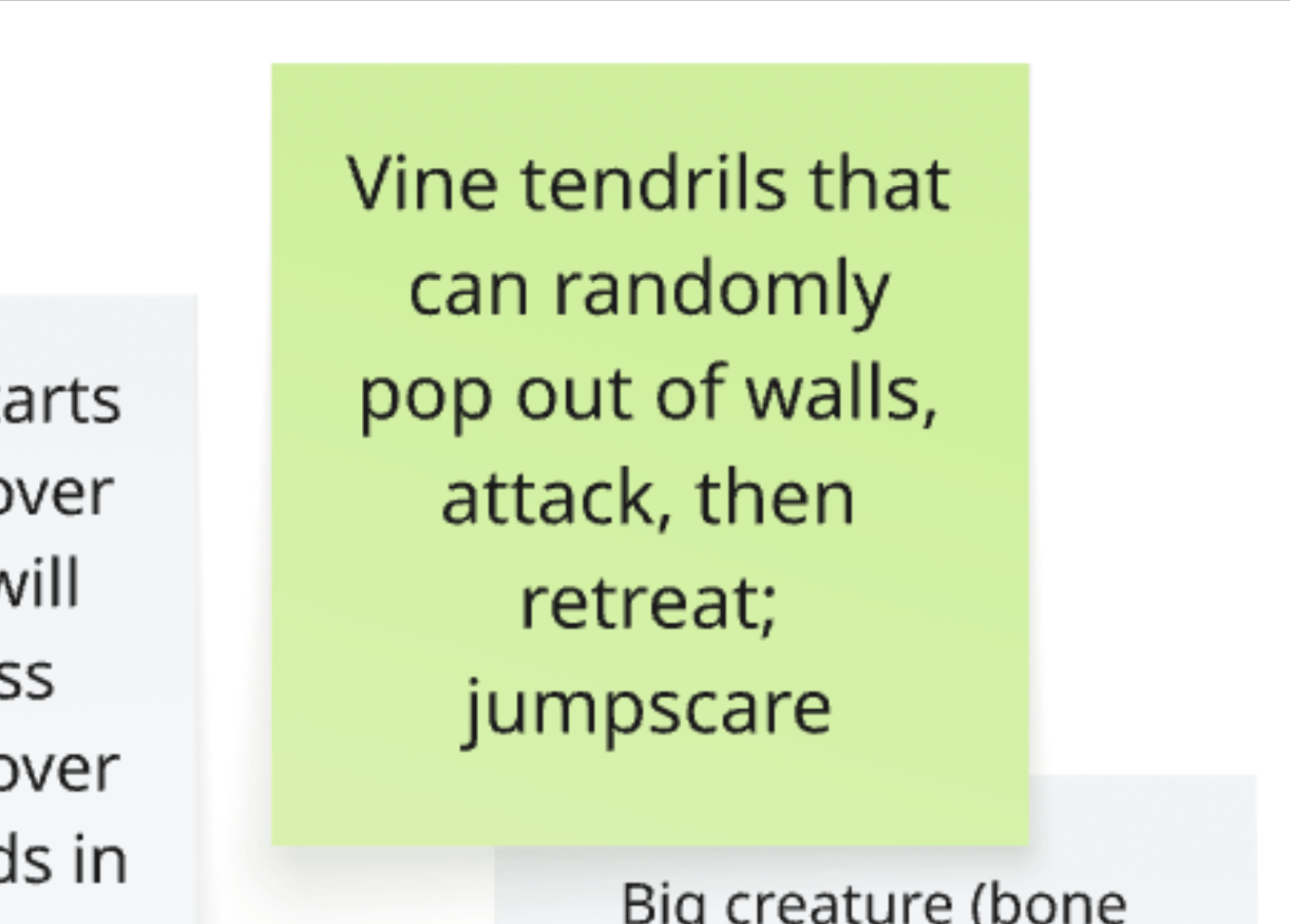
Before we added Root Whippers, all of our enemies were mobile. If the player got in range, they would begin chasing! With the Root Whipper, we wanted to add a creature who was bound to a single location and waited for the player to come to them.
Having a sessile creature is nice because they can act both as an enemy and a stage hazard. Depending on their randomly spawned distribution, different areas of the map might be more or less “infested,” giving the player some interesting decisions about where to explore. Defeating sessiles enemies also has an implied “base-building” function, because destroying them improves the safety of a given area.
One of the things we were particularly excited about with Root Whippers was the potential for a hidden and revealed state, creating little moments of surprise and terror when they descend from the ceiling.
Phase 2: Placeholder Art Prototype
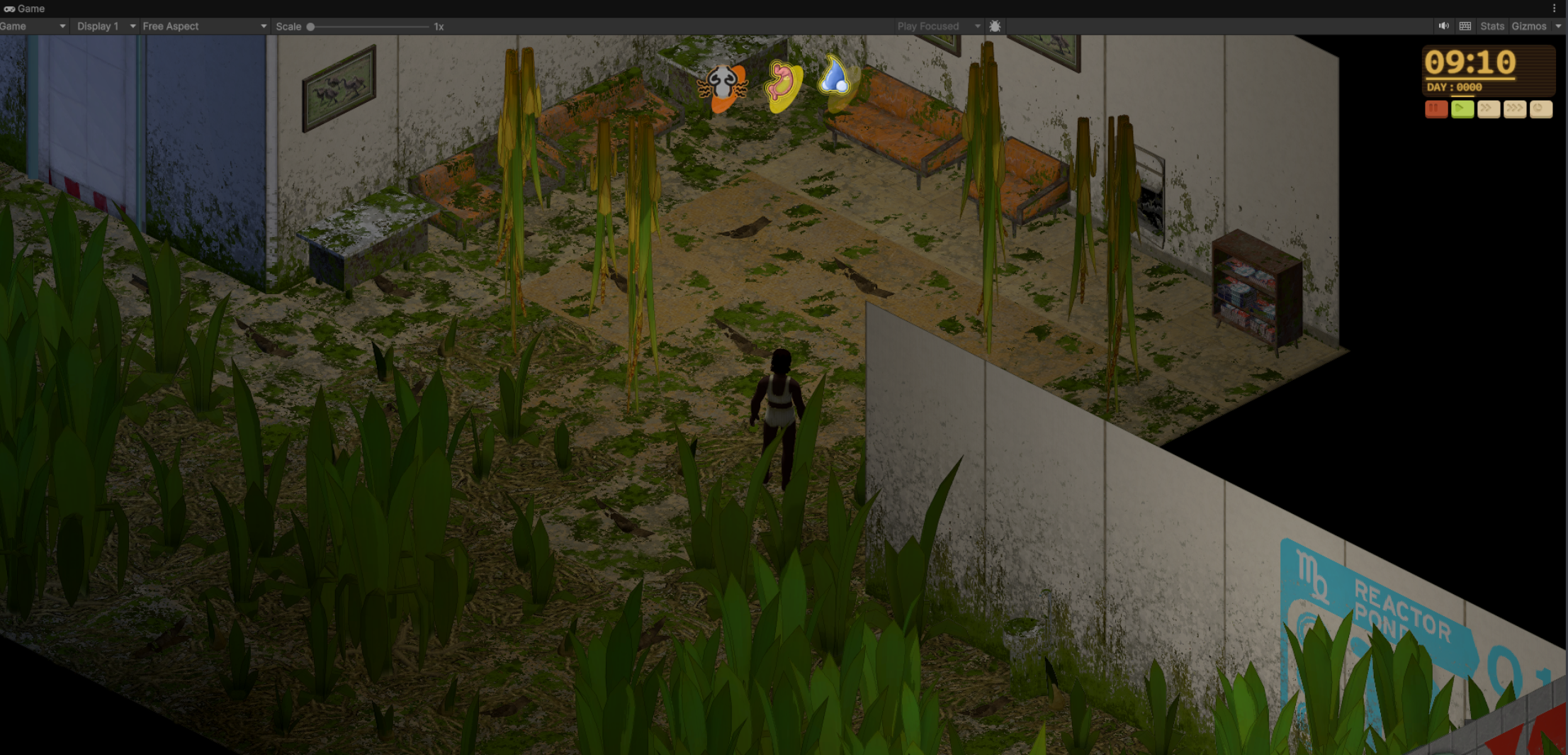
As mentioned above, the first testable version of root whippers used repurposed assets and very simple behavior. If those yellowy-green tendrils hanging from the ceiling look familiar, that’s because they use the same model as our toxic grain plants!
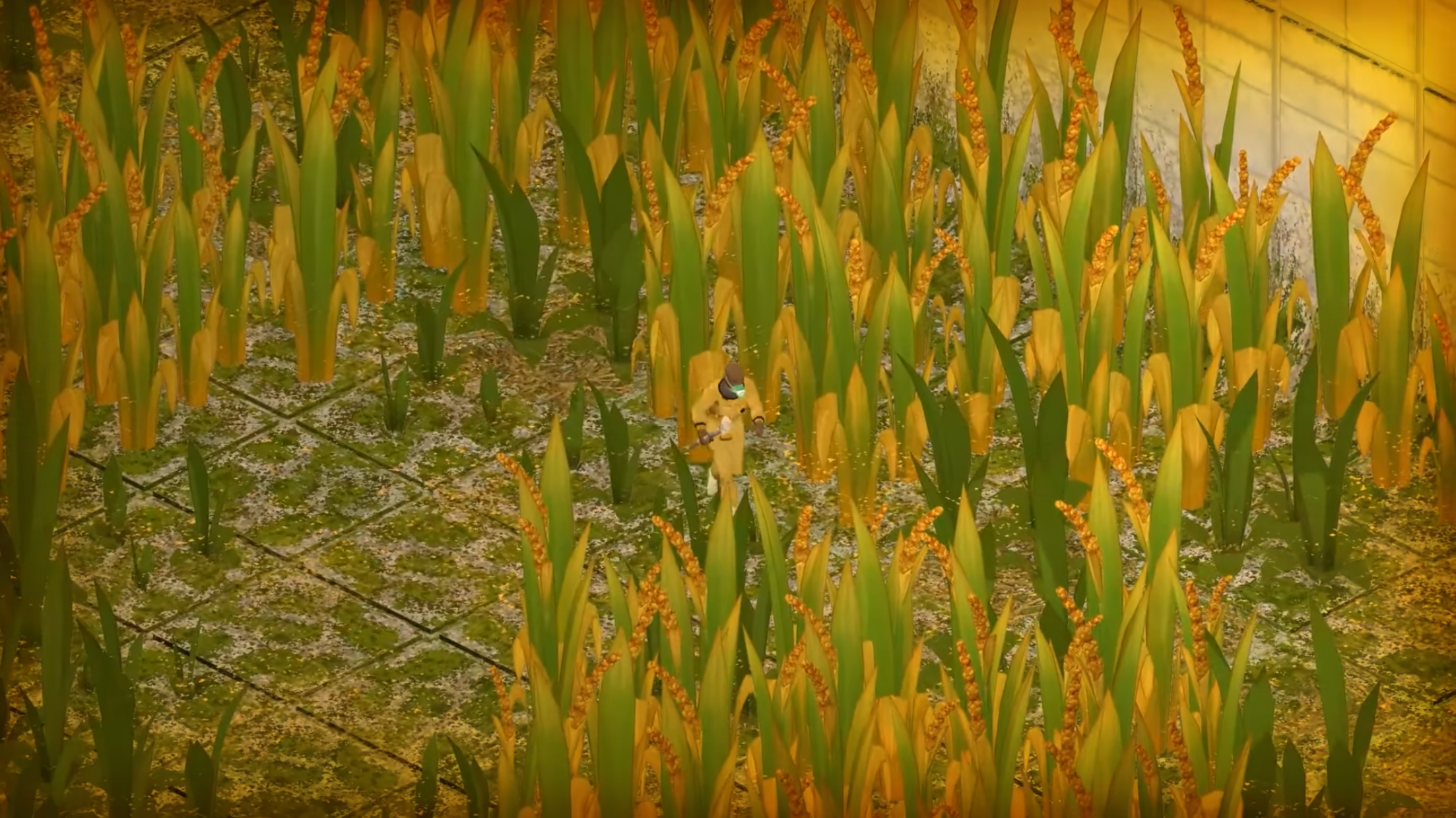
Brian whipped up this version in just a couple days. Instead of animations, it was just a static hazard which would apply a status effect to the player if they walked into it.
Here’s what we learned from our first playtests:
- What worked:
- Having randomly distributed stage hazards added a good feeling of variety to the map, especially across multiple playthroughs
- Having plants dangling from the ceiling contributed to the “overgrown” aesthetic of the ship
- Clearing out a room of root whippers was satisfying!
- Takeaways for the next iteration:
- The isometric camera makes it hard to tell which tile a ceiling-mounted entity is on, leading to player frustration when they accidentally bumped into them
- We wanted to explore something with more motion and animation, especially with hidden/revealed states
- The vines exploding on contact with the player was interesting, but didn’t feel intuitive
As a note, this version of the Root Whipper was transformed more or less verbatim into our separate Spore Popper entity! As it turned out, “static hazard that explodes and applies a status effect if you step on it” was a perfect flavor fit for a puffball mushroom.
With that said, we still wanted to push the Root Whipper design more towards the original vision.
Phase 3: Programmer Art Prototype
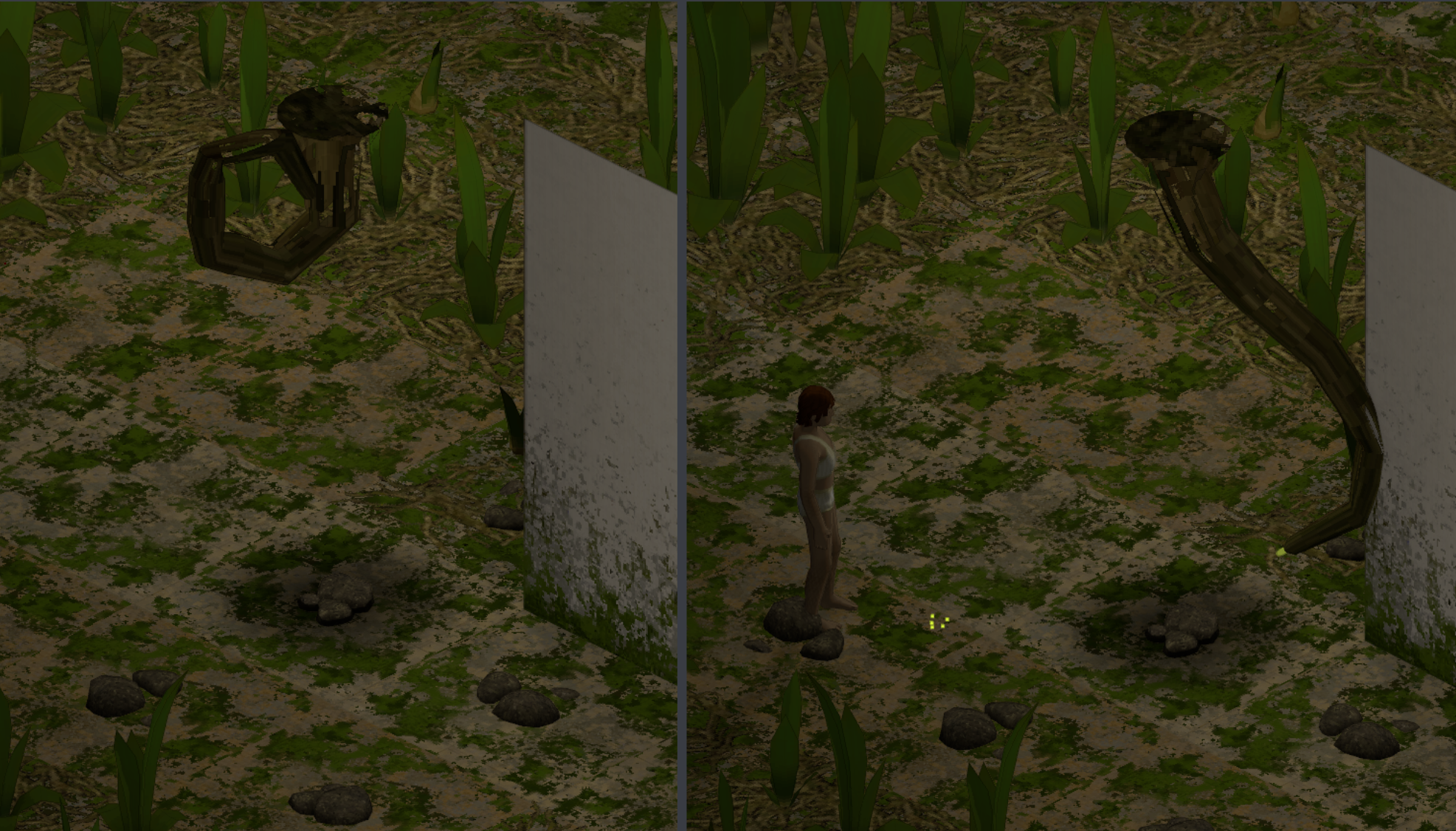
This next version of the Root Whipper was the first one to have an animated model! We call it “programmer art” because it was quickly whipped up in Blender by Robin (yours truly), who normally works as an engineer.
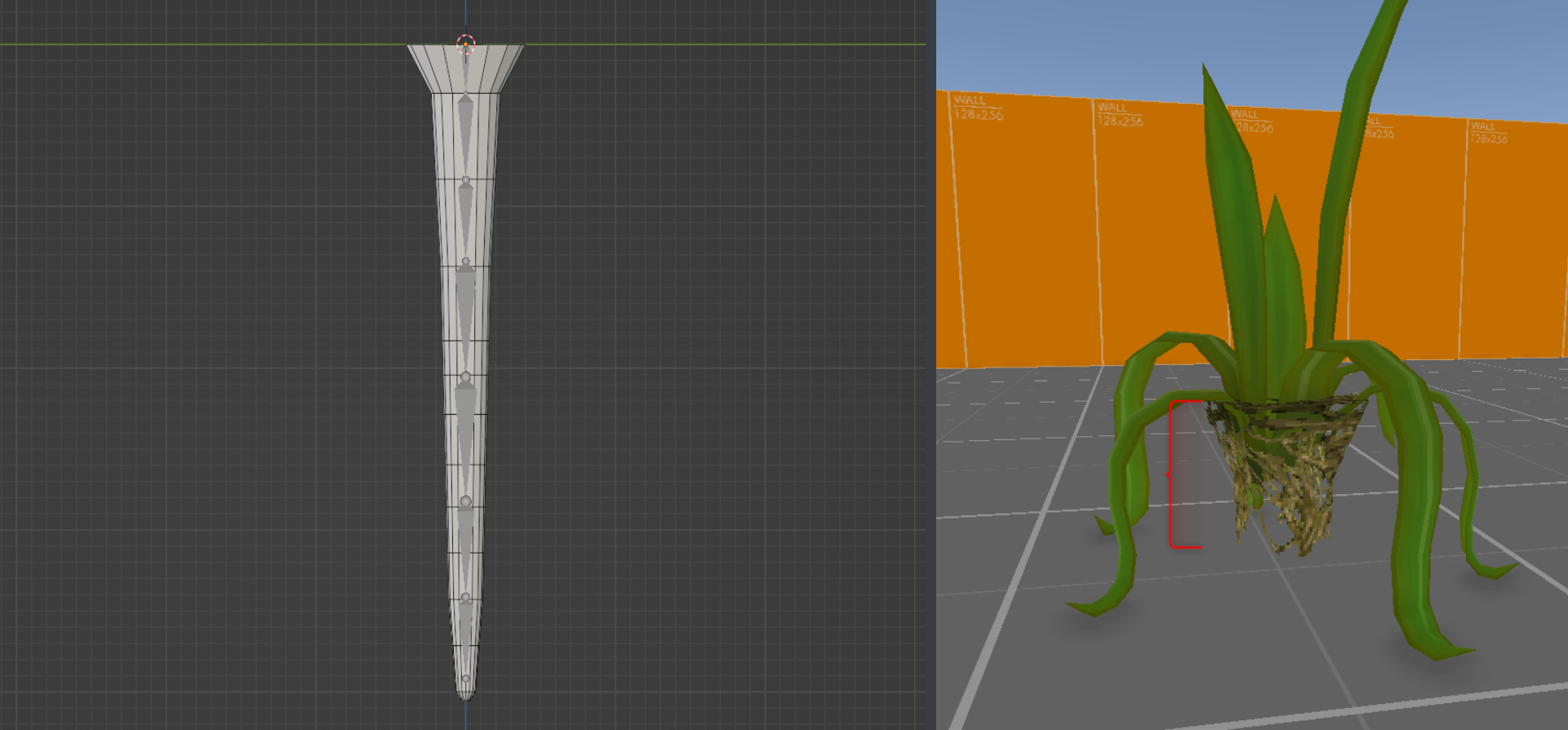
Left: the “Programmer Art” Root Whipper is little more than a rigged noodle
Right: The texture of this root whipper is borrowed from the rooty undercarriage of our Uproot enemy
This is still very much temp art, but having a rigged model allowed us to prototype different behaviors and attacks using actual animations. This version has separate retracted and extended states, as well as a jab attack.
Here’s what we learned in playtesting this version:
- What worked:
- The animations really brought it to life! Making it a dynamic entity with attacks felt a lot more compelling
- Adding a circular blob shadow on the tile underneath the Root Whipper helped a lot with the previous version’s depth perception issues. It’s technically not accurate to the rest of the lighting in the game, but it adds enough gameplay value that we want to keep it for now.
- This version of the Root Whipper will spawn in an “ambush” state during the random shipquake event, which has proven to be a fun horror moment for testers
- Takeaways for the next iteration:
- Artistically, it’s unclear what type of material the creature is made out of. It feels more like a monster tentacle than a plant.
- We felt we could push the surprise factor of them a little further – rather than having the “retracted” state just be curled up, we wanted to try completely hiding them in the ceiling
- The jab animation was repetitive, and it felt a little silly to see such a long creature just poking at you. We wanted to vary up its attacks more.
Phase 4: First Production Quality
Up to this point, we hadn’t yet called in Dara, our dedicated 3D artist. Our process is typically to mock up the gameplay of a creature before investing full art resources into it. For instance, the ideal length of the creature will depend on the range we want its attacks to have. Answering these questions early with temp art prototypes allows us to fill in these blanks, and give Dara a more accurate asset description for their first pass.
With all of this said, we liked how the Programmer Art prototype was playing, so it was time to pull in the big guns! Brian started by gathering some reference photography for the design of Dara’s Root Whipper:
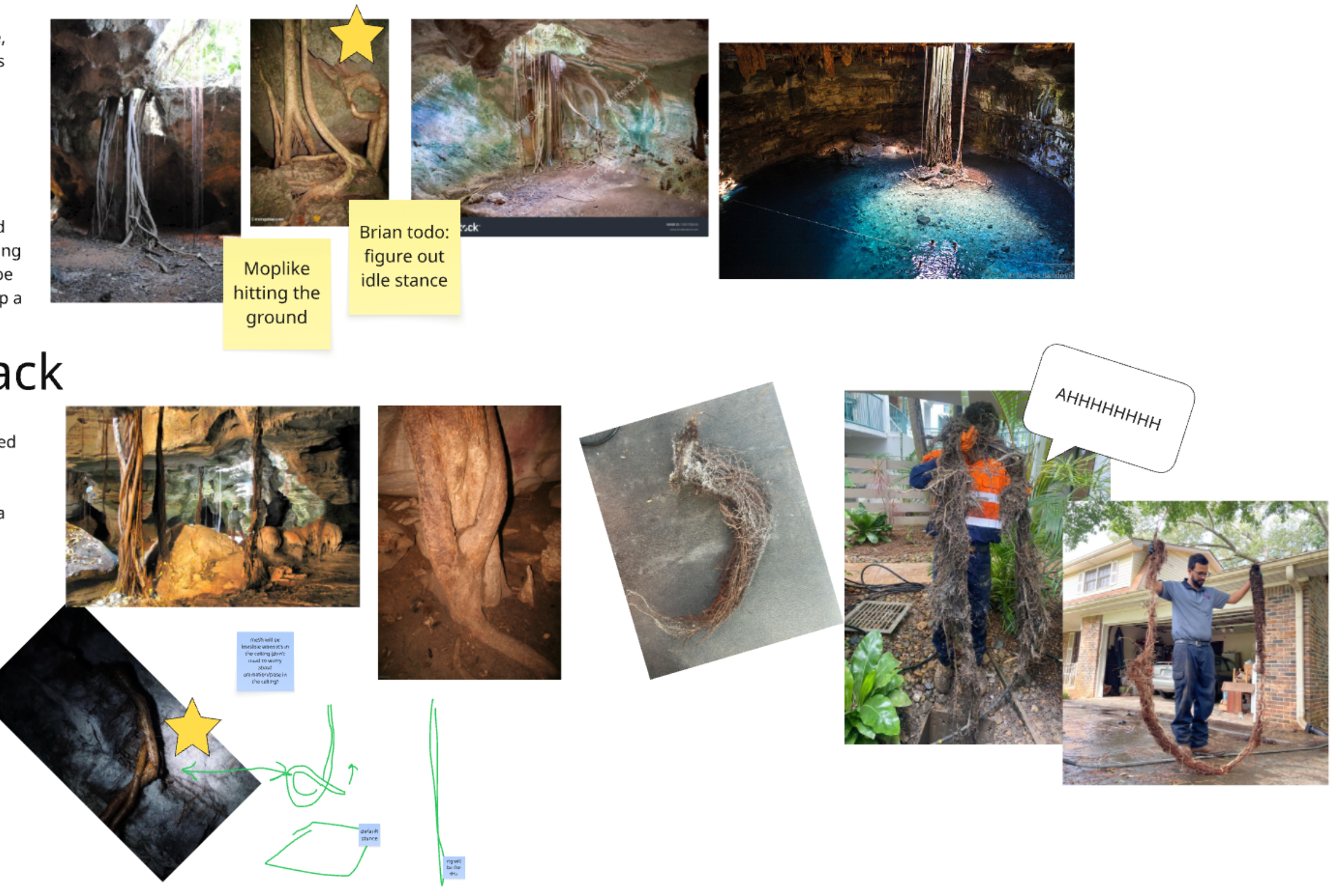
As visible above, we wanted to really put the “Root” in “Root Whipper” for this pass! We took particular inspiration from the braided, woody vines of trees that sometimes make their way into caves. Based on these ideas, this is what Dara came up with!
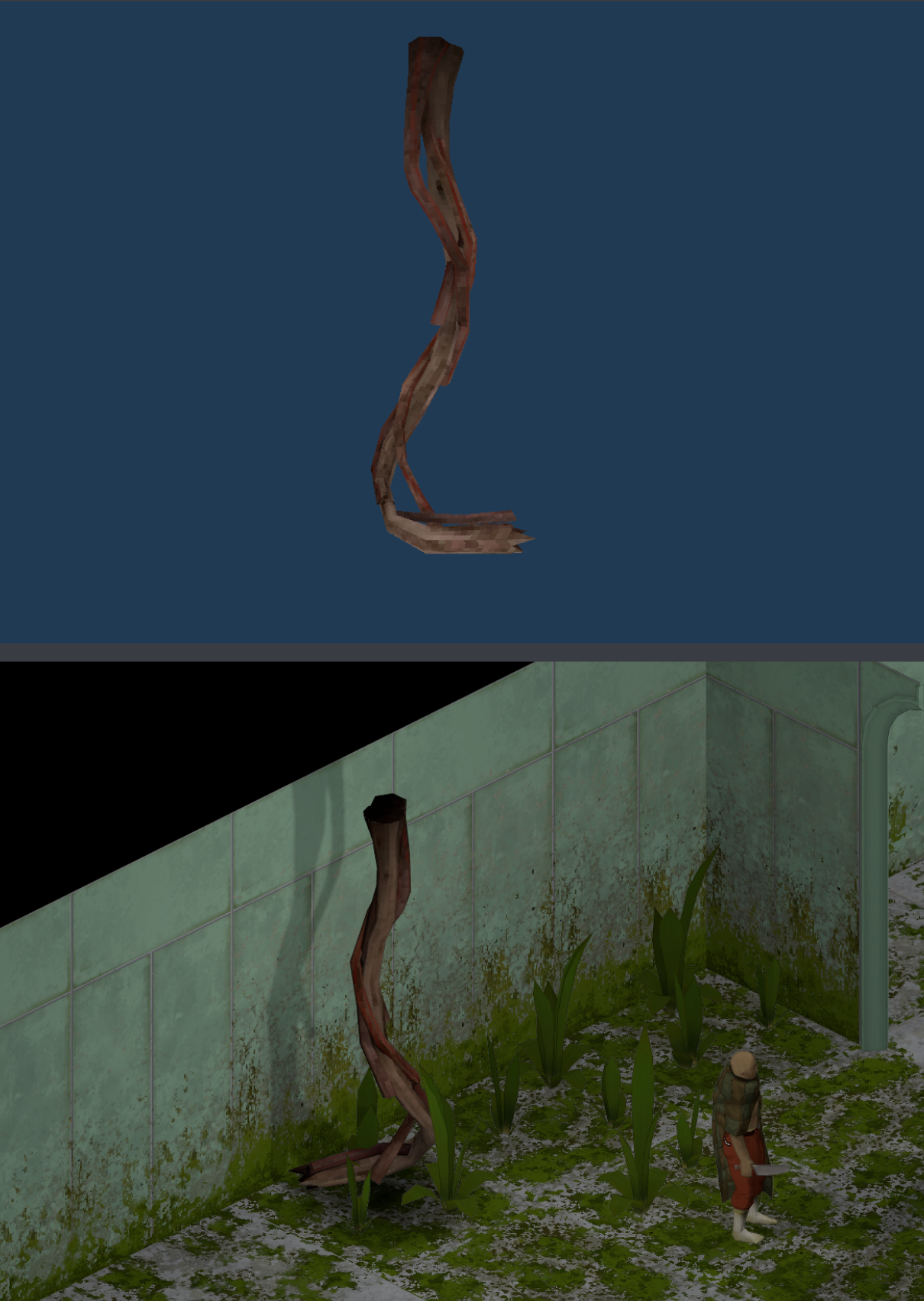
Along with this model update, Dara also gave the creature a horizontal sweep attack, and updated its retracted pose so that it is completely hidden within the ceiling. Robin then implemented the new art and attacks. Dara and Robin used to work as an animator / programmer duo on tentacly monsters for a Stranger Things game, so this was a fun getting-the-band-back-together moment!
Once everything was in, we did our most recent round of testing:
- What worked:
- Like the reference, this version looks much more like a woody root. We like that it’s composed of multiple cords braided together, whereas the previous version was just one thick noodle.
- We really like the warm, chestnut-colored wood tones on this creature! Our plant theme means that most of our enemies default to green, so we’re always happy to jump on an opportunity to expand the color palette
- The new sweep attack adds some much-needed variety to the creature’s movement
- Fully hiding the creature in the ceiling feels fun and devious!
- Takeaways for the next iteration:
- We think we can do more to visually integrate root whippers into their environment – maybe they could be surrounded by shorter, more delicate dangling roots on adjacent tiles
- On this first implementation of the new model, we’re just using simple poses for the animations. Now that we have the full behaviors set up, we want to set aside some time for a second animation pass.
- We still have some fine-tuning to do on the creature’s attack range and frequency of attacks
Coiling Up
And there you have it! We hope you’ve enjoyed this peek into the full production process for a Dandelion Void enemy. I know that I personally had a lot of fun looking at our little worm’s “baby photos.” Please look forward to more new botanical beasts as we continue development.
Until then, everybody please take care and have a great week!
– Robin and the Manzanita Interactive team