Over the past development cycle, we have been rewriting several environment studies as production systems used by the main game. Every image below comes from the current Godot 4.7.1 Forward+ development build and its formal settlement route. These are not concept images, and we are not presenting isolated experiment scenes as finished gameplay.
This post covers the environment foundation that has reached the main game. It is not a completion announcement or a release-date announcement.
Four settlement landscapes
New games currently offer four local settlement environments: an open temperate plain, an offshore island surrounded by sea, a river valley divided by a broad waterway, and a wetland with multiple shallow-water areas. Terrain, water, shorelines, vegetation, and rocks are all derived from a versioned recipe and seed, so the same input produces the same layout.
The selected map data is handed directly to the settlement scene instead of being rolled again after loading. Automatic road generation has also been removed from the formal environment, allowing grass, soil, exposed rock, wet shores, and vegetation to form continuous patterns.
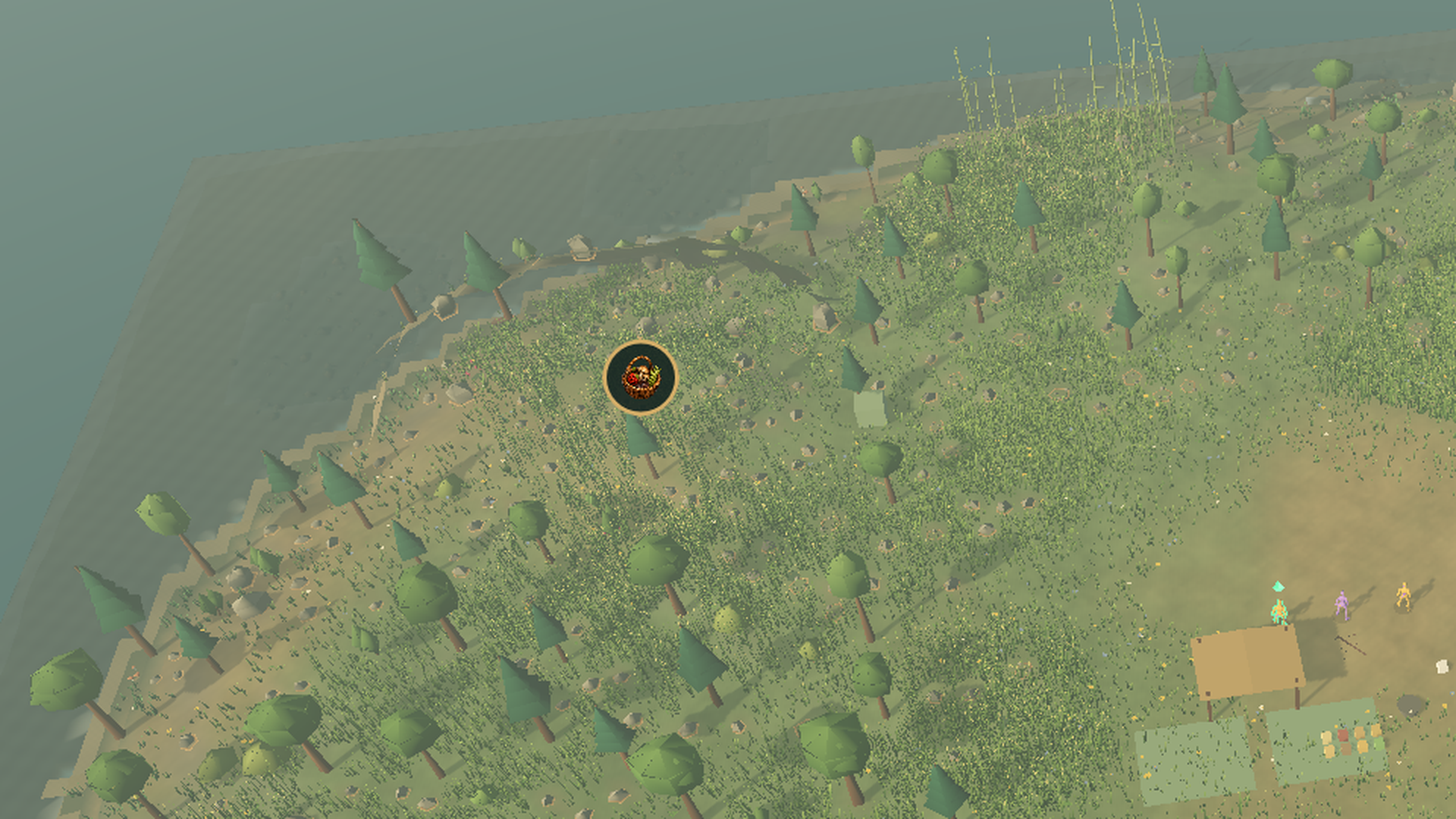
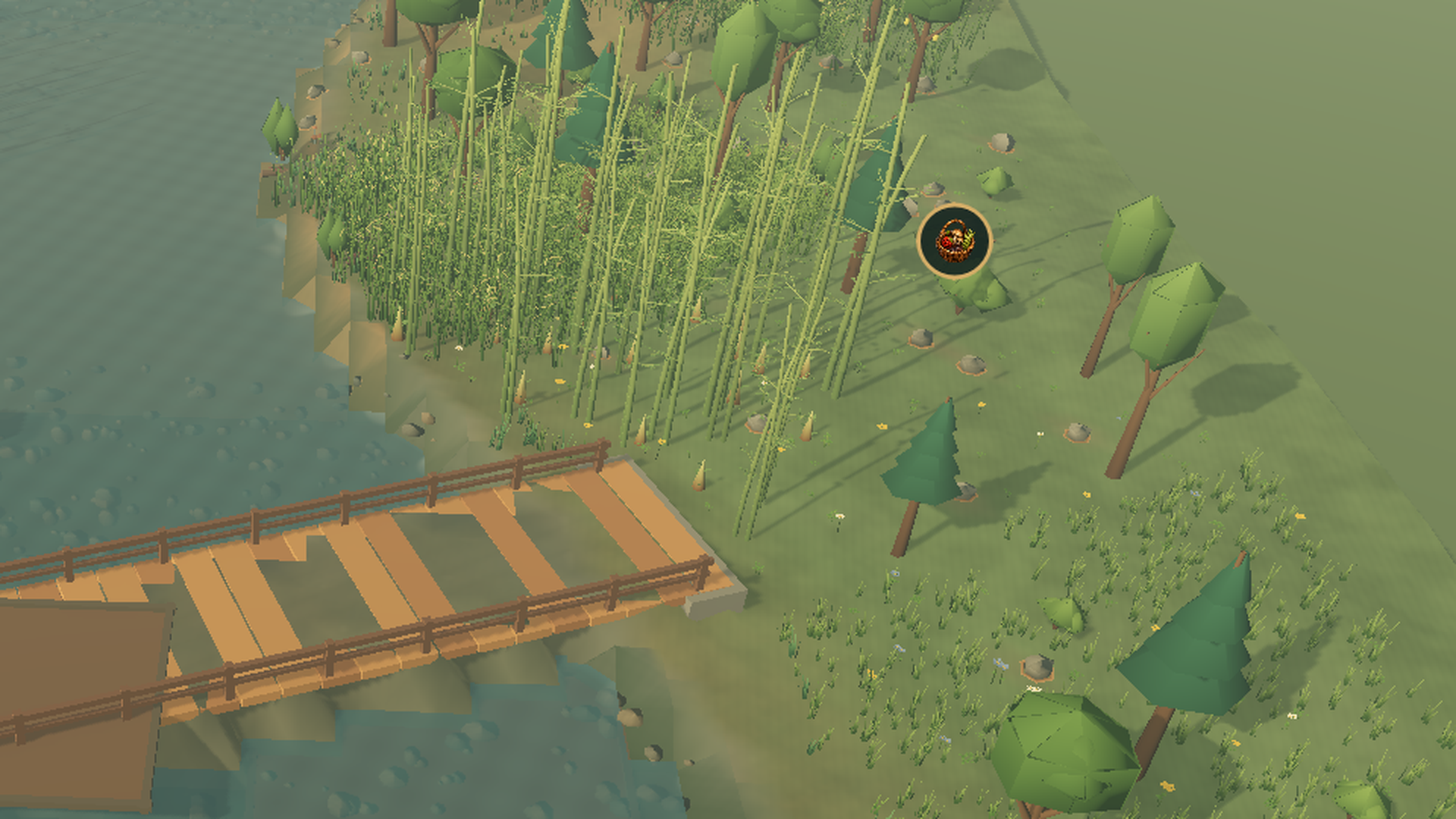
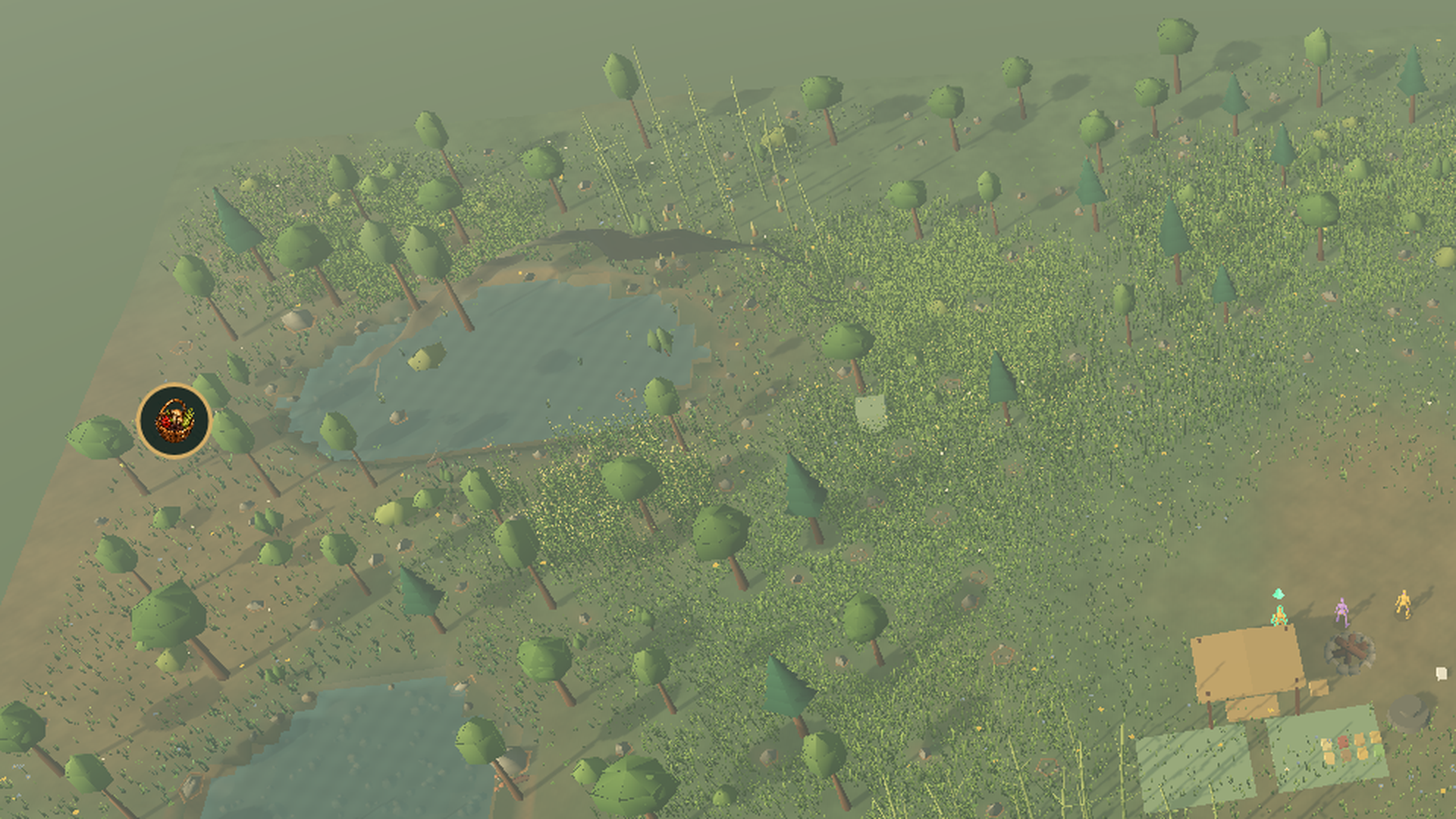
Ground, vegetation, and shorelines are more than a backdrop
The formal environment now blends grassland, loam, and exposed rock into a continuous surface. Ponds, coastlines, the Great River, and wetlands share the same underlying depth, shoreline-distance, wet-band, sediment, and pebble data. Grass, flowers, clover, rocks, broadleaf trees, slender deciduous trees, conifers, shrubs, and bamboo are distributed according to terrain and moisture rather than scattered uniformly.
Some environment objects are also gameplay resources. Berries, fruit trees, mushrooms, wood ear fungi, and mature grass-fibre patches are built from existing environment anchors, so gathering commands use the same location and maturity data as the objects you see.
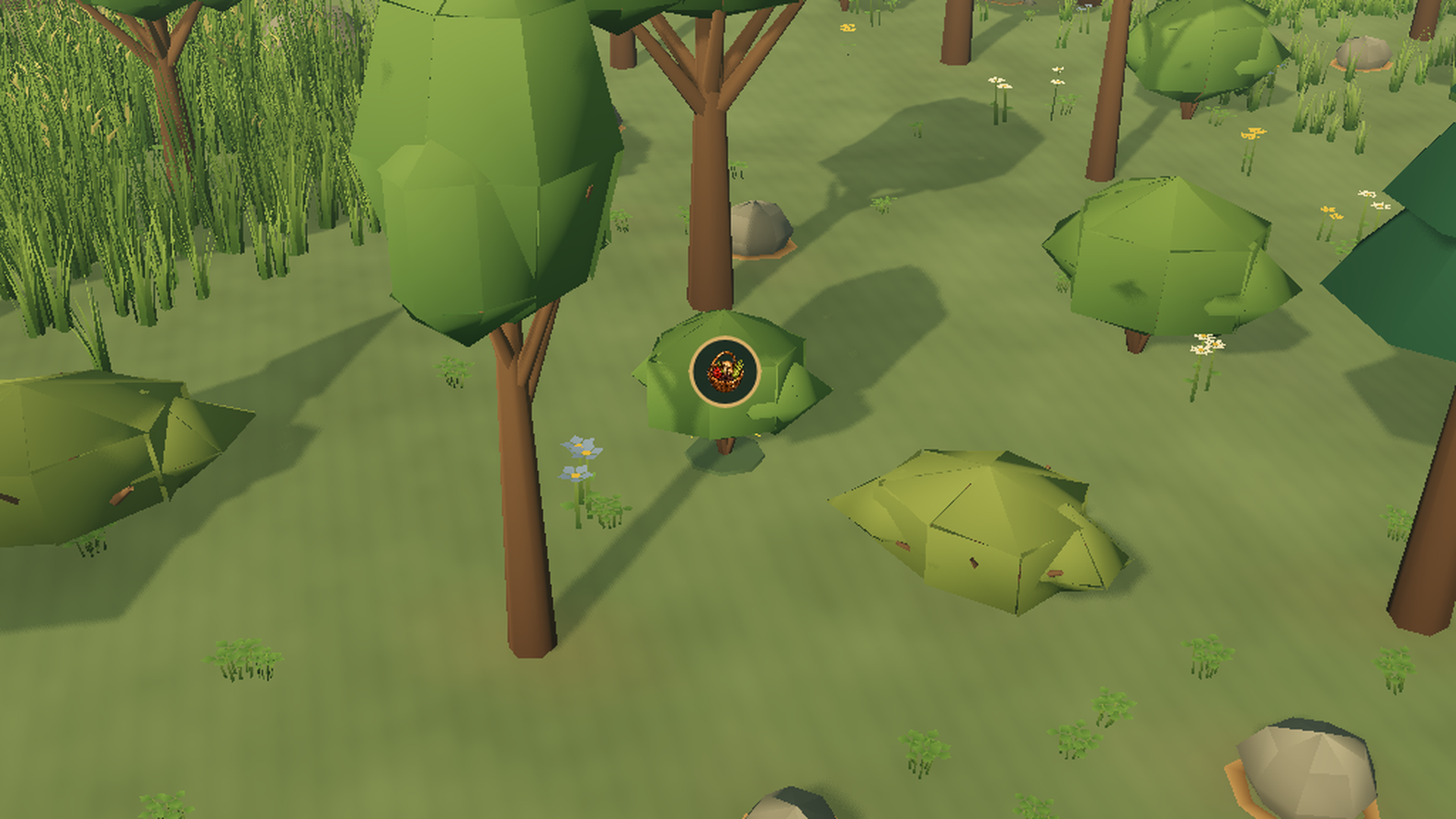
Weather, seasons, and time of day share one environment state
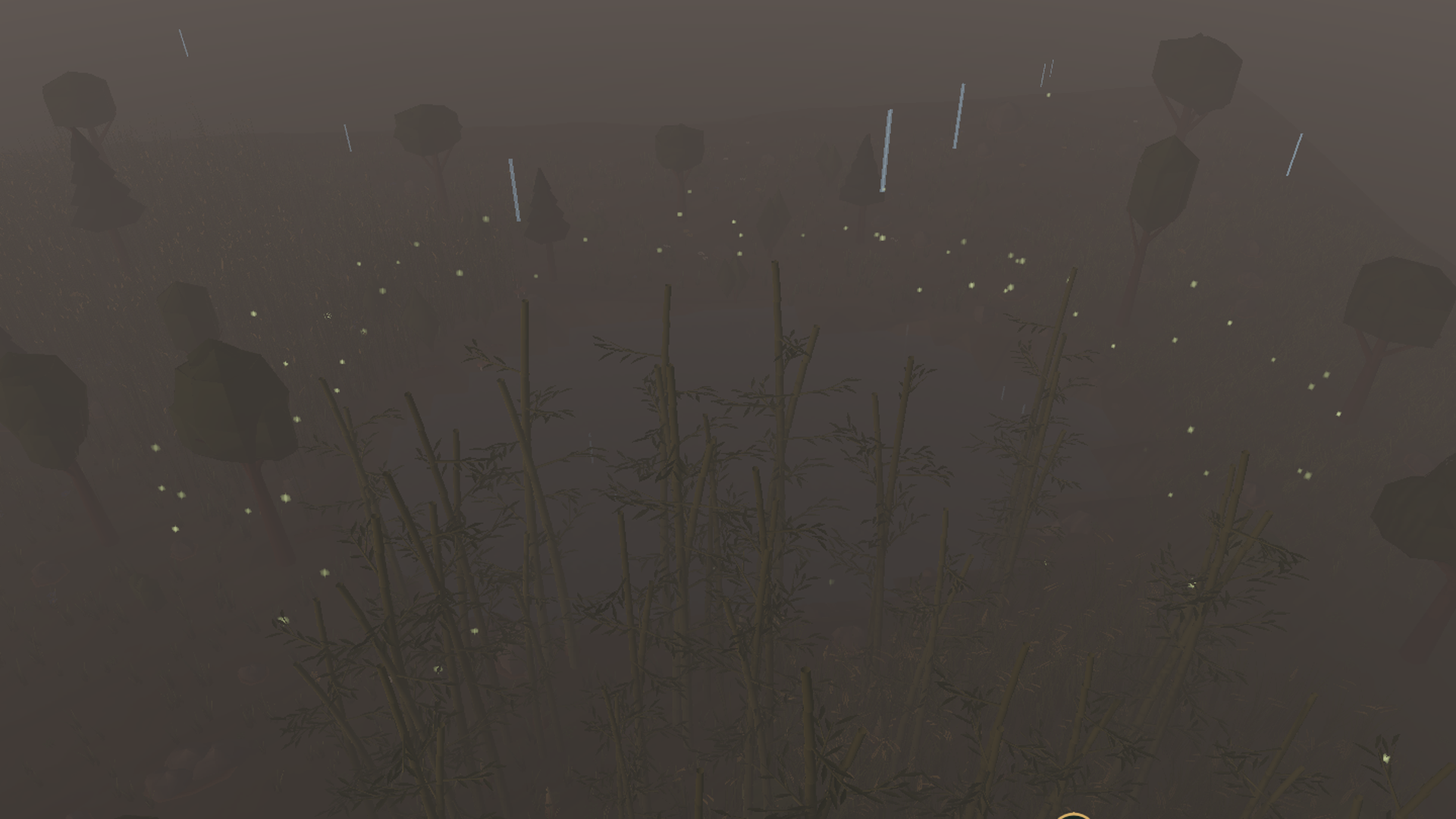
The main game now cycles through spring, summer, autumn, and winter in 15-day seasons, with clear weather, steady rain, thunderstorms, winter snow, and dense fog. Weather no longer swaps every value at once: it transitions over 90 simulated minutes, while the sun, sky, fog, temperature, wind, precipitation, ground wetness, and pond ice all read the same climate state.
That state also drives the presentation of vegetation, shorelines, rocks, and water. Fireflies can appear at night, leaves fall in autumn, ponds develop thin ice in winter, and the campfire provides warm light at dusk and during the night. Random disaster chains, snow footprints, and weather-based movement penalties are not part of the current implementation.
Construction now prepares the ground first
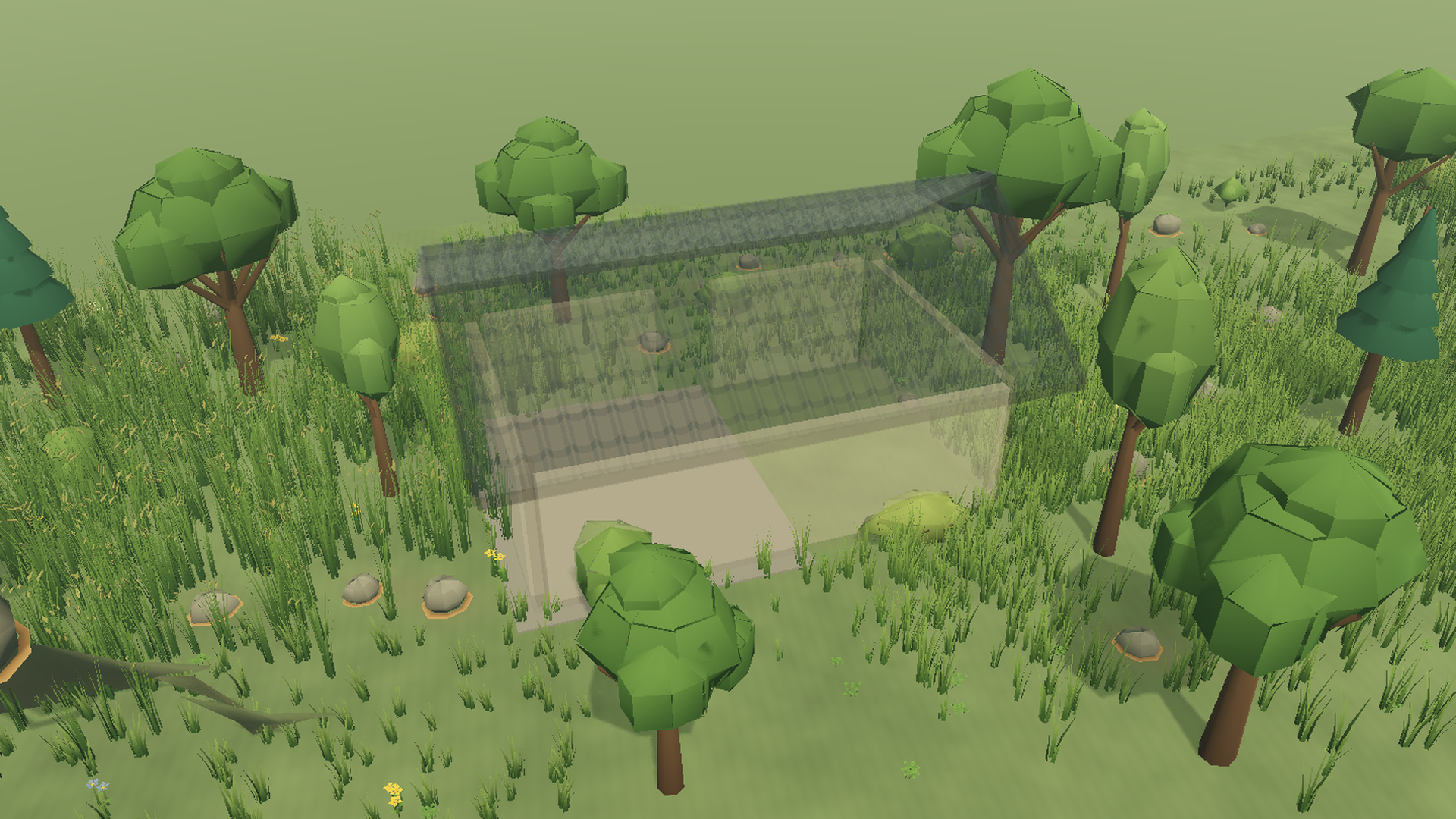
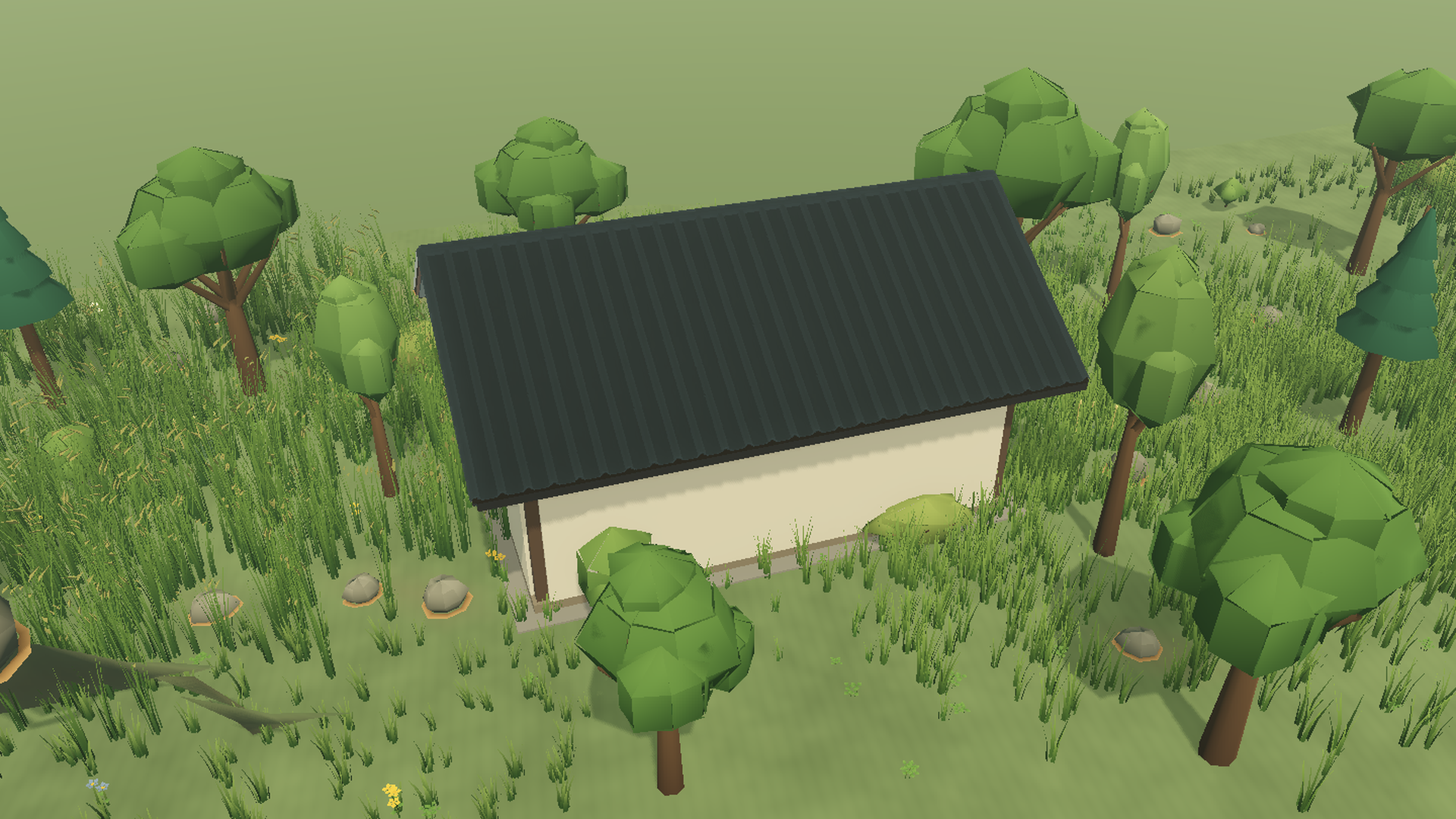
With automatic roads removed, construction no longer relies on pre-generated corridors. On genuinely usable dry land, ordinary slopes, trees, and rocks become preparation work instead of causing a blanket placement rejection.
Formal construction proceeds through blueprint placement, clearing, leveling, groundwork material delivery, paving, structure material delivery, building, and completion. Characters, items, buildings, and crops then read the same effective ground height, so groundwork is part of the simulation rather than a decorative decal.
What comes next
We will continue refining scene readability, material response under different weather, the boundary between settlements and nature, and more environment feedback that genuinely connects to survival and building. Free-form terrain editing, road construction, snow traversal effects, and a full disaster system from our isolated studies are not being presented as completed main-game features.
If a slower-paced settlement survival game built around the relationship between people, construction, and the land sounds interesting to you, please wishlist Shanhe Builders and follow future development updates.