Hello everyone,
In our first devlog, we looked at what Tiny Eden is really about, and we ended by calling it a cozy indoor gardening game that focuses on space management, knowledge, and growth (plant growth that is).
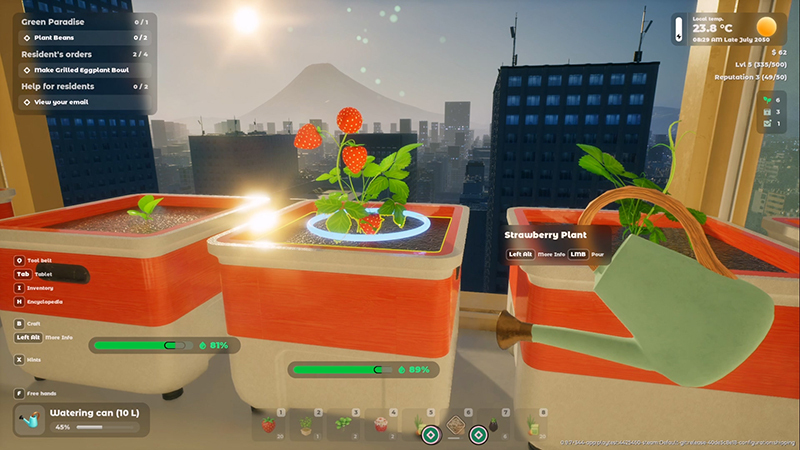
For this dev log, we're going to focus on one of the most important parts of Tiny Eden, a feature that makes it stand out from other gardening and farming games, the apartment. An apartment as the base for a gardening game is not that common; as such, we often get asked "Why does Tiny Eden take place indoors, in an apartment, instead of outdoors?" Well, we'll be answering this today!
At first, this may sound like a simple change of setting, instead of growing plants outside, you grow them indoors. Instead of looking across open fields, you look around your apartment and decide where the next pot should go. However, for us, the apartment setting is not just a backdrop, it is one of the main reasons Tiny Eden works the way it does.
In many farming games, progression often means expanding outward: clearing more land, planting more crops, building more structures, and slowly turning a large area into something productive. What it boils down to is that a farm gives you space, and plenty of it, for you to play around with. That kind of setting can be very satisfying, especially as it is very familiar, but Tiny Eden is built around a different idea, one that requires you to be more creative with space.
In Tiny Eden, you start with a much smaller and more personal space. You have a room, a windowsill, some pots, and whatever space you can make work. Instead of asking how much land you can fill, the game asks you to think about where each plant belongs, what conditions it needs, and how your apartment can slowly change around the garden you are building.
That smaller space also changes the way you play. A shelf, for example, becomes much more than something that holds books or decorations. It can become a platform for plants, lifting them above shaded areas and giving them better access to light. It also lets you make use of vertical space, which is not something you often need to think about in more traditional farming games.
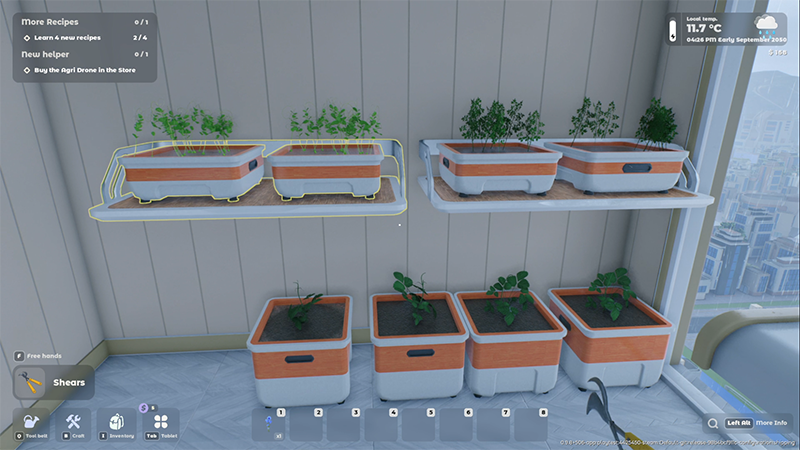
The same is true for the rest of the apartment. A sunny windowsill becomes one of the most valuable places in the room. An empty corner might become the start of a new growing area. As you progress, you begin to look at your apartment differently, because every part of it has the potential to become useful.
This is one of the reasons we wanted Tiny Eden to be set indoors. The apartment itself creates limitations, and those limitations make the space that you have feel much more meaningful. After all, when you do not have endless land (like on a farm), placement and the choices that you make end up being a lot more important.
This also connects closely to our own experience with indoor gardening, as every plant that you can grow in our game has been grown by our team indoors, at home, in apartments. That experience shaped how we think about the game, because growing plants indoors is very different from growing plants outside.
Germinating seeds / getting them to sprout is quite easy, that's why gardeners will very often sprout their plants indoors, but getting them to keep growing into healthy plants that bear fruit, or grow large enough to be eaten, is a very different (and harder) task.
You do not simply plant something in a field and let nature do the rest. You have to think about light, heat, soil, containers, and the space each plant needs to grow properly.
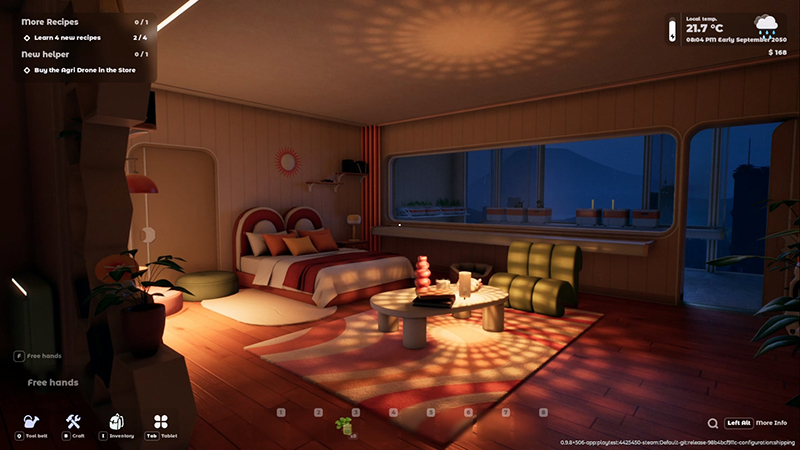
That does not mean Tiny Eden is trying to be a strict simulation of real life. We want the game to be fun, so we're not trying to turn every small detail into a complicated system or make the player worry about every possible mistake. We simply take inspiration from real indoor gardening and turn it into something understandable, satisfying, and fun to play.
This is where the apartment setting becomes useful from a design point of view. It gives players a space that is easy to understand at first, but becomes more interesting as the garden grows. Early on, a windowsill and a few pots may feel like enough. Later, as you unlock new seeds, grow more plants, cook new recipes, and help other people in the building, your apartment begins to change because you start looking for more space.
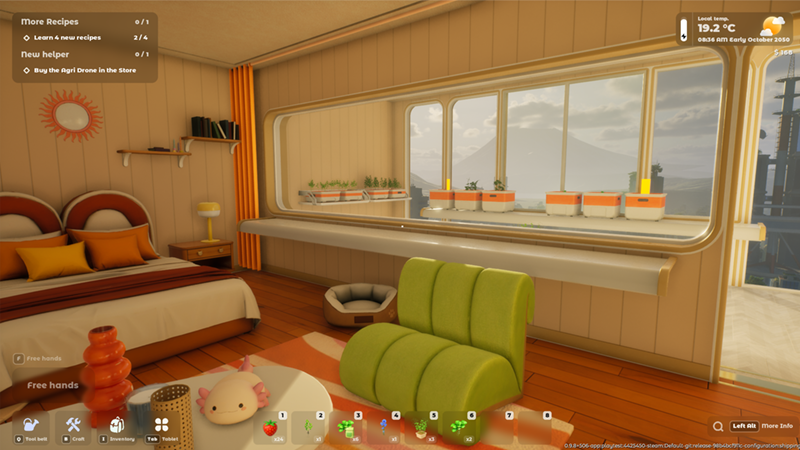
We love farming games, but Tiny Eden is built around a fantasy that is closer to home, it is about taking a small living space and slowly turning it into something more alive, finding room where there did not seem to be room before, and creating a garden in the middle of everyday life.
A farm gives you freedom through open space. An apartment gives you creativity through limitation.
Stay tuned, follow us on social media, and make sure to wishlist Tiny Eden on Steam if you have not done it yet.
https://store.steampowered.com/app/3375110/Tiny_Eden
Join us on Discord >>> https://discord.gg/tinyedengame
Follow us on X >>> https://x.com/TinyEdenGame
Watch us on TikTok >>> https://www.tiktok.com/@tinyedengame
Explore on Instagram >>> https://www.instagram.com/tinyedengame