The past few weeks have been intense on the development front for our team, and we wanted to share some of the progress we’ve made with you.
As many of you already know, QANGA features a full-scale reproduction of the solar system, made possible in large part thanks to our internally developed plugin, Worldscape.
Recently, the team, especially CyberAlien, began a major overhaul of QANGA’s solar system structure, with one clear goal in mind: to make space more dense, more meaningful, and better suited for exploration and gameplay.

A denser, richer space
Thanks to this deep rework, space between planets will no longer be just empty stretches to cross. QANGA’s solar system is gradually being filled with new spatial objects, distributed in a logical and realistic way:
- Space stations placed on specific orbits, potentially serving as relays, trading hubs, or refueling points.
- Moons orbiting certain planets, each following its own trajectory.
- Asteroid belts, particularly between Mars and Jupiter, bringing more opportunities for exploration, danger, and resource gathering.
Lagrange points
To make all this work in a consistent way, CyberAlien also implemented a full system of Lagrange points. These well-known points in orbital mechanics represent areas of gravitational balance between two massive bodies, like a planet and its star or a planet and its moon.
In practical terms, these points are perfect for placing:
- Space stations, for refueling or fast travel
- Secondary orbits
- Groups of asteroids, like the famous Trojan asteroids that share Jupiter’s orbit in our real solar system
You’ll find diagrams below, especially the one showing points L1 to L5 in a Sun/Planet system, to help visualize the placement logic we’re using.
What is a Lagrange point?
A Lagrange point is a specific position in space where the gravitational pull of two massive bodies, like a star and a planet, balances with the centrifugal force experienced by a third object. In simple terms, these are locations where an object can remain stable or semi-stable without needing constant adjustments to its trajectory.
There are five such points for every pair of celestial bodies:
- L1, L2, and L3 lie along the line connecting the two bodies. They are useful but unstable.
- L4 and L5 form an equilateral triangle with the two bodies. These are the most stable points and are often naturally occupied by asteroids, like the Trojans near Jupiter.
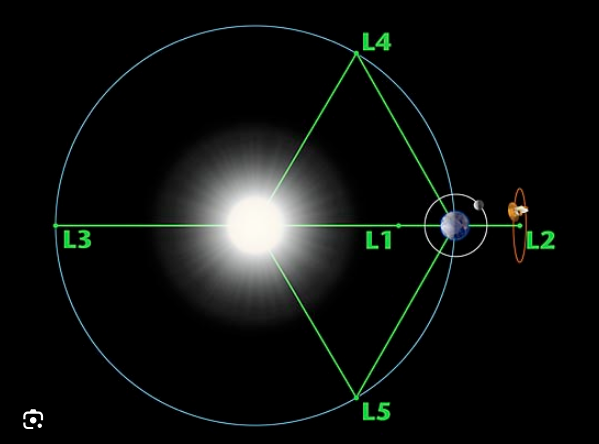
This principle, applied in QANGA, allows us to place stations, moons, asteroid belts, and other space objects in a way that is both realistic and functional. It also opens up additional points of interest for players in the long run.
A glimpse behind the scenes
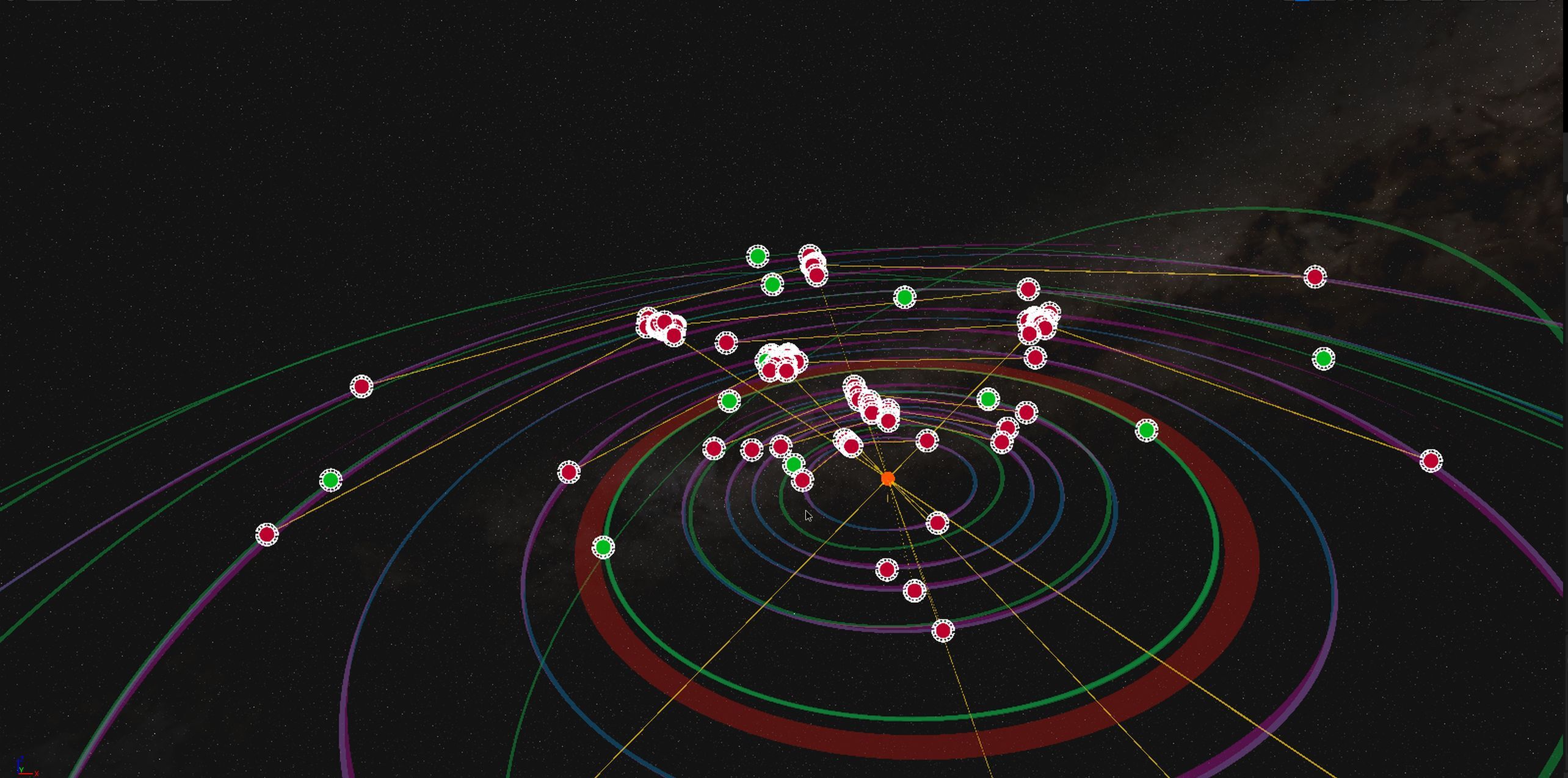
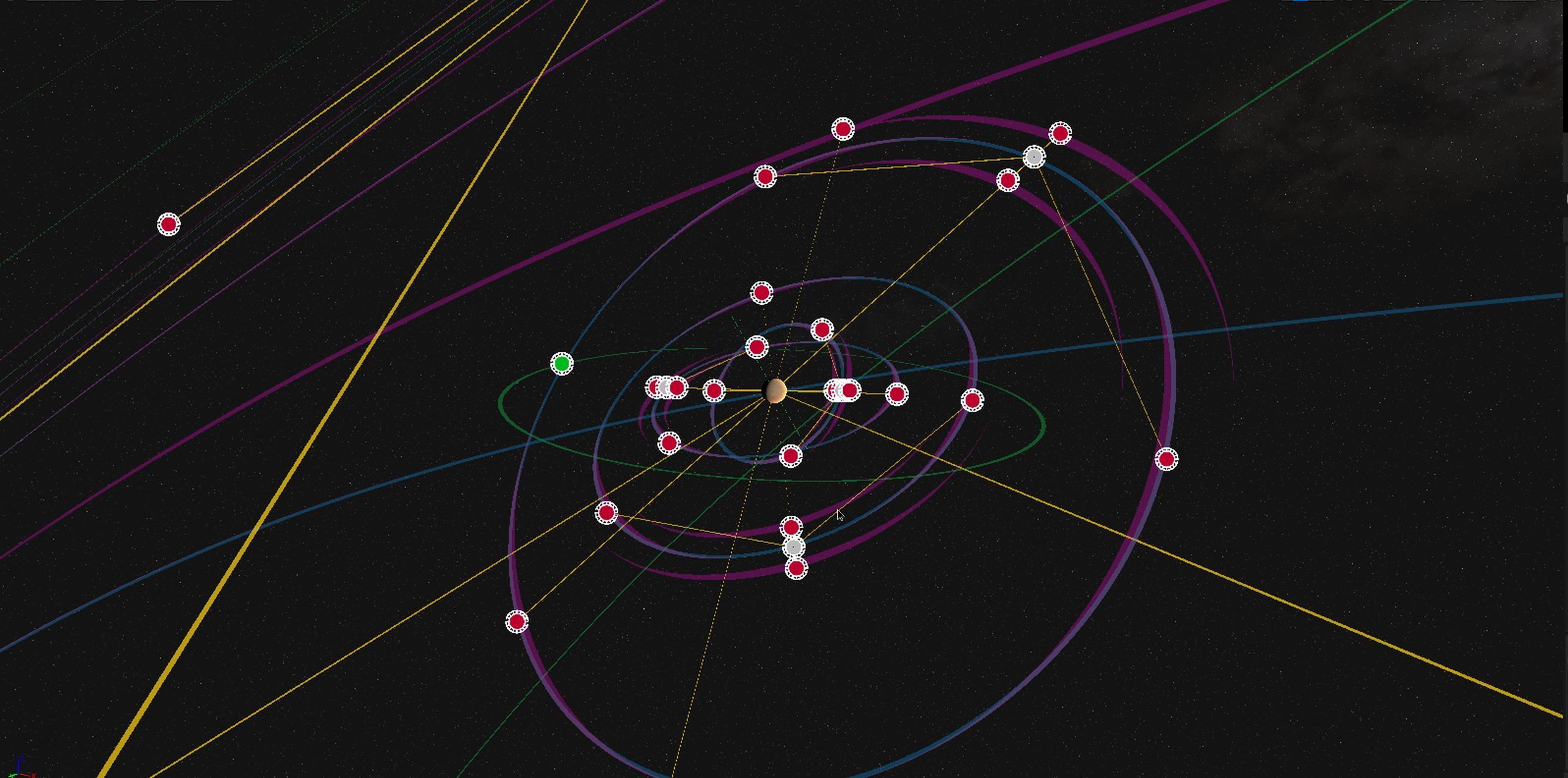
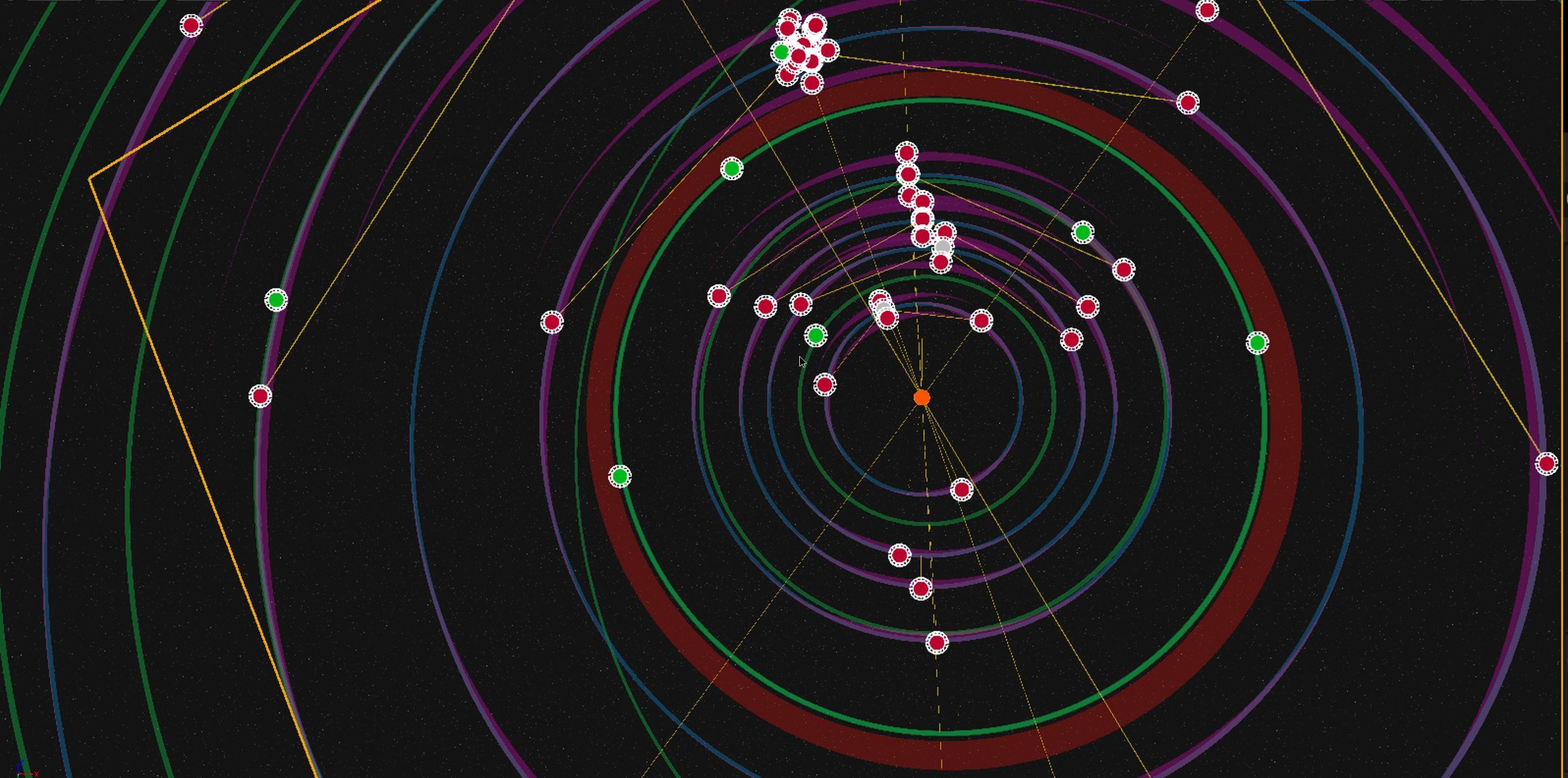
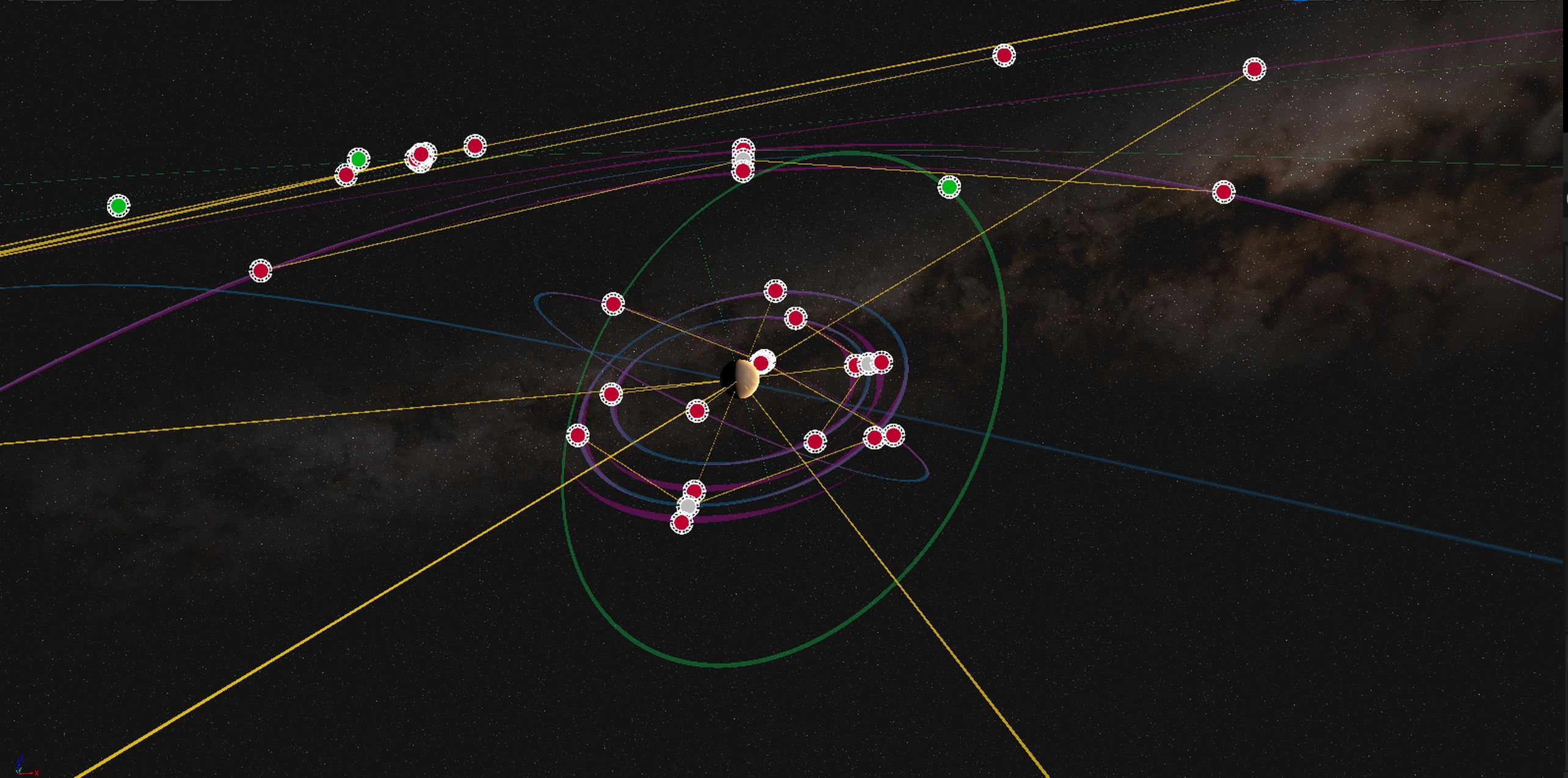
Here are a few development screenshots from our internal tools, showing how the solar system structure is evolving. You will spot the addition of Lagrange points, orbital paths, and the gradual densification of interplanetary space.
Solar System
Jupiter
Neptune
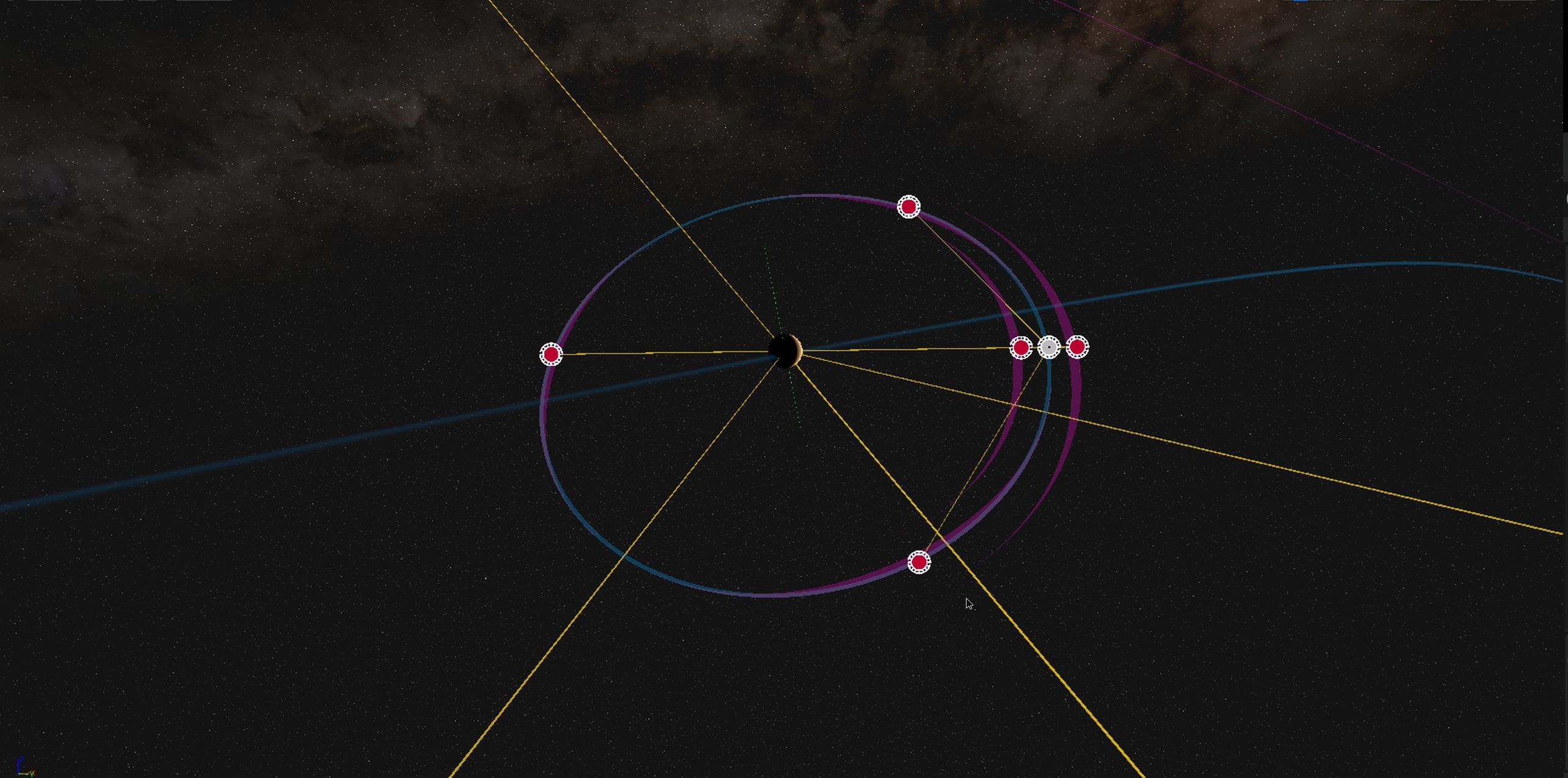
NovaCeleste Station (green point) on the L5 point of Uranus
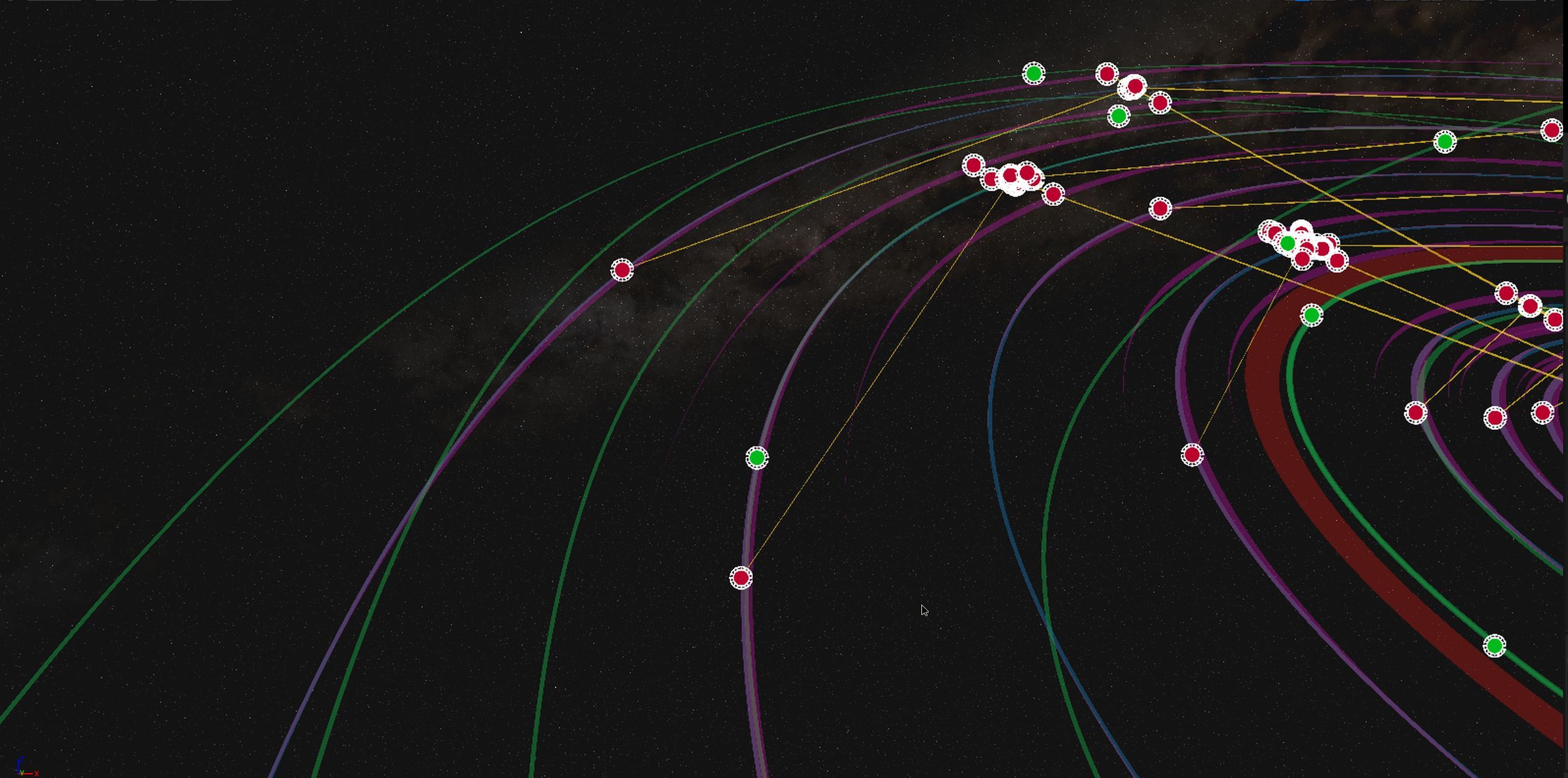
Asteroid belt between Mars and Jupiter (red zone) with the stations (green points) Tycheko, Ceres, and Pallas
Talos Station (green point) around Saturn
To infinity... and beyond?
This solar system overhaul marks an important step toward a more vibrant and coherent universe. We are not just trying to fill space; we want it to have meaning, to support gameplay, exploration, and immersion.
Lagrange points and new orbital paths provide a solid technical foundation, but that does not mean each one will automatically host a station, a moon, or a point of interest. These are early steps, giving us the structure we need to imagine and design what comes next.
It’s still a work in progress, of course, but the foundations are in place. And we wanted to share a glimpse of what we’re building behind the scenes, because it’s clearly going to change the way we travel through... and experience... this universe.
More is coming soon.