Welcome back to the Armory. You might detect a running theme with the last few articles. With Armored Brigade II due to release on Steam April 8th, we are continuing our coverage of Cold War main battle tanks with the Leopard 1.
Like last time I would like to thank Ospreay publishing’s book on the Leopard 1 and tank-afv.com’s article on the Leopard 1. Sources like these are fantastic for wargamers looking to design their own scenarios, make mods, or take their first leap into modeling a vehicle.
Leopard 1 was designed and developed in later half of the 1950’s. Originally part of the “Europanzer” project – a joint German and French venture to design an MBT – Leopard 1 entered service with the Bundeswehr in 1965.
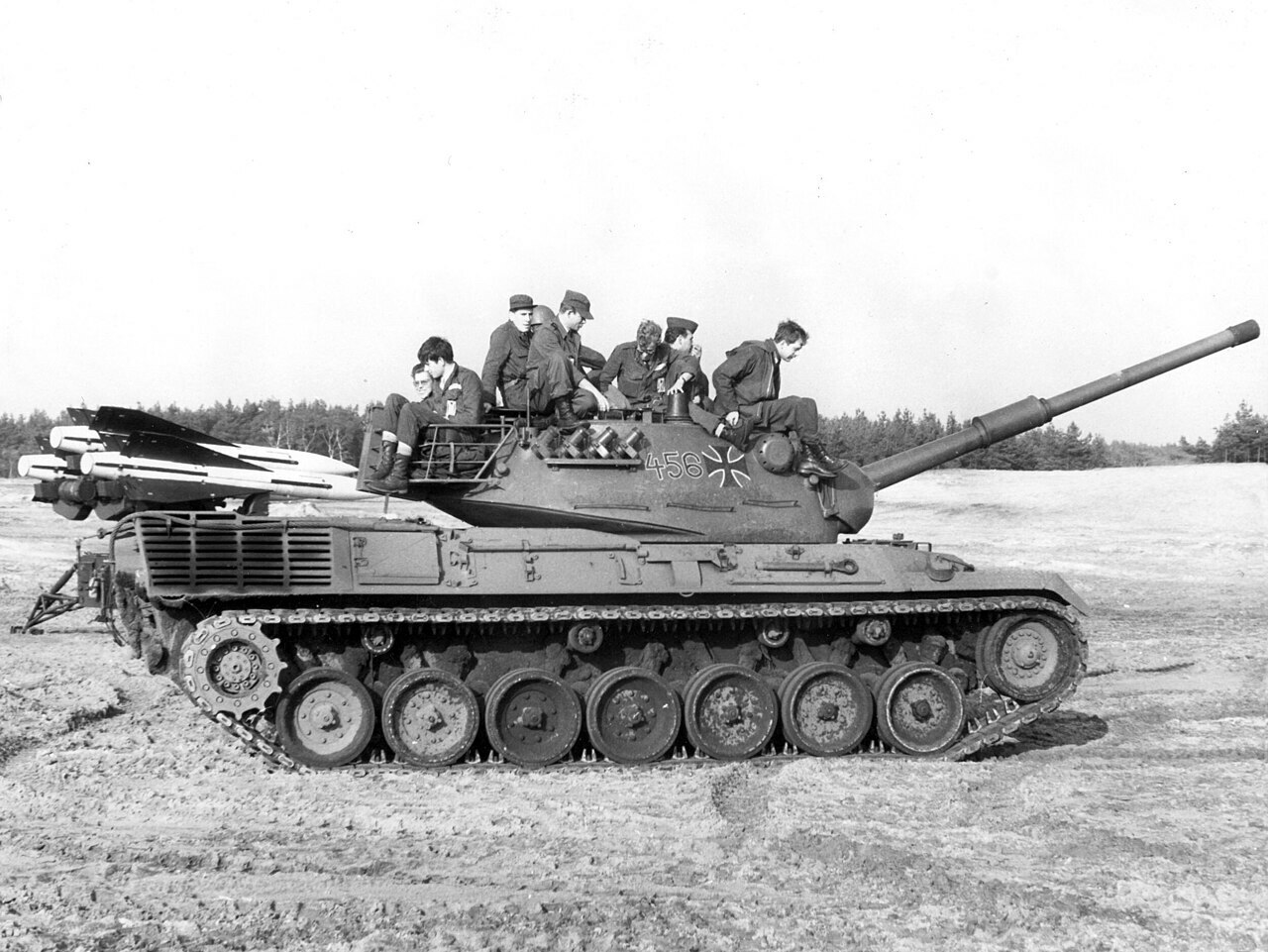
An early Leopard 1 still featuring a cast turret
Multiple upgrade packages continued to be produced during the Cold War that included a switch from a cast turret to a welded one, spaced armor to defeat shaped charges, additional armored cheeks for the turret, and a laser rangefinder and thermal imager. Combined with the adoption of APSFDS ammo for the 105mm gun, later Leopard variants remain viable MBT’s for the duration of the Cold War.
The Leopard 1 saw service internationally. In addition to the West Germans, operators within NATO included Canada, Denmark, Italy, the Netherlands, Norway, Greece, Turkey and the UK (as a recover vehicle). Even after the Cold War and the development of Leopard 2, Leopard 1 is still in service with multiple armed forces across the globe, and is currently serving an active combat role in Ukraine.
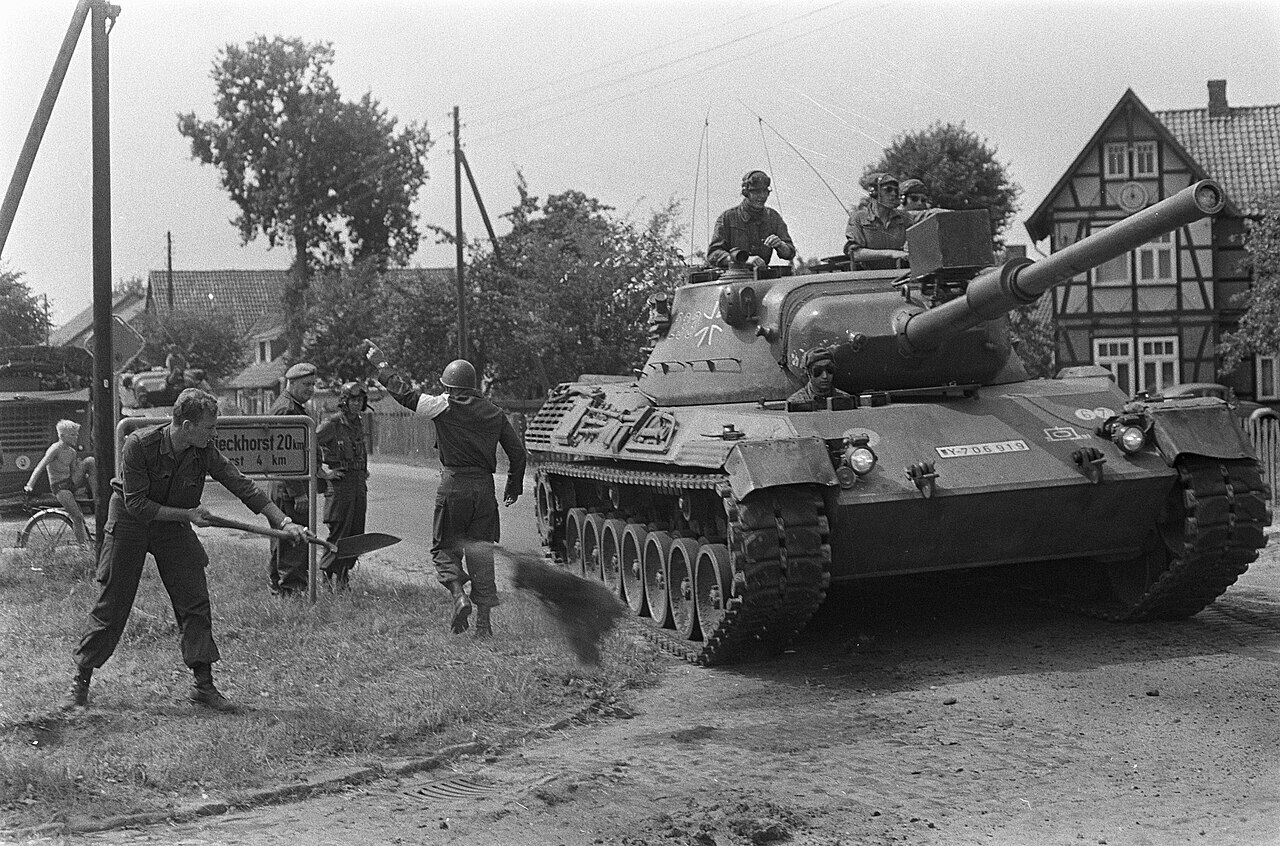
Another early Leopard 1 on manuevers in West Germany
The British Centurion attempted to beat new and cutting-edge HEAT warheads and anti-tank shells with thicker and thicker steel armor. When the West Germans designed the Leopard tank, they basically went in the opposite direction. The original Leopard 1 weighs in at a very svelte 40 tons. This is achieved by the frontal hull armor being only 21mm’s thick. The turret is better protected at 70mm’s, and as mentioned later variants like the Leopard 1A3 had additional armor added to the gun mantlet.
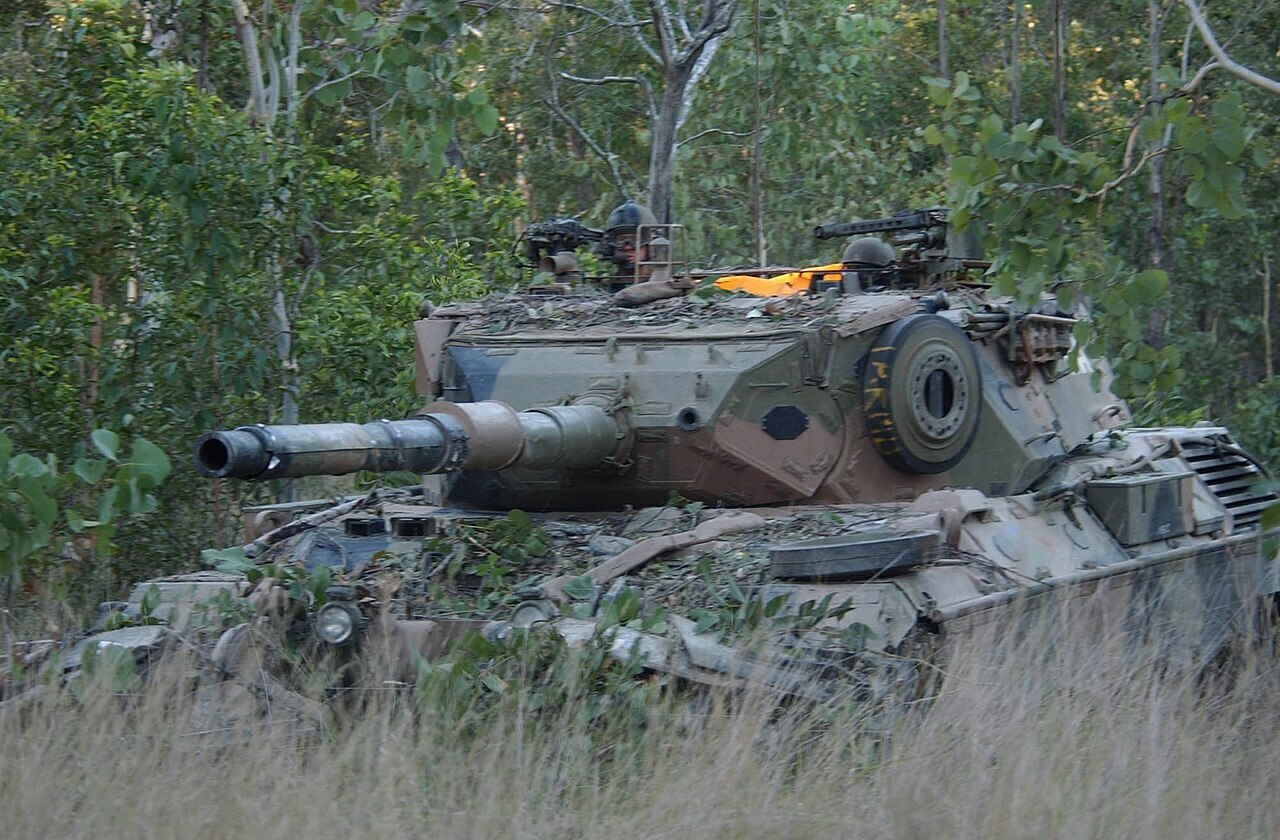
Australia used Leopard 1 up until 2007
The theory was that dedicated anti-tank weapons would so vastly outpace conventional RHA (Rolled homogeneous armour) that you would require an unfeasible amount of thick plating for full protection. Battlefield survival would depend on positioning and maneuverability. Leopard 1’s armor was improved on latter variants with additional layers of spaced armor.
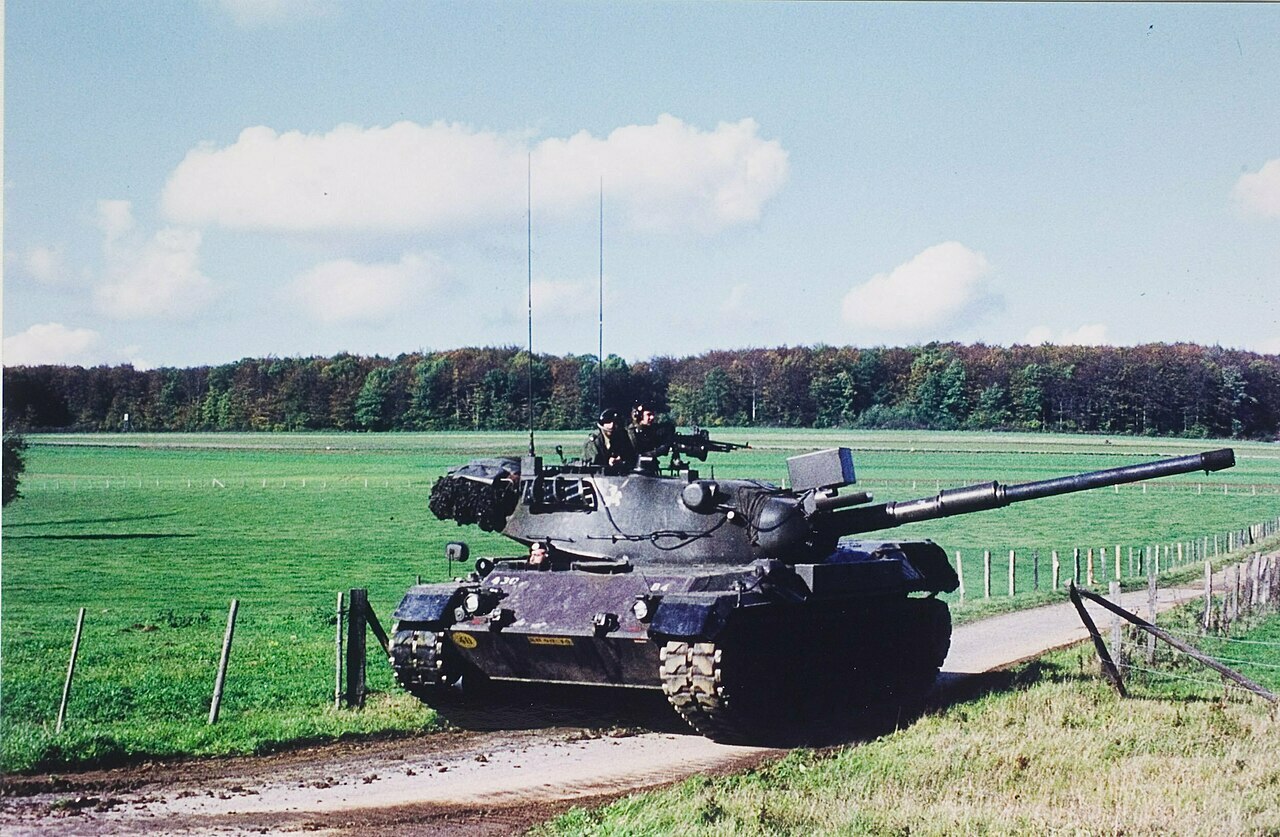
A Dutch Leopard 1 - many NATO members adopted the Leopard as their MBT
The Leopard 1 is still immune to most autocannon fire, small arms, shell fragments, and just about everything else shy of dedicated anti-tank weapons. That being said, a direct hit from a Soviet MBT or ATGM is almost always a guaranteed kill. Dedicated crew hatches and fireproof bulkheads do assist in making sure a kill doesn’t mean the whole crew bites it in a catastrophic explosion (as is the case with many Soviet tanks).
Much like the BMP or many other early Cold War designs, the Leopard 1 designers considered it likely that a conventional war between the superpowers would involve the deployment of battlefield nuclear and chemical weapons. Survivability in this case could not be guaranteed by thick armor, but maneuver and dispersion.
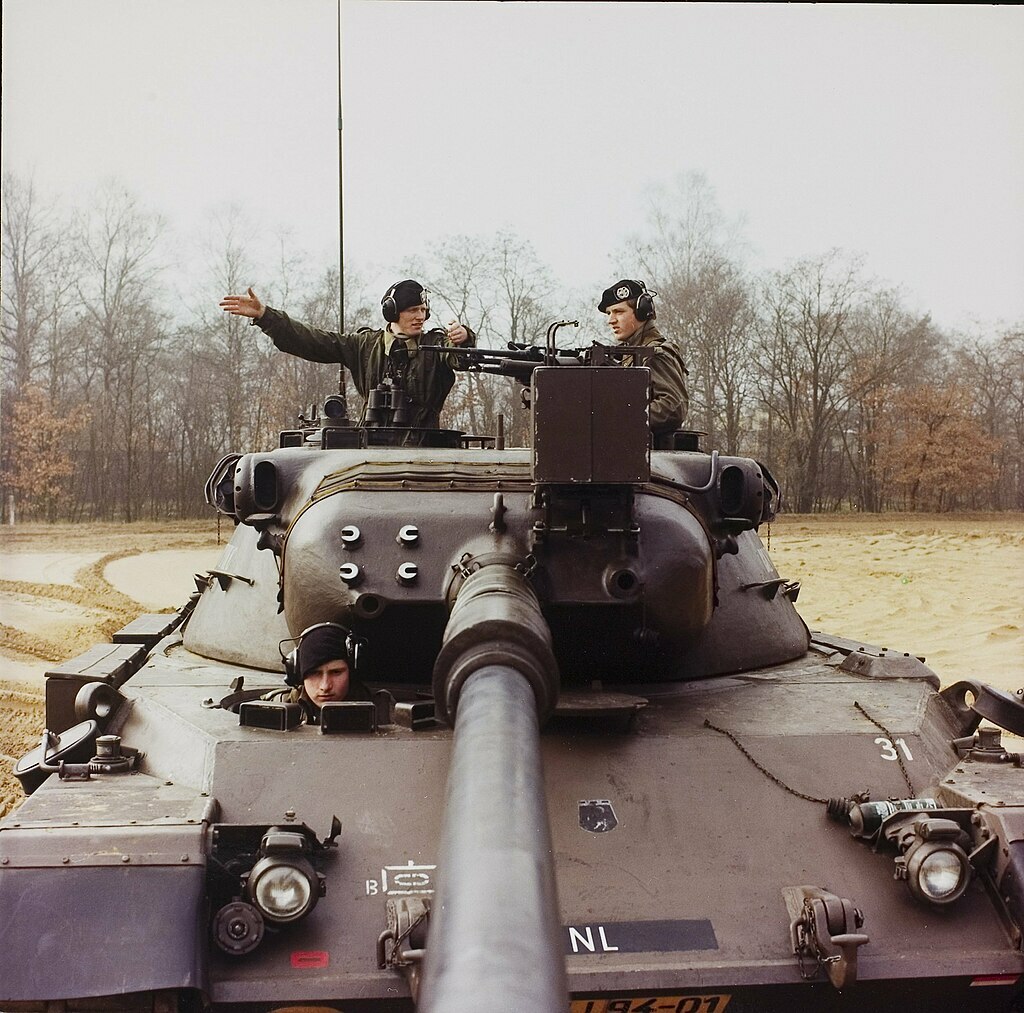
A 70mm turret mantlet is rather thin by Cold War standards
The relative lack of protection is made up for in mobility. The Leopard 1 is capable of reaching road speeds of 65 km/h. Combine this with a torsion bar suspension and built-in shock absorbers, and you have a very fast and smooth ride. Even early variants of the Leopard like the 1A1 have a stereoscopic rangefinder and a stabilizer, meaning she is surprisingly accurate on the move.
Leopard 1 also armed with a British-made 105mm gun. The Leopard 1A5 is equipped with APFSDS which massively improves it’s ability to frontally pen modern Soviet tanks. A coax and pintle-mounted machine gun help deal with infantry targets and light vehicles.
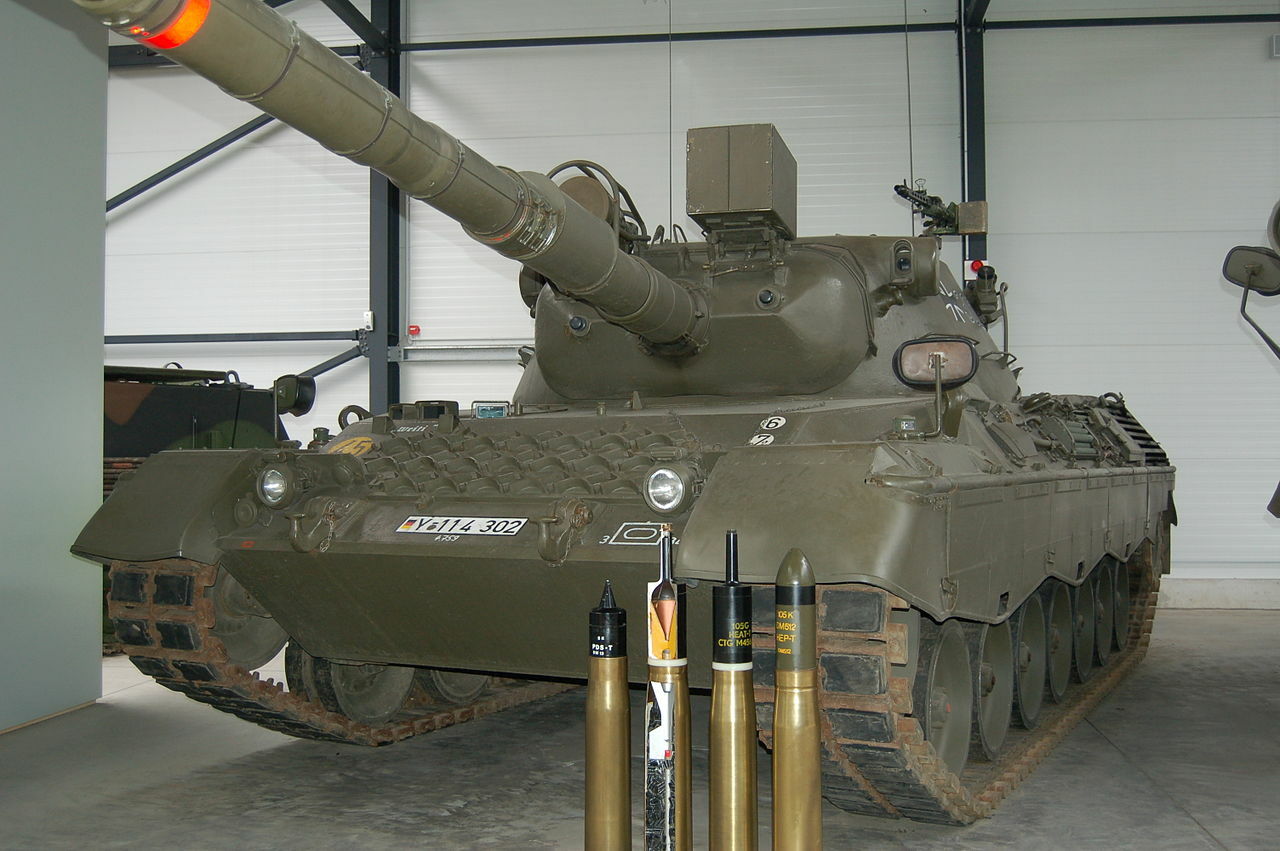
The British L7 105mm gun is effective for most of the Cold War. Later Soviet tanks can still be defeated with the APFSDS ammunition carried by the Leopard 1A5
Leopard 1’s chassis also proved fruitful as a platform for many support vehicles. Gepard – arguably the best tactical air defense weapon available to NATO during the Cold War – is based on the Leopard hull. Armed with twin 35mm autocannons and an active search radar, Gepard is a very effective weapon for shooting down Soviet helicopter gunships or low-flying aircraft. Gepard also holds a limited supply of armor-piercing rounds, just in case it has to be pressed into service against ground vehicles.
Additional Leopard 1 variants include a bridge-layer and a recovery vehicle.
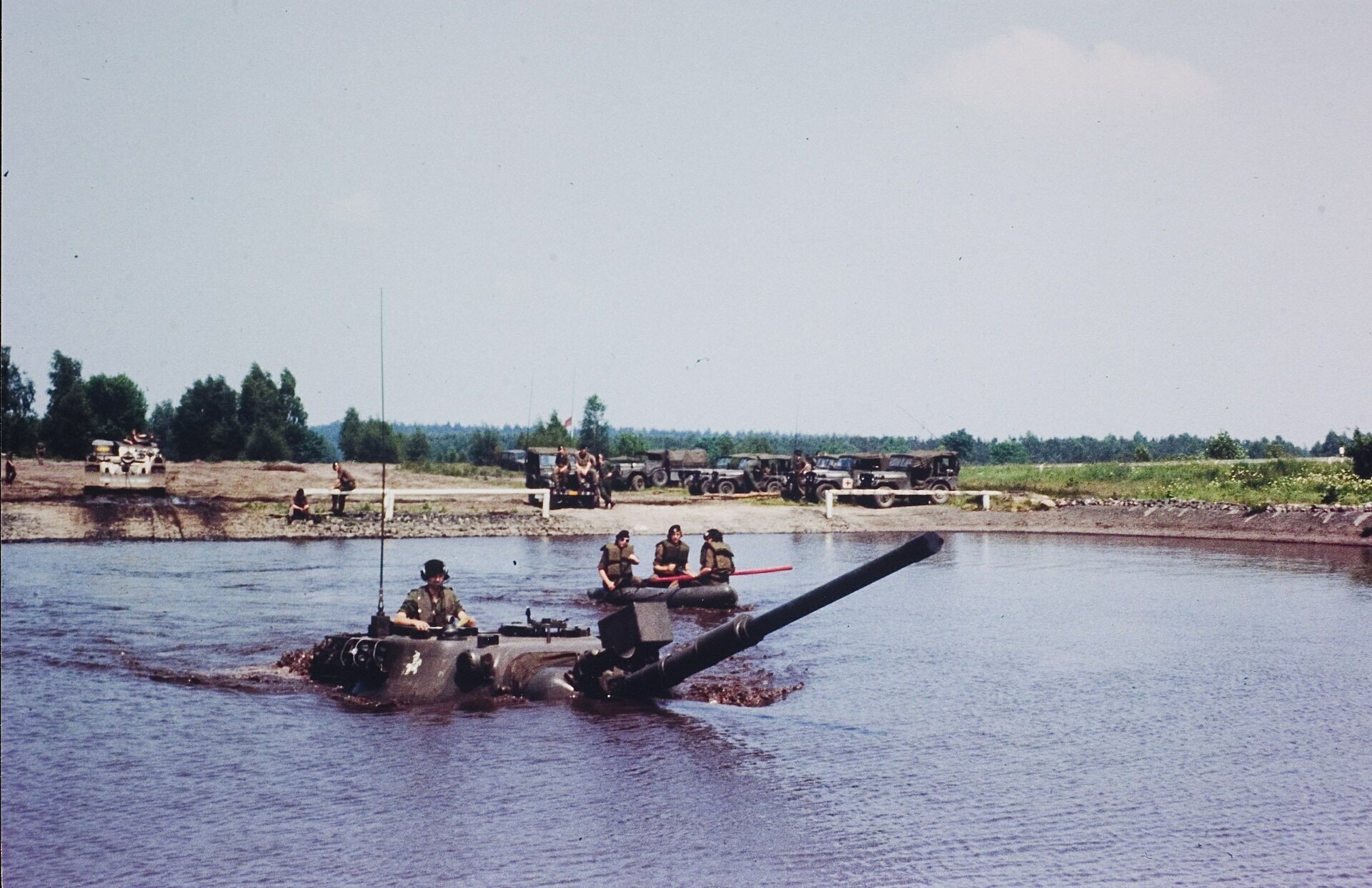
Even without bridging equipment, the Leopard 1 is adept at fording rivers
While a deadly and accurate vehicle – especially with it’s upgrades - by the end of the Cold War the Leopard 1 is showing it’s age. When the T-72 debuted in 1978 the Dutch considered their Leopard 1’s obsolete. This was rather timely as the Leopard 2’s began their rollout in 1979. While many users of the Leopard 1 began replacing their tanks with 2’s, you will see the Leopard 1 still in service right up to 1991.
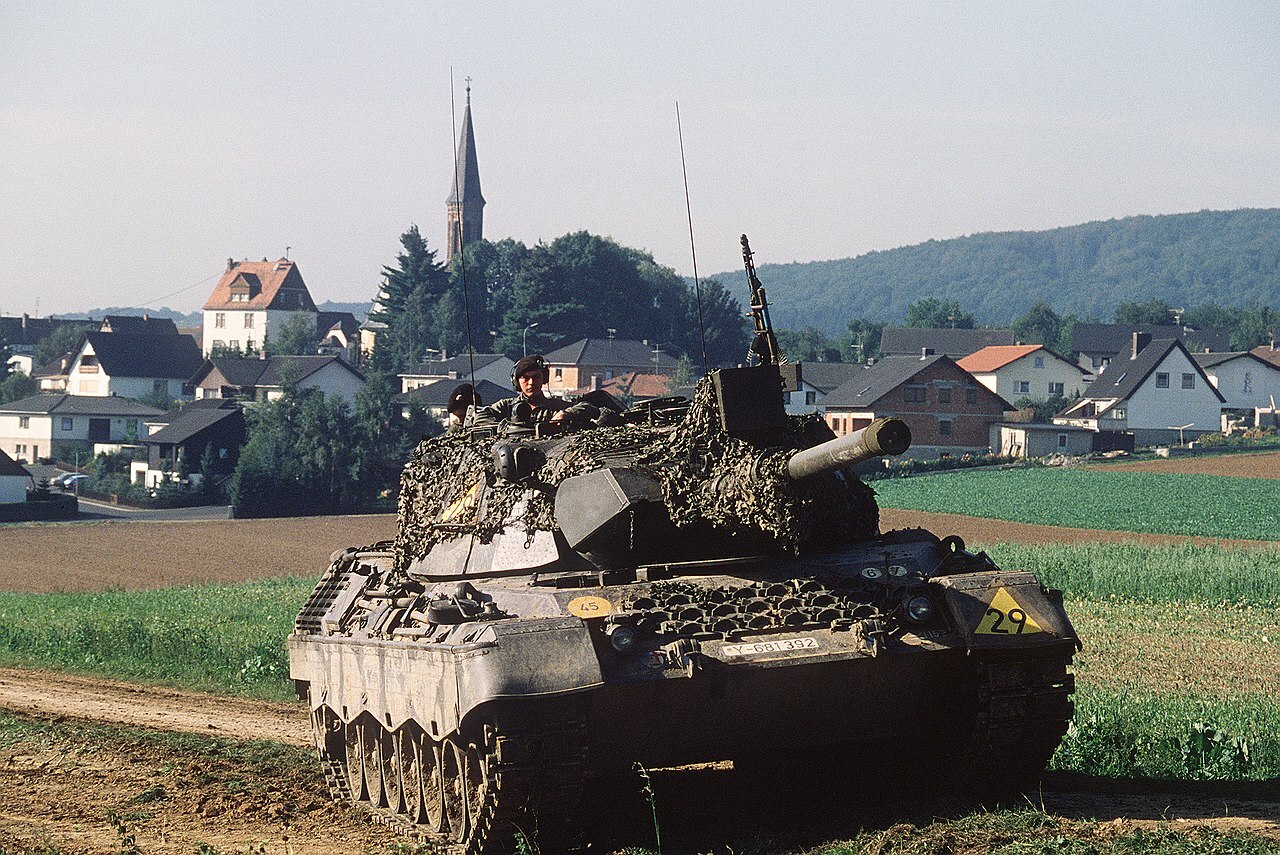
A later model Leopard 1 with a welded turret and extra applique armor
So how does the Leopard 1 rate in Armored Brigade II? As previously mentioned, the armor protection of the Leopard means she doesn’t do well in a slugging match (although no tank should ever count on just it’s armor for survival). The speed and fire control system of the Leopard give it a crucial edge over most vehicles. The Leopard is fast and can fire accurately on the move, which is more than the earlier Chieftain variants can do.
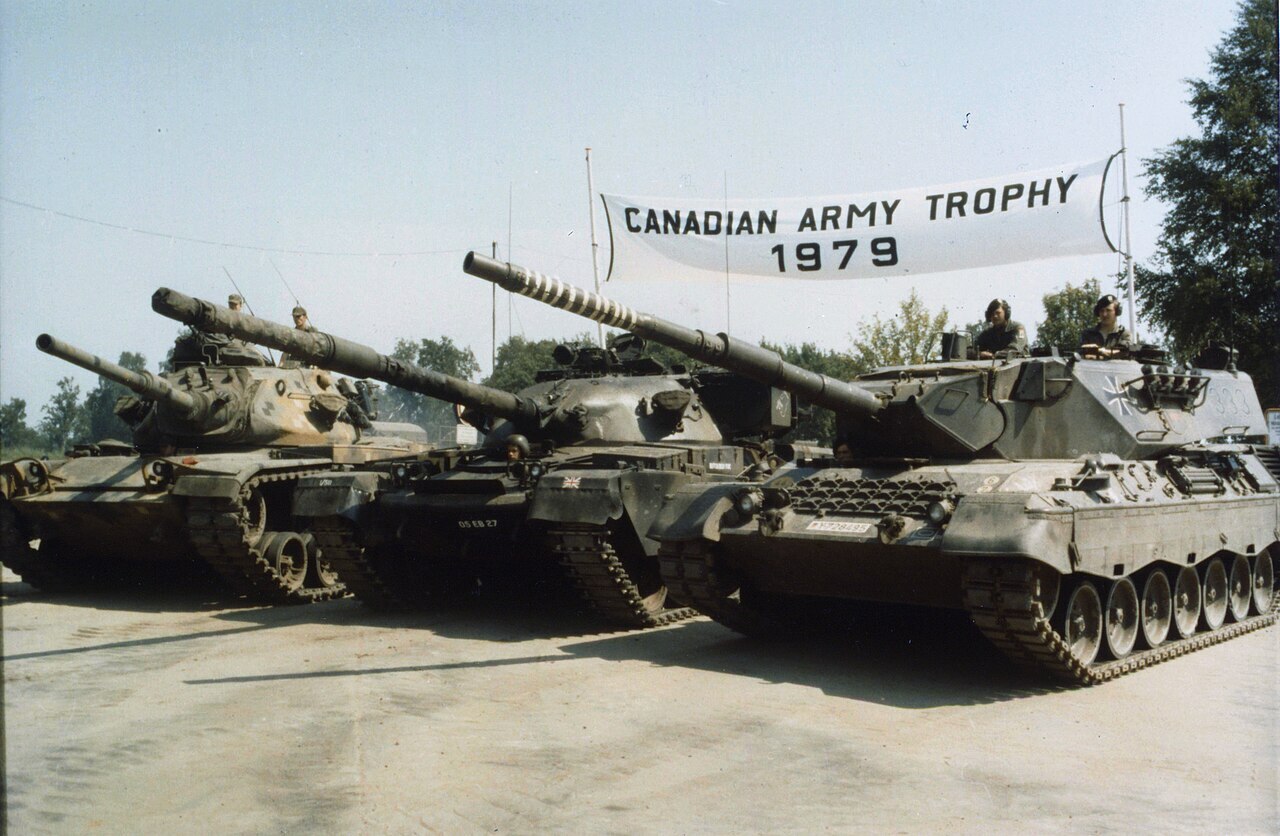
Leopard 1 is prolific, with operators or former operators on five continents
With that in mind, unexpected maneuvers and a mobile defense are your best bet for success. The West German arsenal is full of vehicles with good speed and cross country performance, giving you tremendous flexibility for combined arms attacks. Leopards paired with Marders have immense offensive firepower. Leopards can also help add teeth to attacks carried out by infantry mounted in less well armed vehicles like the Fuchs.
As high priority targets for Soviet aircraft, keep your Leopards under the protective umbrella of Gepards. The high speed of the Leopard also means they take less time to reposition, meaning they can better avoid Soviet artillery barrages and have far less downtime as they move to a new firing position.
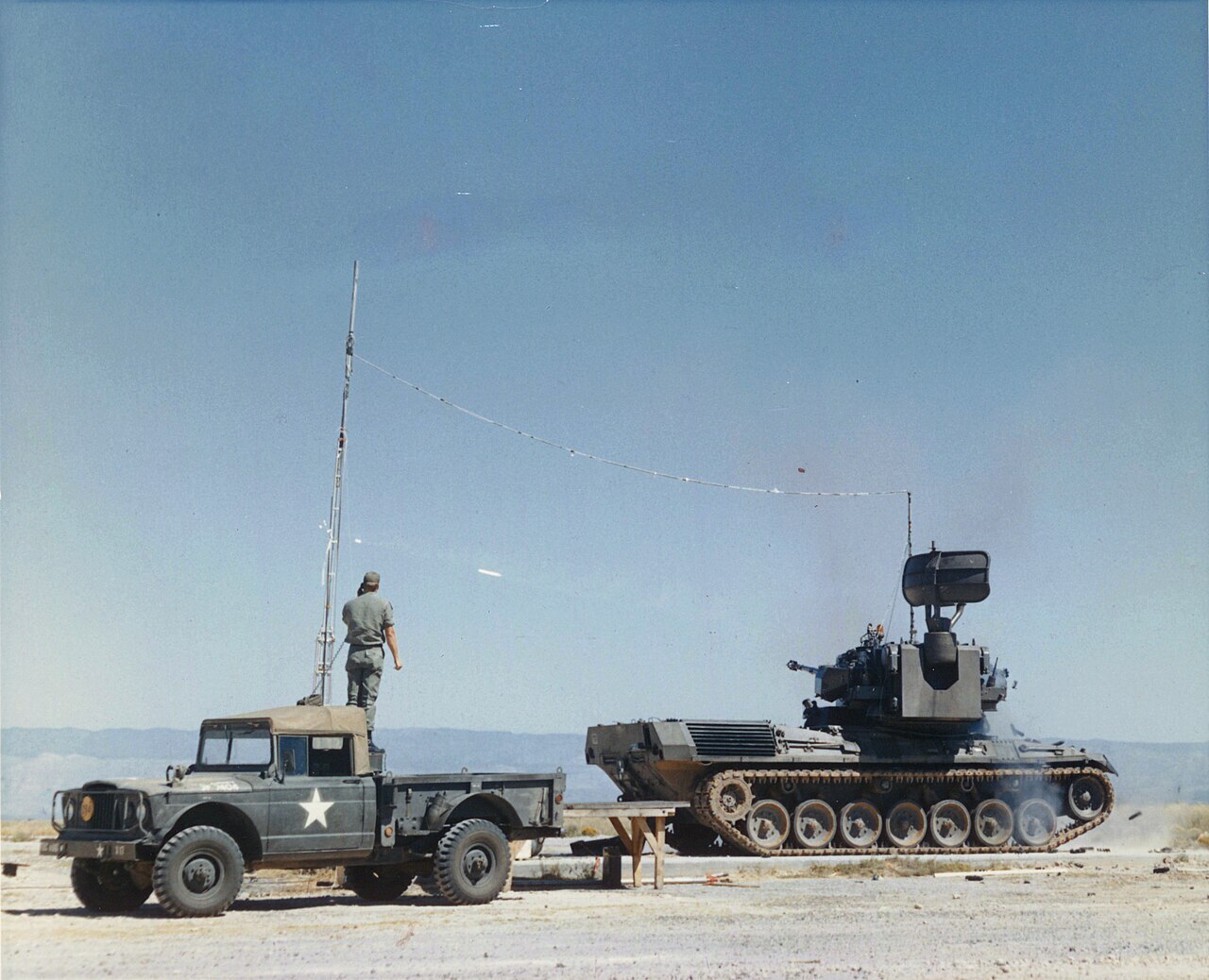
Gepard is a fantastic air defense system and will help keep your armored units safe
Another excellent vehicle to pair with Leopards are Raketenjagdpanzers. These missile-carrying tank destroyers are not nearly as useful for offensive operations, but can hold large sections of the front against Soviet armored attacks. The more of the front you can hold with tank destroyers, the more tanks you can free up for an attack.
You can wishlist Armored Brigade II now on Steam. Keep an eye out for it’s release April 8th.