Salvete amici mei,
It’s been a while since I last shared an insight into my work. I believe this will also be the last blog for this year. So, it seems fitting not only to talk about current topics but also to reflect on the past year from a personal perspective.
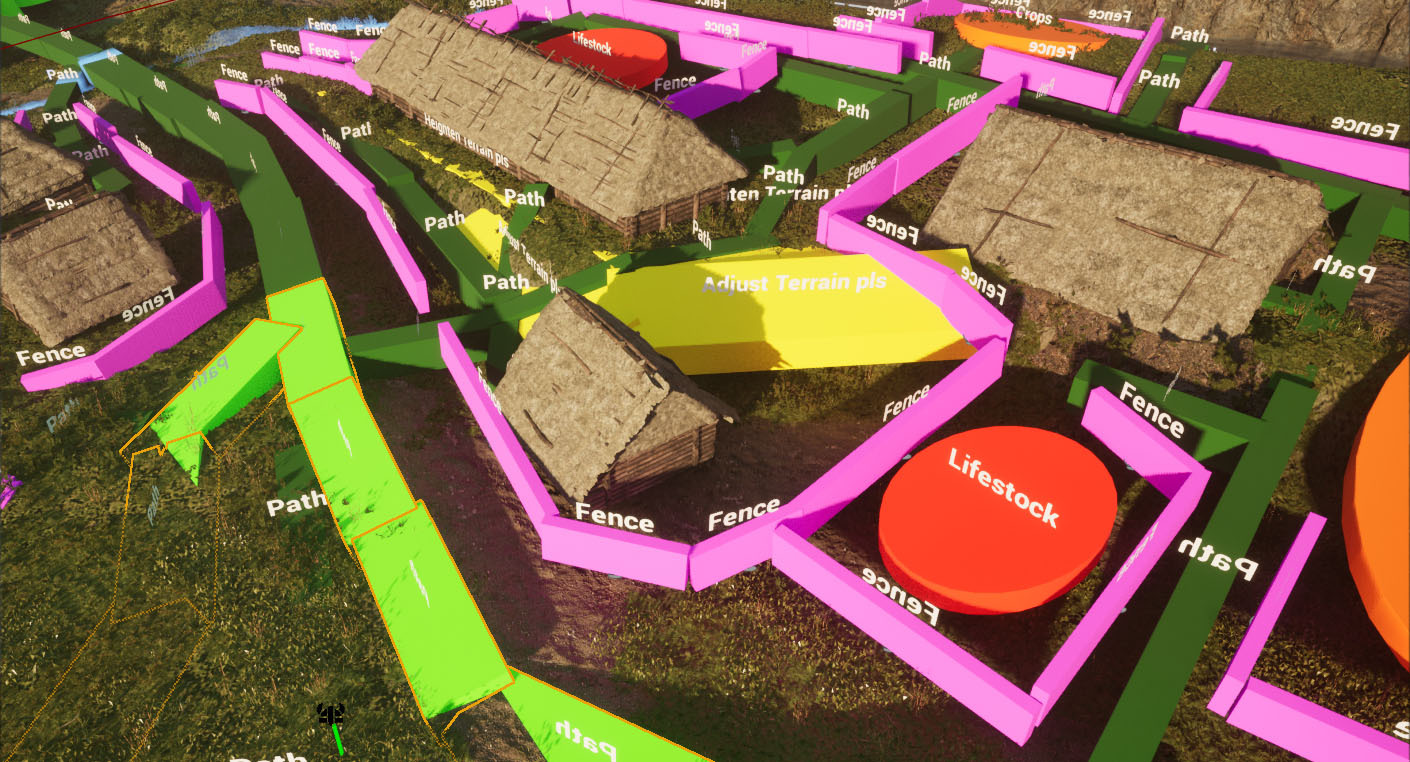
Currently, we are working on a new demo version of the game. This version will also serve as the foundation for the final release. Our last working day this year is December 20th. Then we’ll head into a well-deserved Christmas break. We’re giving ourselves a gift by putting our last bit of effort into building the new version. We’ll then play it during the holidays with patience and calm, collecting initial feedback from friends and family. Armed with these insights and well-rested, we’ll finalize the demo as our first task in the new year. Then comes the exciting moment we’ve been eagerly and reverently awaiting. We will start sharing the game with you, our community. I imagine our workflow will change significantly at that point, as we’ll have to consistently integrate your feedback into our processes. In my vision, it’s akin to a ticketing system at a QA studio. We’ll categorize reports by urgency and impact level and weave them into our production schedule accordingly. With every update (at least every two weeks), there will be patch notes where you can track the adjustments. I’m very excited about this and look forward to this new phase.
After spending much of the summer working on characters and their equipment, my main focus has shifted back to animations. Attentive followers of our blogs and posts on other channels already know: my new favorite tool is the “SmartSuit Pro II” from Rokoko. I’ve long dreamed of an affordable indie solution for performance capturing. Years ago, I experimented with iPi Soft, where I connected 8(?) PS3 Eye Toy cameras to a PC for optical-based motion capture. The results weren’t terrible, but at that time and for our purposes, they were far from production-ready. Tim will remember this.
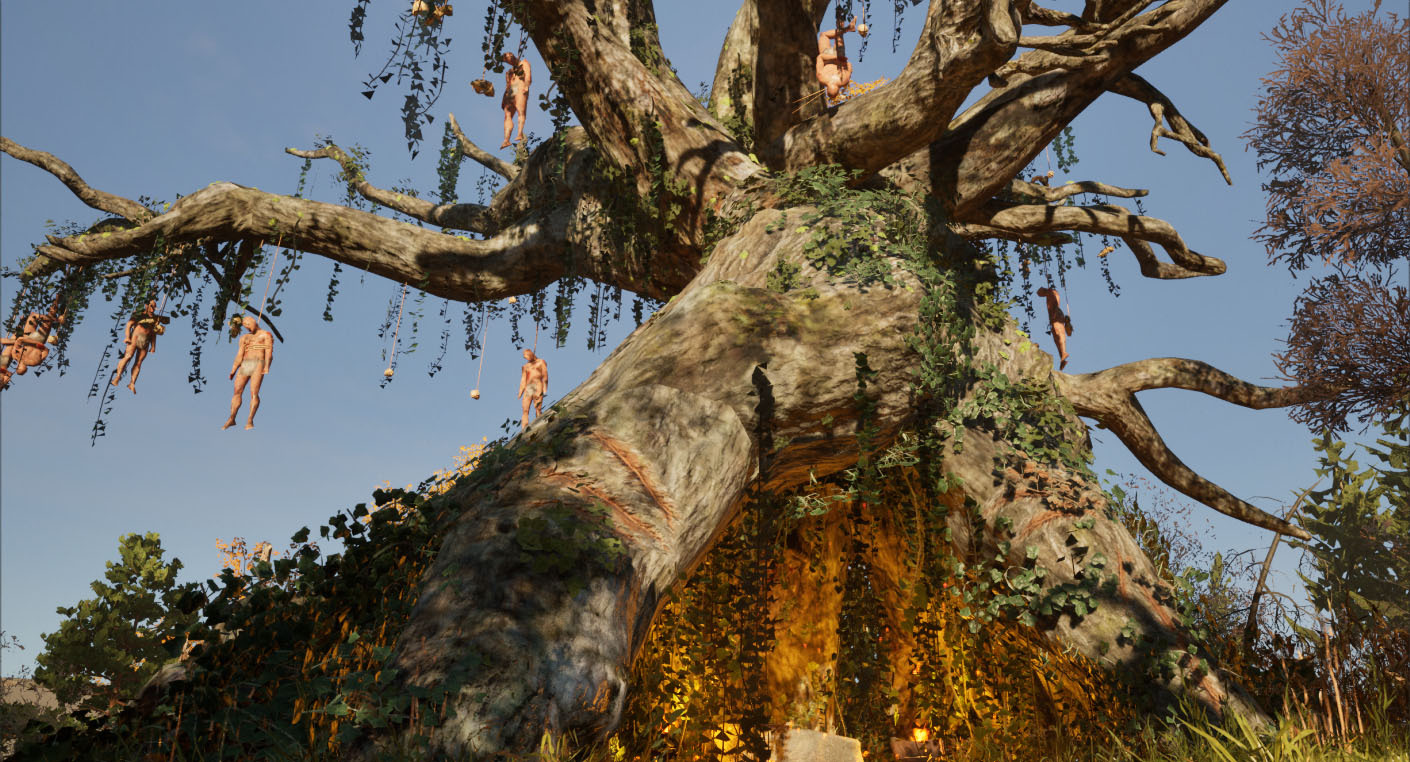
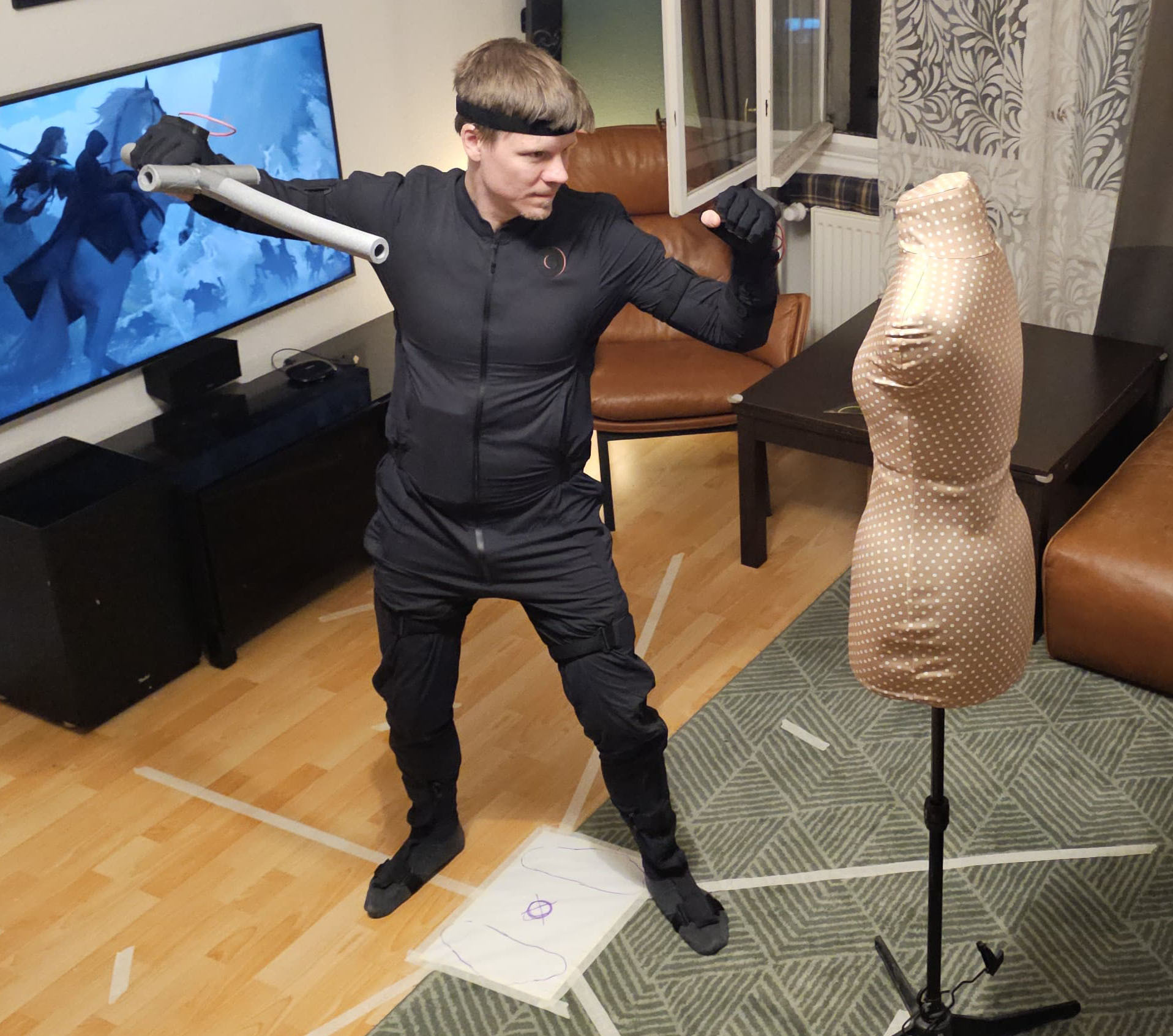
In any case, the Rokoko setup (Smart Suit II + Smart Gloves) promises a suitable result for our current work. The limb motion data is transmitted in real time by many small sensors via its own WiFi to Rokoko Studio on the laptop, where a 3D avatar calibrated to my measurements replicates the movements and records them. Unreal Engine can then read these data 1:1 and play them on our Metahuman-based characters. Writing this, I must pause and marvel. The tools and technologies available to us today were reserved for large budgets and specialists a few years ago. We truly live in an era of democratized game development, with all its advantages and challenges.
The motion capture works surprisingly well. Setting it up at home is straightforward but still somewhat time-consuming. Space must be cleared, the suit carefully donned and powered with a power bank, a dedicated WiFi router must be connected, and the laptop with Rokoko Studio (for calibration of the initial pose and managing recordings) set up. It takes about 30 minutes from setup to the first recording. The same amount of time is needed to dismantle it all. Therefore, it needs to be worthwhile. I usually plan for two to three hours of capturing, which is quite intense and has left me with days-long muscle soreness from these sessions.
It pays to have a clear idea of the movements to be captured. As a base, we use animations from libraries. Only when something specific is needed or we’re dissatisfied with the quality of the pre-made sequences do we create our own animations. The longer we work on the project and the deeper we delve into the subject, the higher our standards become. I assume that animation work will accompany us for a long time. We collect these requirements in a list, which I work through piece by piece.
So far, my experience has been that stationary movements come across very well, and even the articulation of finger movements is surprisingly accurate. A realization we quickly reached is that a form of acting is needed to convey the desired movements effectively. Simple, civilized motions often look too bland and unconvincing in the game. I think our camera position plays a significant role. Similar to theater, where movements need to be visible even to the back rows, our solution lies in making gestures broad and sometimes exaggerated.
Unfortunately, I often encounter problems with locomotion, such as walking and running. Foot positions are often not transmitted correctly, resulting in unnatural movements and unusable recordings.
Once I’ve captured the raw material, I can load it into the engine to connect it with our Metahuman. From there, I export the asset and load this file into Blender for further editing and cleaning up the animations. This may sound cumbersome but is quite simple and ensures maximum compatibility for me. I no longer need to retarget in Unreal.
For further editing, I’ve developed a reliable system using NLA (Non-Linear Animation Editor) actions. This allows me to select the appropriate raw material from many recorded variants and prepare it with layers for corrections and blending transitions for in-game use. Thanks to motion capture, we always have a solid foundation for our movements, and by applying traditional animation methods professionally, we can further refine and even modify the data for various use cases. It’s very exciting and educational work.
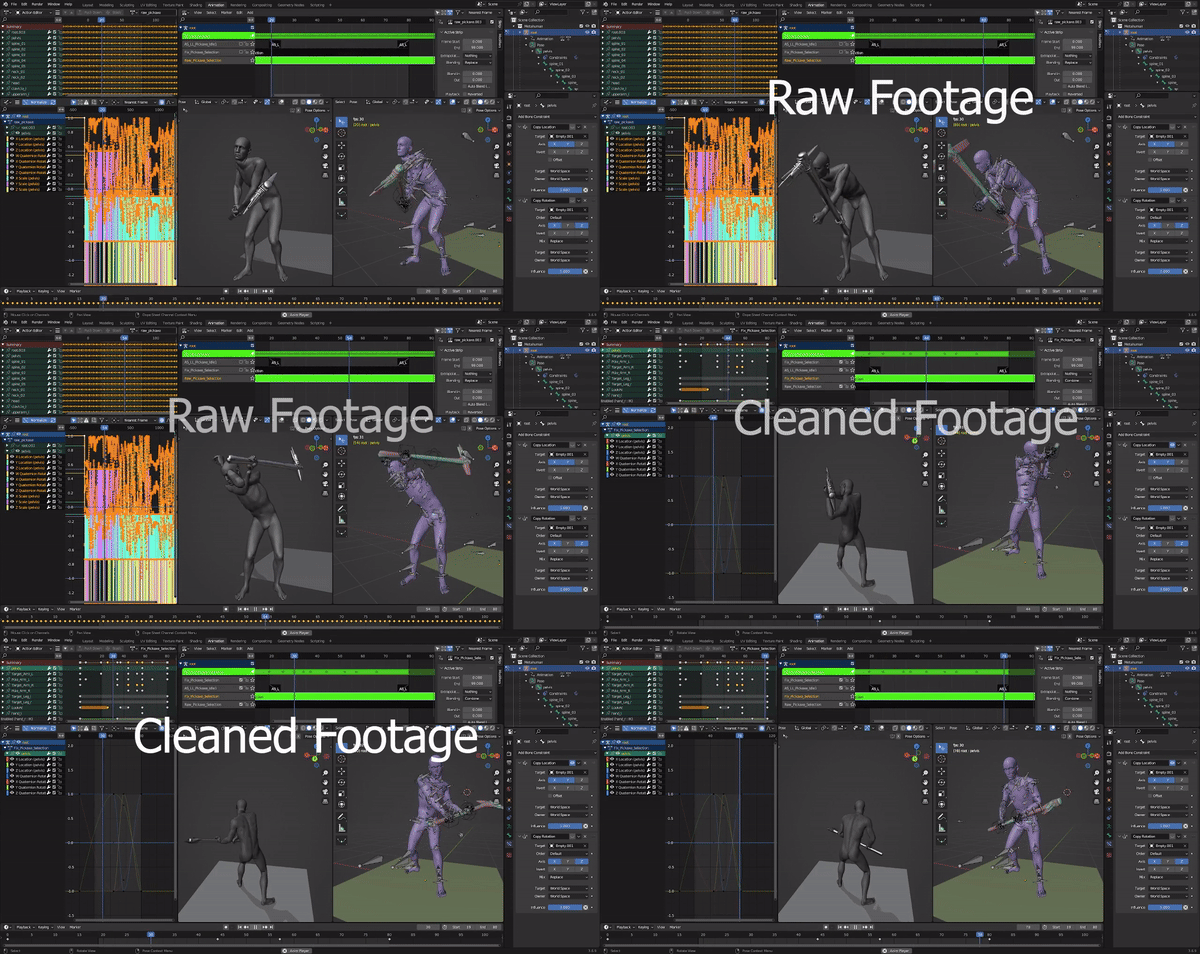
In this work, I love combining modern digital technology with physical acting. Transferring an element of reality into a computer game, comparable to photogrammetry, fascinates me. I’m thrilled that we can use such methods with our means. Sometimes, I wish I could spend my entire day doing this, but as I’ve often mentioned, in a small team, we wear many hats, and the next urgent, important, unplanned task is always waiting around the corner to surprise me.
Finally, I want to share some reflections on the past year:
Firstly, I haven’t gained any surprising new insights. If you want to follow my thoughts in detail, feel free to check out my previous blogs. It’s been an educational year, filled with many first-time experiences. We boldly embarked on the project with much uncertainty and were then overwhelmed by your positive response to the announcement of Lost Legions. Along with the industry’s strong support for our endeavor, we’ve gained the confidence over the year to make our game bigger and more beautiful than we initially envisioned. This inevitably led us to invest a lot of effort in finding suitable partners. Working with the highly talented S4G students and the resulting Gamescom demo gave us a taste of the upcoming production phase and put the functions into a playable context for the first time. This also led to an improved understanding of the DNA of our game. I enter the new year with the belief that we are ready for the next phase, and I look forward to seeing the game grow and sharing a playable version with you very soon!
To everyone I won’t personally reach by then: Happy Holidays, IO SATURNALIA, and a Happy New Year! Stay healthy, and see you on the other side!