Procedural Content Generation (PCG) in Unreal Engine 5 for Lost Legions
Hello everyone, it’s Tim here, the Environment Artist at Tarock Interactive! Creating vibrant, realistic worlds is crucial in developing Lost Legions, and Unreal Engine 5’s procedural content generation (PCG) offers the tools that make this process easier and faster. Previously, we were using Unreal’s older system due to limited experience with PCG in a real production environment. PCG allows for the efficient creation of environments like forests, mountainous landscapes, and vast meadows, which is a huge advantage, especially for small teams like ours.
PCG in Unreal Engine 5: An Overview
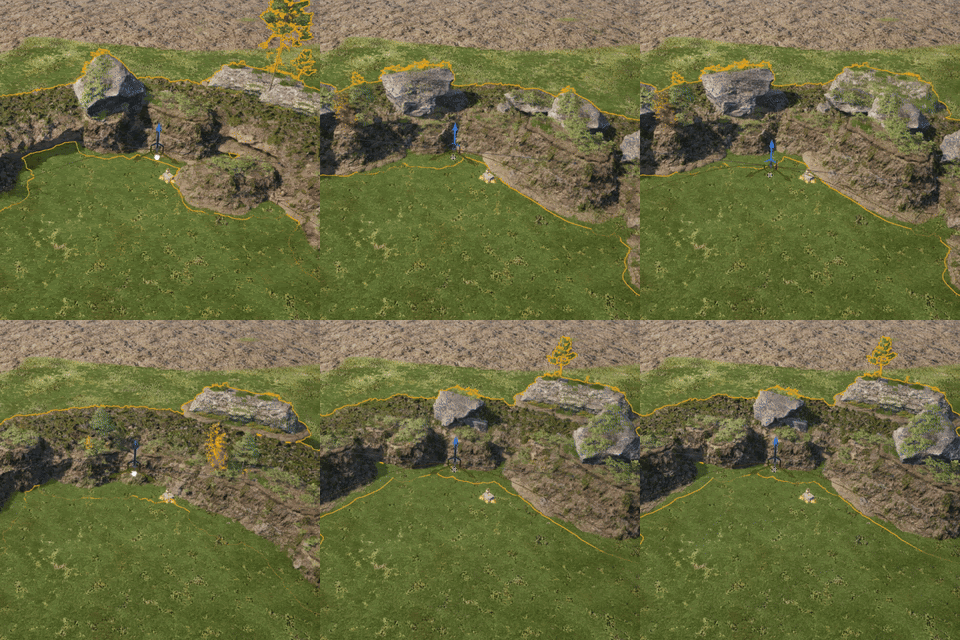
The new PCG framework in Unreal 5 enables developers to generate and customize large, vibrant landscapes algorithmically. The framework offers powerful features like node-based graphs and rule-based asset placement to create complex environments in just a few steps. Parameters such as density, size, and random effects can be applied to trees, bushes, rocks, and other objects. By setting rules, we can ensure objects don’t overlap or get arranged in illogical patterns.
Advantages for Creating Forests
For Lost Legions, creating realistic forests like the Teutoburg Forest is especially important. Here, PCG allows me to build densely populated and dynamic forests. Setting up the system is a bit tedious at first, as we have to configure the rules for generation. Later, it’s simply a matter of filling it with authentic content.
With PCG, we can specify tree species and their spacing, where ground vegetation like ferns and bushes form dense areas, and how natural barriers like rocks or small water sources are integrated. The iterative process is much faster: instead of manually adjusting every tree and bush, I can make global changes and test them instantly. This saves development time and also allows us to easily create different forest variations for different biomes. However, there are some things to consider first: Does item collection or tree cutting work without generating over 100,000 actors? How does this impact performance, and what do we need to change to create not only visually appealing but also playable worlds?
These questions have been answered over the past few weeks, and we now feel ready to unlock the full potential of PCG in Lost Legions.
Faster Iteration and Customization
Since the environments are procedurally generated, adjustments can be made anytime without requiring a complete redesign. Changes in the game’s level design can be quickly applied across the entire world by simply adjusting the relevant parameters in the PCG system. This allows us to create flexible environments with minimal manual effort, even when new gameplay ideas need to be incorporated, such as special resources in certain biomes.
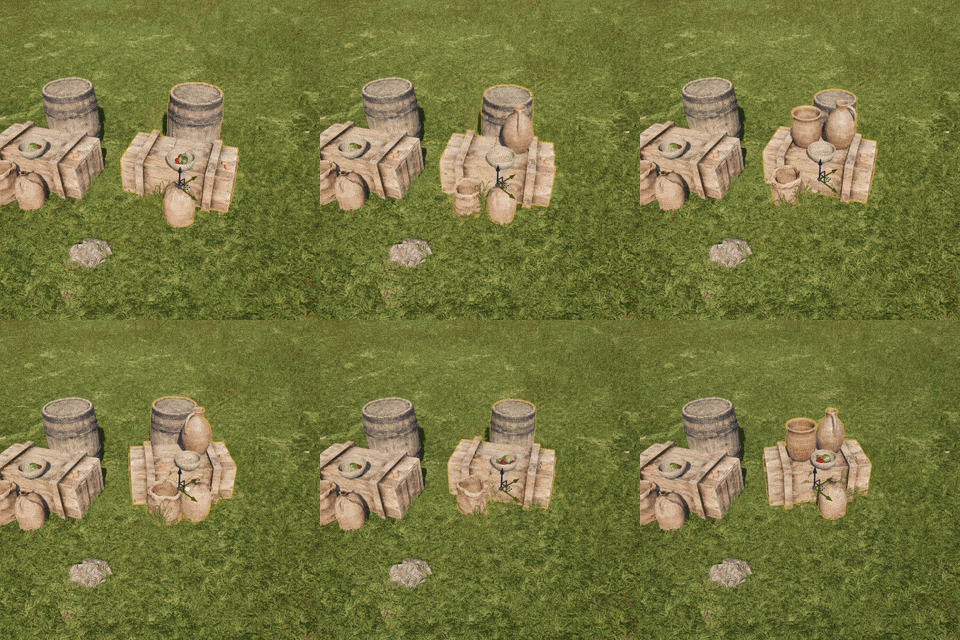
On Discord, I’ll be sharing the process of creating biomes with PCG. Feel free to join us there to stay updated!