Without knowing who he was, I had seen Ivan’s work for years: his fantastic portraits are in virtually every game developed or published by Wadjet Eye Games (the publisher of our two adventures, Primordia and Strangeland), and he contributed beautiful backgrounds to Quest for Infamy, another awesome adventure game. When a couple of his scene illustrations came across my Twitter feed back in early 2021, I immediately wanted him to join the Fallen Gods team, and I reached out not even realizing the common ground and friends we shared.
Since then, I’ve discovered why everyone who works with Ivan wants to collaborate with him time and time again—he is the consummate teammate: immensely talented, committed to the common effort, and considerate of his colleagues. One thing that stands out in particular is Ivan’s ability to integrate his illustrations into the other aspects of the game (its gameplay, its sprites, etc.), so that his art enhances those elements rather than detracting or distracting from them.
Ivan's answers and some of his art are below, and you can find more his work on Twitter.
Mark: Like Wormwood Studios itself, your prior projects have been point-and-click adventures like Unavowed, The Excavation of Hob’s Barrow, and The Charnel House Trilogy. How is illustrating for Fallen Gods different from your work on those games?
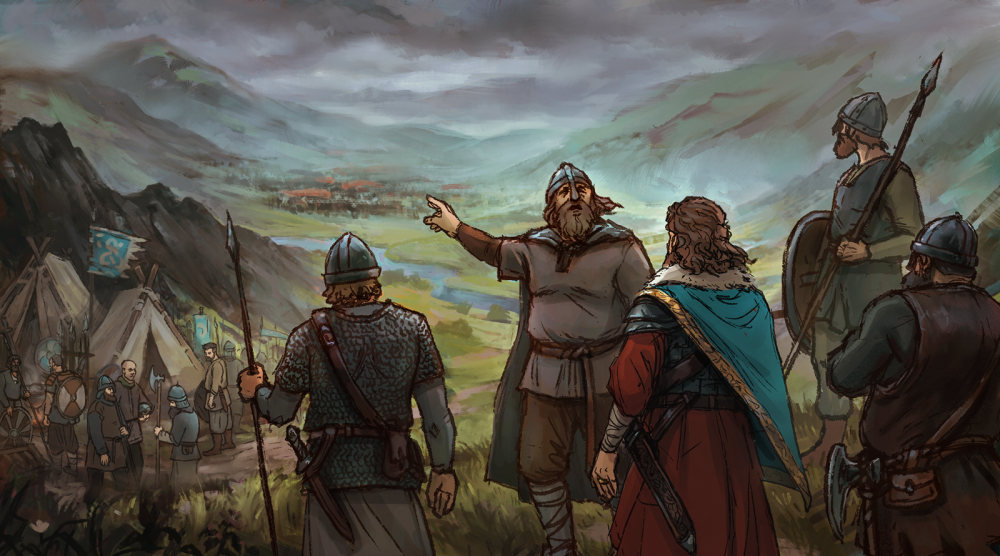
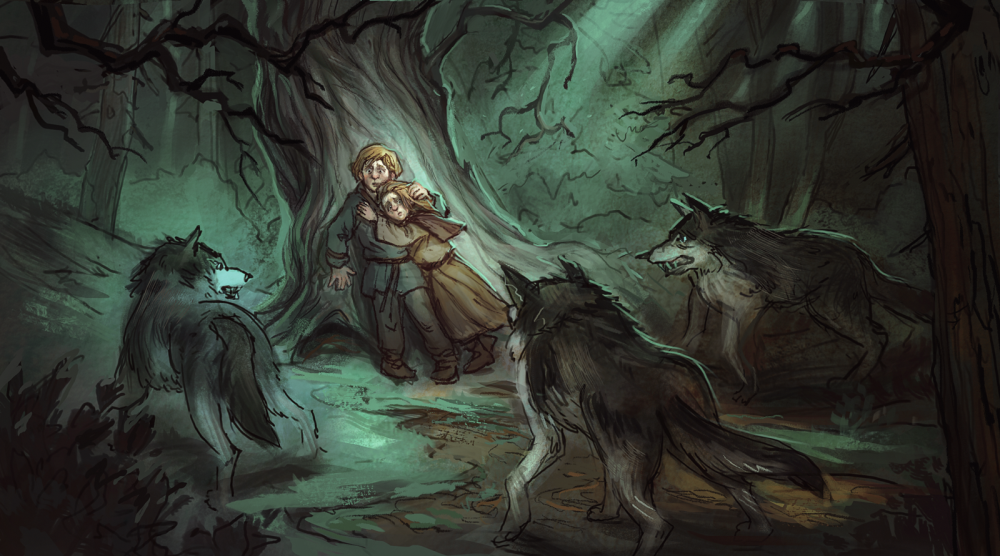
Ivan: One of the trickiest aspects of creating art for games is that more often than not you’re creating small, detached parts of the whole—a floating head for a portrait, a standing sprite of a character, an empty background to be occupied later. This means you have only limited control over how your art would actually look in the end, and a lot of effort goes just into making all those disparate elements mesh together. Making illustrations for Fallen Gods was a different beast—much closer to classical book illustration, it was a welcome change in how much freedom it allowed, both in terms of interpreting the stories, and in terms of control over your compositions, color palettes, and style.
Another important difference was in the role that the illustrations play in the game—the way I see it, they are not there to create a rigid, specific game-space, but to create little windows into the imagined wider whole, to expand the possibility space and to spark the players’ imagination. And each illustrator brought their unique flavor to that shared table, which was always inspiring.
Mark: Many of the event illustrations depict followers, enemies, scenes, items, and the like that appear elsewhere in the game as sprites or backgrounds. How do you approach illustrating those elements so that they complement the pixel art?
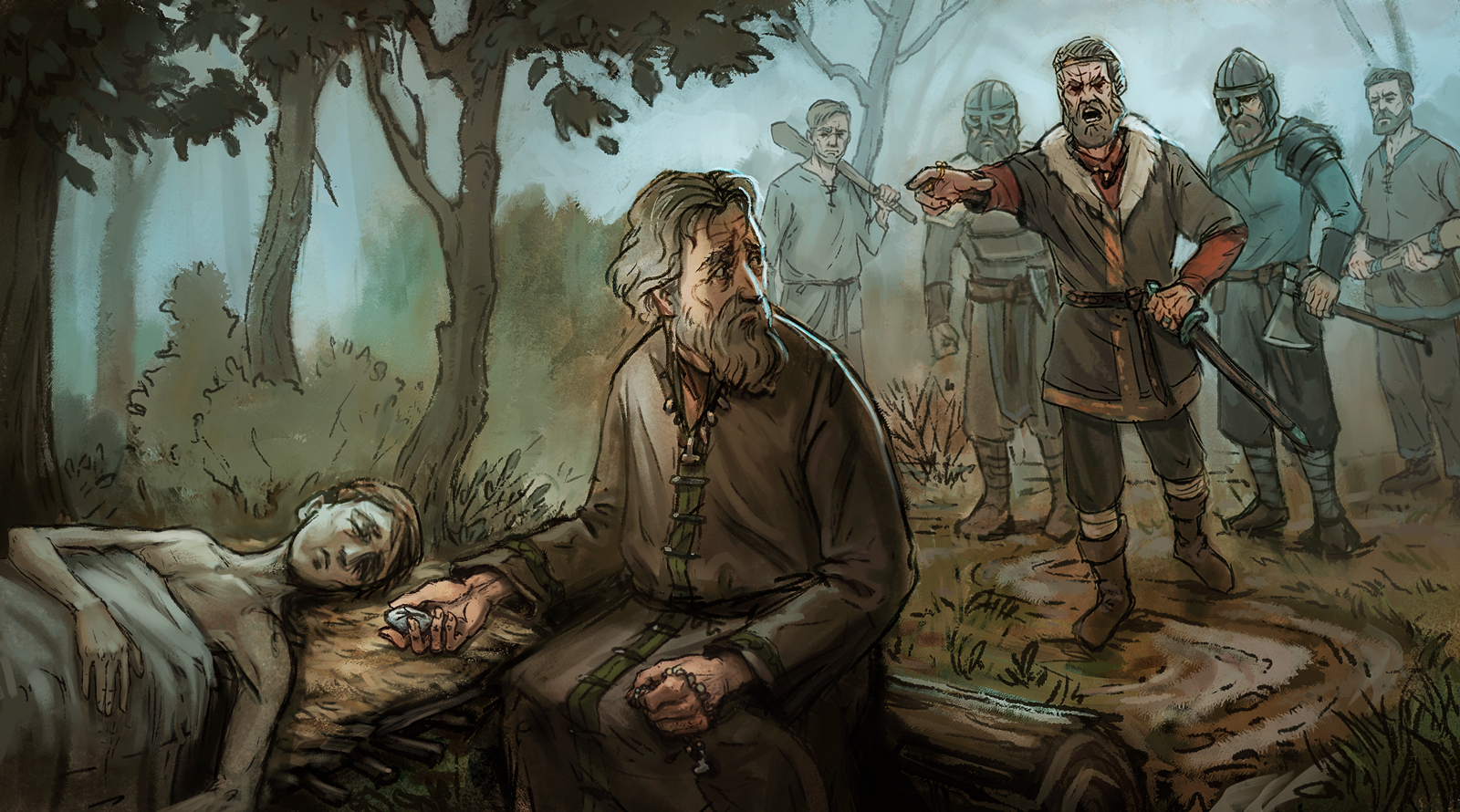
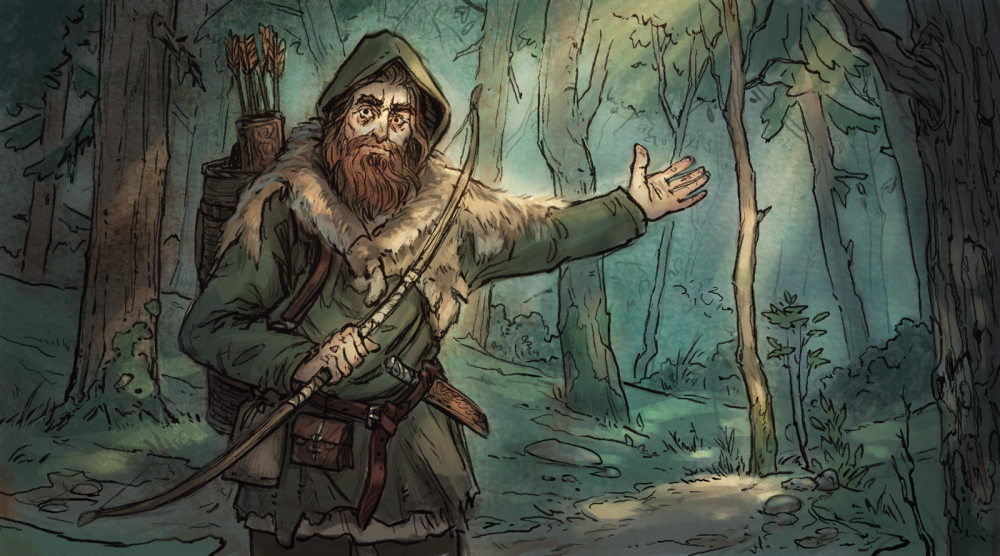
Ivan: Drawing characters that would also appear in the game as tiny pixelated people was an interesting challenge—the small sprites stand in for entire groups of people (churls, priests, fighters, etc.), whereas the ones I illustrate are individuals involved in specific events. There’s a clear difference in the level of abstraction there, but the player should still be able to relate one to another to make informed choices. My solution for this was to always take a couple of visual cues directly from the sprites—a piece of clothing, a haircut, a particular color, but change the rest—that way you both get a sense of continuity, and get to expand and enrich the world of the game by showing a wider variety of its inhabitants. In a funny way, it was a bit like drawing fanart for a game you’re working on yourself.
Mark: One of your largest undertakings on the project is a multi-stage victory path involving first a clash between armies, then a battle between the god’s warband and the elite enemy forces, and finally a direct confrontation with a single powerful foe. How do you capture the shifting scale and focus of a long event like that?
Ivan: I wanted to make that sequence feel grand and sweeping, so it made sense for me to think about it as if directing a film, and then boiling it down to a couple of essential shots. So we start with a bird’s eye view “establishing shot” to create a sense of scale, and then go down to the ground, right into the fray. Presenting a scene from different viewpoints has its own challenges—it’s easy to go too far and end up with a disconnected collection of images, but I've tried to anchor them with repeating visual elements and recognizable topography—the fact that the battle takes place on a river helped with that a lot.
Another important part of the cinematic approach was emphasizing the passage of time. Thankfully, as an illustrator you get full control of the weather in your art, so it was only a matter of deciding how it should change to best accommodate the story we’re telling. For that I’ve turned to another film technique often used in animation—making a color script. A color script is a visual way of presenting a story simply through the change of color palettes in the scenes. In our case we move from ominous gray to orange-red, and then to red and black. You can probably tell how this story goes just from that.