Welcome, Sinners!
As we’re amazed at how much positive feedback and cheering we're receiving after forecasting our upcoming roguelike card game, we're also receiving a lot of questions about some details that the project’s going to provide with its unique gameplay.
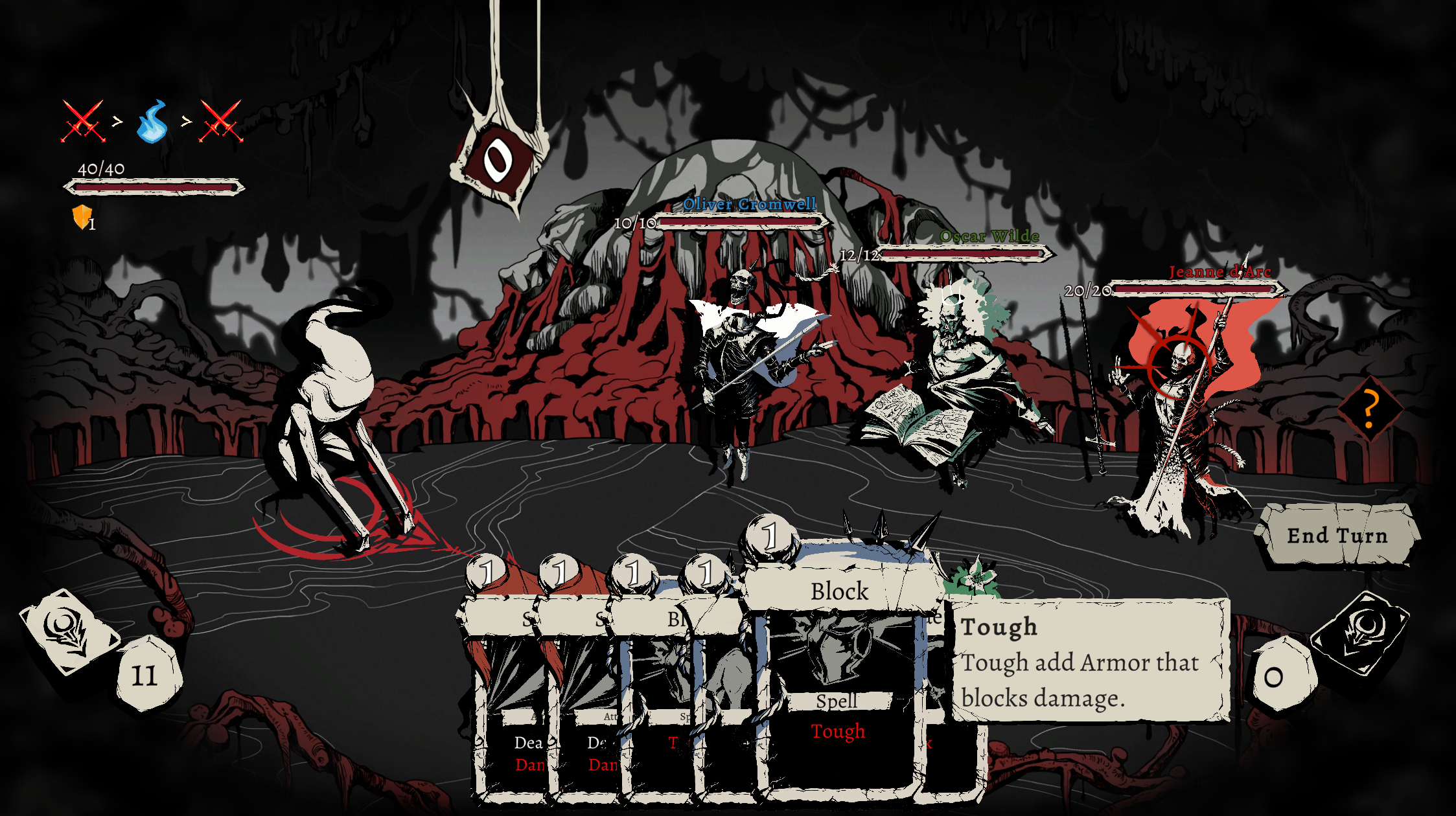
Today, we'll delve into the past, to show you the birth of one of the core features of Nadir: the Threat Points system.
From the very beginning, we wanted to have some kind of a twist on the classic turn system to give the game a distinctive feature. And soon, two ideas popped up one after another: a team of characters fighting a single, powerful enemy; and the need for a risk-management mechanic.
We developed many iterations of the combat system, to find the perfect spot and consensus between dreams, possibilities, and reality. We always knew what emotions we wanted to create – quite a wide range of them, actually – and we felt the engagement needed to achieve it. This is when we started prototyping, heavily and extensively. We crafted dozens of different ideas, even the craziest ones, and then we playtested them, mashed them with each other, and mixed them in the search of our unique feature. And it must be told: exploring the possible card game mechanics with paper-based prototypes gives so much fun!
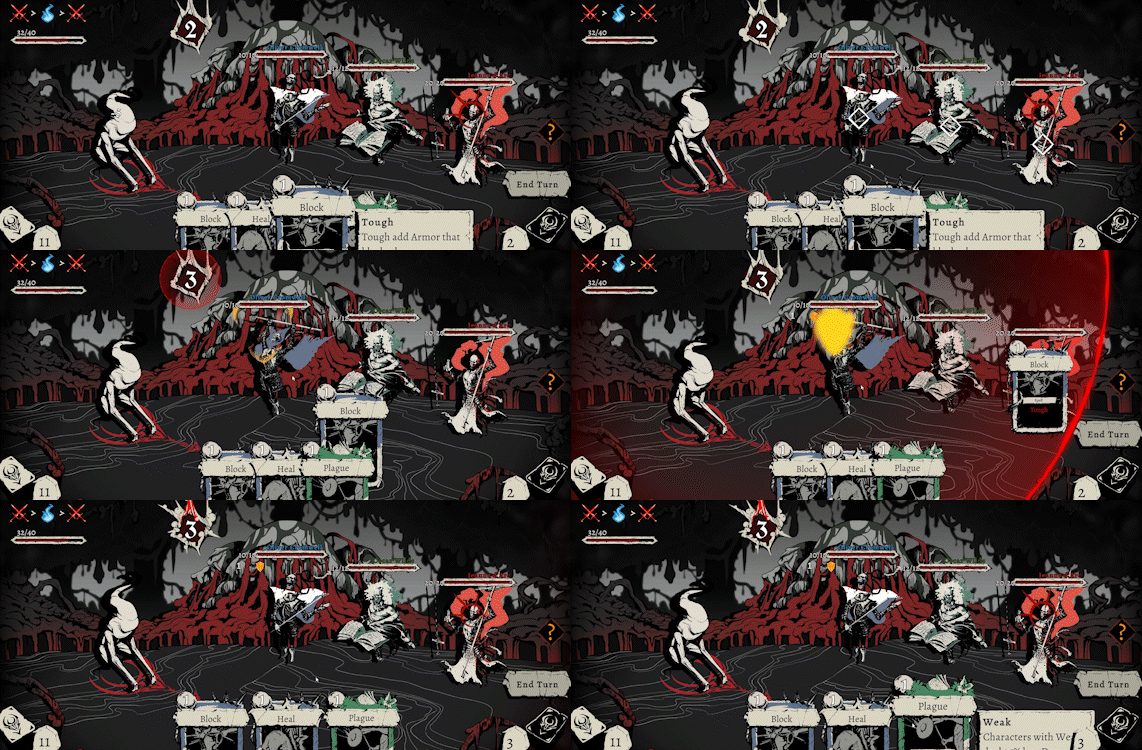
But to the point – as you may know, in Nadir we’re not limited with the number of cards that can be played during a turn, so we can build that tasty combo and destroy our opponents.
But if we can play as many cards as we want, where’s the catch?
In a pretty simplistic, but very satisfying risk-reward mechanic we implemented: Threat Points. In the game, you won’t be spending some boring mana or energy to make a move. Instead, each and every card in the deck has a Threat Points value. When you play any card, this value is added to the Threat Counter. The more points your Threat counter has, the more powerful your enemy will become.
Now, you must know that your adversaries have their own unique and powerful abilities. To use them, they need the Threat Points, so in order to rage up and turn the odds against you, they’ll gladly take a beating (they’re sinners and demons, after all, they’re used to it… kind of). Knowledge is the key, and it’s so true in Nadir, where knowing the capabilities and feats of your enemies can guide you safely on your journey to the depths of hell – or end it brutally.
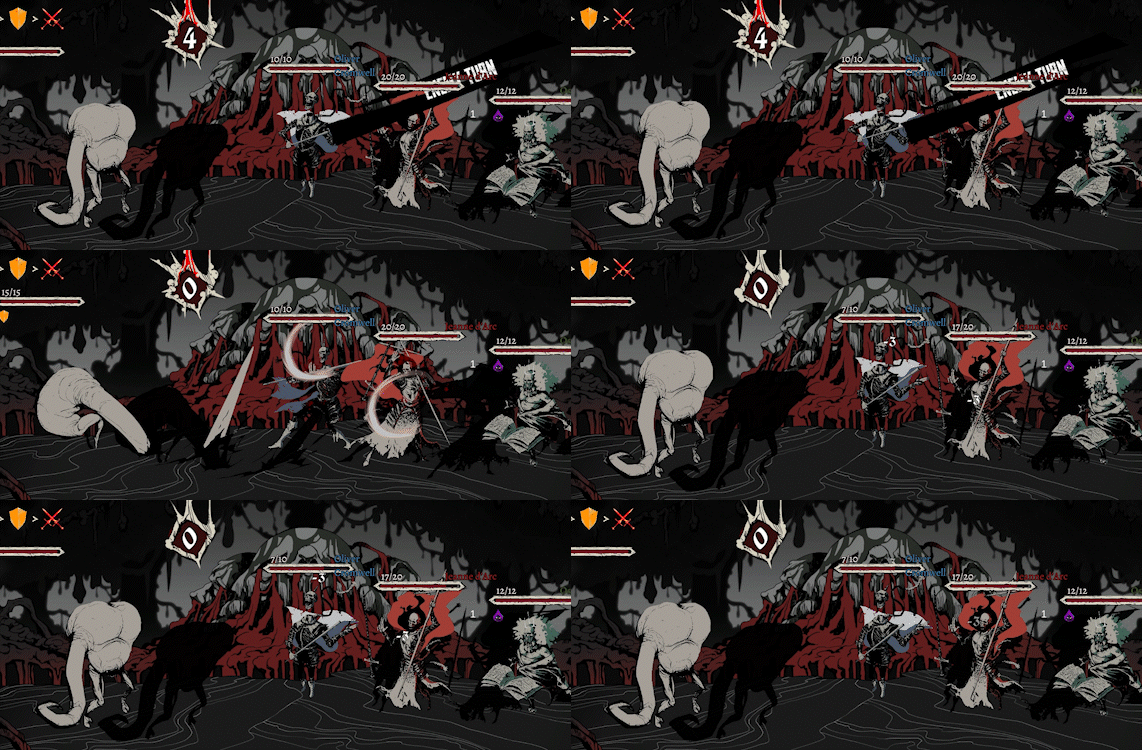
Use this knowledge to find the right balance – play as few cards as you can to keep the Threat Counter low, but also look for ways to deal as much damage as possible. It’s a pretty wide topic and deserves another devlog entry. So, next time we’ll talk about the deckbuilding in Nadir!
Let us know how you like the idea, and add the game to your Steam and Kickstarter wishlists! Follow our Socials for some more insight and pledge your souls here:
Wishlist on Kickstarter!
Wishlist on Steam!