Major update
[Blosharper] Early Access v1.0 Beta: A Lower Bar to the Table
Blosharper Demo · published · build 24881042
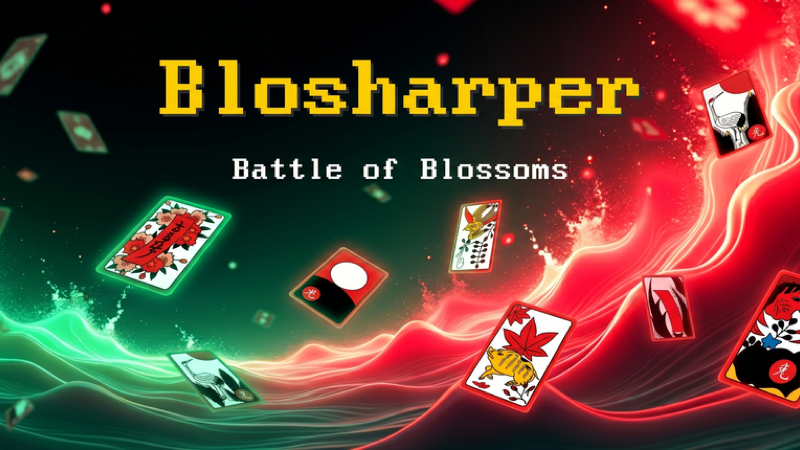
Blosharper Early Access v1.0 Beta Update
Hello, Sharpers!
With today's update, Blosharper enters its v1.0 beta — the final stretch on the road to release.
This update has one direction: lowering the bar to the table. Newcomers learn each hand the moment they make it, the curious get to watch the game play itself, and long-time Sharpers get their hours back — on the record. And while this beta was being tempered, the table picked up a new sound — the people at it now have voices.
The People at the Table Have Voices
- A breath on the speech bubble: as a character's line appears, a short sound of theirs now lands with it — a sigh, a laugh, a grunt. It is not a voice reading the lines; not a single word is spoken. Just a piece of breath laid over the text — and that one piece changes the air at the table.
- A first step: not every moment has its sound yet. This is the first batch, and we intend to keep adding and refining — the table will only get more alive from here.
Learn Each Hand the Moment You Make It
- The best teacher is the hand you're holding: the first time you complete a scoring hand, a guide appears in a quiet moment — the cards, how to remember them, the score, and how to use it. No separate lessons; you learn at the table you're playing.
- Six representative families: Bright, Ribbon, Animal, Monthly Pair, Monthly Set, and Junk — one guide per deal, at most once per round, so the flow of play is never interrupted.
- Rain is called out separately: some hands score differently when the Rain cards are involved — one way costs you, the other pays. The two run in opposite directions, so each gets its own note.
- Review anytime: every hand you've learned can be revisited from the hand-ranking chart. Seasoned Sharpers can turn Hand Guides off in the settings.
Step Away, and the Table Runs Itself
- A real game, live: leave the title screen idle for a while and a game starts on its own. It's not a recording — it's live play on a freshly shuffled deck every time, and the one holding the cards is a relentlessly trained AI card sharp. The fingerwork alone is worth watching.
- Learn over its shoulder: watch the AI sharp pick its cards and build its hands, and you'll pick up how to read hands and run a table — the oldest way there is to learn the game.
- Watching is free: the showcase never touches your save. No records, no saves, no traces. Touch anything and you're instantly back at the title.
Continue Goes Straight In, New Game Asks Once
- No second question: pressing Continue on the main screen now takes you straight to the table, with no confirmation in between. You had already pressed the button that says "continue" — asking again was never good manners.
- The question moved where it belongs: what that confirmation actually protected was your save, not your continue. So it moved to the destructive side — a "New Game" entry appears in the main screen's bottom menu only while a game is in progress, and it tells you plainly that the current game will be lost before starting fresh.
A Summons from the Director
- So the big moment isn't missed: some Sharpers cleared their debts and walked right past what came next. Now, when the time comes, the Director asks for you at the pharmacy — decline if you like; the marker on the pharmacy button stays until you're ready.
The Black Bank — a Passbook, and "Settlement Money"
- The passbook: if your balance ever looks different than you remembered, you can now ask for the passbook. Deposits, storage fees, every movement — one line each. The ledger doesn't lie.
- Your first settlement money: at a certain point in your journey, the back-alley bank opens its doors to you — and what has quietly accumulated is handed over as settlement money. Money that wasn't in your hands yesterday. The exact figure is right there in the passbook.
- Laundering was never cheap: putting money away in the back alley has its price — the hotter the cash, the costlier the wash. What's taken is always shown on screen before you commit.
- The more you grow it, the bigger the cut: the laundering fee is not one fixed number — the closer this run's deposits come to the balance you started the run with, the higher the rate climbs, and doubling your money takes it to the ceiling. Splitting the deposit doesn't help; the rate is set by the run's running total. Walking in yourself does: money that drifts in on its own pays full price, while a deposit you make in person is discounted by your Insight — on the base portion only. The part that grows with your growth is discounted for nobody.
Your Hours, On the Record — the Training Journey
- Total playtime: the time you've given this journey is now recorded, and you can check it under Achievements in your Collection. Nothing is shown during play — time at the table should slip by unnoticed.
- Five cards, face down: five cards now sit face down above those hours. We won't tell you in advance what they're for — reach that moment, and the card turns over and names itself.
- The first time only: each record is engraved once per save, at the first moment you reach it — when it happened, and how long it took you to get there.
- The road already walked counts: if you passed one of those moments before this update, the card is turned over for you. The exact hour wasn't kept back then, so it simply reads "-".
- More room in the details: record details went from three columns to four.
Proper Credits
- The end of the long road: after the closing scene, a proper credits roll now plays — the names behind this table, carried on the twelve months of the flower cards.
- The time it took to get there: the hours engraved on the closing screen now speak of how long it took to reach that milestone.
- Where silence is the point: removed the typewriter beeps from the lines engraved on the closing screen. That screen is meant to be quiet.
- The names are on the roll: since the closed-test days, a handful of players have kept catching this table's flaws, testing what came next, and pointing out the way this table should go. Their names now ride in the credits under Special Thanks — this table was never built by the developers alone. Who is on it, we will let the roll say.
- Found, once again, by you: a good share of the fixes in this note began as reports from Sharpers — including problems that had quietly slipped past many versions until your eyes caught them. The names that kept this table honest are on the roll as well.
What Made It Grow, Not Just How Much
- The reason comes first: the growth notice used to say how much a stat rose and never what caused it. Now a single cause leads the line, and when several stack, they are grouped by family.
- Numbers corrected: fixed some effects displaying a larger cumulative multiplier than they actually granted. Nothing about the table changed — the display finally tells the truth about it.
- Kept on screen: fixed the notice spilling off both sides of the screen in some languages.
- What is building up now says so: of the five streaks that build as a run goes on, two — Offbeat and Hot Hands — had no marker on screen at all, so there was no way to tell how far either had climbed. They now appear alongside the other three, with the count and the multiplier your next play will carry.
Back-Alley Flavor
- The collector calls on empty vaults too: even with nothing on deposit, the collector no longer passes in silence. Whether it's sympathy or a sneer depends on how you got there.
- Winning on the edge of getting caught: what happens when you win with the suspicion gauge maxed out — see for yourself.
- A first meeting with the Rat: the first time The Rat catches your hand where it shouldn't be, a short scene now stands in that moment. What passes between the two of you is best met in person. Once you've seen it, you can revisit it later from your recollections.
- One step less to proving your innocence: having decided to prove your innocence, you still had to pass one more window that asked nothing and told you nothing. It's gone — the decision now leads straight into the contest. What's at stake stays written on screen the whole way through.
How a Run Ends
- An ending that says so: a run used to end with the screen simply moving on, leaving you to work out what had just happened. Every way a run can end now has a closing screen of its own.
- When you go down: if your body finally gives out, red letters rise over a black screen. An ending you cannot take back should not wear the same face as one you can. The sound of that moment was reweighted to match.
- How you got here: the summary now tells you how this run ended as well — whether the bank stepped in, whether something kept you standing, whether the money you had put away changed hands. If several of those happened at once, you see all of them.
- The moment the certificate took the hit: a certificate spending itself to keep you alive used to happen in complete silence — the most consequential thing at the table, and nothing on screen said a word. It is now written plainly into the summary.
- The last repayment asks first: clearing the last of your debt is a choice you cannot take back. You are now asked before the money leaves your hands, and saying no changes nothing at all — the place to ask is the place you can still turn around.
Balance
- A sealed skill now does nothing at all: stat bonuses were not the only thing sealed skills had been quietly leaking — score multipliers, interest on your deposits, shop discounts, and even the rescue that keeps a run alive were all passing straight through the seal. A sealed skill now produces no effect anywhere. Opponents who seal your tricks are exactly as threatening as they were meant to be.
- As described, so it works: skills whose descriptions and behavior had drifted apart have been audited and corrected. This pass caught two skills that paid out nothing at all even with their conditions fully met, and two more that spent an entire accumulated pool into a hand that could never pay it. What you have banked now waits for a hand that can actually pay it out.
- The deck is a runway, not a purse: scores swollen by deck power still win the match — but the swelling no longer converts into money. The deck remains what carries you into deeper rounds, while your wallet is filled by how well you actually play. And so it never comes as a surprise at settlement, the deck screen tells you this rule up front.
- The gamble was too cheap: the back-alley master's Skill Training comes cheap because you don't know what you're getting. It had become so cheap that leaving it to luck beat picking your own bonus offer after a match. That isn't a gamble — that's just the correct answer.
- The fee is now five times higher: the base training fee rises from 5,000 to 25,000, putting the price in line with what comes out of it. Luck, which had been lifting training results hard enough to walk straight past that price wall, has had its pull on the master's roll cut sharply as well.
- The jackpot stays: a formidable skill can still fall out for a pittance. Training is still a back-alley gamble — it's just a gamble you pay for now. The quality of the bonus choices you pick from after a match is exactly as it was.
- Sell it, and the streak goes with it: selling or losing Winning Streak now clears the streak you had built up. Until now you could sell it and buy it back to skip the cost of rebuilding. Its sibling streak effects had always worked that way.
Bug Fixes & Stability
- Four achievements that could not be earned: four Steam achievements would not unlock no matter how fairly their conditions were met — one had been that way since the day the table first opened. 📚 Know-It-All still demanded old items that no longer exist, so a complete collection never counted; 🔄 Double or Nothing and 🔥 God of Streaks happened right there on the table, but no record of it was ever kept; and 🃏 Leave Nothing Behind checked its condition at a moment when it could not be true. All four are fixed.
- If you already qualify: there is nothing to redo, and your saves are untouched. Know-It-All unlocks on your next launch; Double or Nothing and God of Streaks unlock the next time that moment comes around.
- Achievements now speak the game's language: achievement names and descriptions had drifted from the words the game actually uses — in all seven languages. They now ask for things by their in-game names.
- No more winning empty-handed: you could win a match, with earnings plainly on the table, and still walk away with nothing — when several cuts stacked up, each was measured against the full amount, and once their sum passed the total there was nothing left. Each cut is now taken from what remains after the one before it. The rates themselves have not changed — only the part where everything vanished. If this ever happened to you: it was never your mistake.
- One card out, two cards gone: fixed Entrust removals taking a second card with them — pull one Pi of a given month out of the deck, and that month's other Pi could quietly go with it, never to show up in later removal choices again. Nothing was wrong with the display; the deck really was getting thinner. We found it thanks to a Sharper who kept reporting until it was pinned down. Saves already caught by this heal themselves — the lost cards return to the deck on the next round.
- A Double-Pi is not a Pi: a few features had been treating the two as the same card. Entrust: Add Pi and Entrust: Remove Pi now do exactly what their names say — they touch neither Double-Pi nor the Chrysanthemum cup. The 🧹 Junk Purge achievement carried the opposite flaw — it could unlock whether or not its condition was met. Its judgment now reads the very same rule.
- Nothing to remove, nothing for sale: a removal Entrust could sit on the shelf even when the deck held nothing it could take — costing you the money and the pick while doing nothing at all. It now appears only when there is truly something to remove, and returns the moment you acquire a qualifying card again.
- Not one card leaves the deck in silence: three more problems of the same grain, found and blocked — buying a card you already owned a copy of from an Entrust took your money without the card ever joining the deck; a card returning from a lifted seal vanished on the next round; and when a card-holding skill left the table, the hand refilled itself with more than it had actually lost, quietly thinning the deck. The cards you paid for, and the cards you got back, now stay in your deck.
- Records at the very top: past a very high score, every finished game announced a new record while the record itself never moved, and different best records displayed as the same number. Fixed — the ledger near the summit is honest again.
- First steps, unblocked: fixed a freeze that could occur during the tutorial's skill-learning step.
- A stopped road, reopened: fixed a situation in which the game could go no further. Saves already caught in that state free themselves on the next launch.
- Stuck on the way through: fixed the game being unable to go any further on the way into the next round, and during a story scene. Both were places you could do nothing at all, so both were reopened. A story scene also no longer sits and waits while the game window is minimized or completely covered by another window — it now runs itself through to the end, so the table has already moved on by the time you come back.
- A story that would not go on: fixed the story not carrying any further in certain situations.
- A fallen run reaches the save too: if the game was forced closed at the very moment your body finally gave out, that ending could fail to reach your save, leaving nothing you could do with it the next time you opened the game. That moment is now written to the save ahead of the scene, and a save already stuck that way sorts itself out on the next launch.
- However it closes, the run still wraps up: fixed the confirmation that appears at the end of a run being force-closed by a screen change — after which every later end of a run was silently skipped.
- What a win leaves you, stays: fixed techniques newly discovered in a run you won going unrecorded as the run wrapped up, so they were missing the next time you sat down. What a win earns you now stays earned.
- No lessons you already know: fixed a prompt offering to teach a technique you had already learned. Techniques you have not learned yet will keep finding their way to you.
- The winner's last word: fixed the opponent's line at the end of a match being lost before it reached the screen, and gave that line about a second more room before the settlement pushes it aside.
- Time to read what you're owed: fixed collection amounts and storage fees being covered by the next scene before they could be read.
- Leave the shop, and the counter closes too: in languages where the teller's line runs long, walking out of the shop before it finished could leave the withdrawal window floating alone over an empty table. What a visit opened now closes with it.
- The passbook is introduced by its owner: fixed the wrong voice doing the honors when you looked over the passbook in the shop. The ledger's keeper — the Director — now speaks for his own book.
- Even failure deserves a moment: fixed the result screen closing almost instantly when every awakening attempt ended in failure. It now stays long enough to be read and set down.
- The menu that opened underneath: fixed the game menu opening beneath a story scene when the menu key (F10 / gamepad Options) was pressed — it made a sound and then nothing was clickable. It is now quietly ignored while a scene is playing.
- While a scene plays, Escape belongs to the scene: fixed the cancel key (Escape / gamepad B) going to the shop still sitting behind a scene the shop itself had started, instead of to the scene. Nothing appeared to happen on screen, while behind it the game quietly came back to life — and you needed a second press to reach the scene at all. Keyboard and gamepad navigation no longer wanders onto invisible buttons on the covered screen either.
- Step out, come back, nothing moved: fixed cards you had just played ending up pinned to the top of the screen after a trip to the settings, help, or Collection screen mid-game. Full-screen menus now hold the table still while you're away.
- Tabs remember where you were: switching tabs on the settings, help, Hand Ranking, Collection, and Deck screens used to leave you at whatever scroll position it felt like. A tab you open for the first time now starts at the top, and a tab you return to picks up right where you were reading. All five screens follow the same rule at last.
- Notices, every time: fixed the auto-repayment and rescue notices at the end of a run only appearing the first time.
- Honest exit prompts: fixed the exit prompt promising "save and quit" in special games that do not save.
- The game you continue is the same game: fixed a save resuming into a hand — or a turn of events — that wasn't the one you had actually played. The rolls that decide a run now all belong to that run.
- A seeded game stays a seeded game: fixed seeded runs reaching into your save — the tutorial reward being marked as claimed without ever being received, and the save slot and its backup being overwritten. Seed links now actually start on the seed they carry, and they ask before discarding a game in progress.
- Old demo saves: fixed an old demo save showing your debt as fully cleared and lighting up a path that only continues in the full game. Affected saves put themselves right the moment they are loaded.
- Timing corrections: fixed a few scenes appearing at moments that didn't match the situation.
- No fanfare for zero: fixed the Go presentation running in full — flashes and all — on a round whose earnings had fallen to zero, celebrating nothing nine times over. It read as mockery. The breakdown still reveals in full, so you can still read why the number is zero; only the fanfare goes quiet.
- The opening hand comes one card at a time: fixed the opening hand landing all at once instead of card by card. It showed up when the machine was at its busiest — right after launch, or while a saved game was being loaded. Each card now waits for the one before it to settle, so however busy things get, the deal stays a deal; when nothing is in the way, the timing is exactly as it always was. The tutorial's first deal behaves the same. The card art is now unpacked while the game boots, closing the last route by which a whole hand could still arrive at once.
- The bottom card is revealed, not blown out: choosing which card to pull with Bottom Dealing used to wash the card white under your cursor, right when you most needed to read it. It now takes a gold ring instead — the card stays readable, and it is the same marker the gamepad uses, so both hands point at the same place.
- Bottom Dealing, reachable by pad: fixed only the first candidate being selectable with a gamepad when Bottom Dealing offered several. Left and right now step through the candidates and wrap around at the ends; up still takes you out of the choice, as before.
- The hand-ranking chart, drawn properly: fixed the chart's borders not being drawn at all, and the description column — the one meant to sit quietly behind the hand names — coming out exactly as bright as they were.
- Broken glyphs: fixed characters appearing as boxes (□) on certain screens in some languages, and long words breaking out of the record cards.
- Russian screens, tidied: fixed buttons and labels overflowing their boxes and breaking the layout on some Russian screens.
- Six languages, re-read line by line: every string added since the last full review was re-checked against the source in all six translated languages — 186 fixes in all: unified terminology, corrected mistranslations, grammar and punctuation set right. In English, the game now says Double-Pi wherever it means one, the awakening tutorial names the button actually on your screen, and the loan shark keeps calling you "Brother" the way he always meant to. A few lines that could fall back to Korean are properly localized as well.
- Fullscreen stays fullscreen: fixed the fullscreen setting quietly reverting to a window on the next launch.
- The window stays within reach: fixed the game window being restored to an off-screen position after a change in monitor setup, leaving the game invisible.
- Four more window sizes: 960×540, 960×600, 1080×608, and 1080×675 join the resolution list — room for the table on a smaller monitor, or beside whatever else you keep open. The smaller the window, the more the whole table scales down with it.
- The setting follows the actual screen: when you entered or left fullscreen from outside the game — a shortcut, or the window button — the resolution setting kept showing the old state, and picking fullscreen again did nothing at all, leaving no way back. The setting now follows the real state whichever way you switch, and leaving fullscreen restores the windowed size you had last. A setting already saved out of step corrects itself on the next launch. A profile that boots straight into fullscreen had no idea what window to return to and simply guessed; it now measures the restored window instead.
- Big numbers on narrow screens: on screens taller than they are wide, the score, the multiplier and the money figures overran their panels and pushed each other around. On those screens the large figures now fold into short units, while roomier screens still spell out every digit exactly as before. A folded figure always rounds down so it can never read higher than the real amount, and the exact number is still there on the target-amount readout.
- Menus offer only what you can use: fixed entries in the window menu staying clickable outside a run, and keeping the shape of the run that had just ended. They now light up only when they apply.
- The tail of the first credits track: fixed a faint pop heard as the first song of the credits roll came to an end.
- Settings, tidied: reordered the entries on the settings screen.
- The right culprit behind a seal: the notice on a sealed skill always named the same opponent, whoever had actually placed the seal. The name now appears only when that opponent is the one who sealed it; every other seal is reported without a name.
- The master's shelves fit the screen: the back-alley master's shelves used to spill past their frame on wide screens. Scrolling that comes from having more on offer stays as it is — it is now simply obvious that it's there.
- A skill that described the wrong effect: one skill's description and preview figure pointed at something other than what it actually did. Description, preview, and behavior now say the same number.
- Typing into the seeded-game field: fixed everything typed right after the dialog opened being discarded until you clicked the field once.
- What you staked is what you staked: fixed the amount committed to a high-stakes match being recomputed at settlement and drifting from what you had actually put down. The figure is now fixed the moment you commit it.
- First-run card art for Chinese: adjusted the card art picked by default the first time the game runs in Simplified or Traditional Chinese. Art you have already chosen is untouched.
- A banned card is banned for that match only: after certain boss matches, a card that had been banned or hidden during the match could stay that way into the following round. Cards are now released at the round boundary, no matter how the match ended.
- The last road to a zero settlement: after betting everything and losing it, a round in which you went on to score again could settle at exactly zero — the deck's cut was measured against a pot it had already eaten. What was staked on the lost hand now leaves with that hand, and the score you make afterwards is entirely yours.
- While a scene covers the screen, the table behind it is locked: with a story scene covering the screen, the reward window still sitting behind it kept answering keyboard shortcuts — rerolling its list or opening your bag somewhere you could not see. Other shortcuts that had been living on under a scene are now shut with it. What you can see is what you can operate.
- A skill handed over without payment: the skill was granted first and charged for afterwards, so if the wallet ran dry in between, the skill could stay without ever being paid for. Payment now comes first, and if you cannot pay, the offer is declined exactly the way the existing insufficient-funds notice does.
- No medicine for a body already full: medicine could be sold to a body already at its ceiling — money out, nothing in. With nothing left to restore, the sale no longer goes through.
- The play and discard counters tell the truth: both counters listed effects that do not move those numbers at all, while the one effect that does raise them was missing. The breakdown now lists only what actually moved the number, by exactly the amount it gained this round.
- A sealed skill no longer shows up in your hints: sealed skills stayed alive in the hint scan, the "almost there" forecast, the score preview, and the status readouts — so the screen was pointing at Hands that could no longer score. What the screen shows and what the table counts now read the same rule.
- An extra discard that vanished: an effect granting one extra discard was cancelled out by the very next discard, so the net gain was zero (it only happened while you still had discards left). The extra one now survives to the end of the round.
- Opening the stats screen pauses the table: the stats screen opened by hand did not hold the table still, so time kept running while you read. Like every other full screen, it now stops and waits.
- The stop button that was gone when you got back: step away to patch yourself up, come back, and the stop button could be missing until you clicked a card. The board now restores itself the moment you return. Found thanks to a Sharper who reported it.
- A continued run coming back short-handed: in the brief window between played cards leaving your hand and the refill arriving, a save recorded the hand as it stood — short — and restored it that way. Loading a run now completes the interrupted refill; saves already caught by this repair themselves the next time you open them.
- The killing blow that disappeared: a lethal hit arriving while the "keep going?" window was open was dropped instead of processed, and the run carried on at zero health. That blow now lands the moment the window closes — and of course does not land if something saved you in between.
- The cursor that never came back: in some situations, moving the mouse or touching the screen would not bring the cursor back, so a perfectly live screen looked frozen. Any input now summons it.
- Expanding the pouch closed the pouch: pressing the button to add a slot to your sleight-of-hand pouch closed the whole pouch instead of adding one. Fixed.
- Line breaks in the help diagrams: fixed the help screen's diagram labels showing two literal characters where a line break belonged.
- Beyond that, the background music was re-chosen for a few scenes, and many smaller presentation and display issues were addressed — the coin cues stacking into one instant as reward stars filled, a scrollbar in one shop that did not match any other, and the German wording for the card art among them.
The road to 1.0 is nearly walked.
To every Sharper who has stayed at the table with us — thank you.
May sharp fingers and good fortune find you beyond the lowered bar!
More from Blosharper Demo
Other announcements
[Blosharper] Early Access v1.1 Update: Recollections Restored, Prices ResetBlosharper Early Access v1.1 Update Hello, Sharpers! With today's update, Blosharper steps up to v1.1 . The tempering toward full release continues — and this step moves in two directions at once: honest prices at the table, and everything you have already lived through back where it belongs. Balance · From Act 3, falling costs you the bank as well : One rule changes when Act 3 opens — from tha…[Blosharper] Early Access v0.9 Update Notes: New House RulesBlosharper Early Access v0.9 Update Announcement Hello, Sharpers! The v0.9 update for Blosharper is an update devoted to the table itself. The back-alley bank changes its rules, seven new skills hit the table, one sleight-of-hand finds its own color, and your best records now open up to show what's behind them. We've corrected long-standing scoring errors, and re-read every one of the seven lan…[Blosharper] Early Access v0.8 Update Notes: The Story DeepensBlosharper Early Access v0.8 Update Announcement Hello, Sharpers! The v0.8 update for Blosharper is an update devoted to the story this game has been holding back. The late chapters of the journey have been greatly expanded with new encounters and events, and every story scene in the game has been rewritten from scratch — new stagecraft, new prose. Alongside it: revamped record screens, dice th…