Battle Playtest Now Open for KIT Three Kingdoms: Heroes at War
KIT Three Kingdoms: Heroes at War · published
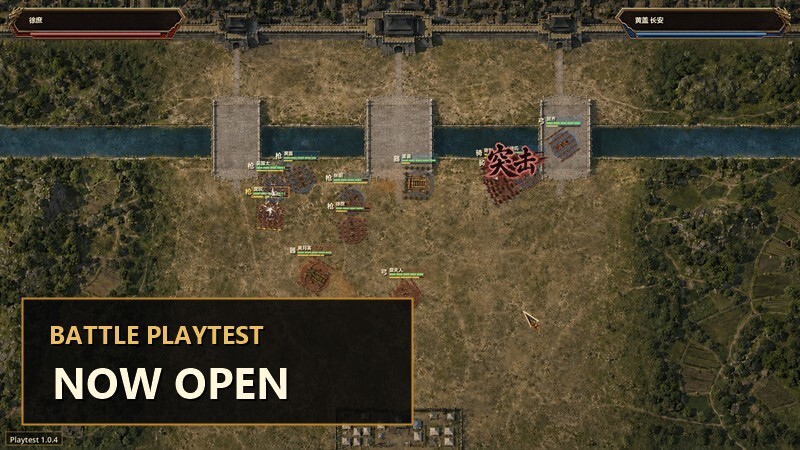
The Battle Playtest Is Now Open
Hello, everyone!
The Battle Playtest for KIT Three Kingdoms: Heroes at War is now open. Visit the main game’s Steam store page and click “Join the Playtest” to add the Playtest to your Steam Library and download it.
The game is still being developed by a solo developer. This Playtest is a standalone test build focused on the core battle systems. It is intended to let you experience the fundamentals of siege attacks, siege defenses, and field encounters while helping me gather real feedback as early as possible on controls, pacing, balance, AI, UI, and stability.
What Does This Playtest Include?
Siege Attacks, Siege Defenses, and Encounters
The current test includes three core battle scenarios. You can select officers, assemble your forces, arrange formations, and then either observe the battle or take direct command.
Manual, Semi-Automatic, and Fully Automatic Command
You can select units directly and order them to move, attack, or adjust their battle lines. You can also retain control of key orders while letting the AI assist units without explicit commands, or use fully automatic mode to observe how officers, troop types, formations, morale, tactics, and supplies work together to shape the outcome.
Troop Types, Formations, and Facing
The basic troop types include infantry, spearmen, cavalry, archers, and siege units. Cavalry can build charge momentum while moving. An intact spear formation that is facing the enemy head-on and has not yet become engaged in melee can stop a cavalry charge and counterattack. Ranged attacks from archers can temporarily suppress spear formations, creating an opening for other units to advance. Formation, facing, distance, and order of engagement are often more important than troop-type icons alone.
Siege Objectives and Siege Engines
In siege battles, you must contend with the city gate, walls, and stronghold integrity. Battering rams, scaling ladders, ballistae, and catapults each serve a different role. Your choice of target and the timing of your advance will affect the efficiency of the siege.
Supplies, Reserves, and Morale
Supplies are consumed throughout battle. If the attackers run out of supplies, they may be forced to retreat. If the defenders run out, the city’s defenses will weaken further. Reserve troops can be used to reorganize and replenish units, while changes in morale affect their performance on the battlefield.
Officers, Traits, Tactics, and Duels
Officer attributes, troop roles, traits, and tactics all shape the course of battle. Tactics can deal damage, disrupt formations, affect morale, or strike at enemy supplies. When the conditions are met, officers may also enter a duel upon meeting in close combat, using six actions: “Slash,” “Thrust,” “Lift,” “Disarm,” “Guard,” and “Evade.”
How to Join
- Open the Steam store page for KIT Three Kingdoms: Heroes at War;
- Click “Join the Playtest”;
- Add the Playtest to your Steam Library, then download and launch it.
About the Scope of This Playtest
Please note: the current Playtest focuses on a standalone battle core. It is not the complete strategic campaign version of the main game. The grand-map management, city administration, faction expansion, and full campaign scenarios described on the main game’s store page are still in development and are not included in this Playtest.
The current visuals, numerical values, balance, UI, and some presentation elements do not represent final quality. I will continue refining the battle core based on development progress and player feedback, gradually building it into the complete main game.
Tell Me About Your Experience
I would especially appreciate feedback on:
- Whether officer selection, force composition, and formation deployment are clear;
- How the manual, semi-automatic, and fully automatic modes feel to control;
- Whether cavalry charges, spear-formation counters, and archer suppression are easy to understand;
- The pacing and balance of siege battles, supplies, reserves, morale, tactics, and duels;
- Battle AI, UI, localization, performance, and bugs.
Thank you to everyone willing to take part in the test. You are also welcome to wishlist and follow the main game. Future development updates and patch notes will continue to be posted here.
MAG & Kitetsu