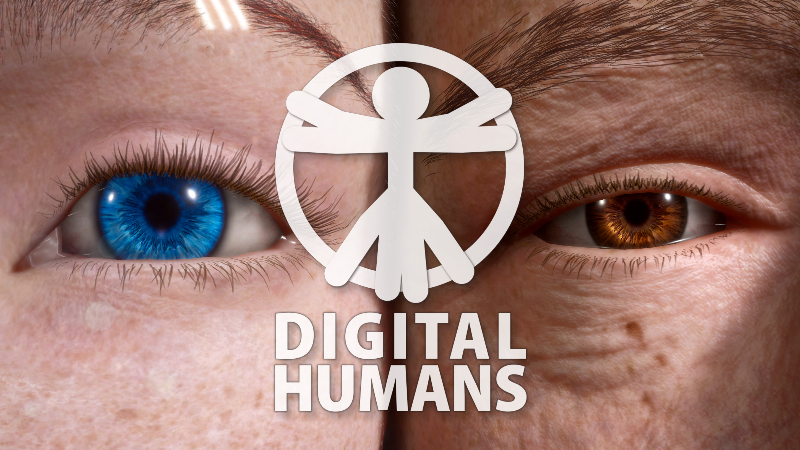
Update 0.5 brings the biggest visual upgrade to Digital Humans so far, alongside major improvements to the local AI pipeline, conversational responsiveness, emotion system and performance.
Here’s what has changed since March:
Visual Upgrade
Major improvements to character rendering
Reworked skin, eyes and hair
New strand-based hair rendering
Improved materials and lighting
Better facial presentation during conversations
General scene, post-processing and visual quality improvements
Various performance and rendering optimizations
Local AI & Conversations
Updated local LLM models
Reduced conversational latency
Improved conversation behaviour
Improved context handling
More natural and consistent character responses
Continued optimization toward sub-second interactions wherever hardware allows
Emotion & Character Behaviour
Expanded emotion synthesis pipeline
Improved sentiment interpretation
Emotional state now influences character animation and presentation
Smoother transitions between emotional states
Better synchronization between dialogue, facial behaviour and body movement
Under the Hood
Introduced a streaming architecture across the conversational AI pipeline
Improved coordination between STT, LLM, emotion, animation and TTS
Memory and VRAM optimizations
Faster model initialization
Numerous stability fixes
What’s Next
Next up is multilingual support, including multilingual voice input and multilingual character voices.
Digital Humans continues to move toward its core goal: natural, real-time conversations with AI-driven characters, running entirely on your own hardware.