Comrade commanders!
Another DevBlog, another Steel Division 2: Battle of Dukla Pass preview awaits! In today’s post, we’ll march to victory with the new Soviet 242-ya Gornostrelkovaya or the 242nd Mountain Rifles Division.
Davai!
The Soviet 242-ya Gornostrelkovaya’s History
In comparison to some of the other formations found in Steel Division 2, the 242-ya Gornostrelkovaya or 242nd Mountain Rifles Division has a richly documented World War II combat history. Originally formed as the lowest-number division of the Red Army after Operation Barbarossa, the 242nd Rifles Division was thrown into action without much preparation in the desperate summer months of 1941. It fought tooth and nail during the defense of Smolensk and Moscow, being subsequently overwhelmed, shattered, managing to break out and return to friendly lines, only to be utterly destroyed by the end of 1941. The division only existed for six months before being disbanded, the survivors too few and weak.
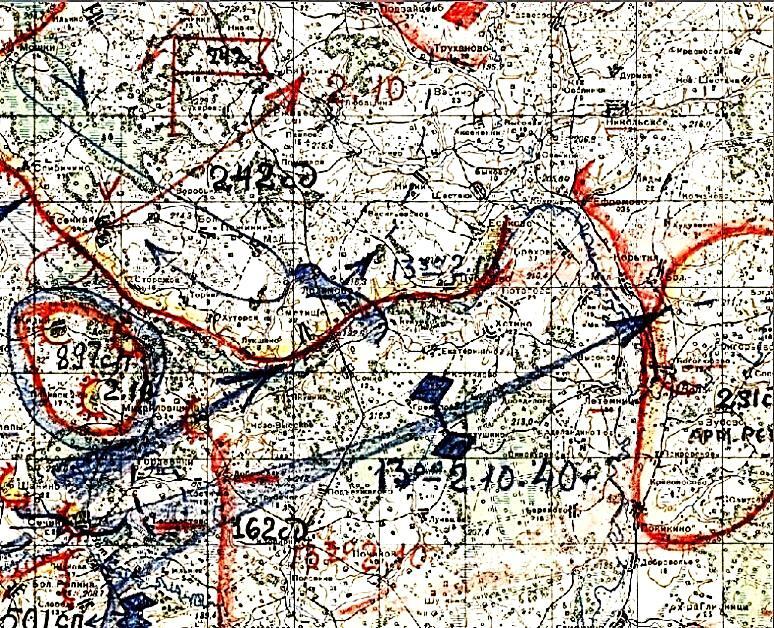
Like a phoenix from the ashes, the 242nd Rifles Division rose again in early 1942, this time in the North Caucasus. Still a rifle division, it participated in the early battles around Kharkiv, before being driven back and once again surrounded during the strategic German summer offensive, Case Blue. This time, the division’s fortunes were better, with a sufficient number of soldiers escaping to keep the formation on Stavka’s rolls.
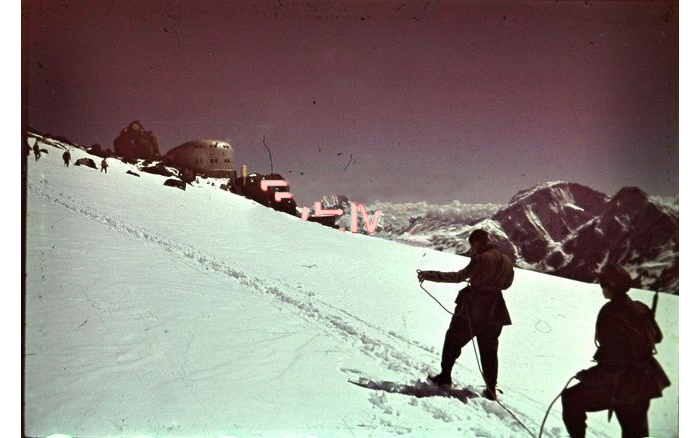
Remnants of the division were sent to the North Caucasus Front to reorganize in August 1942. It reformed as a mountain rifle division (Gornostrelkovaya) and, as such, took part in successful Soviet defensive operations in the region, including battles around Europe’s highest mountain, Elbrus.
The War Continues
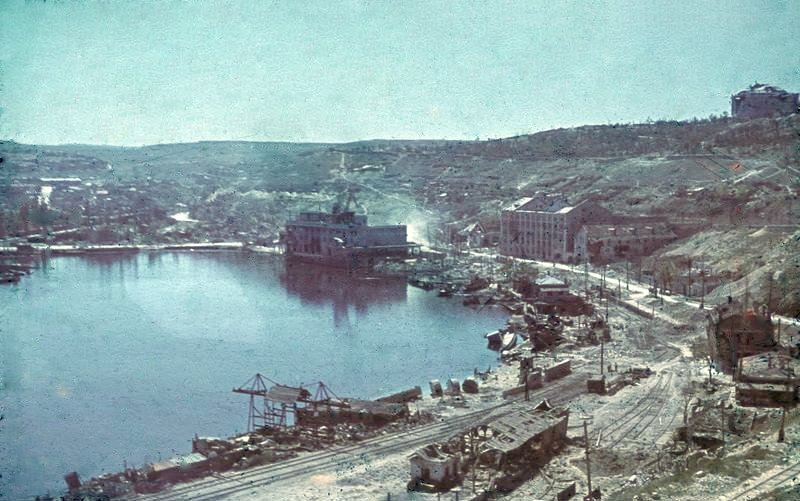
Further combat see the 242nd Mountain Rifles Division embroiled in action on the Taman Peninsula and the Crimea, where some elements took part in the liberation of Sevastopol.
Afterwards, the division was transferred to the 4th Ukrainian Front and the Carpathians. The mountain division did not fight on the main axis of advance during the Battle of Dukla Pass; instead, it deployed further east, where it attacked Uzhorod, which was captured on October 27th, 1944. This particular city had been Czechoslovak up to 1938, then Hungarian (which concerns our timeline) before ending up being Ukrainian from 1945 onwards.
The division would finish the war, officially, as the 242nd Mountain Rifle, Taman, Order of the Red Banner Division and a heap of combat accolades and honors in Czechoslovakia, with the division disbanded relatively soon after in 1946.
The 242-ya Gornostrelkovaya Detailed
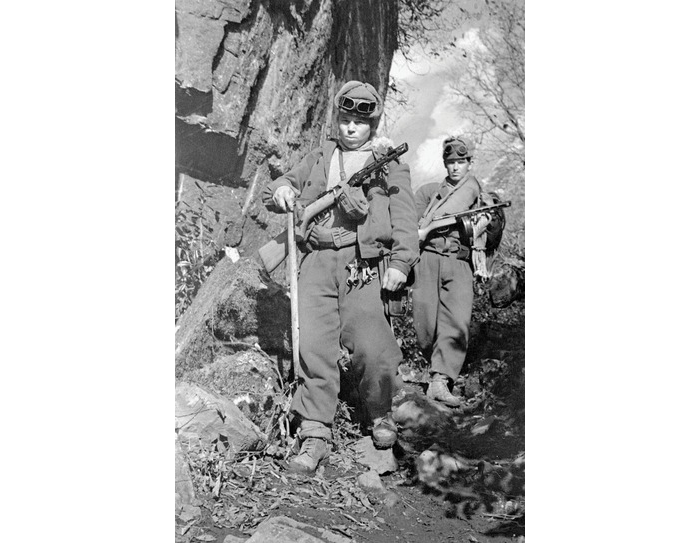
Specialized mountain divisions were rare in the Red Army, with only six such divisions ever formed, three of which eventually reverted to standard rifle formations. This was not the case with the 242nd Mountain Rifles Division, which will fight out the war in this unique capacity.

Soviet mountain divisions had four rifle regiments instead of three, but these weren’t subdivided into battalions. Instead, the regiments commanded directly over six companies. This unusual arrangement meant that Soviet mountain divisions were smaller than regular rifle divisions. An advantage was that they were better suited for semi-independent operations. With fewer men, they had a greater ratio of support weapons per soldier; this meant lots of mortars, machine guns, light infantry, and mountain guns.
Mountain divisions operated in difficult terrain and did not have any allocation of armor. This could be “problematic” for any action on a Steel Division 2 battlefield. Fortunately, the 242nd Mountain Rifles Division’s parent formation, the 18th Army, created on September 9th a unique "Separate Army Tank Battalion of Trophy Tanks" equipped entirely with… captured Hungarian armored vehicles. This unit will be attached to the 242nd Mountain Rifles Division to bolster its firepower. There is more: we’ve also attached the depleted 1-y OGTTP, a seperate Guards heavy tank regiment, with some IS-1. Both armored formations amount together to barely a single tank battalion.
The 242-ya Gornostrelkovaya in Steel Division 2
How will the 242-ya Gornostrelkovaya in Steel Division 2: Battle of Dukla Pass look like?
All GORNO (mountain troops) will feature the Raider trait. Some units are shared with Gornostrelki elements from 126-ya L. Gornostrelkovy Korpus as found in Steel Division 2: The Fate of Finland while some others are new. New units are both italic and bolded, but might be subject to change.
RECON
- An average category with a decent amount of slots. You’ll get to play with the WLA DT sidecar, as well as a single Phase A-only card of MOT. RAZVEDKA, representing 1-y OGTTP’s motorized recon platoon.
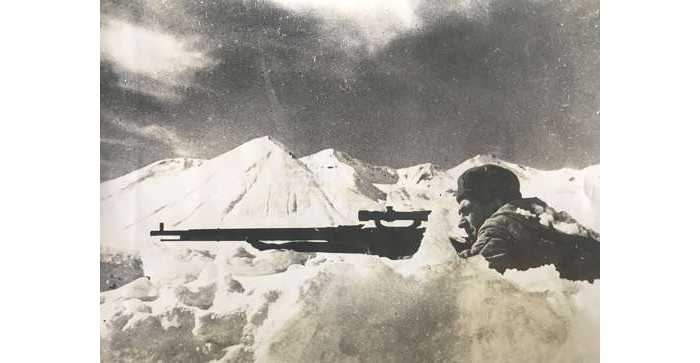
- The GORNO. SNAYPERI and GORNO. RAZVEDKA (already featured in the 126-ya L. Gornostrelkovy Korpus).
- The new GORNO. RAZV. SAPERI, which are 6-man scouts with 2x PPS-43, 3x Mosin-Nagant, 1x scoped Mosin-Nagant, plus TNT charges.
- The division can also count on a few captured TOLDI I in a recon role.
INF
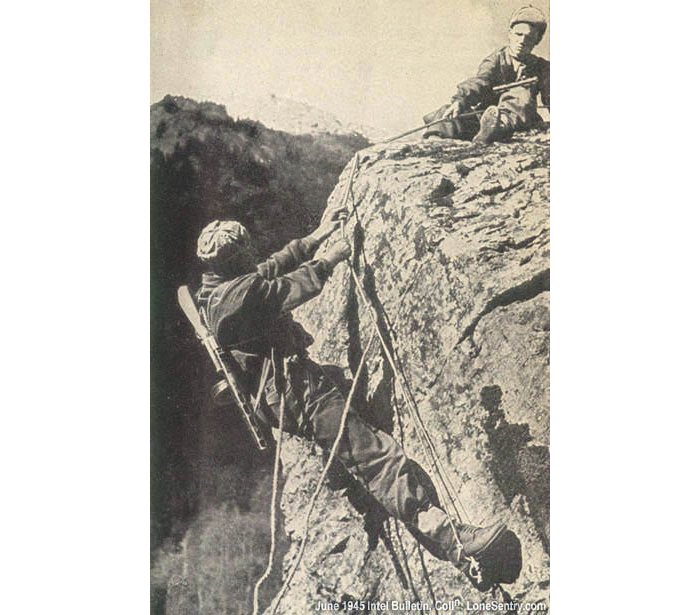
- As can be expected, a very good category for the 242-ya Gornostrelkovaya with lots of cheap, open slots. All units are of the ”Gorono” mountain infantry type.
- These include GORNO. SAPERI, GORNOSTRELKI, GORNO. AVTO. and GORNO. KOMROTI squads all featured with the previous 126-ya L. Gornostrelkovy Korpus.
- New units include:
- GORNOSTRELKI (DT) are 11-man riflemen squads with 2x PPS-43, 7x Mosin-Nagant, and 2x DT light machine guns.
- GORNO. SAPERI (ROKS) are 11-man engineers with 5x PPSh-41, 3x SVT-40, 2x DT LMGs, plus a 1x ROKS-3 flamethrower.
- GORNO. AVTO. SAPERI are 11-man engineer squads with 6x PPS-43, 5x PPSh-41, plus TNT and smoke grenades.
TANK
- Average. The division had two independent armor battalions attached, both with quite a variety of choices. However, both formations are small, which limits the number and availability of the units to one card each.
- From the 1-y OGTTP, you get the IS-1 in a combat role but only in Phase A and B, plus a single IS-2 KOMROTI.
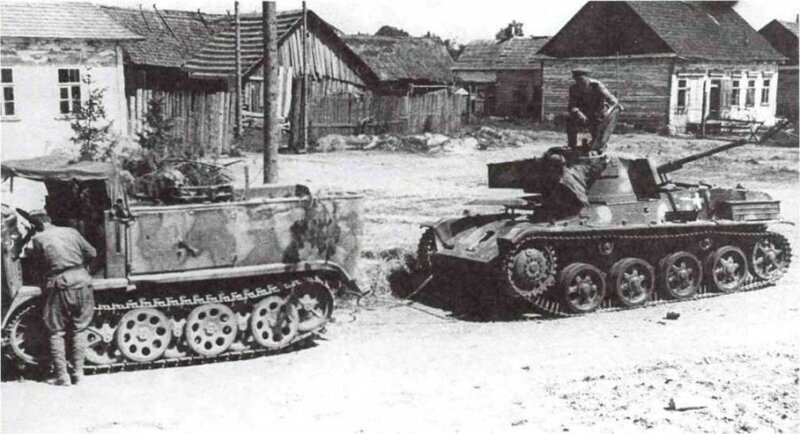
- From the “trophy” captured materiel battalion, you’ll get the TOLDI II KOMROTI, TURAN I, TURAN II, and ZRINYI II. All of these units are only available in Combat Phase A, with the exception of the TURAN II, which can also deploy in B.
SUPP
- Another good category, with a decent amount of units available. These range from GORNO. RM-38 50mm, GORNO. DUSHKA, GORNO. OB-25 76,2mm field gun and the GORNO. KOMBAT (as featured in the 126-ya L. Gornostrelkovy Korpus), as well as the new GORNO. MAXIM.
- Other units include STUDEBAKKER SNAB. supply vehicles, and the WLA KOMBAT and M2 KOMBAT commander units.
- And, a single A-only card, an ISU-152. It was historically found attached to the 1-y OGGTP.
AT
- Average in slots, mostly light in options. These include the GORNO. PTRS-41 (from the 126-ya L. Gornostrelkovy Korpus).
- This category also includes a handful of PTRS-41., plus a a few ZIS-2 and a fair amount of ZIS-3 - the latter anti-tank gun straight from corps reserve.
AA
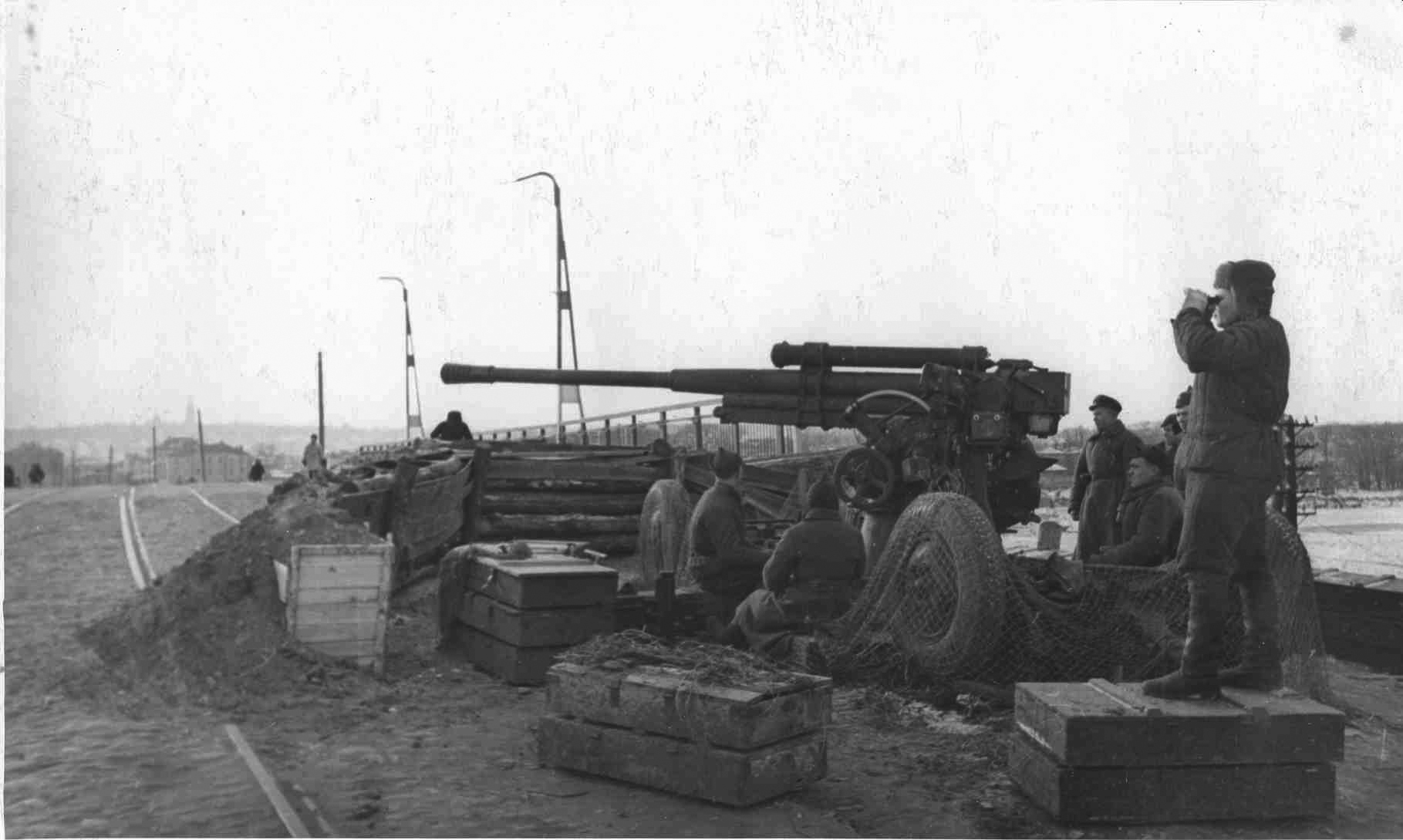
- Pretty unbalanced, with the division only relying on some 61-K 37mm guns for organic AA defense.
- However, the “trophy” battalion attached brings two to three NIMROD SPAAGs, which will be added here.
- And we’ve also added some elements from the Red Army’s 32-ya Zen. Art., in the form of a card of 85mm OBR. 39 and a few captured FLAKVIERLING 20mm.
ART
- A good category for the 242nd Mountain Rifles Division but with light options.
- Plenty of mortars are available, be they 82mm, 107mm or 120mm.
- It also had a good number of light 52-P-356 76,2mm mountain howitzers.
- Corps support will be provided by a forward observer DZHIP KAO (152mm).
- Lastly, the mountain troops fielded their own version of “pocket artillery” in the form of a makeshift MRLS: the new BM-8-8 82mm. It was no less than a jeep with rails for eight 82mm rockets.
AIR
- Air support for the division might be average in terms of slots, but it comes with varied choices.
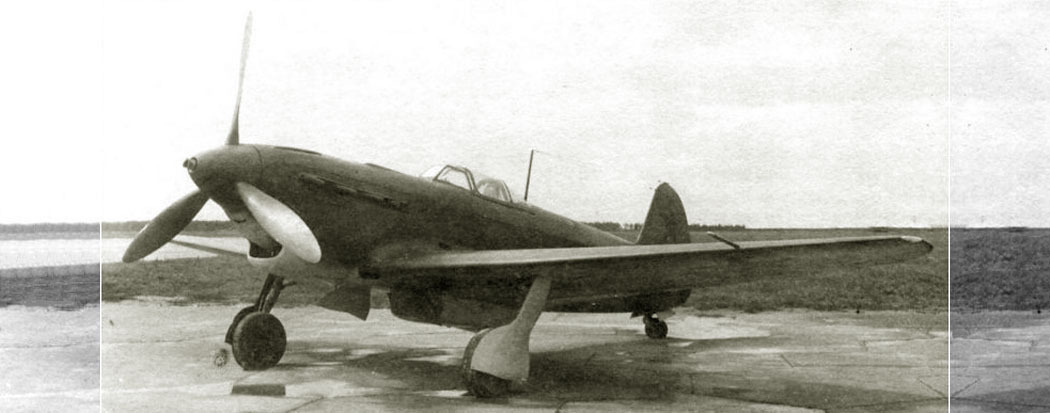
- Fighter planes include YAK-1B and LA-5FN.
- While recon aircraft featured are the heavy IL-2KR and new YAK-9R.
- Fighter-bombers featured are the LA-5FN(in various bomb loadouts) and IL-2M (AT rockets and napalm).
- Plus bombers include the A-20C BOSTON in various heavy HE loadouts.
The 242nd Mountain Rifles Division is a light infantry division, with plentiful hardened specialized soldiers excelling best when fighting in rugged terrain. Various attached elements boost its firepower but are only available in smaller numbers.
Battle of Dukla Pass Expansion
What can you expect from the Steel Division 2: Battle of Dukla Pass?
- The expansion features 1 massive Army General campaign centered on the Battle of Dukla Pass.
- Plus 6 new Divisions, playable in both single-player and multiplayer. These include the Allied 1. Československý Armádní Sbor, Slovak National Uprising, and Soviet 242-ya Gornostrelkovaya, while the Axis deploy the 208. Infanterie-Division, Hungarian 13. Gyaloghadosztály, and 18. SS-Fr.-Panzergrenadier "Horst Wessel".
See you on the battlefield
We’ll be back next week with another Steel Division 2: Battle of Dukla Pass preview!
Make sure to join the Steel Division 2 community on our Steam forums. The latest Steel Division 2 news can also be encountered on our Instagram.
Looking for an online game? Visit the Discord server or Reddit page and get involved with the lively Steel Division 2 community!
See you on the battlefield, commander.