Excerpt from an official broadcast by ICLabs – Research Division
Interview between journalist Ayla Romane (AR) and Dr. Emil Karrow (EK), biologist specializing in exo-environmental mutations at ICLabs.

AR: Dr. Karrow, thank you for taking the time to speak with us. Can you confirm today the existence of new Sangline variants, such as the Sand Digger?
EK: Yes. The data collected from our orbital stations and field units is now consistent enough to confirm the existence of this entity. More importantly, these observations reinforce the idea that the Sanglines possess advanced adaptive behavior.
AR: Adaptive? You mean they evolve?
EK: Not in the traditional Darwinian sense. What we’re witnessing is rapid, opportunistic morphological change, triggered by environmental conditions. These aren’t fixed species, but rather biological responses tailored to specific biomes—deserts, high altitudes, toxic atmospheres. Sanglines aren’t a single entity, but a dynamic evolutionary phenomenon, potentially without limits.
AR: Let’s focus on the Sand Digger. What do we know about it so far?
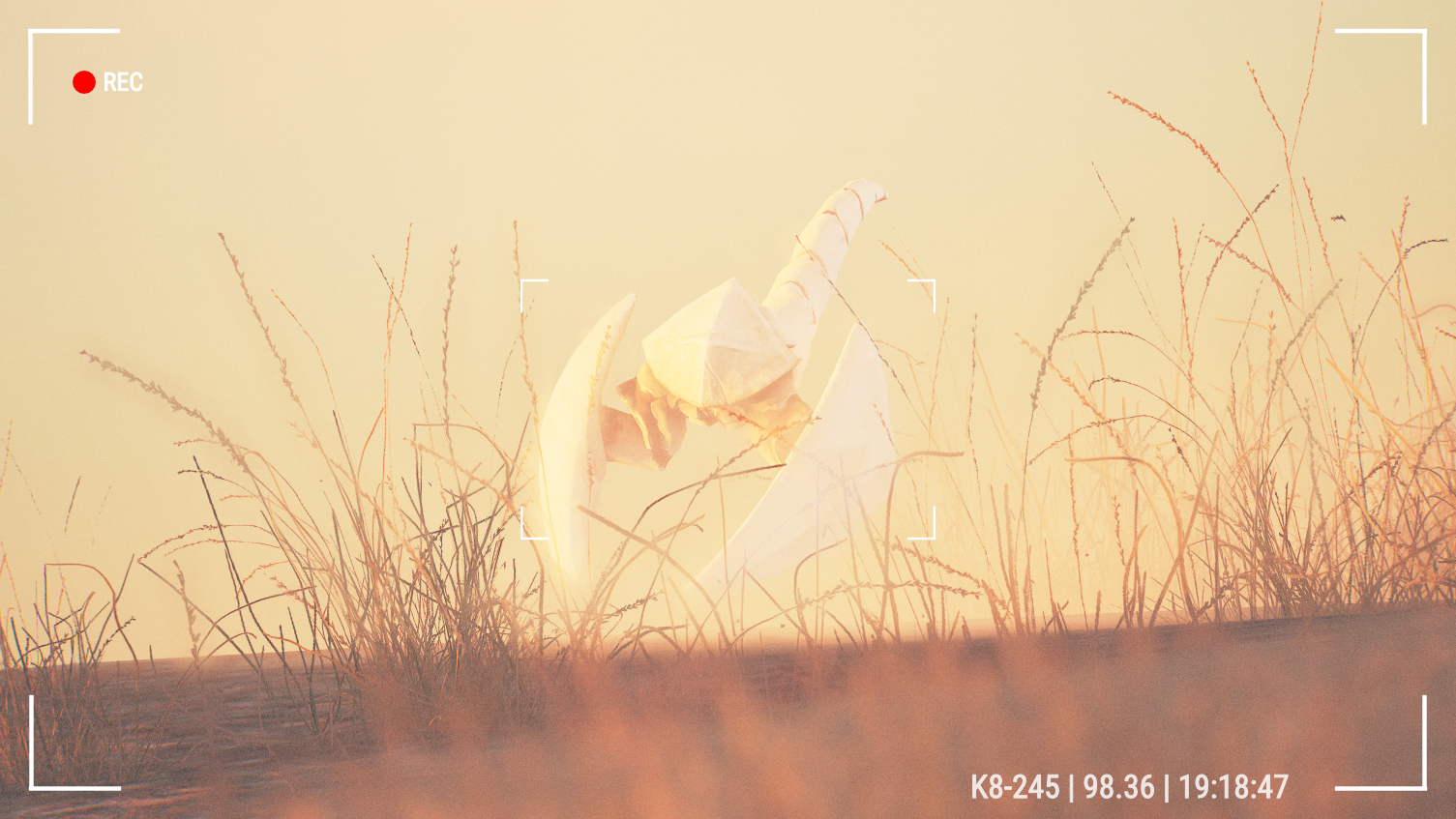
EK: This creature has been identified in several desert zones with high geological instability. It remains undetectable until the moment it strikes—its thermal signature is nearly zero, except for brief spikes when it erupts from the ground. Morphologically, it resembles a hybrid of burrowing predator and invertebrate. It moves beneath the surface, likely by generating controlled vibrations and localized sand liquefaction. Its lower jaw is split and extensible, capable of snapping shut with significant force. It also has hooks or short limbs used to grab prey on impact.
AR: Is it blind?
EK: Not exactly. Our analysis suggests it perceives mechanical vibrations through the ground, much like certain Earth species once did. Walking or running carelessly through its territory is the equivalent of ringing a bell.
AR: Other variants have also been identified recently. What can you tell us about those?
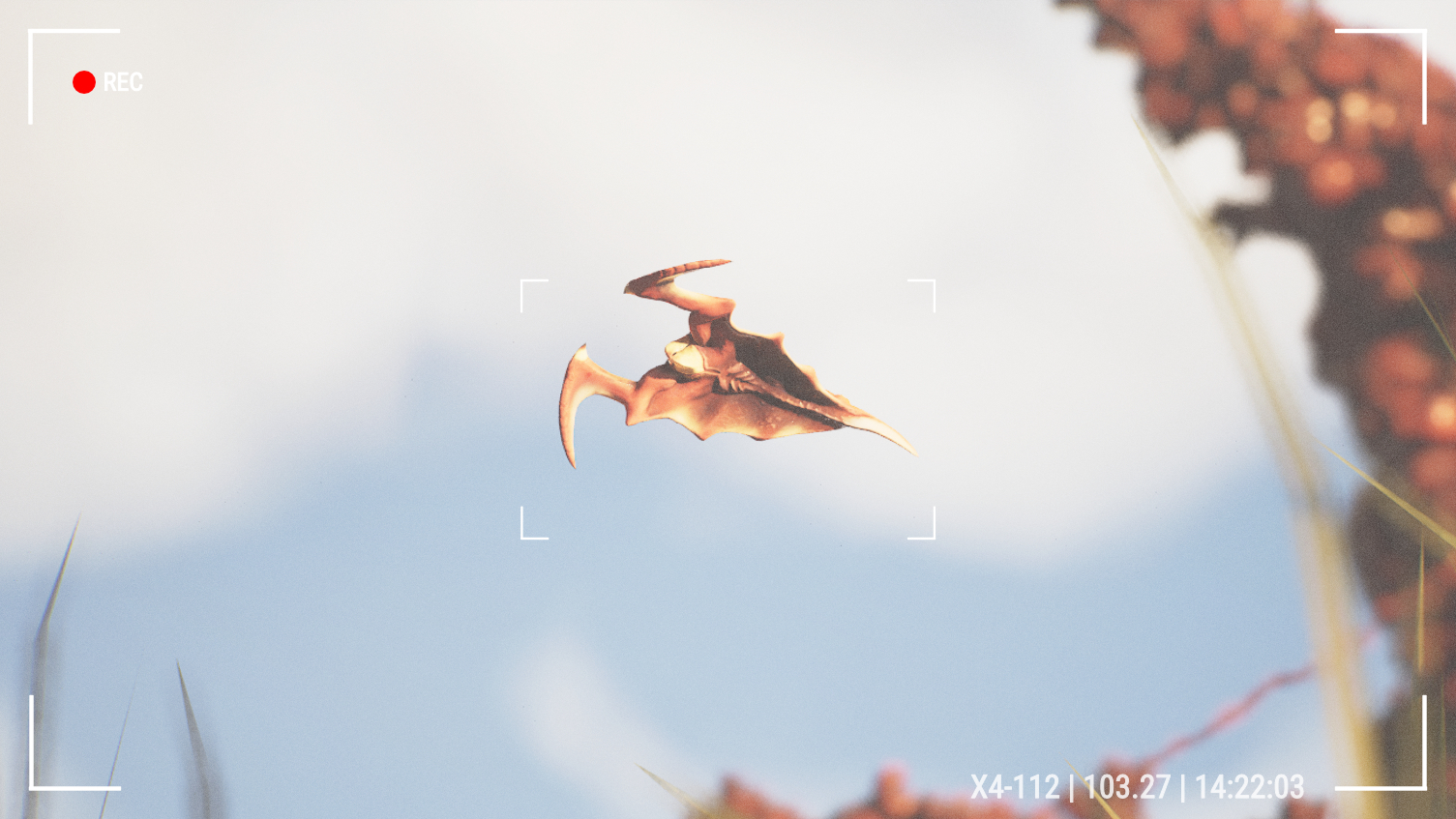
EK: The Flyer, as its name suggests, is a winged variant capable of gliding or swooping down on targets from high altitudes. It has been observed in mountainous regions or near steep rock formations. Its skeleton is lightweight, and it demonstrates excellent aerial control. So far, it represents a direct threat to anything or anyone in open terrain.
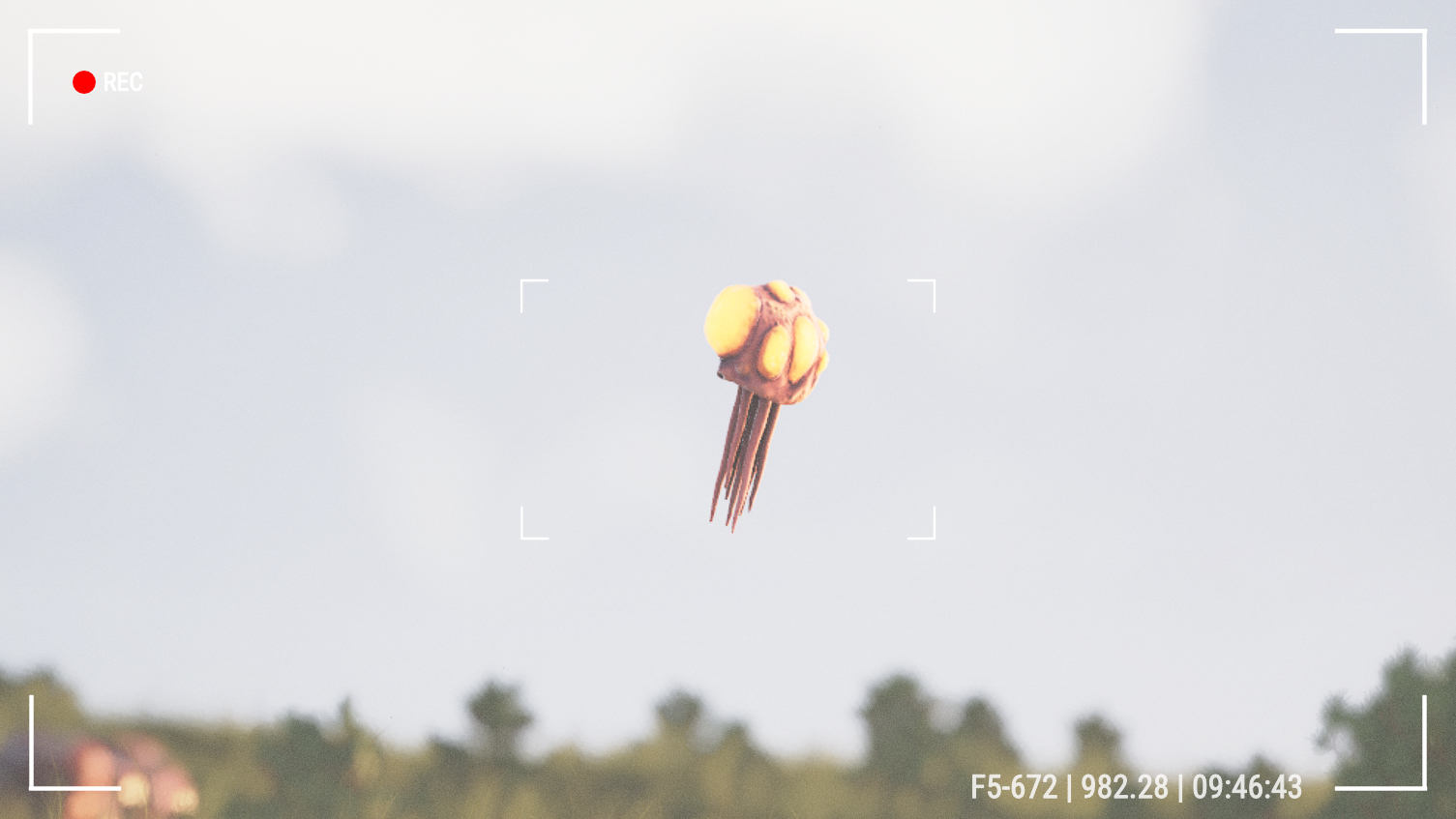
The Gas Sac, on the other hand, is a bloated form—spherical or oval in shape—filled with unstable compounds. It floats slowly at low altitude and detonates when close to a target or upon impact. The explosion releases a toxic or acidic cloud, depending on the sample. It is often escorted by more aggressive variants that take advantage of the ensuing confusion.
AR: To conclude, what should we take away from these discoveries?
EK: That the Sanglines are not just surviving—they are spreading, adapting, and transforming. Every biome becomes an evolutionary testing ground. What we once thought was an isolated threat is now a global phenomenon. The variants we’ve already identified are likely just the beginning. If their logic of adaptation continues, then every corner of the planet—and beyond—could soon host its own horror.
AR: Do you believe more will appear?
EK: It’s not a possibility. It’s a certainty.