Dev Diary #9 - The station in Low Earth Orbit (LEO) - Part VII
Space Station Designer · published
Welcome to the ninth Dev Diary entry of 'Space Station Designer'. In the previous entry, we covered two important revenue-generating mechanics: Modules Leasing, and Commercial Services. In this article, we'll cover two more mechanics related to the LEO Station: 'Earth Facilities' and 'Space Tourism'.
Earth Facilities
Behind every successful network of space stations, there's a large structure of facilities on the ground that provides the necessary support. In the early stages of the game (i.e., 'Phase I') there's an 'Earth Facilities' research technology, which enables a button in the Global Screen and allows us to construct a series of buildings that can help us optimize our operations.
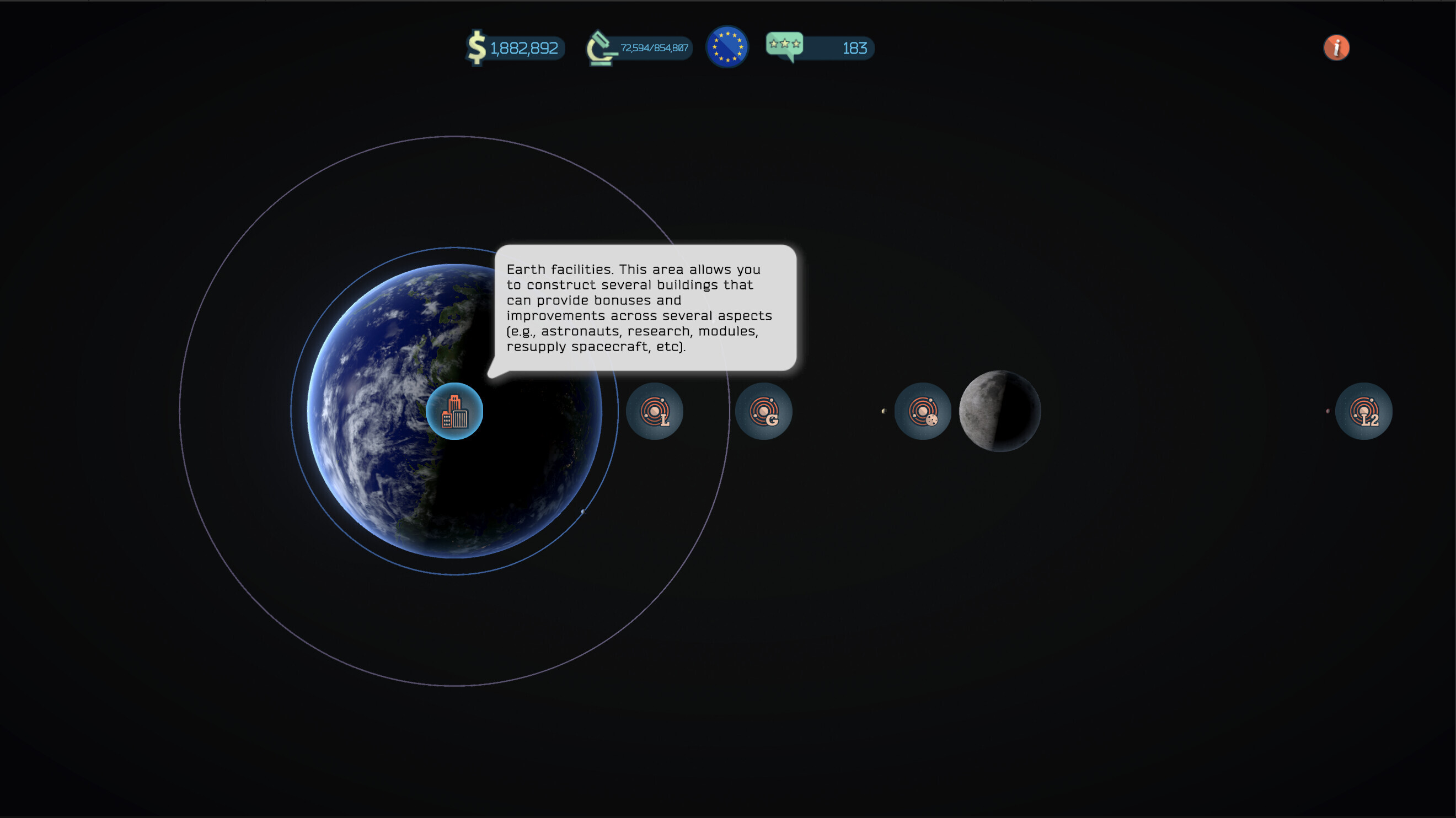
Note that the first time we access the Earth Facilities, there's only a handful of patches of land.
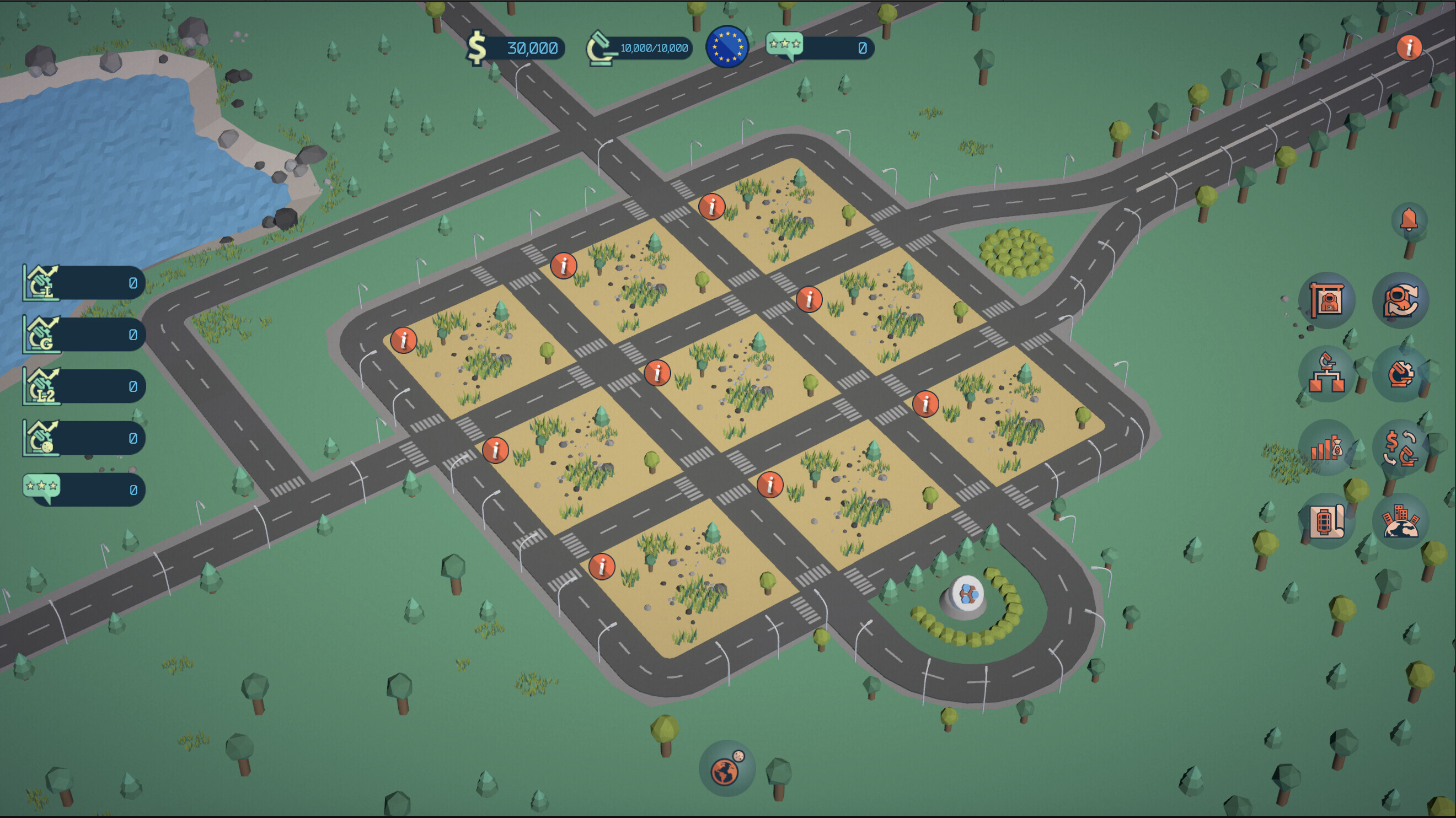
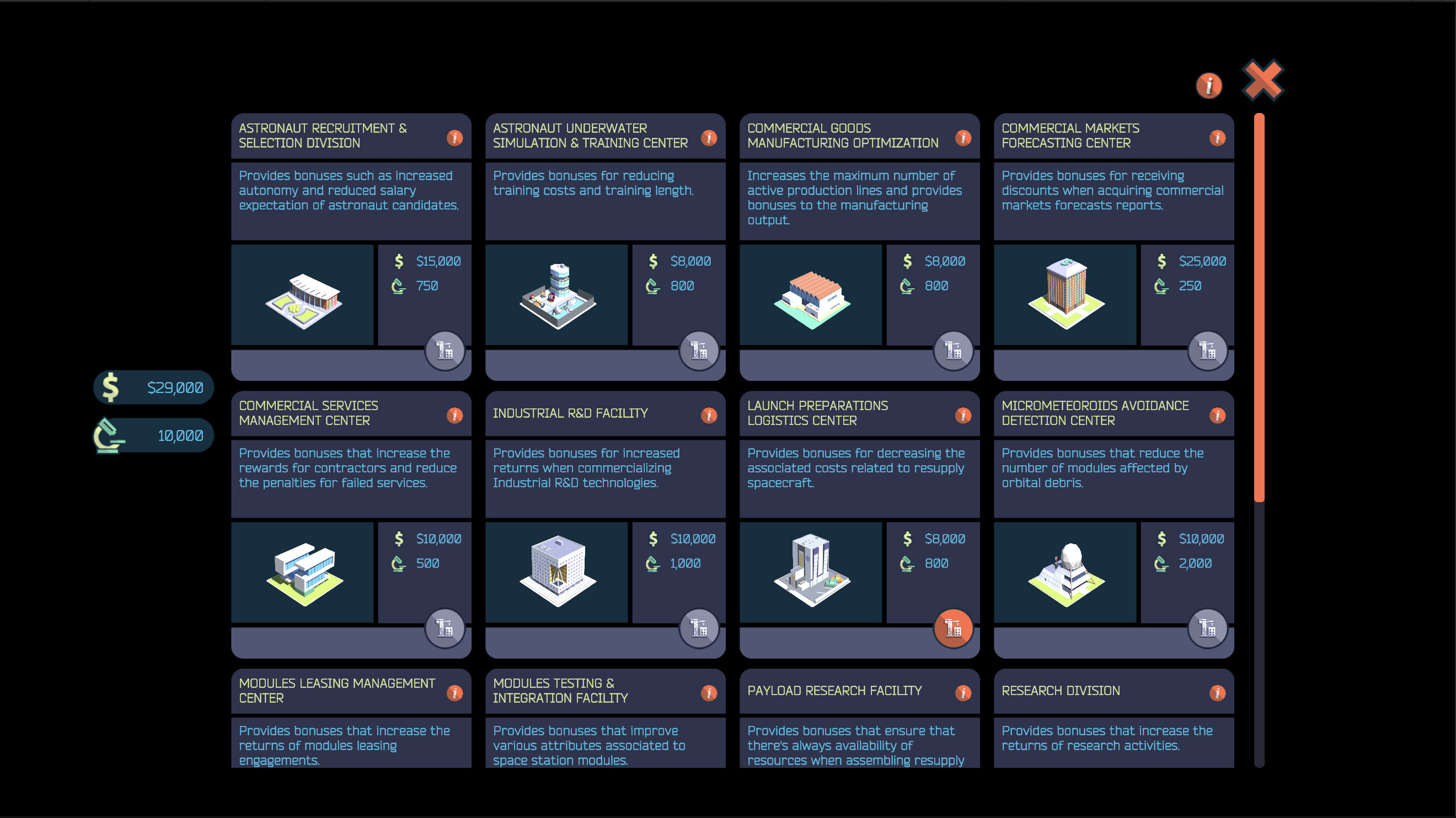
After unlocking one of these patches and clicking on it, the game will present a series of buildings that we can choose from. Some of them are locked, and they only become available after acquiring their corresponding research technology from the tech tree. Moreover, there's only a limited number of patches available, so we need to choose carefully.
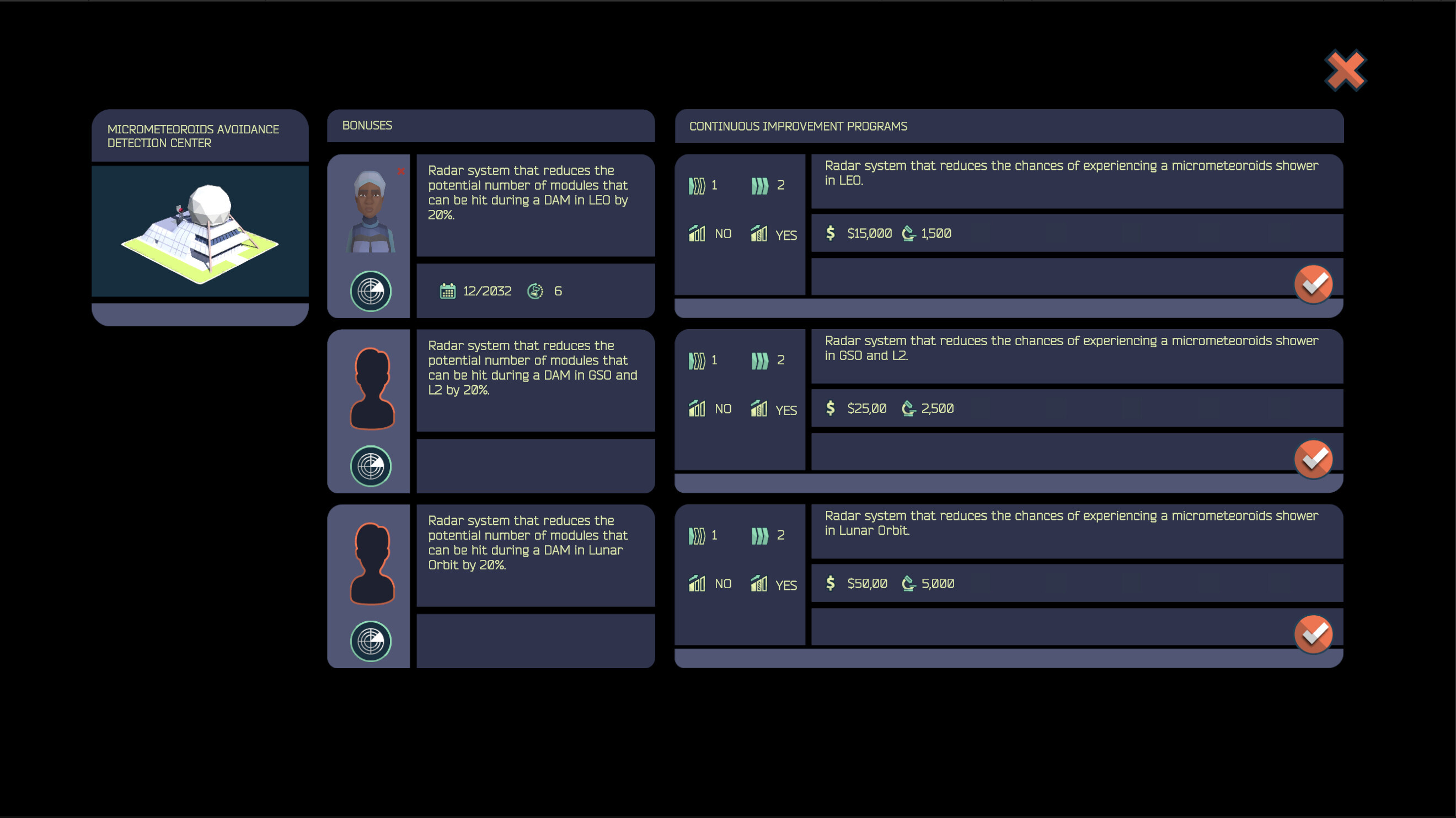
Once the construction process ends, the facility becomes fully functional, and it gives us access to a series of bonuses and Continuous Improvement Programs (CIPs). Bonuses are only active when there's an astronaut with the required special skill assigned to them, whereas CIPs allow us to upgrade astronauts, modules, resupply spacecraft, or a general aspect of our operations. For example, the 'Micrometeoroids Avoidance Detection Center' Earth Facility shown below includes a series of expensive CIPs for researching radar systems that decrease the chances of experiencing micrometeoroids showers across multiple orbits.
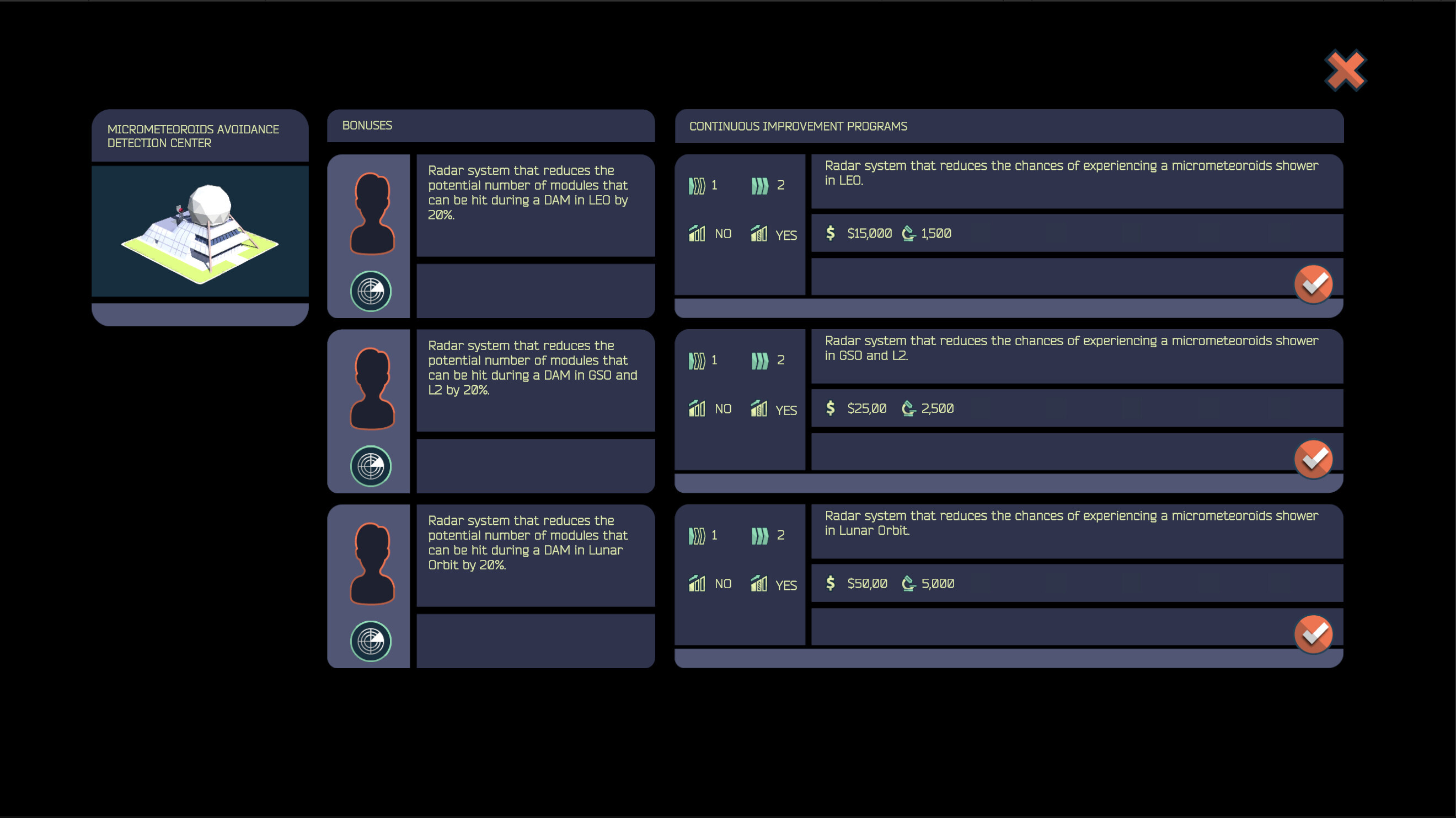
Note that astronauts assigned to bonuses have a minimum commitment time, so keep that in mind before assigning them to one, as they won't be available for other activities during this period. In the case of our astronaut assigned to the first bonus shown in the screenshot below, the waiting time is six months.
Space Tourism
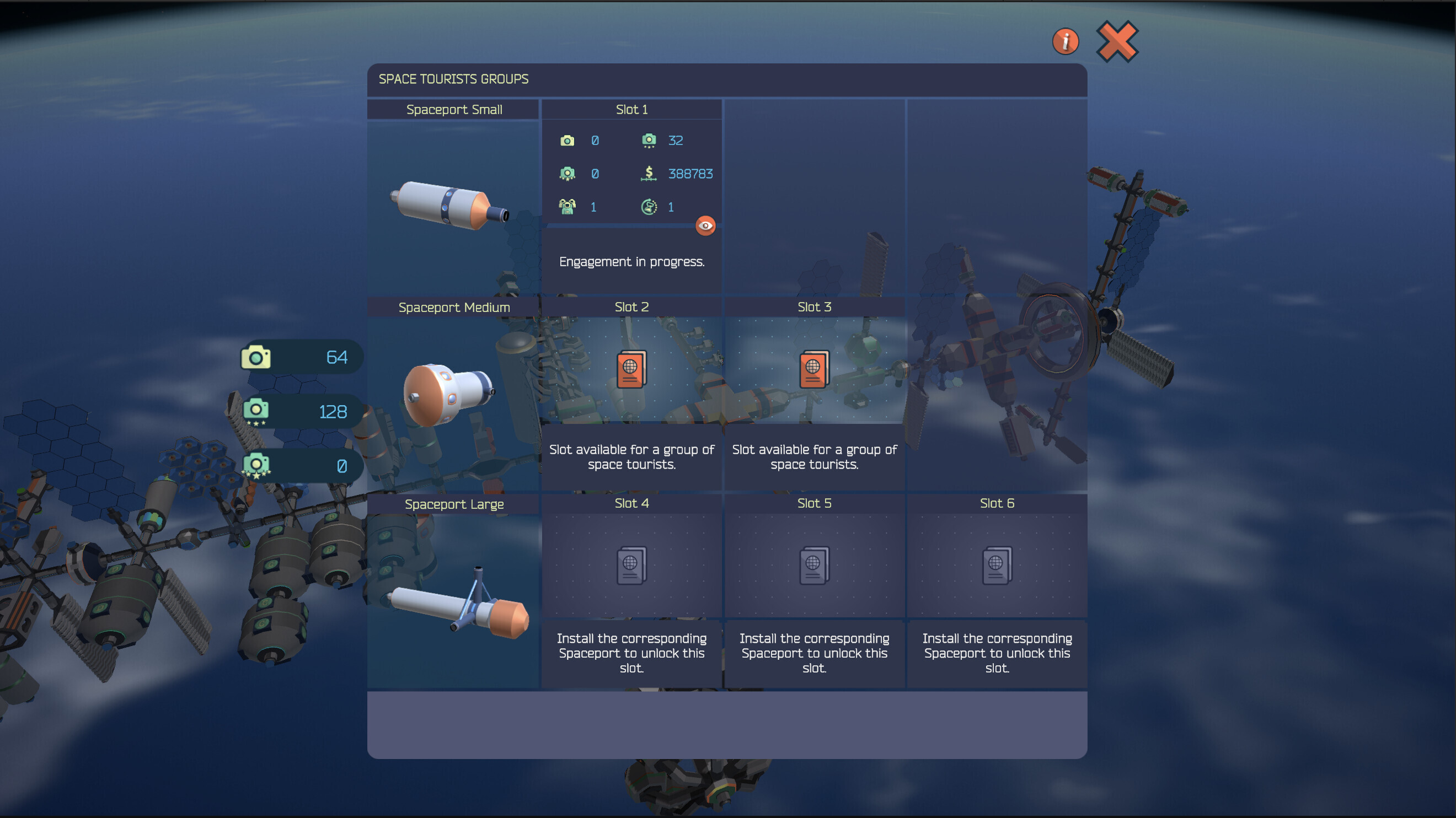
Space Tourism is another tool in our revenue-generation toolbox, and it becomes available shortly after acquiring the 'Expansion in LEO' research technology, which marks the start of Phase II. Once we have researched the 'Space Tourism Level I' technology, we're able to install spaceport-types modules, which come in three flavours: Small, Medium, and Large, and feature one, two, and three docking ports for space tourism shuttles, respectively.
In the screenshot below, our small spaceport is already engaged in an ongoing space tourism group, whereas the medium spaceport has its two slots fully available.
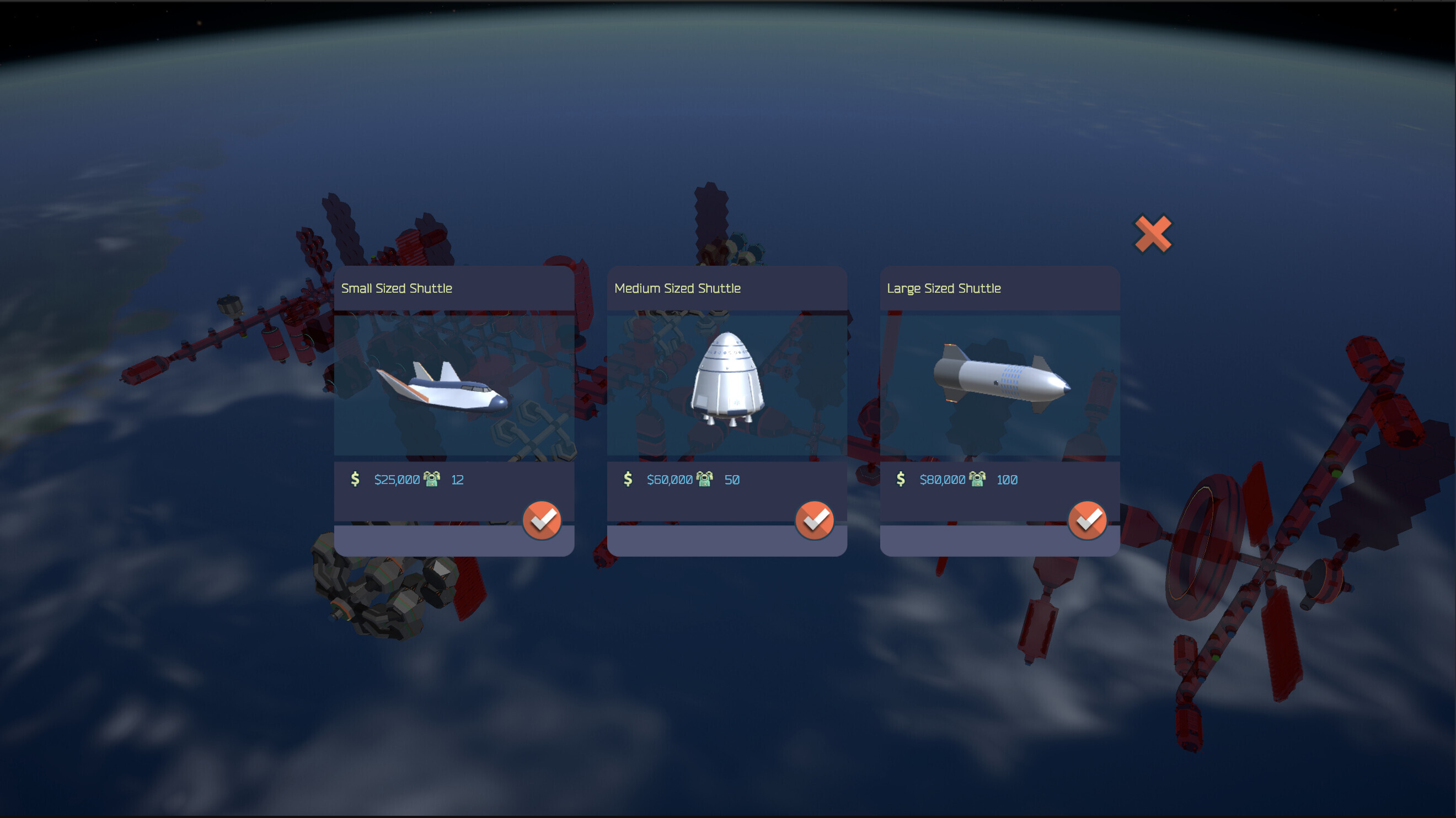
After selecting one of the slots, the game will present us with three space tourism shuttle options with different costs and capacities.
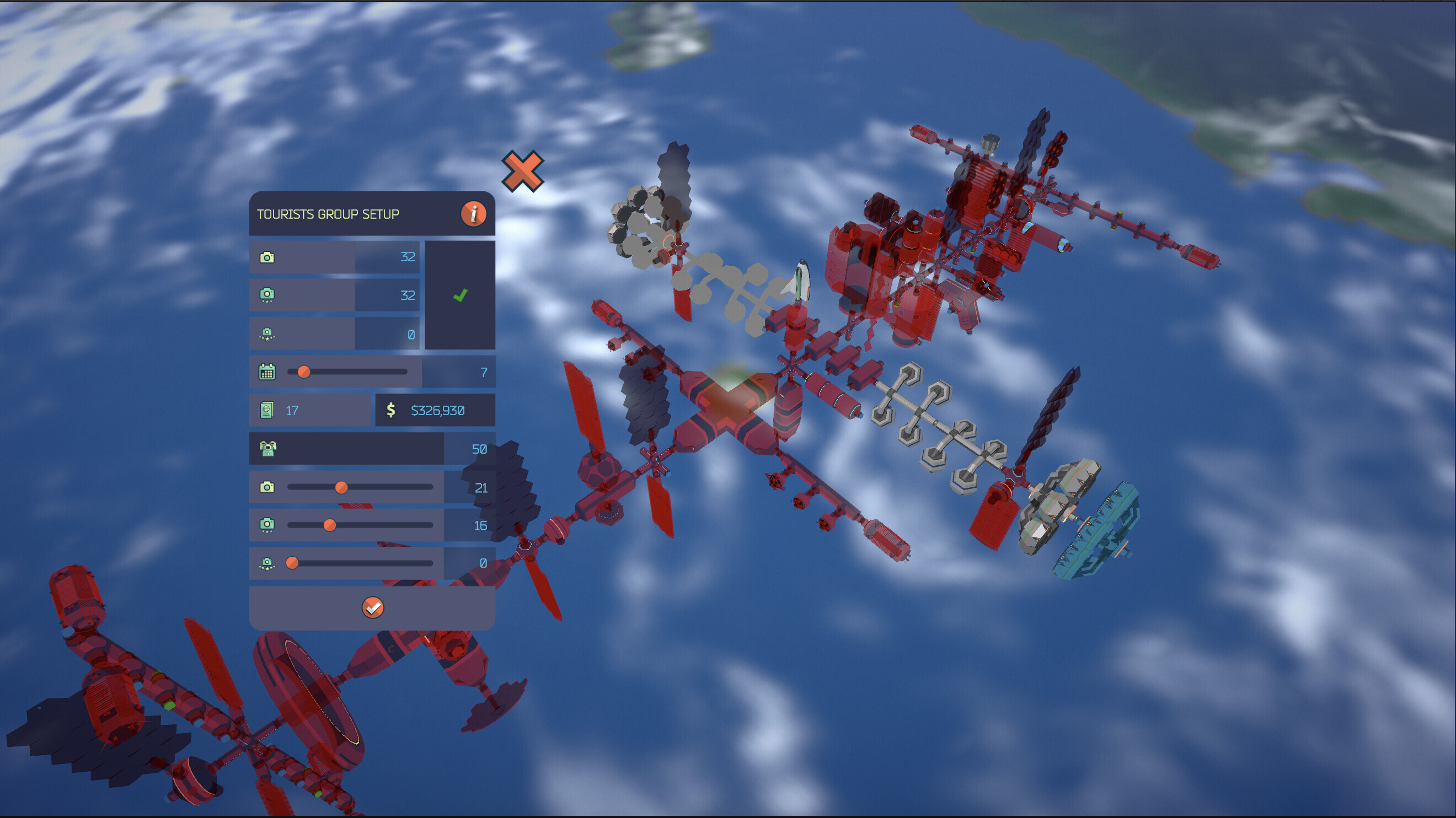
After selecting one of these options, we'll be presented with a screen that lets us select the space tourism modules we want to allocate for this tour. The selection of these modules will define the maximum number of seats available from each one of the available tiers (i.e., Standard, Premium, and Deluxe).
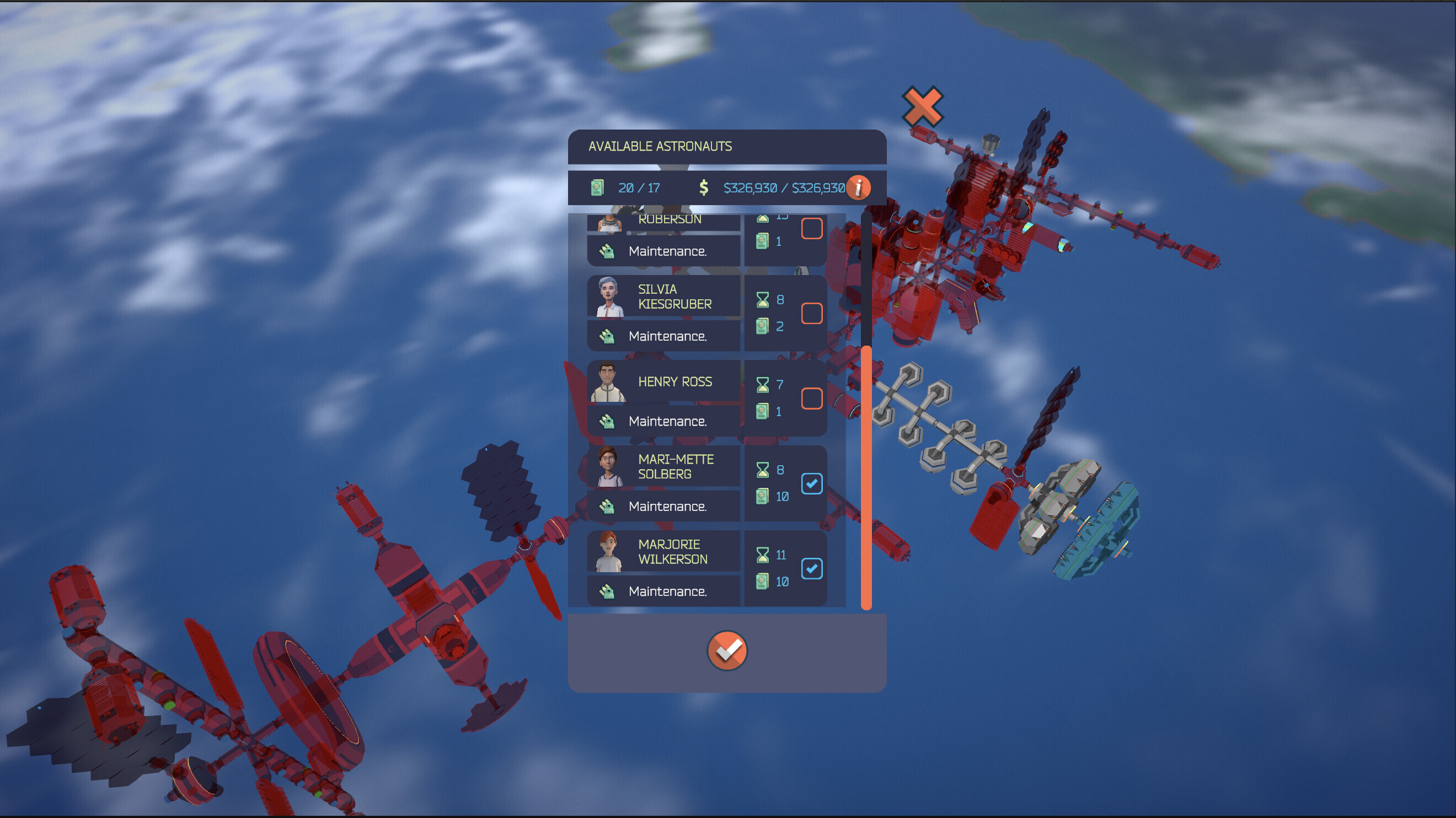
By using the sliders in the lower area of the dialog, we can define the number of tourists from each category we actually want to bring. The number and type of these tourists will define an 'astronaut Space Tourism skill points' requirement (in this case, 17). These two factors, combined with the duration of the tour (in this case, 7 months), yields a potential maximum revenue of $326,930. Larger, more prestigious, and lengthier tours will bring more revenue, but obviously will require a larger allocation of skilled astronauts to run them.
Once the selection of space tourism modules and the allocation of seats is complete, the game will present us with all available astronauts in the station that can be assigned to the tour. If we're planning to make space tourism a big part of our sources of revenue, then it's important for us to invest in the training of astronauts.
In addition to the waste management challenges related to large groups, ongoing space tourism tours can and will be affected by random events, but we'll let you discover those!
Coming Up Next
This blog post covered the last two main concepts associated with the LEO station. In the next article, we'll start covering some of the main aspects of running our space stations in higher Earth orbits, including Geosynchronous Orbit (GSO) and the Lagrange Point 2 (L2) orbit.
We're currently running a closed beta for 'Space Station Designer' (more information here). If you're interested in trying it out, please consider applying and help us shape its future.
See you in the next Dev Diary!
--Ignacio, Mauricio, and Nicolas (Polar Motion)
Join the community on Discord: https://discord.gg/qxSJXAZ6ZJ
Wishlist Space Station Designer
https://store.steampowered.com/app/1447650/Space_Station_Designer/