Big Idea and the Importance of Making It Right — Dev Diary #1
inKONBINI: One Store. Many Stories · published
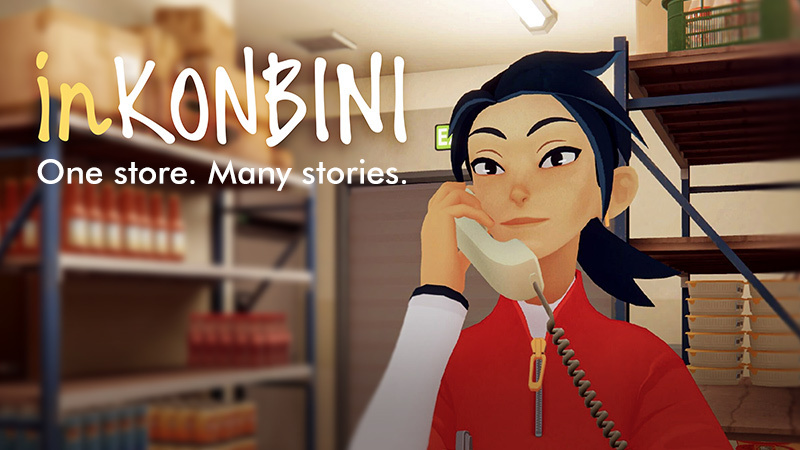
There is no single way to design a video game, but no matter what the genre, gameplay, or visual style is, it all starts with an idea. Finding a good one that will spark everyone’s imagination, will be able to sustain the team’s creative energy for long enough, and will appeal to a playing audience, is a tricky business. Especially when it’s your first game.
In fact, it’s very rare in any creative field, when the first try on a concept turns out to be the one that provides all the necessary elements for the final product. In the best case scenario, you’ll have a kernel of an idea that would be developed and elaborated upon through many stages of work before being realised in the form that looks solid, finished, and right.
This quality of rightness is arguably more important than anything else in game development as it defines how well every single element of the experience serves its purpose and complements the whole. It brings story, gameplay, animation, UI, controls, visuals, sounds, and music to a common denominator resulting in an overall impression that players will be getting from the game.
So, you can say that this ephemeral thing called a game concept is a compilation of ideas and elements that fit together in a way that is novel and compelling to be considered worthwhile. And we were on the search for a great one when we first started thinking of the game that would become inKONBINI.
From the very beginning, we knew our internal resources were limited, so we had to scope the project accordingly. Early on, we made a decision to build the whole game around a single location that would allow for a lot of gameplay interactions, have a unique narrative flavor, and also this feeling of ease that we all enjoyed playing our favorite cozy titles.
They say constraints will serve you well, and that’s definitely been true in our case. As you can see, we didn’t have a genre or particular style in mind from the outset, but instead were driven by production limitations. In a series of blueprint sessions, we went through a number of locations and settings, trying to imagine various gameplay scenarios that could occur in those environments.
In a parallel universe, we could have ended up with a game set on a steam boat, a gas station, or a farm, but none of those struck a particular impression as we were toying with them, throwing dozens of ideas on the wall.
It’s always kind of a miracle when one of them sticks, because you can feel it right away, and that’s what happened when we stumbled upon a Japanese convenience store as our potential setting. Just like many good things, a konbini has always been there, right in front of our eyes, as a place that we went to daily to get some snacks, use an ATM, and do plenty of things that instantaneously materialized as gameplay activities and situations in our game design oriented brains.
Someone suggested an idea to go back in time and explore the opportunities that the non-digitised early 1990s offered in terms of mood and feel as well as gameplay variety. For all of us on the team, that time period has always been special in how we remember it and coloured brightly with our childhood memories, so this take on the concept felt natural and was accepted by everyone.
That way, the initial concept put in the context of the early 1990s suddenly felt right, felt like a dream game, or more like a game that should have already existed, but somehow hasn’t been made yet, and that’s become our privilege to discover it and make it real.
We were lucky to find our setting, but everything else was still unclear. Although it was natural to see players fill the shoes of a store clerk since the game was set in a konbini, Makoto Hayakawa didn’t exist as a central character at the time, and we didn’t have a slightest idea of her role in the story or any background for her.
As we went on trying to crystallize our vision, we took a lot of inspiration from a Japanese TV series Tokyo Diner: Midnight Stories that you can now watch on Netflix. Despite being much more mature in tone, the show had a narrative style that we felt would fit our game. Instead of making the owner a protagonist in a traditional sense, it focused on individual stories of customers visiting the titular diner at night. This storytelling approach made perfect sense for us since it presented an opportunity to create a whole canvas of a small-town life, with all the intricate connections between customers coming to the store, without us ever leaving the store itself.
A list of references that we had put together to define the mood and aesthetics of the game included notable Studio Ghibli animated movies, like Only Yesterday (1991) and Whisper of the Heart (1995), but also featured a selection of contemporary independent drama with Paterson (2016) and Rent-a-Cat (2012) heading the list. Although being varied and seemingly different from one another, they all focused on minutiae of everyday life and made a commentary on how some of its calmest moments could be the most beautiful and fulfilling.
Another recent cinematic work that would have made it to our reference list had it been released a year earlier is Wim Wenders’ instant classic Perfect Days (2023), a poignant picture celebrating the moments of serenity found in the ordinary routine of a quiet Tokyo public toilets cleaner. The only thing that can be said here without the risk of spoiling either the movie or our own story content is that on a concept level it’s very close to what we have aspirations for inKONBINI to achieve through its meditative gameplay.
Many of you have already pointed at Lake (2021) as a video game title that feels somewhat similar to our project in how it puts interactive story first providing a calming experience and the world you want to inhabit. And we certainly aren’t shying away from being compared to one of our main inspirations here. Gamious production has graciously paved the road for other developers to explore how non-violent, meaningful, and accessible interactive content can be made and presented in the current gaming landscape, and we’re just proud to see our brief teaser trailer inspire players to make this kind of connection.
The last, but probably the most important element that would shape the game concept for us was a unique vibe that we wanted our game to evoke. As we kept exchanging ideas on what kind of interactive experiences we found the most memorable, it became clear to us that some of our favorite titles resonated with the playing community on the merits of mood and atmosphere first and foremost.
While gameplay and visuals are almost always meant to be refined and polished, the way how the game feels doesn’t necessarily get the same amount of time and attention. Partly because tuning up a tangible and correct atmosphere is a very delicate matter, but when done right it really can become a solid foundation for the whole experience, so we made it our priority right from the beginning.
These four elements — a Japanese convenience store as a cozy and familiar location, the 1990s as a nostalgic time period, a multi-character narrative structure, and a quiet, tranquil, and peaceful atmosphere — became the cornerstones of the experience we set out to create.
There were still more questions than answers about what kind of game inKONBINI would be when it’s out, and many important things regarding gameplay and story were yet to be specified (see, we didn’t even have a title for the game!), but we had a groundwork that felt concrete, well-designed, and strong enough to sustain all the narrative cargo and gameplay functionality that we were about to put atop of it.
The idea was there, we only needed to find ways to bring it to fruition…
Let us know in the comments what other movies, books, and video games you can think of that would make it into our list of references and stir the feelings of calm and relaxation.
Follow Nagai Industries, Inc. on Twitter, YouTube, Instagram, Telegram, join our official Discord server, and visit the game's website for more updates!