The Beginning:
First, let’s talk about Roguelike genre. There are more and more great games with roguelike elements that have been made recently. They all provide a variety of interesting gaming experience and always have the roguelike mechanics at their core.
After playing many popular roguelike games, we decided to focus on the turn-based aspect of the genre. We wanted to make a turn-based roguelike game for modern players. And that’s when we came up with the idea of making Crown Trick.
Pioneers:
Our design team took inspiration from other games in the genre to incorporate some of the more modern game design elements into Crown Trick. For example: lower entry level, fast-paced combat, great graphics and turn-based strategic gameplay. We wanted to make a classic turn-based roguelike game with a modern twist that everyone could play.
The Prototype:
After much research, we came up with the first prototype for Crown Trick. At the beginning when we didn’t have any art direction yet, we used paper prototypes to determine some core game elements. At this stage, we wanted to be sure we could create interesting character builds and combinations in a turn-based game. For this reason we designed different Familiars and skills, then tested them on a paper prototype.
After many different design variations and trials, we decided that the player should should be able to assign two Familiars at a time, and by switching these familiars the player could come up with different skill combinations and tricks!
After completing the above experiments, we determined three core game mechanics:
1. Two Familiars with different skills that can be replaced during the game
2. A variety of weapons to change the ordinary attack methods
3. A variety of passive skills (also known as Relics later)
Interestingly, after confirming these core mechanics someone from the team asked, “What if the player comes up with a ridiculously overpowered character build and kills the boss in seconds?”
And our answer always was: “Then this player should feel very proud of themselves in this round!”
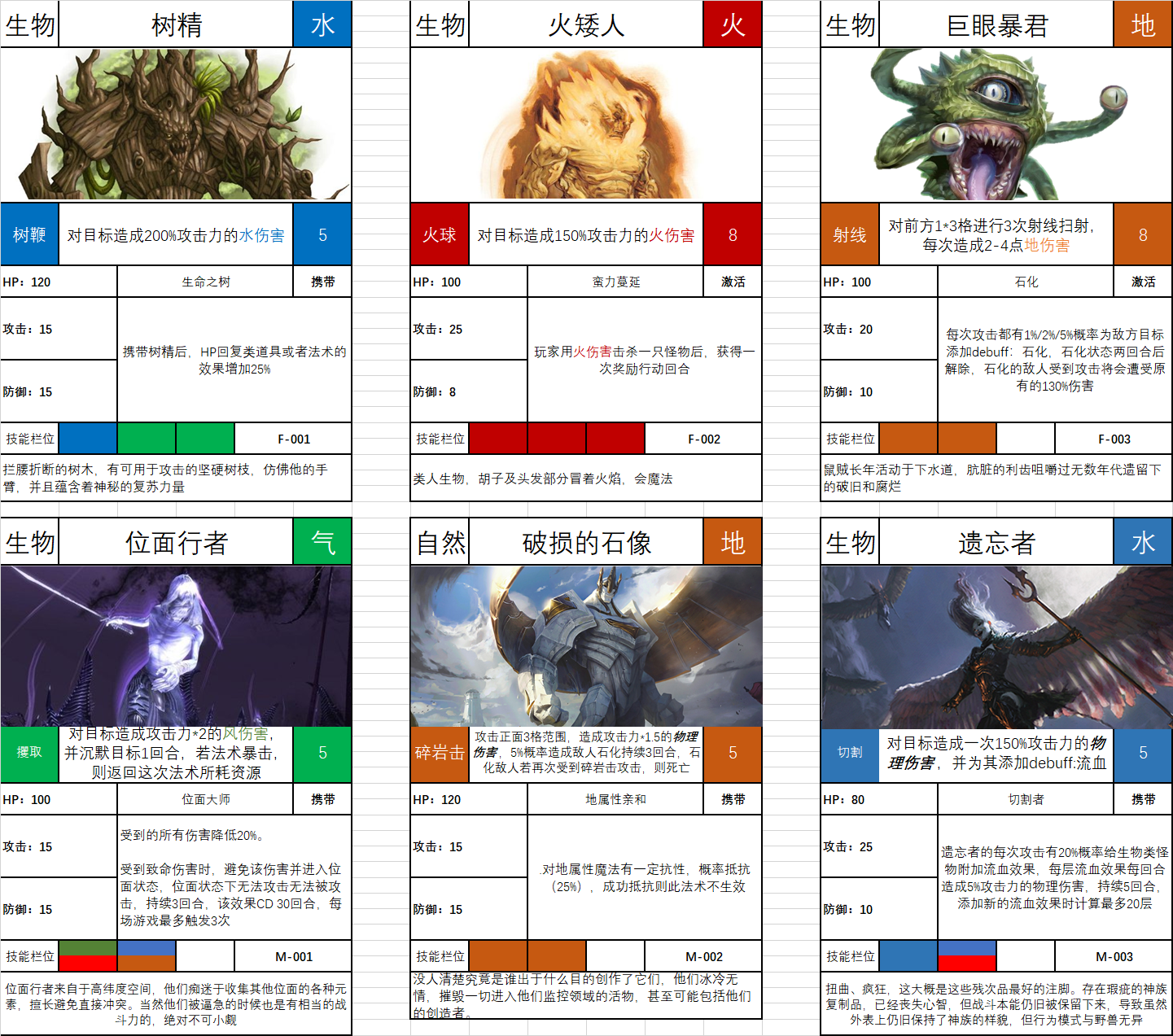
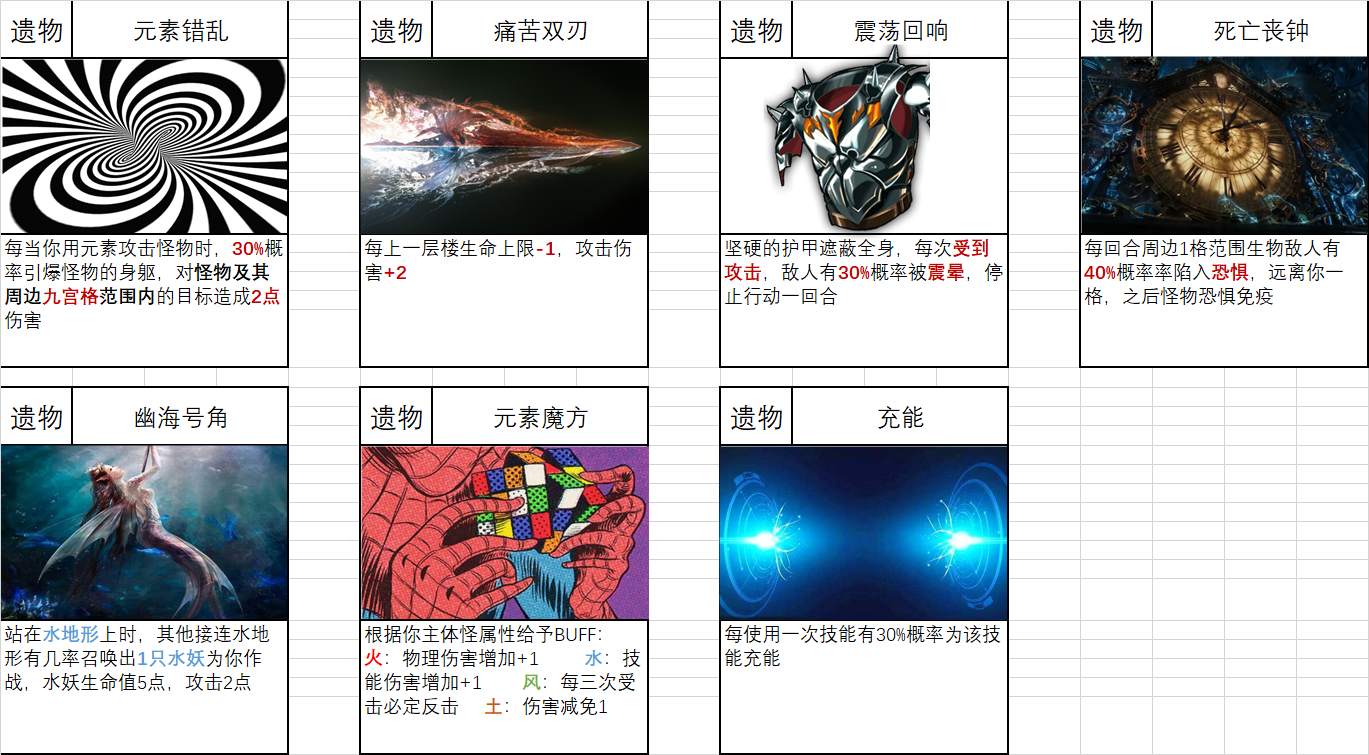


Original paper prototype
Main Character:
When we were entering the character design process, the question that bothered us all was that in a game where the character is all alone in a dark dungeon, what kind of character experience does the player want?
The feeling of loneliness is what we think players are most likely to have in a long dungeon adventure. But we also thought that it could be more interesting to have two characters go on an adventure together - because two is better than one, right?
We thought that it would be a good idea to have a companion for the main protagonist. So, we decided to add another character and make the player feel less alone with some interesting interactions between the two characters.
When coming up with the appearance of the second character, we wanted them to be a non-human being. Then we started to come up with the overall look for this mysterious companion. After a series of discussions and voting, we finally decided to put a talking hat on the main protagonist, but to make our protagonist look even better, we just changed the appearance of the talking hat to a golden crown.
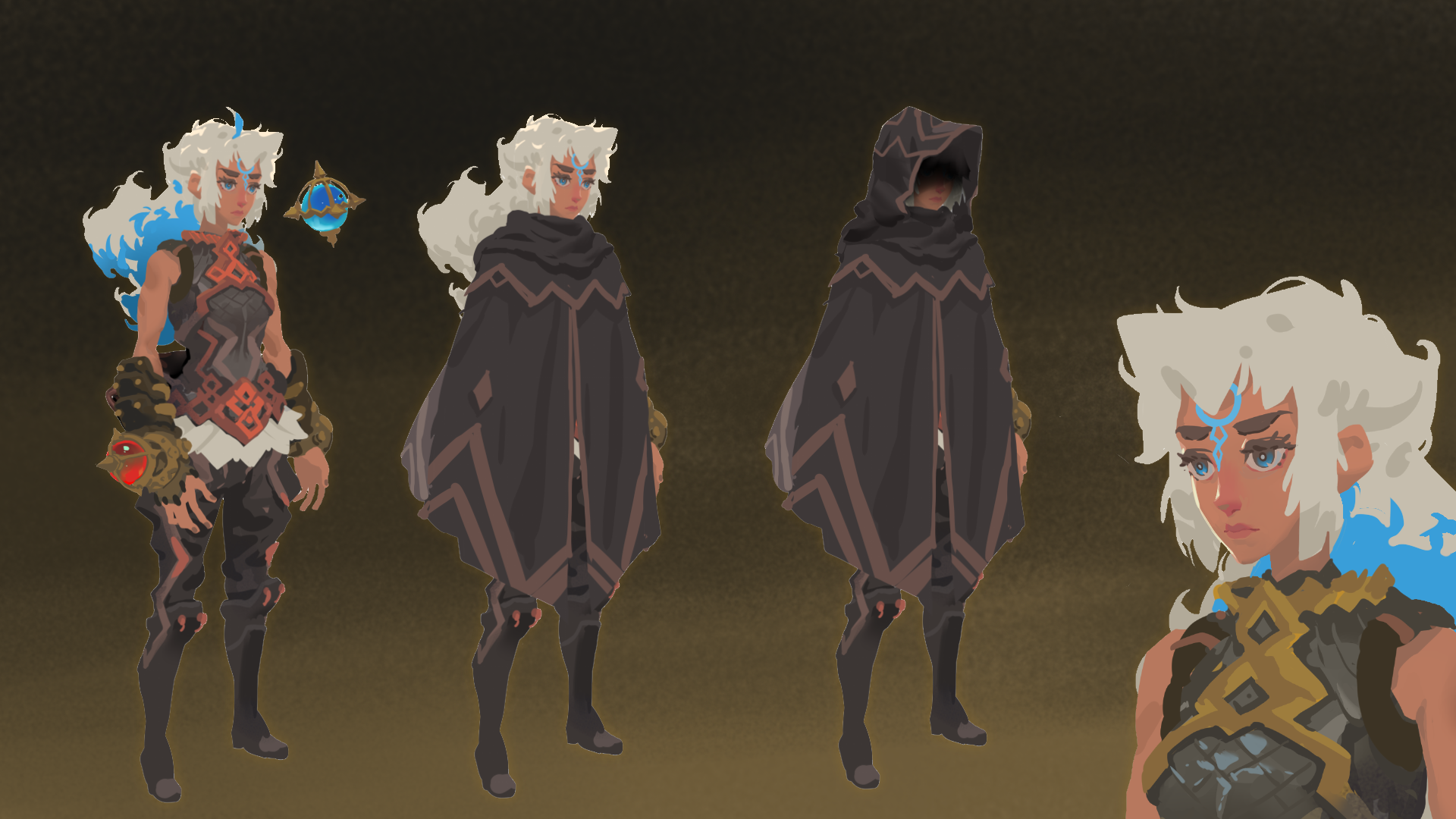
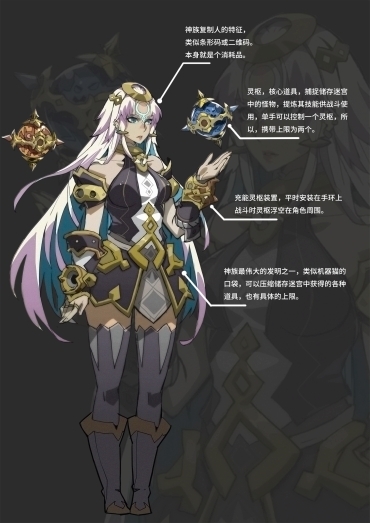
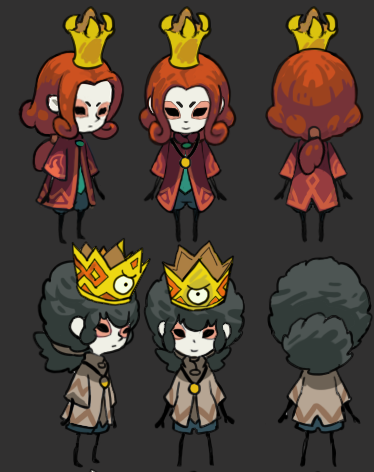
Early variations of Elle
The Maze:
Our ultimate goal was to design a rich and interesting maze for players to explore, but first of all we asked ourselves, “What kind of design principles should we apply to the maze?”. This proposition itself made our team to fall into the maze of game design. We researched and designed a variety of different prototypes, but none of met our original expectations.
After a series of painful struggles, we finally determined the method of using a single room as an experience unit. Then we hand-crafted some contents for it and randomized the maze structure. We believed that by using this method we could control the rhythm of player experience in a randomly generated roguelike maze.
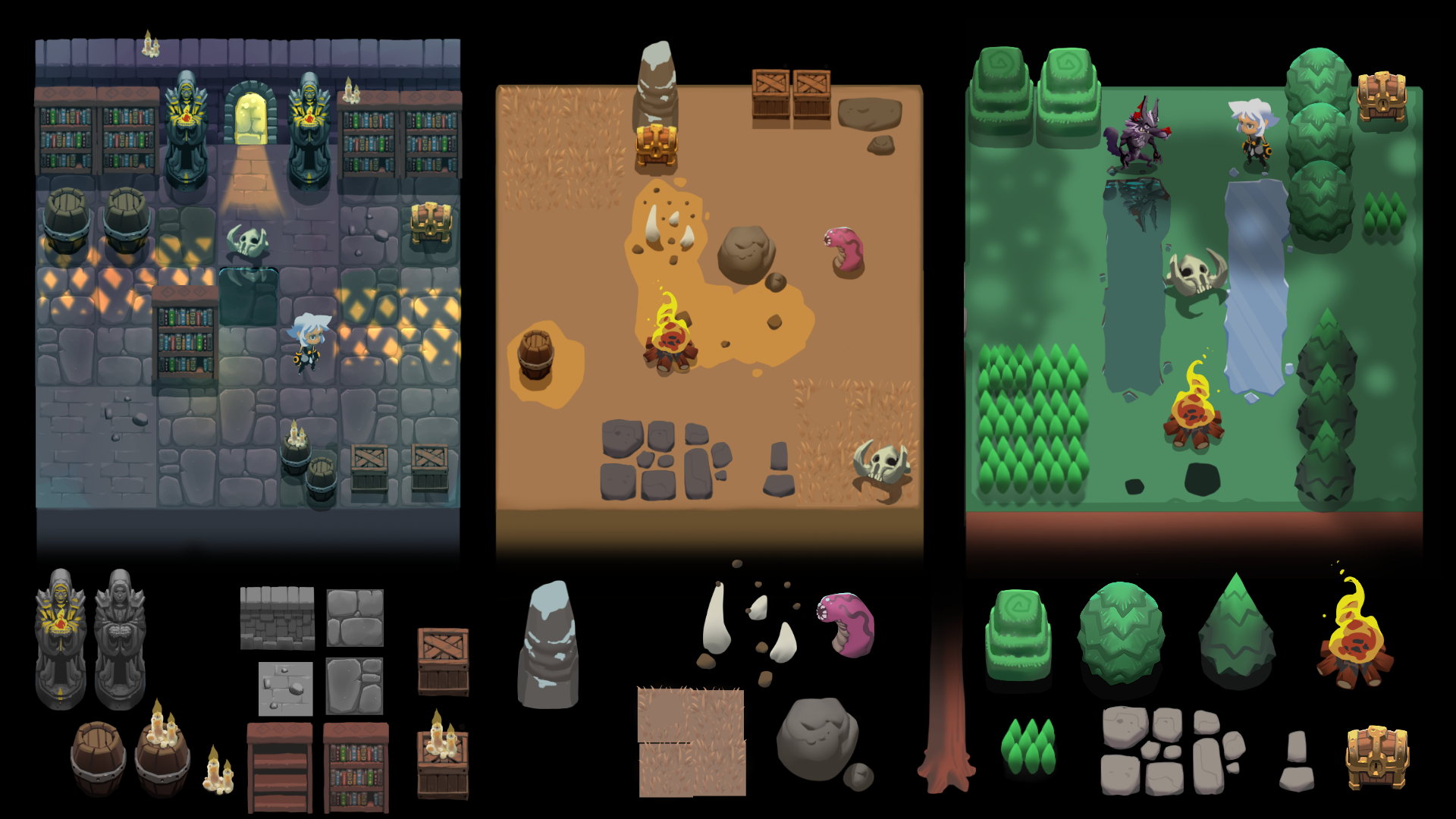
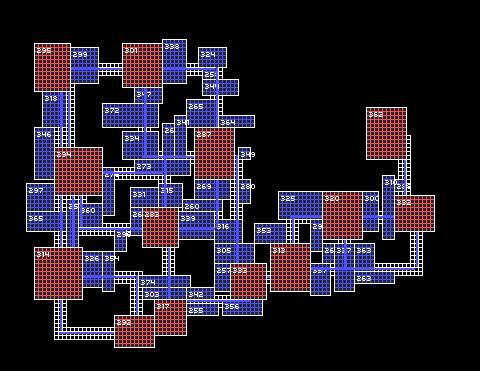
Early maze variations
Make it fun!
Once the core gameplay, main characters and maze design were sorted, it seemed that the game was perfectly ready to go into production. But the main problem was still yet to come…
In the early versions of the game we conducted a couple of small-scale playtest sessions and found out that the game had a most essential but deadly problem – it was not fun to play!
In the following days after the playtest session, our development team restructured some of the basic mechanics and reanalyzed the reasons for the lack of “fun” in the game. We found that the lack of emotional experience during the playtest was one of the biggest problems. Emotions such as surprise, panic, happiness, regret, expectation and fear were scarce in the game at that moment.
So, we made three major changes to adjust the game experience drastically.
1. Elemental Interaction
2. Blinking Ability
3. Break System
We have almost completely changed the game combat system through the implementation of these three features. Players can use different elements and terrain tiles to cleverly kill monsters, then use blink ability to control their positioning within the room and use the break system to continuously deal more damage, thus killing more monsters and getting better rewards. After the introduction of these three game design elements, the combat in the game suddenly became richer and more fun to play. And we finally were able to push forward with production.
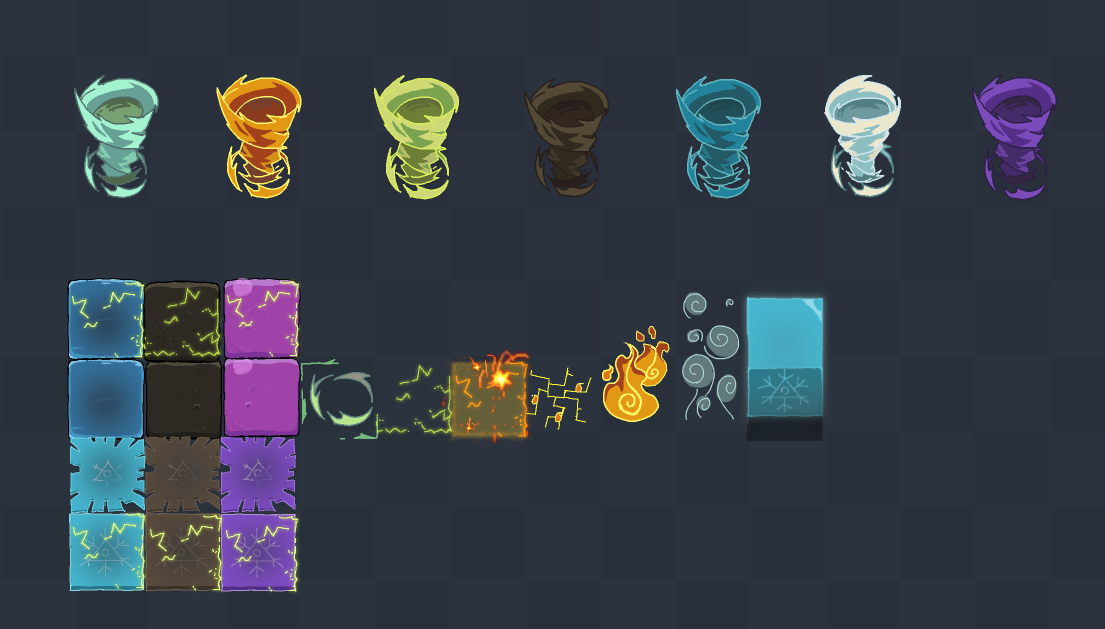
Early concept of the elemental interactions
We may have completed development on Crown Trick, but we plan to share more information on this with you in the future.
We hope that you’ll enjoy this dungeon adventure together with our main characters and have an unforgettable and joyful experience!
Thanks for reading and don’t forget to Wishlist!
https://store.steampowered.com/app/1000010/Crown_Trick/
Keep up to date with the latest Crown Trick news:
Sign up to the Team17 newsletter
Follow Crown Trick on Twitter
Follow Team17 on Twitter
Like Team17 on Facebook
Join the Crown Trick Discord
Join the Team17 Discord