CyberSprawl: Survivors v0.9 — New Loadouts. New Builds. Bigger Choices.
major updateCyberSprawl: Survivors · published · build 26342382
Your favorite character has more ways to fight. v0.9 replaces Doctrines with character-specific Loadouts, reworks weapons and character mechanics, rebuilds the gear and credits economy, and reshapes the climb through the maps. There are new attacks to build around, more reasons to care about your next piece of gear, and animated combat effects that make those choices visible.
The quick version
- Six Loadouts per character. Choose between two randomly offered options before a run. Each changes your character's abilities and gives you a different reason to pick upgrades.
- Major character and weapon changes. Build Viktor's five-role turret fort, fracture Alexei's rail shots, charge Marcus’s mobile drone-and-shield setup, clear lanes with Judge Dreg's shotgun, and discover new companion interactions.
- Rebuilt gear and economy. Gold is now Credits. Item level and rarity have clearer roles, weapon and armor power have been rebalanced, and the Gear Shop uses consistent rarity prices.
- A new difficulty climb. Main maps share a clearer pressure rhythm, alternate crowd and priority-target phases, and scale more consistently as you advance. Map One's ordinary enemies have 15% less health than the previous testing curve.
- More readable spectacle. Animated claws, traps, electrical eruptions, frost, rail trails and protection effects show what your Loadout is doing.
- Clearer progression. Six recruitment chains, faster character unlocks, earlier access to starter gear, and simpler explanations throughout the opening experience.
Loadouts replace Doctrines
Every character now has six different subbuilds, called Loadouts. Once Loadouts are unlocked, choose one of two randomly offered options before each run. Pick the version you want to build around for that run.

We want you to enjoy your favorite character more than one way. Loadouts give you a reason to reconsider your plan before combat begins, while keeping the play style that made you choose that character.
Your Loadout's ability works immediately, and its highlighted focus tag shows which upgrades develop it further. You can inspect all six Loadouts from character details before starting.
There is no separate Loadout power grind. Repeatedly choosing a favorite does not level it above the alternatives. Permanent progression remains separate from this temporary run choice.
Some examples of how your plan can change:
- GG: widen your claws, throw cards from claw hits, build protection through close combat, or send a short cutting wave through the crowd.
- The Keeper: turn charged lightning toward splash damage, knockback or protection, with different boosts supporting each direction.
- Chompy: leave Heart Traps, change how your hearts reach enemies, or keep hearts close for protection.
- Alexei: develop wider rail shots, side shots, a lingering rail corridor or shields earned by firing.
- Tully: invest in piercing releases, split blasts, lingering damage, damaging pulls or protection. Follow-up effects now spend damage earned from real hits on targets they can actually reach.
The selection screen separates your immediate benefit, boost synergy and Loadout Strategy. Focus tags appear beside names and inside descriptions. Matching boosts get a bright, sparkling Loadout Boost marker during level-ups, and the offer system gives those boosts more opportunities to appear. The combat reminder is compact, so the battlefield keeps its space.
We also reviewed the six choices within each character at equal investment. This pass fixes missed follow-up attacks, strengthens weak upgrade paths, and reduces excessive damage and protection bonuses. Different choices keep their strengths and tradeoffs; they are not intended to win every situation in the same way.
The old Doctrine selection, research page and training progression have been retired. Tutorials and saved-run handling now follow the Loadout system.
Character reworks and companion interactions

Viktor: build a fort worth holding
- Defense Turrets now support a deliberate build-and-hold play style. Move to place the queued turret when it is ready, or stand still to cycle the next turret type and hold your fort. Weapon ranks improve placement and startup time, and turrets activate after a visible setup period.
- The fort develops five distinct roles: ordinary fire, sniper fire, amplification, healing and mortar support. Each has its own appearance. Support choices are limited so that a fort can keep meaningful offensive coverage. Placement guides are softer, idle build choices cycle every two seconds, and turret bases persist. A cyan startup bar shows when a newly placed turret will come online.
Alexei: rail shots that fracture on impact
- Rail impacts can split into further shots. Weapon development and Extra Attack investment change the branching pattern, while Pierce helps preserve damage through splits. The weapon preview now explains initial damage, split generations, fragments and reach.
Judge Dreg: a shotgun that opens a lane
- The Executioner Shotgun has a stronger close-range identity. Its opening reach and knockback are more restrained, with reach and shove growing through investment. Close hits are stronger, Extra Attack adds pellets, and wider cones support the burn side of the weapon.
- Shotgun impacts clear the forward lane, and the fire lasts long enough to read. Loadout follow-ups resolve against the enemies struck rather than losing their opportunity after the native blast pushes those enemies away.
GG and Chompy: more life in your companion
- GG's companion stays tethered to her and remains within view. Crystal collection can trigger a love trance; reaching and petting the companion during that window releases a recovery wave that pushes ordinary enemies away. Heart bursts mark the transitions, and the pet prompt makes the interaction easier to recognize.
- Chompy's recovery wave stays local rather than reaching far beyond the character. Heart-based Loadouts add different offensive and defensive directions while keeping the swarm at the center of the build.
Marcus Chen: hold your ground, then reposition
- Charge Drone replaces Echo Drone’s fixed-corridor replay. Hold still to recharge the compact drones around Marcus; higher charge gives their shots more damage and a wider blast.
- Holding also builds a finite shield. Moving drops that protection and spends stored charge, but the drones keep firing while you retreat. Even empty drones still fire weak shots.
- Duration adds charge capacity. Attack Speed improves recharge as well as ordinary firing cadence. Area makes the explosions larger. Charge itself does not increase firing speed.
- Evolve into Siege Array: reaching full charge while holding position switches to piercing lances. Repositioning returns the drones to explosive bolts.
- A compact battery-and-shield display shows the resources you actually have. Clearer block flashes and less overlapping visual clutter help keep Marcus readable in a full weapon build.
More reliable charge and recovery
- Holy Lightning shares its stationary charge rules wherever the weapon is used. Charge feedback is visible for other wielders too, and the first strike no longer selects an enemy outside the visible play area.
- Regen Kit recovery grows with mission time, with a shorter description that explains its purpose.
- Roster tuning adjusts selected weapon ranks and passives while preserving each character's defining mechanics.
New attacks and weapon build paths
This update adds new ways to use familiar weapons: claw cards, traveling cuts, impact splashes, return attacks, lingering fields, piercing shots and protective effects. These come from the new Loadouts and weapon reworks, rather than requiring you to abandon your character for a different starting weapon.
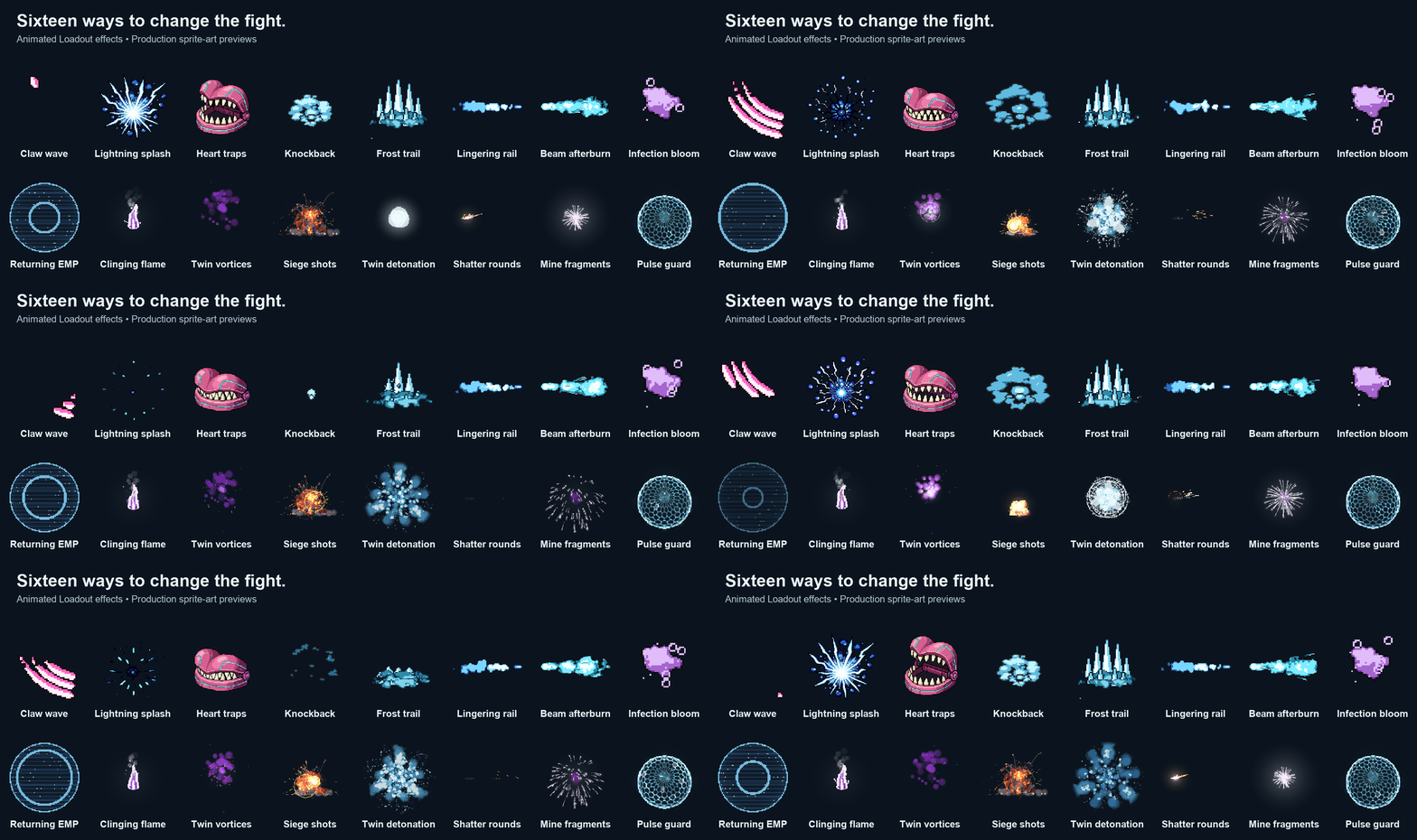
The visual treatment follows the attack. A piercing turret shot visibly continues through its lane. A trap exists on the floor and snaps on a real hit. A lingering rail effect occupies the path of the shot that created it. These differences help explain what happened while you keep fighting.
Gear that grows with the journey
Weapon and armor items now use item level and rarity together to determine their power. Higher-level gear supports the move into harder maps; better rarity provides a stronger range of possible rolls at a given level. A good early find can stay useful without replacing the hunt for later equipment.
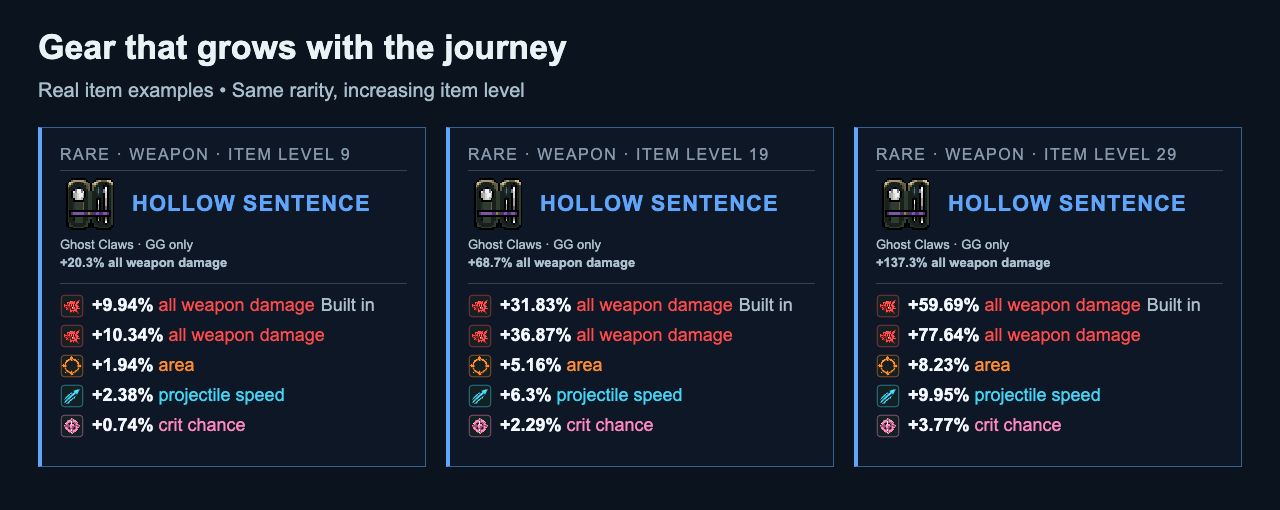
Weapon items provide direct offensive power alongside their other modifiers. Armor progression is calibrated against incoming damage, giving defensive equipment its own role in preparing for tougher maps. Extra attacks, Pierce, critical chance, cooldown and other effects still create different reasons to equip an item.
Existing weapons and armor are converted using their saved roll quality, level and rarity. Ownership, item identity and binding survive the conversion. Previously converted items retain their established values, and original saves are backed up before conversion.
You can now earn access to starter gear before your first full map clear. Inventory is directly available from the main menu, and equipment-case purchases require a fresh confirmation so that a carried-over button press does not buy something accidentally.
Credits and a rebuilt loot economy
Gold is now called Credits throughout the game. Your saved wallet carries forward; this is a currency rename, not an additional resource to manage.

Enemies, encounters and economic rewards now follow a shared value model. Quantity and rarity bonuses have explicit roles: quantity improves the amount of reward opportunity, while rarity shifts the reward mix toward more valuable gear. Elites and bosses carry larger reward budgets than ordinary enemies.
The Gear Shop sells the selected rarity at a clear price: 100 Credits for Common, 200 for Uncommon, and 600 for Rare. Shop stock level follows recovered equipment, and salvaging returns 20% of the item's assigned rarity value.
Other economy changes:
- The opening Credits chest now appears on the starting screen, away from the return lift, with its own money marker on the map.
- Elites reliably award their ability chest, keeping temporary build development distinct from persistent gear drops.
- Repeat Repossessor rewards are reduced, so repeatedly farming overtime pursuers does not replace progressing through the main map.
- Pickup text is shorter and less intrusive.
- Saved cargo, sealed rewards and equipment continue through the migration without paying retired rewards a second time.
A clearer climb through the maps
The five main maps now use a shared pressure structure with regional enemy identities. Each minute alternates a crowd-clearing task with a phase that gives more attention to tougher individual targets. Selected dips in the pressure curve have been filled, while the main upward steps remain.

Later maps increase offensive and defensive demands at different rates. More enemy health asks for a stronger arsenal; harder hits ask for better survival tools. Gear, Loadout investment and weapon development all have a part in preparing for the next map.
For the opening map, we reduced ordinary enemy health by 15% across the run compared with the previous testing curve. Arrival timing and the crowd/priority rhythm remain. This gives the first map more room without removing its escalation.
Outer rings still let you choose additional danger and reward. Mission difficulty and loot rewards are tuned separately, so an encounter's pressure does not silently create extra payouts. The Collapsed Shortcut encounter has been removed.
Recruitment and the opening experience
Character recruitment now follows six clear chains, each beginning with a starter. Level-ups earned as one character advance the next recruit in that chain, across multiple runs and maps. Requirements have been shortened, and characters you already earned remain unlocked.

The opening chapters now teach the current systems. Loadout explanations use shorter language, recognizable boost tags and aligned comparison sections. Chapter counters reset correctly, Chapter 2 rewards and briefing sprites fit their panels, and locked or unavailable characters no longer receive misleading quest ribbons.
Animated combat effects
Loadout effects now use animated pixel material attached to real attacks, fields and protection. The aim is to make the chosen ability recognizable in motion, alongside the weapon's existing spectacle.

- GG: tearing blade strokes, moving claw wakes, and a forming/breaking claw guard.
- Keeper: expanding pressure crests for knockback and a separate branching electrical eruption for splash damage.
- Chompy: visible toothed Heart Traps that close on a confirmed hit.
- Alexei: moving vapor in the recorded rail corridor and compact muzzle exhaust for powered shots.
- Ice: frost crystals that grow, hold and collapse with the field.
- Architect and Tinkerer: beam afterburn, infection blooms and distinct quarantine plumes.
- Companion and turret builds: visible piercing lanes, paired impact clouds and electrical connections between the actual targets.
- Protection Loadouts: changing energy, metal, mist or living material that forms and reacts when protection absorbs damage.
Reduced Motion keeps readable stationary poses while reducing flashes, fragments and expansion. Faces and bodies remain visible beneath the effects.
Fixes and polish
- Fixed follow-up damage lost to target exclusions, attack timing and expired or unspent damage budgets.
- Fixed return splinters changing direction when the player turns after throwing.
- Fixed counter-ray damage lost at a rotation boundary and prevented the same earned damage from being spent twice.
- Fixed small incoming hits bypassing some shields because fractional protection was rounded away.
- Fixed unintended extra scaling on evolved bite effects.
- Preserved Windows fullscreen preference across launches.
- Improved fixed-size text, dense equipment-case reading and controller confirmation behavior.
- Reduced redundant work in Loadout feedback and kept new effect materials within the existing rendering and asset-loading limits.
- Expanded animated effects across enemy attacks, world events, reward collection, healing and Loadout follow-ups. Repairs use bright welding sparks, and temporary protection centers on the character’s visible body.
- Improved Marcus’s visibility, battery feedback and shield-hit cues when several weapons are active.
- Reduced repeated combat and physics work in busy builds, including Marcus’s drones, pressure attacks, burns and lingering Loadout effects.
Thank you for playing, testing builds and telling us what you can actually see and feel. Let us know which Loadout changed your plan, which piece of gear started a new build, and what still needs a clearer explanation.