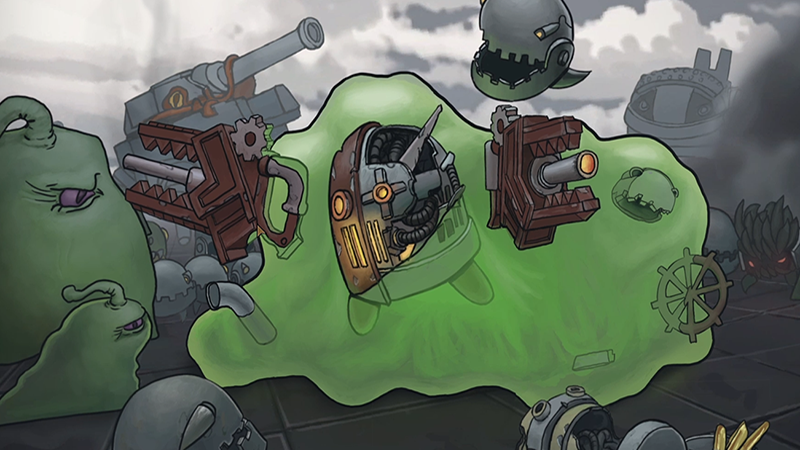
Steam Next Fest starts tomorrow, and I want to briefly talk about Doom Keeper: what kind of game it is, how its gameplay is built, and which design ideas are at its core.Let me say upfront: I’m not trying to reinvent the wheel or turn action roguelikes upside down. I mostly wanted to experiment with some conventions that personally kept me from fully enjoying games in the genre.
1. The build starts with the character.
Each character has an initial concept shaped by a weapon, passive traits, an active ability, and stat bonuses. This sets the direction of the build before the player even starts assembling it. Because of that, the emphasis shifts from finding universally strong items to unlocking the potential of a specific character. The usual roguelike “wow” effect - random great items suddenly combining and making the character incredibly strong - moves into the background. Instead, deliberate choice and player decisions matter much more, and luck has less influence on the final build. The game rewards understanding how a character’s mechanics work and which upgrades are actually worth choosing.
2. The weapon is part of the foundation.
In many games, after the first 2–3 runs the player roughly understands which weapon is most effective and starts buying it at every opportunity. Other options gradually lose meaning, and diversity becomes an illusion of choice. In Doom Keeper, weapons are tied to characters. This expands the initial foundation of the build and creates more substantial gameplay differences between characters.
3. Positioning.
No matter how well the build comes together, standing still and watching enemies die on their own won’t work. Positioning and movement remain essential parts of combat. Even with a strong build, the player has to track what is happening on screen, choose a position, and react to threats in time. Defensive mechanics reduce the cost of mistakes, but they don’t make the character invulnerable.
4. Implants.
Alongside the standard inventory, the game has an implant system - body modifications that give substantial bonuses. The main difference from regular items is the limited number of slots for specific modification types. For example, a character can have only one heart slot. So if a new heart appears in the shop, the player has to decide whether to keep the installed one or replace it. This makes implants more than just another source of power - they become another reason for meaningful choice. Finding something useful isn’t enough; the player needs to understand whether the new modification is actually better than the one already in use. Steam Next Fest starts tomorrow. I’d be glad if players try Doom Keeper, add it to their wishlist, and share their impressions. The Discord is also open for questions and development updates.
Discord: https://discord.gg/hu9RHMzQuc