Status
SteamPeaks
ChartsSalesUpcomingPatchesNewsCalculator
New on SteamEvery app, DLC and depot the minute Steam creates itAppsEvery app on Steam, newest change firstPackagesSubs and bundles, and what each containsDepotsDepots, manifests and install sizesTagsSteam's user tags and the games under themDevelopers & publishersCompanies and their cataloguesTechnologiesEngines, SDKs and anti-cheat found in the filesChange historyEvery PICS changelist as it lands
SignalsNineteen readings of the whole catalogueCompareAny games side by sideRecordsAll-time peaks and the days they were setReportsWeekly and monthly write-upsAlerts & newsroomWatch a game, get told when it movesSteam statusIs Steam up, right nowWeb API explorerTry the endpoints in the browser
NewsSteam's own announcements and the sales calendarCalculatorWhat a Steam account is worth, and its pile of shame
/
Sign in
/
SteamPeaks
The ultimate resource for Steam data.
ExploreChartsSalesSales and festsUpcomingPatchesNewsRecordsTrendingSignals
DatabaseAppsPackagesDepotsTagsDevelopersTechnologiesChange history
ToolsCalculatorCompareSearchAlertsSteam statusAPI
SiteMethodologyFAQDiscordSupportSign in via Steam
Not affiliated with Valve or Steam. Game names and artwork belong to their owners. All times UTC.
PrivacyCookiesFair useStatus
Dead Reckoning: The Long DriftNewsDead Reckoning — the approach, up close (v0.3.1–0.3.3)
Game update

Dead Reckoning — the approach, up close (v0.3.1–0.3.3)

Dead Reckoning: The Long Drift · published 15 Jul 2026, 01:57 UTC · build 24210881

All newsPlayers around this dateRead on Steam

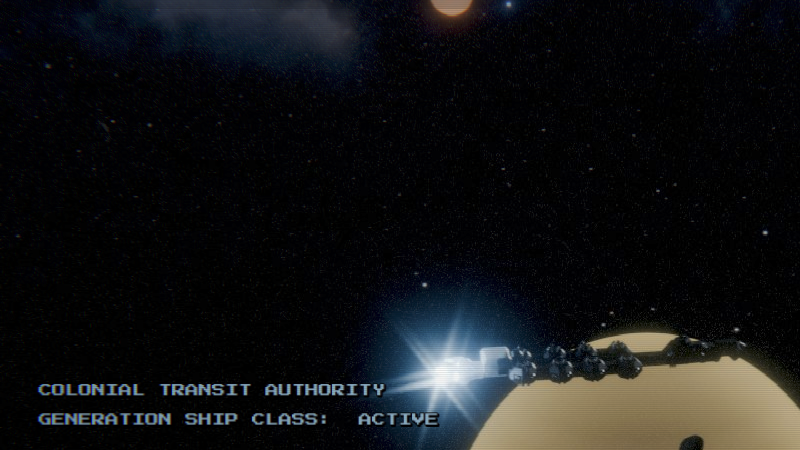
Three updates that together rebuild how you arrive at a world: the star chart learns to move between the far view and the near one, a system becomes a place you can see, and a world keeps its secrets until you look. Along the way the plotted course reads true and the colony's dead are named.

Seeing a system

  • The star chart switches between the interstellar view and a system's top-down map. Arriving at a world opens straight onto that map — the star, its worlds on their orbits, the asteroid belts, the candidate world marked — and drops back to the star field when you move on. No ship in the frame; the view looks out from it.

  • Any system you've charted can be reopened from the star chart — hover a star and select [ VIEW SYSTEM ].

  • The interstellar view holds its full star field for the whole voyage, past the heliopause.

Arrival, and what it tells you

  • Arriving at a system presents its several candidate worlds to weigh, not a single one — and the number of candidates varies, with better sensors improving the odds of finding more.

  • A world keeps its habitability and details to itself until you run the surface scan on arrival. A probe gives only a rough read beforehand, never the number.

  • Every system you visit stays on the chart, and you can always set course back to it — to the same world you left, not a re-rolled one.

Navigation set straight

  • The outbound course plots as one straight line to its star. Through the solar transit the forward leg holds the ship's heading instead of bending toward the destination's true bearing — the route and the ship's nose agree.

  • A probed world's estimated habitability reads the same figure on the star chart as in the probe report.

The colony

  • Colonists lost in the landing are entered in the register by name, each with a cause and the year of death, alongside those lost in transit.

  • Settled colonies stand under an enclosed dome again — a sealed shell on airless and hostile ground, a glassed biosphere on ice and temperate worlds — with the horizon cleared of a stray warm band.

Survival and governance

  • A ship reading 0% power, food, or hull now genuinely faces the consequences instead of coasting at zero.

  • The ship's systems hold their bid for expanded authority until the voyage has outrun most of the crew's lifetimes, no longer in the opening decades.

  • Locked founding directives read as complete, dimmed cards rather than losing their borders.

Fixes and text

  • Returning to a pending decision from another tab no longer leaves the year unable to advance.

  • The faction readout columns line up, and the world-survey card no longer clips its labels.

  • An editing pass on the founding-era passages and the account of those lost in transit.

  • German, French, Italian, Spanish, and Russian brought level with the corrected text.

More from Dead Reckoning: The Long Drift

Other announcements

All news
Community10 Sep 2026What's next — September 2026Two new kinds of world are coming to the survey, the ground is getting a new look, and two writers have joined the colony. New worlds Hycean. A world-sized ocean under a thick hydrogen sky. There is no shore. A colony here lives in sealed habitats hung below the surface, joined by pressure walkways. Eyeball. A world locked to its star, one face always in the light. The only ground that can be l…Game update7 Sep 20260.6.5–0.6.6 — Colonies can growNew features No new features in these patches. Bug fixes Colony · Colonies can grow. The ground's birth rate sat below what age and illness take, and every settlement declined however well it was run. A colony with land and full stores now bears children at a settler's rate. · The population card itemises each year's births and losses: illness and accident, age, hereditary disease, the ground.…In-game event6 Sep 20260.6.3–0.6.4 — Chronicles and records0.6.3–0.6.4 — Chronicles and records New features Chronicles · Choose a named Chronicle to keep the same stars between voyages. Read each voyage's file at the station or from its ending screen. Chronicles are available in the full game. Bug fixes Population and resources · Cryo purge now removes actual sleepers and records their deaths. Landing casualties also update the population and death re…