Hello, Survivors.
Following up on last month’s post, we would like to take this opportunity to reflect on a topic we had previously set aside: The Journey Spanning from Early Access to the Official Launch.
To be honest, we have consistently shared details regarding our development intentions and the situation during the Early Access phase—as well as the reasons behind our decision to implement a major overhaul and the process that followed—in our Developer Notes. Consequently, we felt that simply listing facts or information would not be particularly meaningful.
So today, we plan to stick to the established format only up to the point where the project shifted to an "Early Access" model for its final version; from that point onward, we would like to share some more personal reflections and my current thoughts.
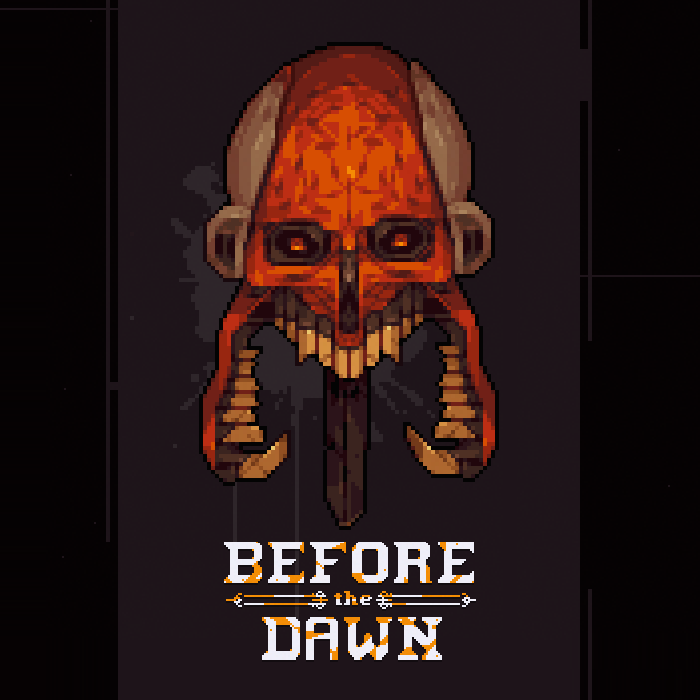
We will be including images that were never previously released or were used in earlier versions—such as the high-resolution pixel art shown below. These are monster designs from the early stages, back when the game was titled "Before the Dawn."

Draft #5: “Focus on What We Can Do” — Toward Early Access (Mid-2022 to Late 2023)
If you saw the link we shared in a previous Dev Note, you may already know that the reason we ultimately gave up on the direction of Draft #4-2 was that responding to the countless narrative choices required far more development cost than we had expected.
Ultimately, it amounted to increasing current costs to save on future ones; however, at the time, we never imagined—much like what happened with the official launch later on—that it would take another year and a half to reach Early Access following this overhaul.
- Minimize narrative choices, and include only dialogue before and after each battle map that explains why the protagonist's party must engage in the battle.
- The combat system will largely retain the format validated in previous drafts, while the level design will be structured to ensure a continuous stream of new experiences.
Even with such strict constraints in place, the time it took on average to determine that a map was truly "fun" was by no means insignificant.
In fact, during the early stages of Draft 5, we wanted to use procedural generation for the map—or at least adopt a system where players could choose their own routes (similar to the current official release)—but ultimately, we had to cut these ideas due to a lack of time.
Consequently, for the Early Access version, we ultimately acknowledged the constraints imposed by the "map"—which had become the critical path for both artwork and level design—and adopted a development process that involved paring down other elements as much as possible to align with the map's development timeline.
- The story will feature a fixed cast of three survivors and focus on their struggle to hold out as long as possible while isolated by enemies.
- We aim to expand the range of possible gameplay—within the confines of the map—by offering the three fixed survivors the widest possible variety of Perk choices and granting players autonomy in selecting and modifying their "weapon" modules.
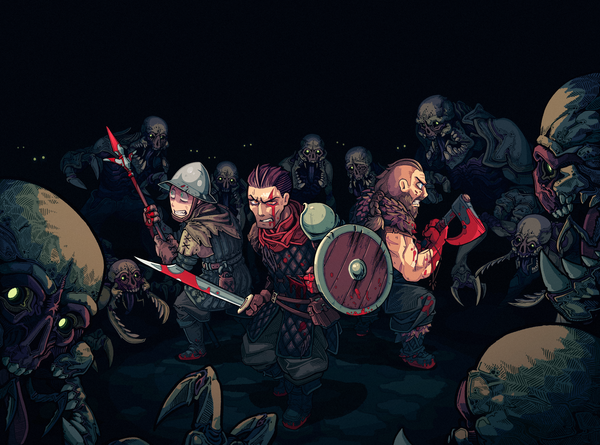
Although this concept art was ultimately not adopted as the official illustration because its comic-book style was too strong compared to the overall tone of the Steam page, it perfectly captured the atmosphere we envisioned for the Early Access version. We wanted to take this opportunity to share it with you.
Ultimately, in October 2023, we released an Early Access version that packed in the highest level of polish we could achieve, featuring six stages, three characters, and around eight types of enemies—including the "Cultists." Thankfully, we received a positive response from many players.
However, the game’s volume could hardly be described as substantial; yet, because the combat system—into which much effort had been poured—and the overall atmosphere received positive reviews, the developers decided to aim even higher.
Draft #6: Toward the Full Release with the Goal of “Doing as Much as We Had Wanted to Do” (Early 2024 to Early 2026)
On December 10—about a month and a half after the Early Access launch—and after much deliberation, we published a post announcing a "complete overhaul," effectively setting out to design a new game from scratch.
- Through the EA experience, we wanted to create an experience in which players could carve out their own routes through various branching paths, based on standardized level design rules.
- Rather than three fixed characters, we wanted players to form a party composition of their choice from among a variety of characters.
- Rather than a pre-fixed skill tree, we wanted players to build what they considered the optimal build from among many different skills.
- In addition, we wanted to express the elements of “humanity” that we had not fully realized, both within the narrative and through systems.
Ultimately, we managed to achieve the goal of completing a game that fully incorporated everything we had intended—though the process was by no means smooth.
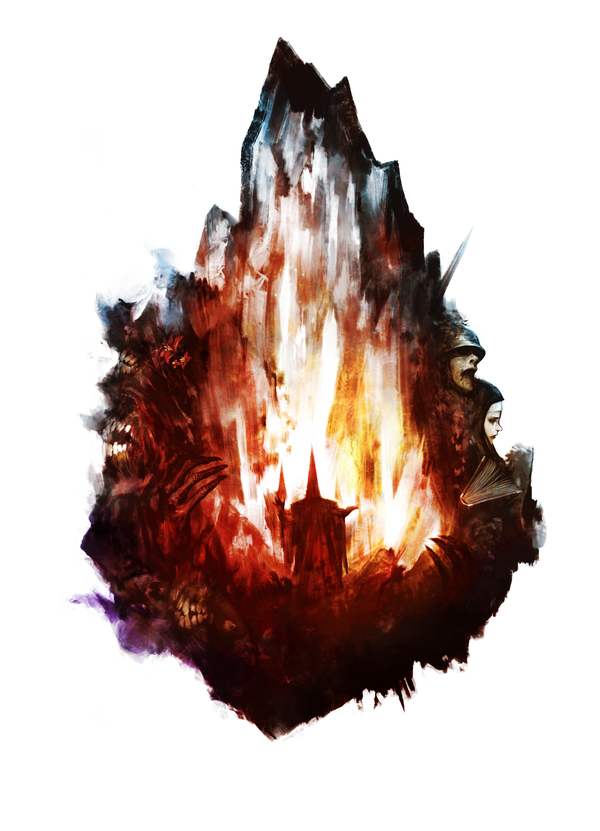
The original concept behind ‘Memolith’ was actually the somewhat rougher idea of ‘Embers.’ It all began when we were trying to figure out how to create a convincing narrative justification for a system where characters could freely use a wide variety of skills, and the concept of ‘inheriting the memories of the deceased’ came to mind.
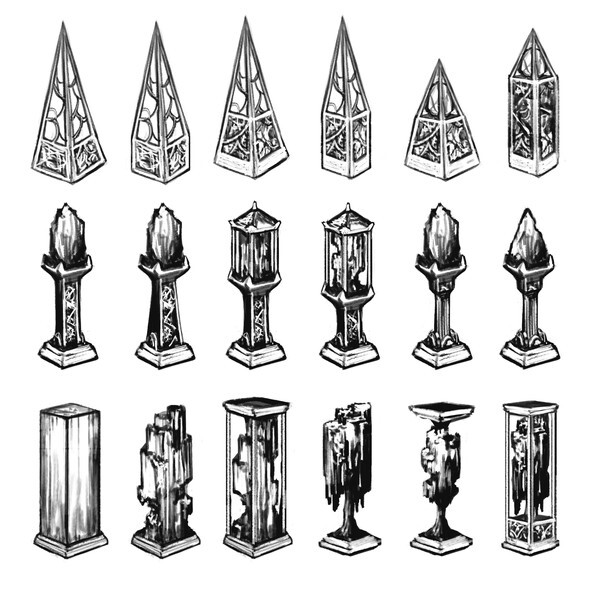
In the process of linking the concept of these "embers" to the clear objectives of each stage—and connecting them to the game's overarching goal of "Restoration"—the concept of the "Guiding Pillar" emerged; subsequently, "Memolith" was conceived as a higher-level concept to encompass these elements within a broader framework. Various design sketches were proposed, and ultimately, the current design—based on the form of a monolith—was adopted.
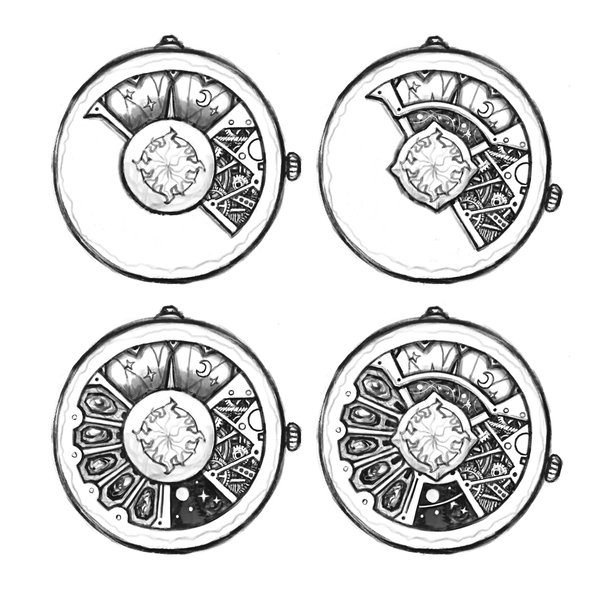
The concept of the ‘Light Tracker’ is presented as a device that allows characters to illuminate the ‘Guiding Pillars’—the primary objective of the narrative and gameplay—while simultaneously measuring their ‘willpower’ and serving as a medium to peer into their ‘inner memories.’
We decided to incorporate various settings while avoiding the pitfalls of "Draft 4-2" by conveying as much information and backstory as possible through indirect storytelling. Although the task was far from easy, I want to express my gratitude once again to the narrative designers and background artists; thanks to their collaboration, we successfully scattered clues throughout the game that reveal the events that shaped this world.
So, What Do We Think Now?
Honestly, it would be a lie to say we have no regrets. After all, if we had stuck to a single concept throughout that long six-year period instead of trying out so many different things, we could have produced a much more solid final product in terms of both scope and polish.
In a way, however, since there was no real way to know beforehand where the limit lay versus where greed took over without experiencing it firsthand, we suppose it was a path we had to walk and a process of trial and error I had to go through.
Although this wasn't the original intention, the official release version—with the exception of the non-grid version—ultimately retains every trace of the path taken to get there.
- The ‘Free Movement System’ ultimately drew inspiration from the real-time movement found in the earlier Draft #3;
- While the ‘Simultaneous Turn-based AI’ from Draft #2 was discarded, the design of the characters' current ‘weaknesses’ is largely based on elements we originally wanted to incorporate from that version;
- The ‘stealth gameplay within a turn-based framework’ established in Draft #4-1 evolved into ‘ambush gameplay,’ and the goal of ‘maximizing assassination mechanics’—which fell short in the Early Access version—was realized through characters like Mienne (the Shadow Sister) and Nathaniel (the Jester);
- Furthermore, the expression of humanity pursued in Draft #4-2 was integrated through the ‘Will-Encroachment’ system and woven indirectly into the overall narrative;
- We intend to retain the survivors of Draft #5 (the Early Access version) as key characters in the official release, preserving their ‘core skill sets and personalities’ as faithfully as possible, while refining fundamental combat systems—including the alarm mechanic—by eliminating counter-intuitive elements like the ‘Grab’ action.
In particular, since boss battles were an area where we felt there was room for improvement at Early Access, we were determined to ensure the official release offered an experience—facing massive bosses with unique mechanics—that simply wasn't possible in standard stages; the result is a combat experience that pushes the current game system to its absolute limit.
Looking back now, we do sometimes wonder if the difficulty level was perhaps too punishing. However, we feel that smoothing out that particular aspect would have diluted the experience's unique character too much; ultimately, we believe leaving it as a sort of "protruding rock"—a rough edge—was the better decision.
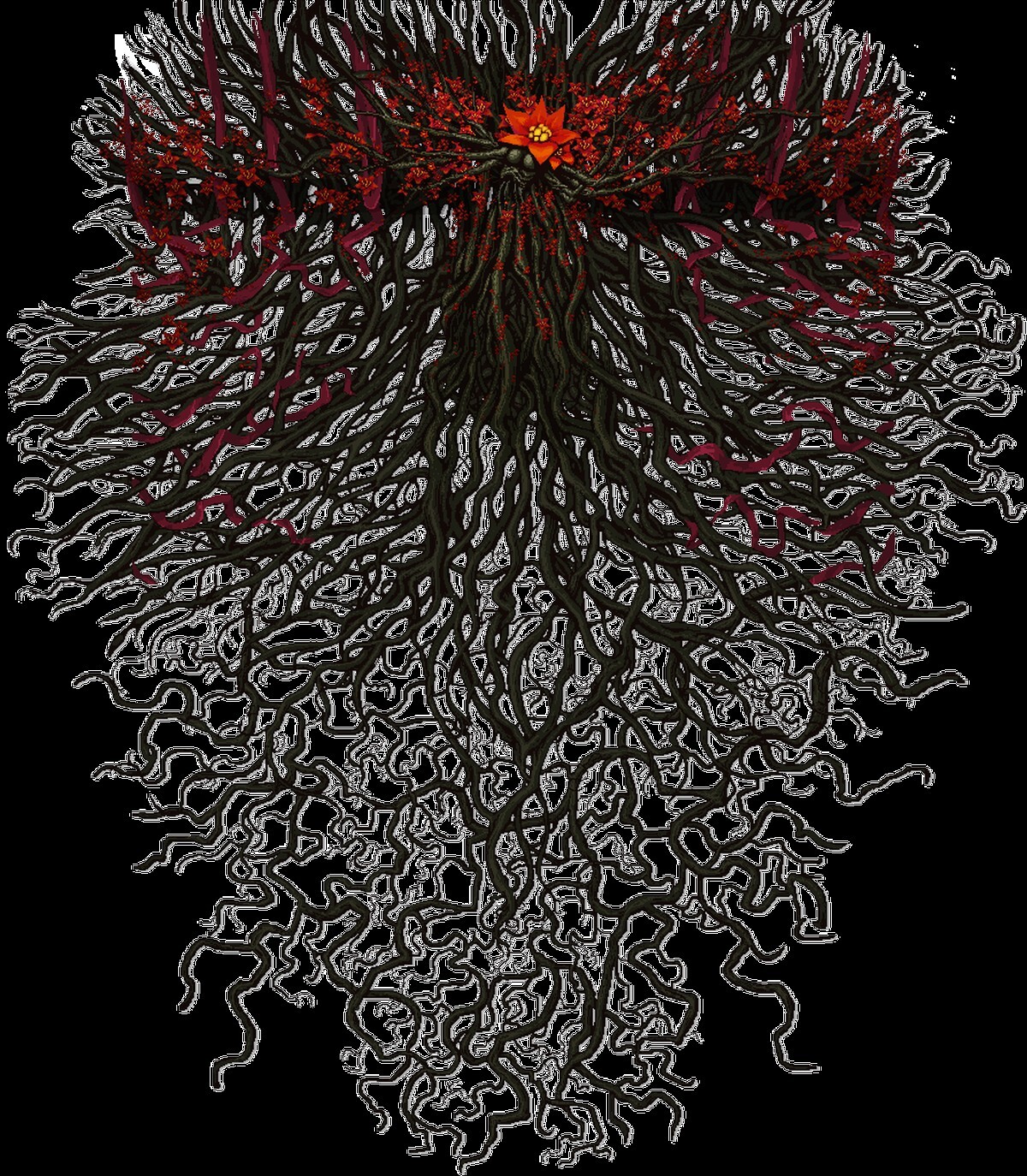
In this post, we looked back at the development journey of MEMOLITH, tracing its path from the initial idea in 2020 to its official launch.
Looking back, there were far more moments when we had to make unexpected choices than moments that unfolded according to plan. Even so, the fact that we were able to share a fully realized world with you after this long journey is something that will remain a special memory for a long time.
MEMOLITH has now transcended our own development journey to live on in the memories of each survivor who personally illuminated the darkness of Remore.
We sincerely thank everyone who joined us on this long journey.
Thank you,
MEMOLITH