What's happening / TLDR: Developer diaries introduce details of Espiocracy - Cold War strategy game in which you play as an intelligence agency. You can catch up with the most important dev diary (The Vision) and find out more on Steam page.
Between two parts of Vietnam after-action-report, we'll make a small detour. As I reviewed the previous diary and prepared the next part, I realized that we mostly skipped management and expansion - which influences significant parts of the hot civil war in Vietnam. Additionally, as Espiocracy's core management & expansion substantially evolved during development (and even since the last dev diary), it will be useful to explore its current shape before continuing the campaign. This dev diary could be named "Agencies 4.0" but, as always, it's not a new version with patch notes, just a full independent diary. Welcome and enjoy!

In the intimidating world of espionage and the Cold War - which the game tries to recreate in the full possible complexity - the main tool is simple: you can order units to conduct activities around the world.
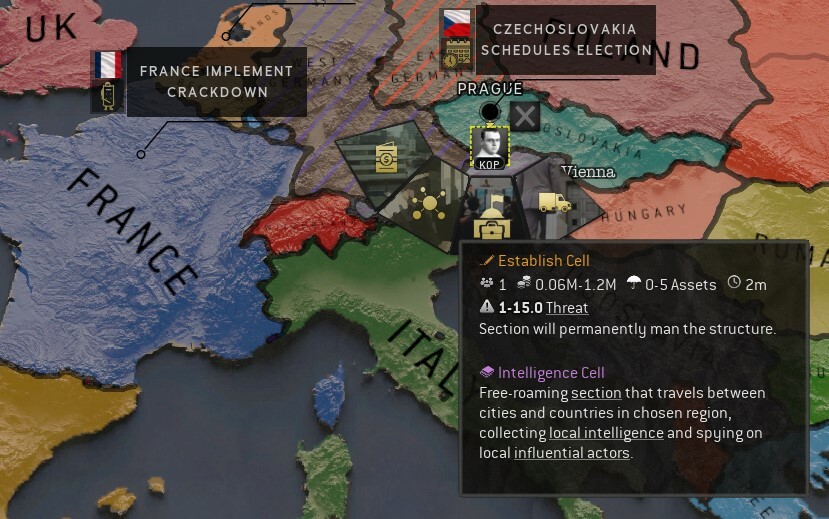
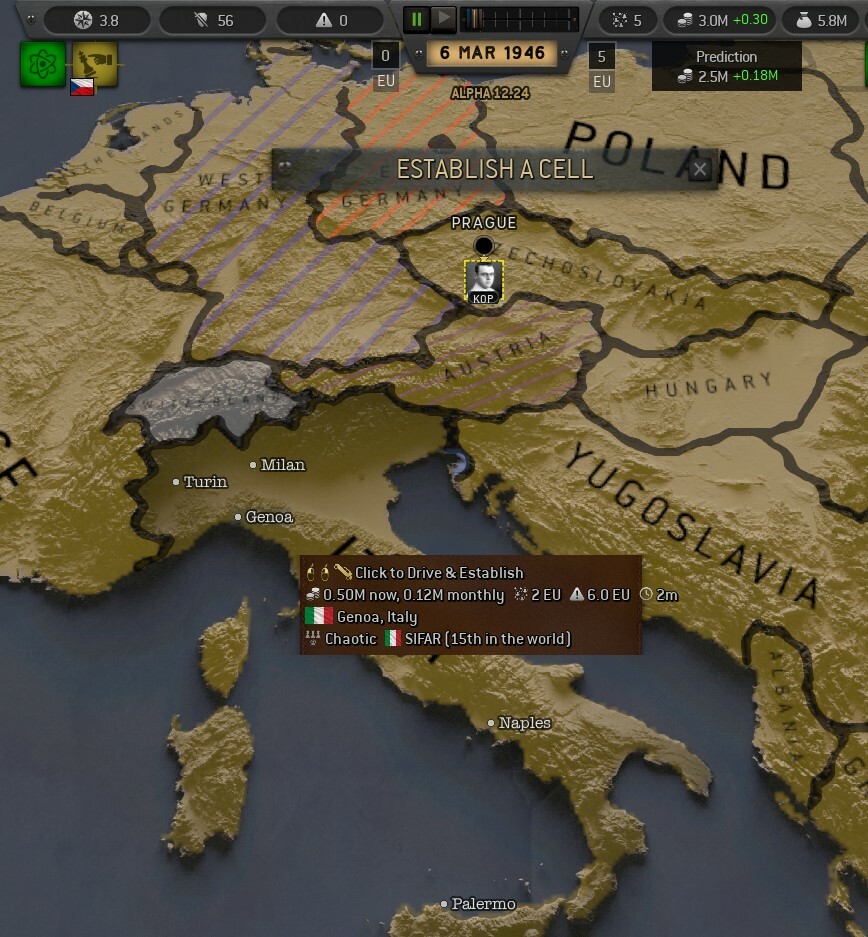
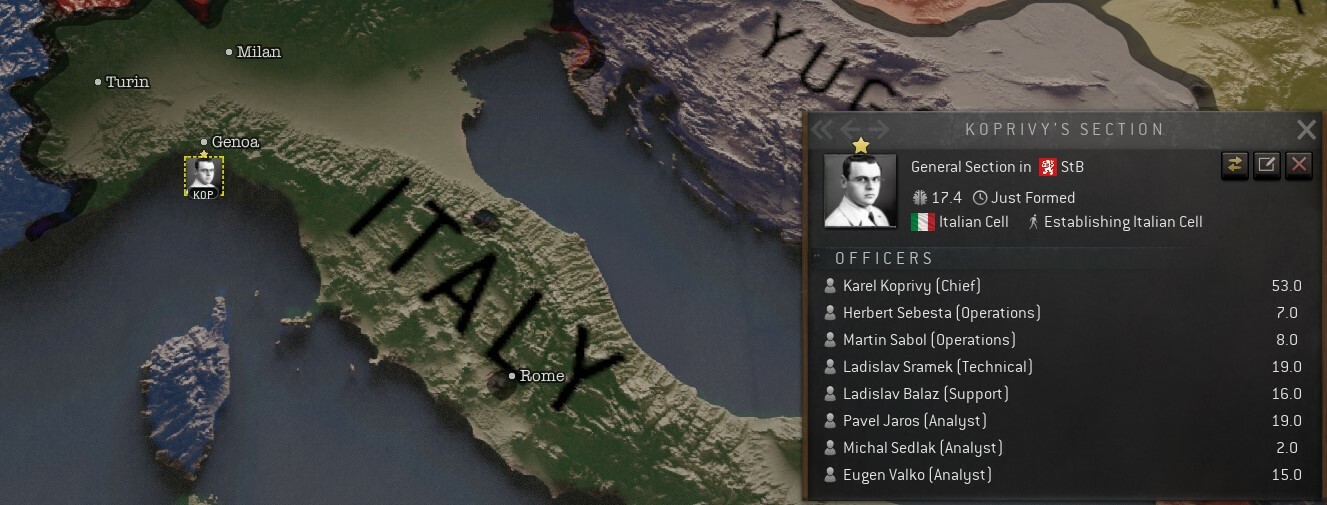
Usually, these orders establish (build) intelligence structures, such as:
- Cells (visible in the example above) - which can for instance roam a warzone to collect military intelligence
- Stations - which organize and conduct a full suite of espionage activities in their range
- Nodes of smuggling, propaganda, financial networks - which are used in all kinds of operations and activities
- Special structures - black sites, radars, export companies, stay-behinds, illegals, and so on
This is where it gets more complex: orders depend on player's units, intelligence community, resources, and local environment (including counterintelligence efforts of other players).
Officers
Officers in the game are now organized into three kinds of units:
- Elite Officer - a single officer with relatively high skills
- Section - a group of usually 8 officers divided into analysis, operations, and technical roles
- Branch - a few dozen or more officers, encompassing a wider range of roles and experts
The main intuitive difference is the size. In principle, any unit can be downscaled or enlarged. Then, the size influences how it can implement orders, with a plethora of associated trade-offs. On the most basic level, a cell can be formed only by smaller units (an elite officer or a section), while a station can be manned only by larger units (a section or a branch). Differences compound in more advanced orders. For instance, an elite officer can execute an assassination but cannot handle a large propaganda campaign - while a branch can be active in the entire continent but spies from this continent will have a much easier time penetrating it. Sections, the middle universal ground, can implement most tasks with average efficiency but they are most valuable when specialized - into special, counterterrorist, paramilitary, and other kinds of forces.
To enlarge or create a new unit, you can tap into precious talent pool...
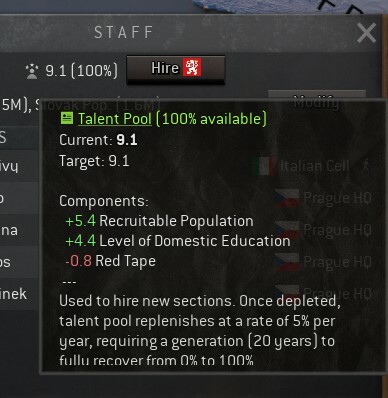
...by launching hiring campaigns:
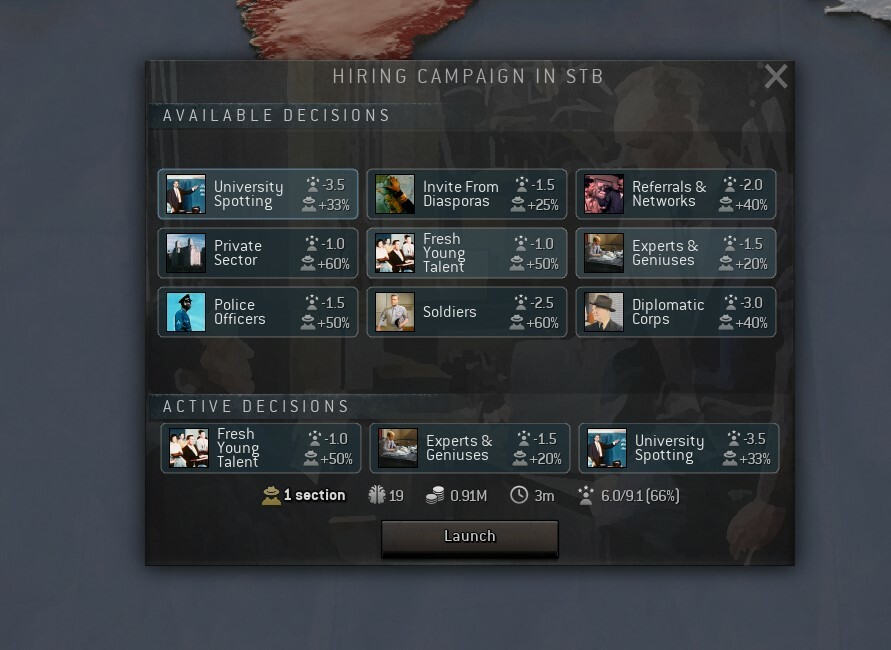
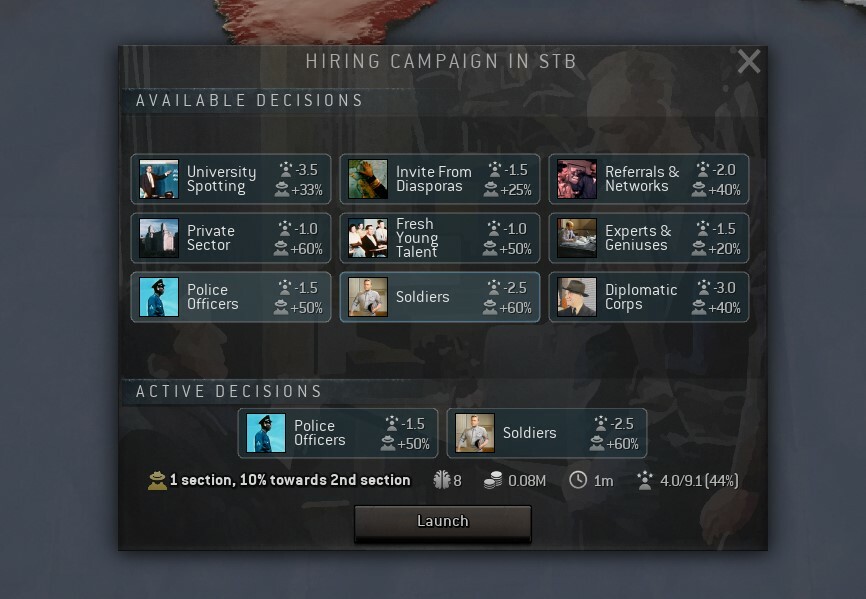
Every campaign differs in features (mainly sources of new officers). Their availability depends on the local environment and intelligence community. Decisions here influence the new unit, spending, and even tertiary effects - for instance, hiring from diasporas brings in local intelligence on countries from which new hires came in. In the example above, we focused on hiring a mix of young and highly skilled candidates, which costs a lot and quickly depletes the talent pool. In contrast, focusing for instance only on police officers and soldiers is much cheaper but the new unit will be substantially weaker:
Tradecraft
General prowess in intelligence activities - tradecraft (also known as the craft) - permeates many levels of the game. Every officer, every unit, and then the entire intelligence community has a tradecraft level from 0 to 100. These values define the availability and value of all espionage tools.
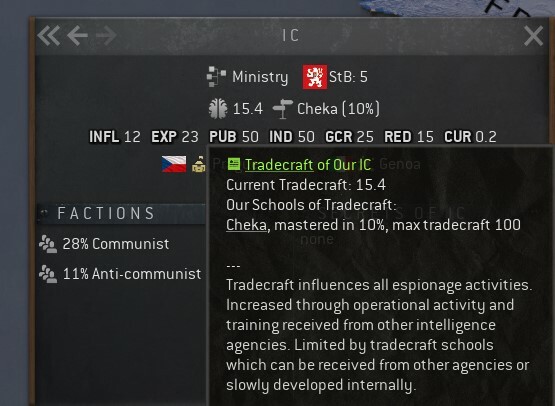
On the most general level (intelligence community, player-wide), the game introduces tradecraft schools - not literal school buildings but instead schools of thought. Every player pursues one or more schools (they can be mixed). In 1946, the world begins with the following schools:
- Amateur
- Police
- Guerrilla
- War Veteran
- Cabinet Noir
- Commonwealth
- Cheka
They influence almost all angles of expansion in the game: possible max tradecraft, contributions to operation types and specialization, availability of intelligence programs, hiring decisions, intelligence structures, laws, and so on. As names suggest, there are two groups - acquired environmentally (eg. war veteran, after participating in larger war) or belonging to particular countries. The latter group is much more valuable and can be acquired only by receiving training from players that mastered this school, for instance, cabinet noir school through training provided by the French player. Players can also develop new schools (you can usually expect the quick emergence of CIA or Mossad tradecraft schools in most campaigns) but it is an expensive and painful process that requires many risky activities in difficult situations.
To summarize tradecraft schools in one sentence, now progression is more varied between countries and players have one more very valuable interaction (training) with other players.
Specializations, Programs, Laws, Budget
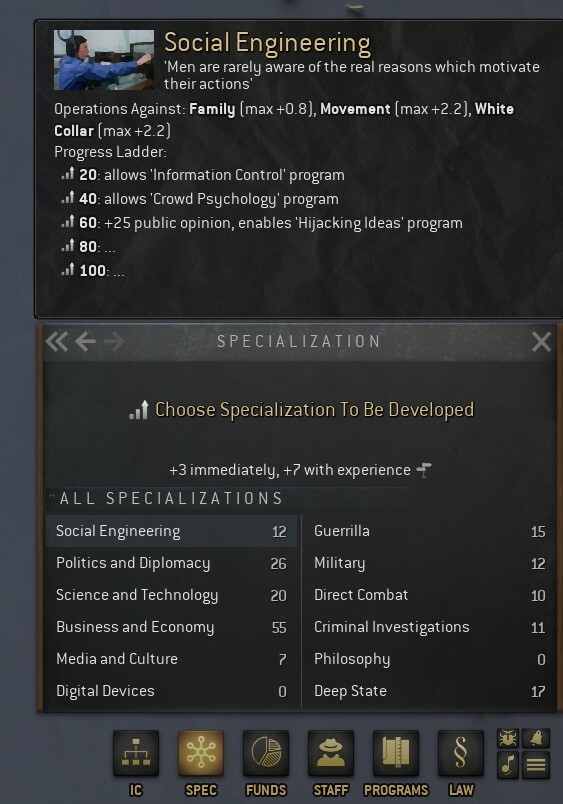
You can pursue 12 kinds of specializations. While nothing changed from their introduction in previous diaries, we can look at an example of one specialization:
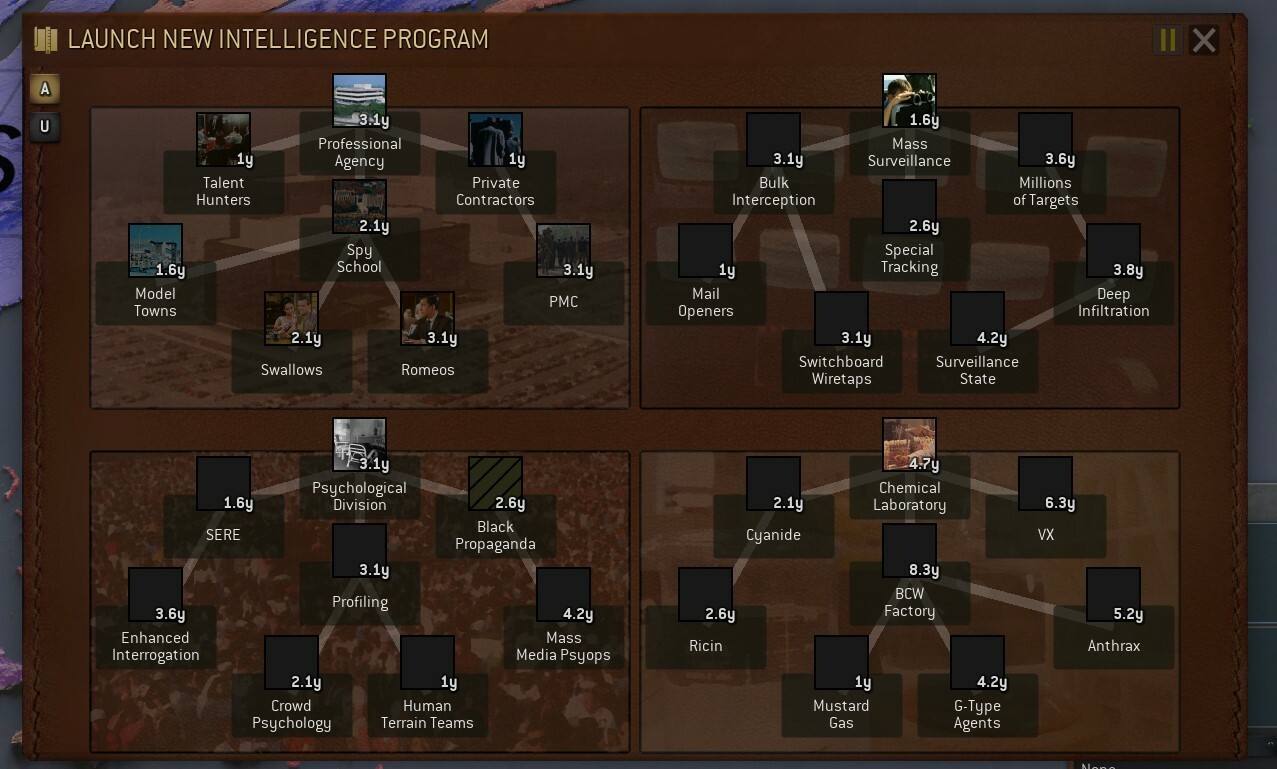
You can also regularly launch intelligence programs which now take the shape of multiple small trees:
The legal environment around intelligence agencies is defined by laws and policies:
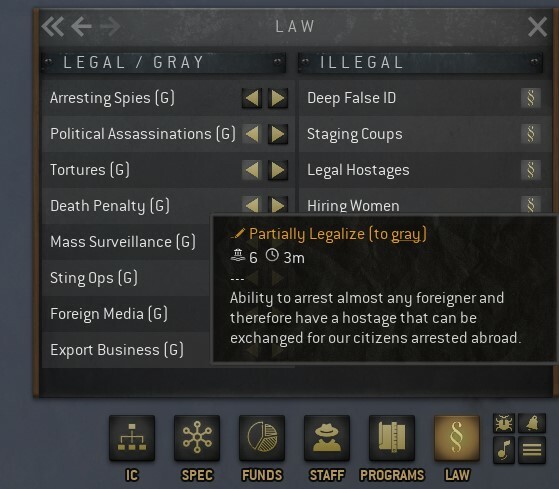
Various actions can be illegal (executing this action incurs a secret), remain in a gray legal area (not delegalized = legal, but at any point government may delegalize it, which may destroy for instance long-term investments), or be fully legal (giving strong protection from whims of changing governments and sometimes even from failures near relevant actions). By using political favors, you can move up actions to higher legal status.
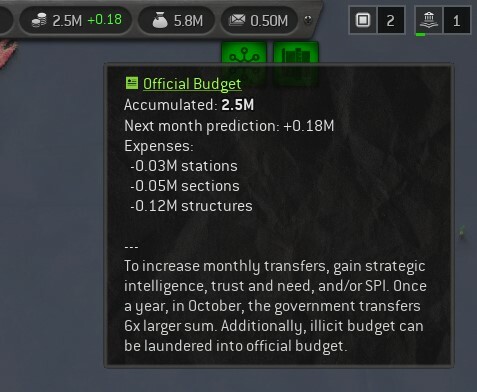
Also, last but not least, budget calculations now include upkeep:
Now, armed in various units, schools, programs, we will progress to the second part of Vietnam AAR on Christmas Eve, December 24th!
If you're not already wishlisting Espiocracy, consider doing it
https://store.steampowered.com/app/1670650/Espiocracy/
There is also a small community around Espiocracy:
