Note: Chinese Translation of this blog post is available! (Courtesy of Baojie)
When it comes to making commercial video games, let’s just say it’s not our first rodeo 😎
(It’s our second)
Steam automatically compiles various play data from gamers. From Phoenotopia, I know that we have a roughly even split of keyboard users and gamepad users. From achievements, I can tell which bosses were defeated and how far the player got (although our implementation of achievements requires the user manually unlock it, so it’s less useful data). Today, I want to focus on one specific data point—the median playtime for Phoenotopia.
Unfortunately, the median playtime clocks in at 4 hours.
I think that’s right when the player reaches Atai.
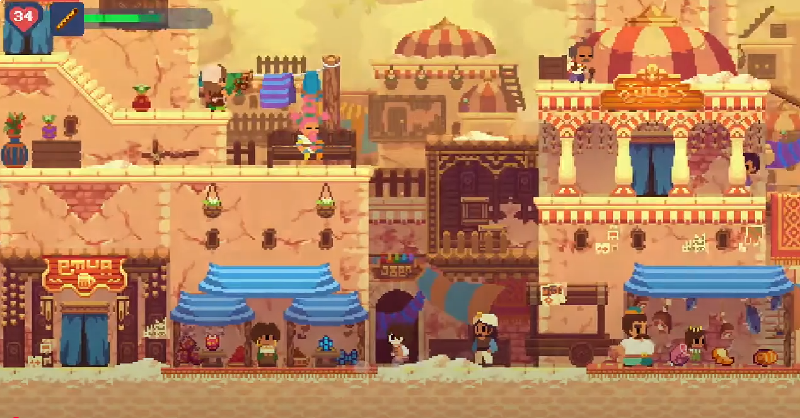
(Atai – the death place of so many playthroughs)
A working theory has been forming:
Atai is the first real “slog” where players are stuck in one place for a long time. It’s a big town with 70+ NPCs to chat with. It’s easy to get lost, feel like you’re not making progress, and then tap out.
Two major quest lines must be completed before reaching the second dungeon: getting the bombs and getting the flute.
Get BOMBS
- Meet Lisa and learn of her plight
- Find the bomb maker’s house—it’s locked.
- Tell Lisa you need to unlock a door.
- Lisa refers you to Garnet, who gives you a “watch the kids” quest.
- Play hide-and-seek with the kids.
- Comb through the entire town looking for the kids
- Go to the bomb maker’s house and claim bombs
Get FLUTE
- Meet Lisa and learn of her plight
- Find the jailed Ouroboros man—he wants wine.
- Go to the tavern—no ID, no wine.
- Talk with Lisa and get her ID
- Dye your hair to look like Lisa
- Buy wine with fake ID
- Go to the Ouroboros bandit and exchange it for the flute
Phew. Looking back, that is a LOT. And we don’t even have a quest tracker >_>
I love romping through towns and chatting with NPCs—it’s my favorite part of JRPGs (the genre I’d be making if I weren’t making this). But maybe I let that influence the design a bit too much 🤔
During these quests, there’s very little action—unless players explore optional caves (which don’t quite scratch the itch). So after 1-2 hours of town questing, many players drop off. That’s why so many runs end at 4 hours. That’s my theory anyway.
That brings us to today’s blog topic: PACING
Long story sequences should generally be avoided—it’s a sign of poor pacing. If a long sequence can’t be trimmed down, it should at least be broken up with action. Think of it like making a burger—it needs balance.

(Atai is like the burger on the left—only meaty “story” sequences. A well-paced game is like the burger on the right — it utilizes crucial tomato and lettuce “action” set pieces to mix things up)
Now, one of our new core design goals for Star Iliad is that if you take any 90 minute slice of gameplay from anywhere in the game’s campaign, you’ll experience all of the following:
- Exploration
- Combat
- Puzzles
- Boss Fight
- New Upgrade
- Story Progression
That’s the core “game loop”. Of course, to stay balanced presents its own challenges because we can only control so much. Players set their own pace, and some will inevitably get lost. As designers, we can mitigate this by packing the game with so much content that there’s always something new around the corner – make getting lost fun!
(It’s going to be a lot of work though…)
It does raise some challenging design questions. For example, how can you deliver “story” sequences when you’re deep in the whale’s intestines, far away from town?
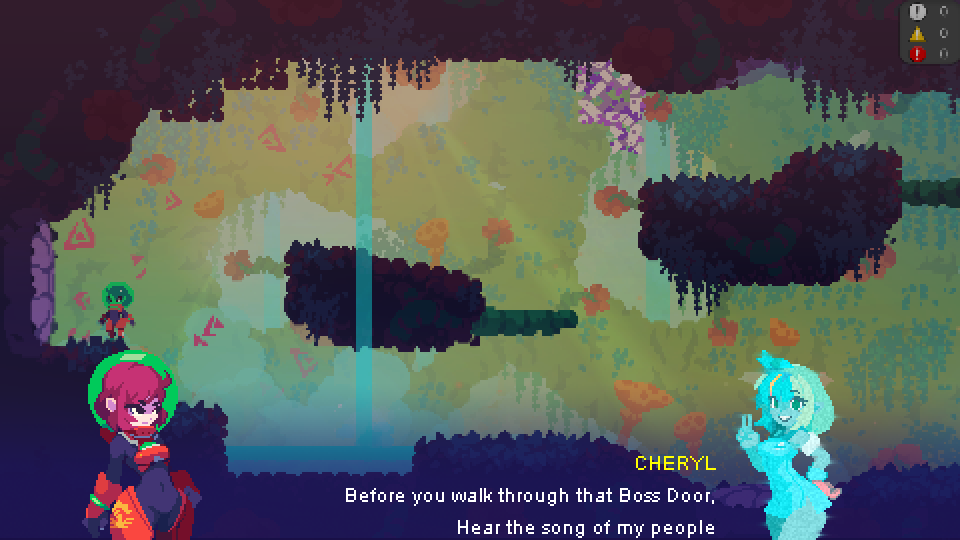
Our answer is to employ something akin to Metal Gear Solid’s codec calls. It’s the future and people have cell phones (or holographic communicators in our case). You can call NPCs and they can call you (Players can also ignore calls if they’d prefer less story)
To conclude —pacing is important! No more hour+ long story sequences! Excepting a couple scenarios – say at a crucial turning point in the game. Long exposition dumps need to be earned. Pacing is something we’re going to be vigilant about through all of development.

(Steve Ballmer understands how important pacing is)
Thanks for reading!
(Next update will be in two months, at May’s end)