Dev Diary #4 - Developing the Solomon Islands Mini-Campaign
Strategic Command WWII: War in the Pacific · published
In our fourth and final Developer Diary for Strategic Command - WWII: War in the Pacific, Robert Carver explains the thinking that went into designing a scenario covering the first of the many battles fought during the Allies’ island hopping campaign: Guadalcanal.
Developing a game that accurately reflects the intense battles of the Pacific Theater during World War II was both a challenging and rewarding experience, and our 1942-43 Solomons Campaign is a scenario focused on the battle for control of the Solomon Islands chain.
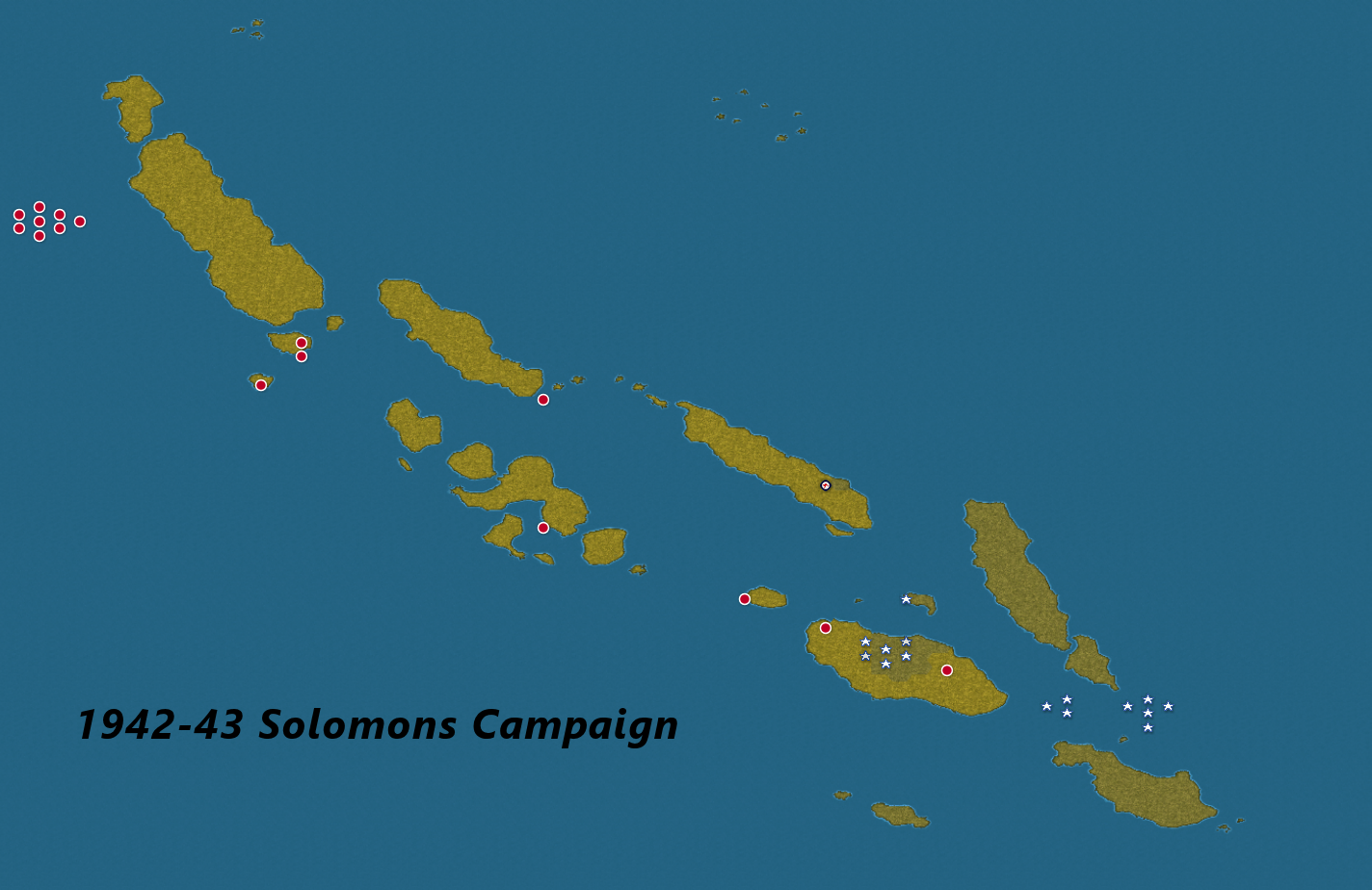
The Solomon Islands campaign was a pivotal moment in the Pacific War. The outcome would determine whether the tide had truly turned against Japan or if Admiral Yamamoto's forces would continue their advances unchecked. As noted in a captured Japanese document from the Guadalcanal campaign, "It must be said that the success or failure in recapturing Guadalcanal Island, and the vital naval battle related to it, is the fork in the road which leads to victory for them or for us" (Samuel Eliot Morison, The Two-Ocean War).
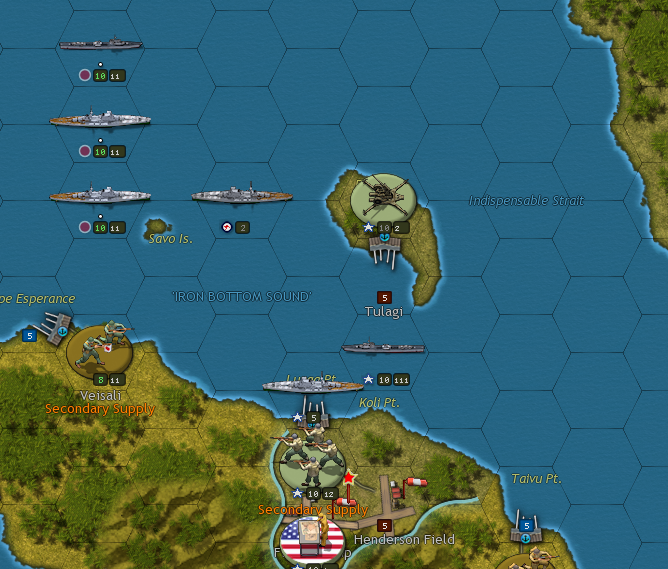
Our game begins just after the U.S. Marines land at Guadalcanal. Immediately, the Japanese conduct several counter-landings with Special Naval Landing Forces. At sea, the Imperial Japanese Navy deploys a powerful cruiser force to disrupt and destroy U.S. naval shipping still in the area. As the battle for Guadalcanal progresses, both sides receive additional land, air, and naval units. Players must strategically transport these reinforcements through a South Pacific Ocean patrolled by enemy fleets, mirroring the logistical challenges faced during the actual campaign.

Victory conditions are designed to reflect historical stakes. If the Japanese capture Henderson Field on Guadalcanal, they win. However, should the Japanese lose Guadalcanal; the Americans must organize and execute a series of amphibious landings up the Solomon Island chain in order to claim victory. Time is of the essence, requiring efficient planning and execution of amphibious operations to achieve success.
Planning and execution of amphibious assaults in the Pacific during World War II required meticulous coordination and innovative strategies due to vast distances and challenging environments. The Allied forces had to overcome the formidable natural defenses of the Pacific islands, such as dense jungles, coral reefs, and rugged terrain, which were often heavily fortified by Japanese troops. In the design of the game, we had to ensure an Allied AI would attempt to launch successful and successive amphibious assaults on the islands containing victory hexes. We did this by developing several transport, amphibious, and fleet scripts and then coordinated them with each other.
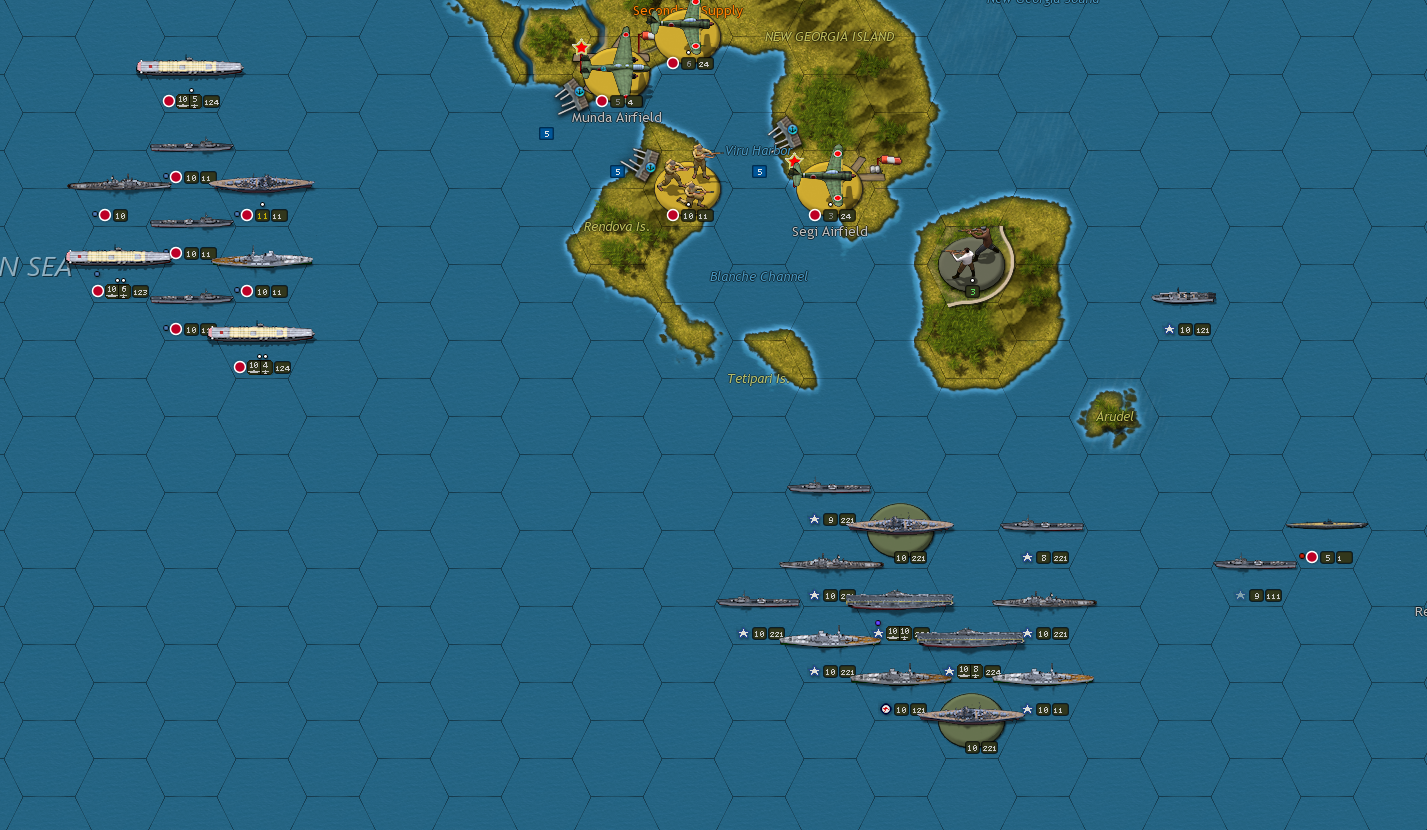
For a human player, just like historical operations in the Solomons, any amphibious assault demands reconnaissance, planning, and the integrated movement of embarked troops while being screened by protective combat ships. To launch the assault a player will have to secure ports, send air or naval forces to the target area to observe just what the enemy strength is, and then move combat ships and amphibious transports together to make a successful landing. The amphibious assault itself will almost always require supporting fires for the troops, so ship and air units will have to be selected to deliver pre-landing bombardments to soften up enemy defenses.
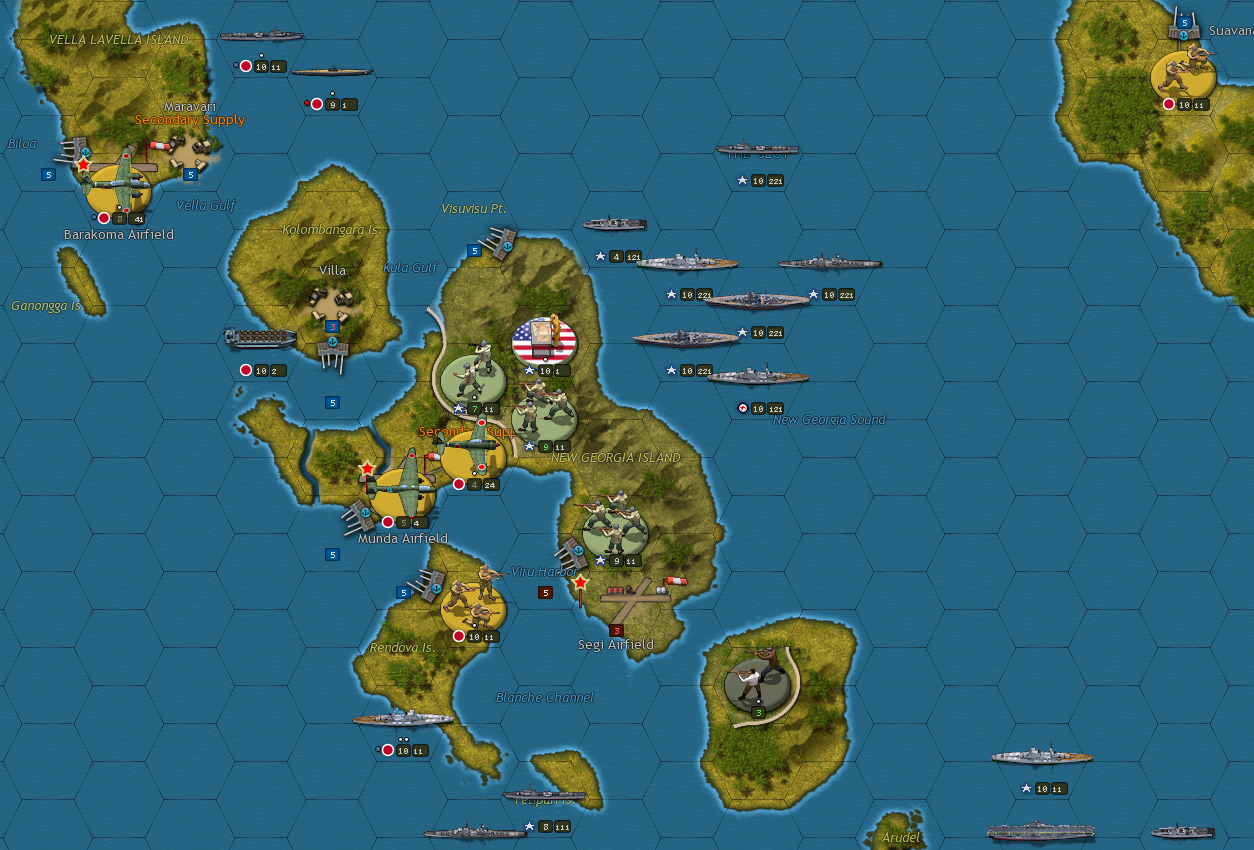
Once the troops are ashore, supply will become an issue unless specific types of units are used. Special Forces units have inherent supply that can sustain the unit for a few game turns. Another supply capable unit is the Headquarters unit; it can extend its limited supply to other units.
We wanted to model the benefits the Americans received from their Australian allies, who had established a network of Coast Watchers on several islands. These operatives monitor Japanese naval and air movements, providing critical intelligence that exposes Japanese ships and transports to American strikes.
During the campaign, lasting about fifteen months, each side implemented technological improvements that had significant impacts. This was designed into the game, allowing both sides to have opportunities to upgrade their unit capabilities. Initially, units are deployed with few or no upgrades, but advanced technologies are available for players to add to their units based on their allocation of limited resource points.
Developing the ‘1942-43 Solomons Campaign’ was an intricate process of blending historical accuracy with balanced and engaging game play. The lessons learned from this development process highlight the importance of thorough research, careful planning, and attention to detail. We hope everyone who plays this campaign enjoys the action just as much as we enjoyed creating it.
Strategic Command - WWII: War in the Pacific will be released on Tuesday, 25th June, at which point you will be able to immerse yourself in this and all our other action-packed campaigns set in the Pacific Theater!