Greetings Alchemists!
We hope that you have been enjoying Alchemist Adventure and the update’s that we’ve been releasing. If you have been playing our game, please do consider giving us your feedback in the discussion section, as we are in early access feedback from you - our early players - is vital to the development of the game!
With that quick introduction out of the way, let’s introduce you to today’s main topic, a quick introduction to the core system of our game, the Alchemy System.
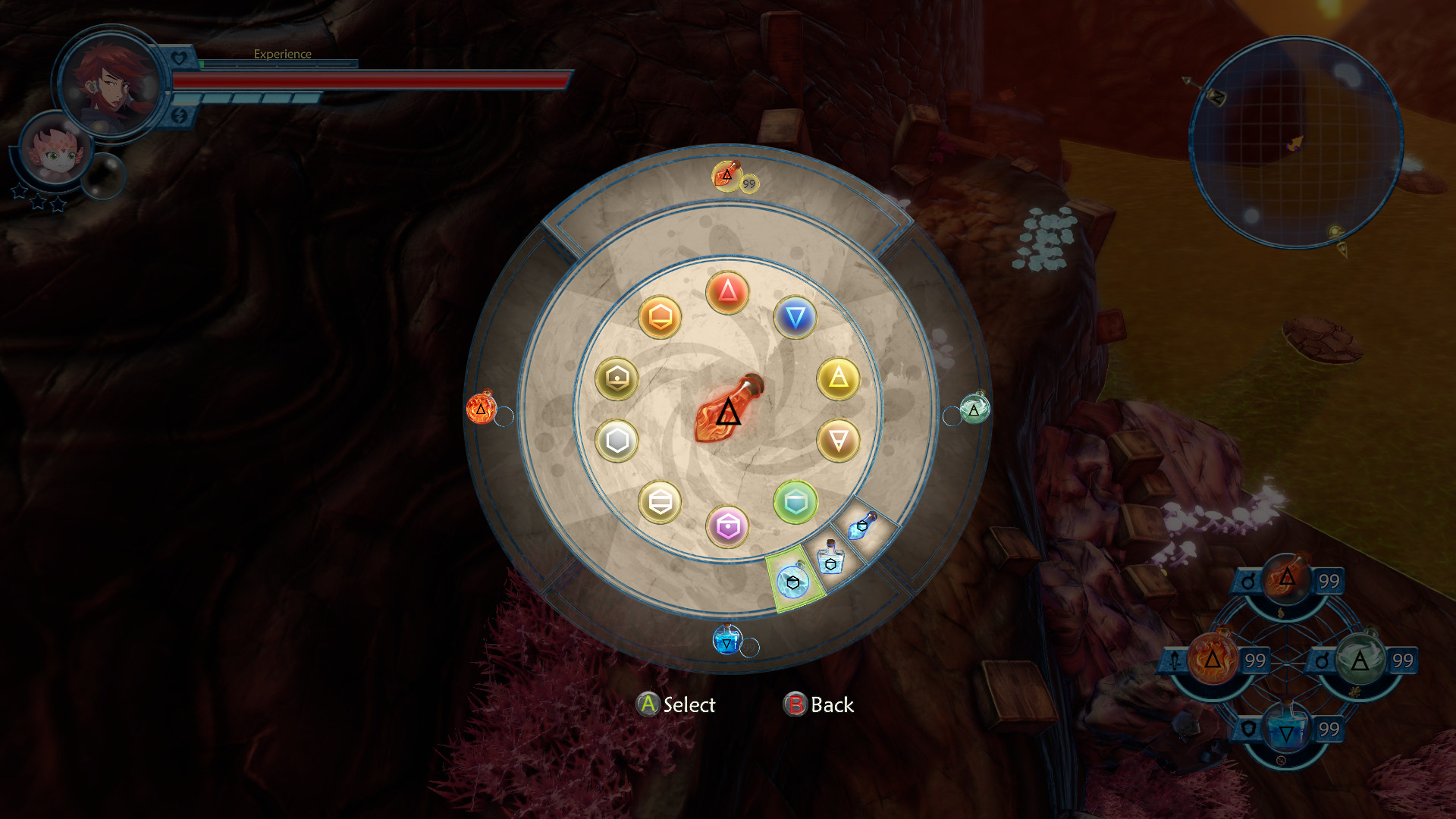

Introducing the Alchemy System
Before we get into how the Alchemy System works, we want to answer one question that we’ve been asked many times over - why did we use Alchemy instead of a magical based system?
The answer to that question focuses on uniqueness. If you have played a few games in your time you’ll probably have come across quite a few games that use a magical-based system, however, games that focus on alchemy instead are much rarer.
In addition to the uniqueness of the feature in games, it has an aura of mystery in real life thanks to it being synonymous with the search for immortality and the quest to transmute led (or coal) into gold.
Looking at it all, we felt that alchemy has much more potential to really enrich our game.
How does the Alchemy System Work?
The alchemy system is split into three main parts:
- The Elements
- The Ingredients
- The Flasks
The elements
First things first, we have the elements. What’s more, the elements are actually split into two categories, primary and secondary elements.
The Primary Elements are:
- Fire
- Water
- Earth
- Air
Then we have 6 secondary elements that are made by combining two primary elements. As this can get a bit complicated, we’ve created this image to show you the combinations.

Each element (primary and secondary) have a vital role to play in this game as the effects that trigger when the potion is used will have an effect on the game world itself.
For example, if you need to cross water, an ice potion would be very useful as it can freeze the water's surface creating a temporary bridge (temporary as the ice will eventually melt). Or, if you need to gain access to an abandoned house, but the wooden door has broken in such a way that you cannot get in, a fire-based potion would be useful as the fire effect will burn the wood down, letting you get access.
The Ingredients
When you make a potion, you will notice that you have multiple slots that can take an element or ingredient.
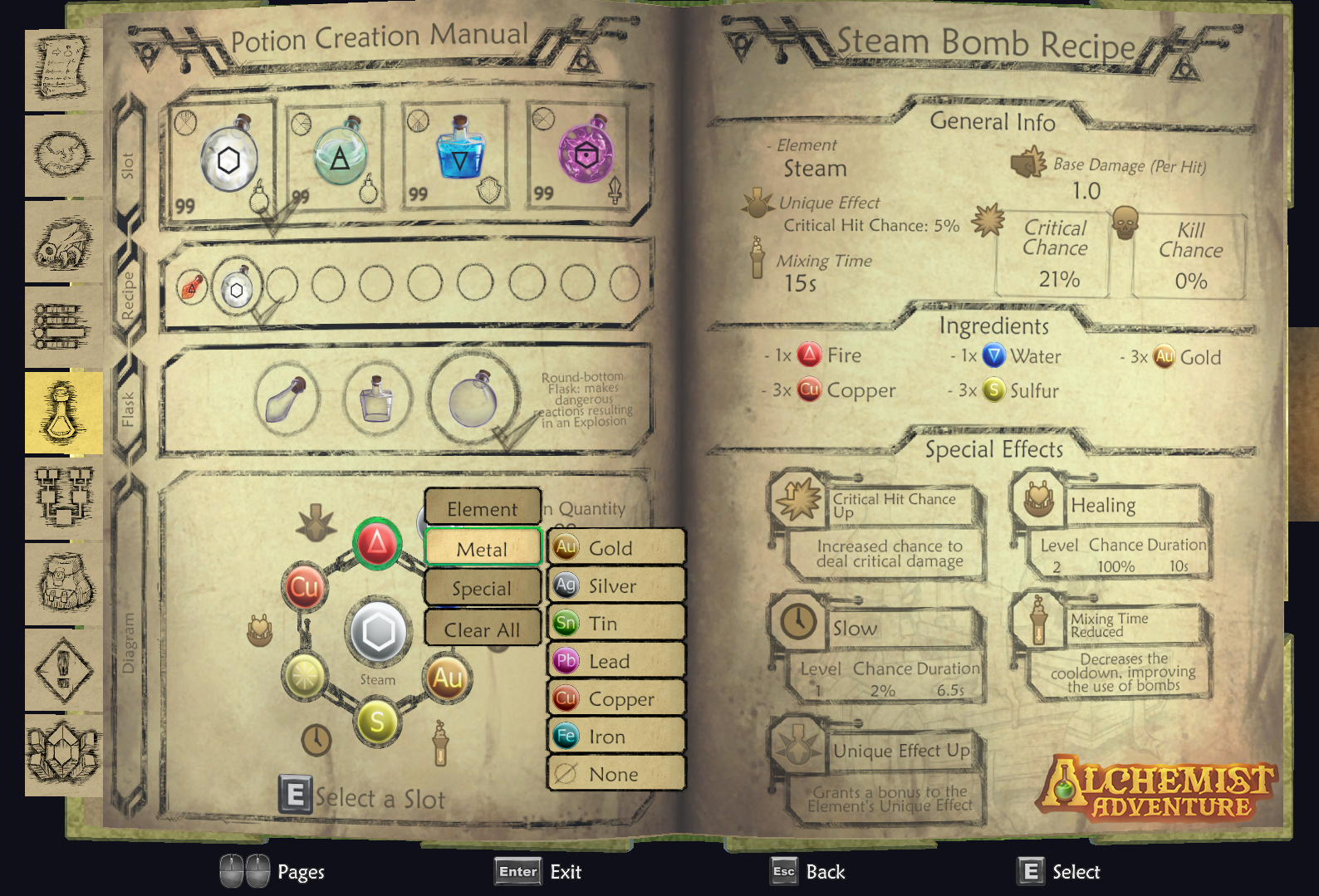
The best way to think of the ingredients system is to think of them as a modifier. Where the element creates the base effect of the potion, the ingredient will modify it. What’s important to know is that every ingredient (we have 14 in the game now) will have its own interaction with the potion that you are creating. However, you should also take note that not all interactions will be positive. For example, some ingredients negate fire damage, so if you were to add that ingredient to a fire potion, you would actually weaken your fire potion.
Finally, there are no recipes in the game, nor are there restrictions on combinations. The player will need to simply test the elemental combinations for themselves to find what suits them best!
The Flasks
Finally, we come to the flasks - the delivery method of your potions. However, like with the rest of our game, the flasks have multiple roles and multiple uses!
Currently, we have three flasks in the game:
- The Test Tube
- The Flattened Flask
- The Round-bottom Flask
Generally speaking, there is an easy way to understand the flasks. The Test-tube is the first flask that you acquire and so it is the most basic, and the Round-bottom flask is the last flask that you acquire and so is the most devastating. A special note goes out to the Flattened flask as it creates barrier effects!
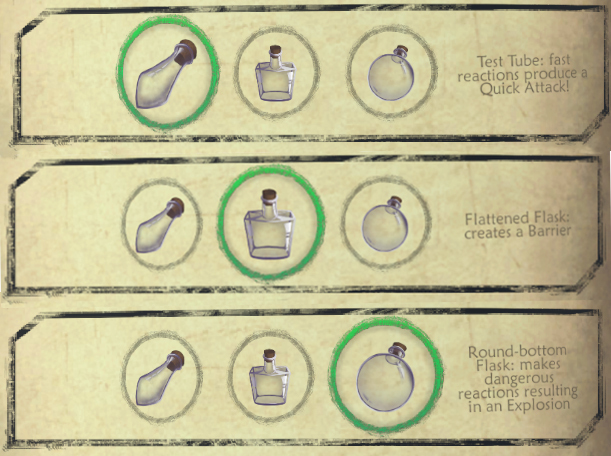
However, understanding the flask system is not as easy as just learning the flasks. This is because players can create three types of potions, and based on the type, the flask will have a different effect. The types of potions are:
- Bombs (offensive)
- Barriers (defensive)
- Sword oils (modifies your sword with an element)
The types are quite self-explanatory. The bombs are your primary offensive potions (however specific combinations can create a healing field - but we won't spoil how to do that).
The barriers create a large obstacle that you can hide behind - but much like how bombs can be used to heal, a barrier can be used offensively as well.
The sword oils are used to apply the elemental effect to your weapon. So if you want a flaming sword, just create a fire-based sword oil potion, apply it to your weapone, and you’ll be able to wave a flaming sword at your opponents!
What is important to note is that we’ve designed the game so that all of the flasks are useful - even the Test Tube in the endgame.
What we are really getting at is that the potions that the player creates can be used in many-many different ways. Ultimately, the effect of every potion is defined by the sum of the ingredients and elements used!