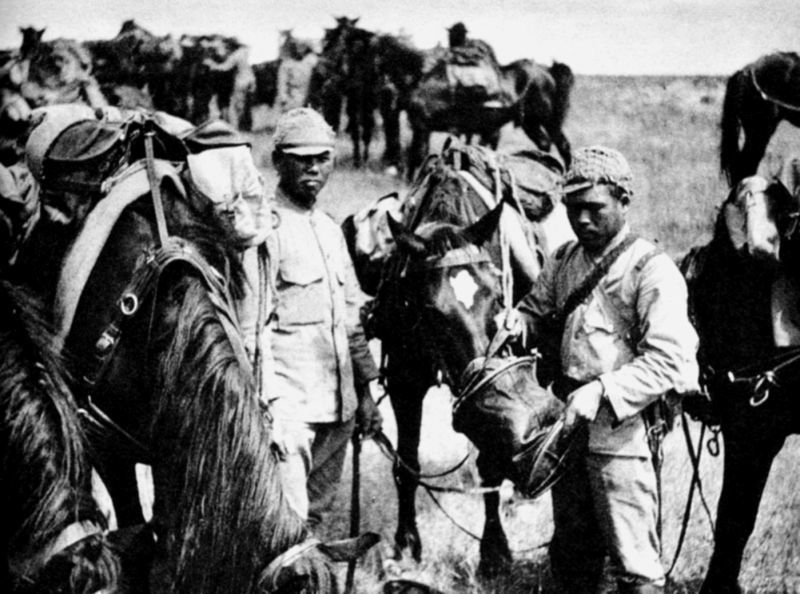
Japanese cavalrymen, Khalkhyn-Gol
First off, thank you very much for your contribution and comments regarding the next EF title. I've got the following variants (sorted by date) so far:
- Battle of Suomussalvi, 1939/40
- Crimea, 1941
- Battle of Rostov, 1941
- Stalingrad, 1942
- Kursk, 1943
- Korsun, 1944
- 11th Panzer Division, any battle
Some of them I actually had in my list of candidates, which means at least one of you will get your proposal fullfilled with next DLC.
Then, guys, as I've found I'd like to bring a bit more immersion and details than I planned originally, I've decided to split this devblog story into three pieces.
- This one will be about IJA (and Manchukuoan) setup and plans,
- another one will be about Red Army's (and Mongolian) setup and plans
- the final one will be about the battle itself.
I expect to finish posting all three parts until weekend. Hope you don't mind it, because for me it is much easier to handle it in parts like this.
The Just Cause
One thing you may find particularly interesting is how differently scholars sometimes explain the reason for the conflict.
All Soviet-biased studies (including many accounts written in modern Russia) would usually write about Japanese imperialists willing to secure their new railroad and setting this whole incident up to shift the border westwards, away from the railway.
Some Western scholars, especially at the Cold War time, would subconsciously - or consciously - align themselves with Japanese, because Japanese became allies by that time and... well, who would side with communists, anyway.
One notable exception is Alwin D. Coox, who was certainly very deep into the Japanese version of events and IJA mindset in general, but nevertheless was always trying to stay unbiased and cool-headed when making conclusions.
But of course, the conflict was not about the railroad, not about the communist expansion and not about that worthless piece of steppe itself.
There have been plenty of border incidents between Soviet Union (together with its satellite state Mongolian People Republic, referred as Mongolia below) and Japan (together with its puppet state Empire of Manchuria, referred as Manchukuo) in 1930s.
The bloodiest of them, known as Changkufeng Incident or Khasan Lake Incident, has happened Summer 1938, just less than a year before Khalkhyn-Gol, with more than 5000 casualties combined, and several dozens of Soviet tanks destroyed.
But still, the map played very important role in Khalkhyn-Gol developments.
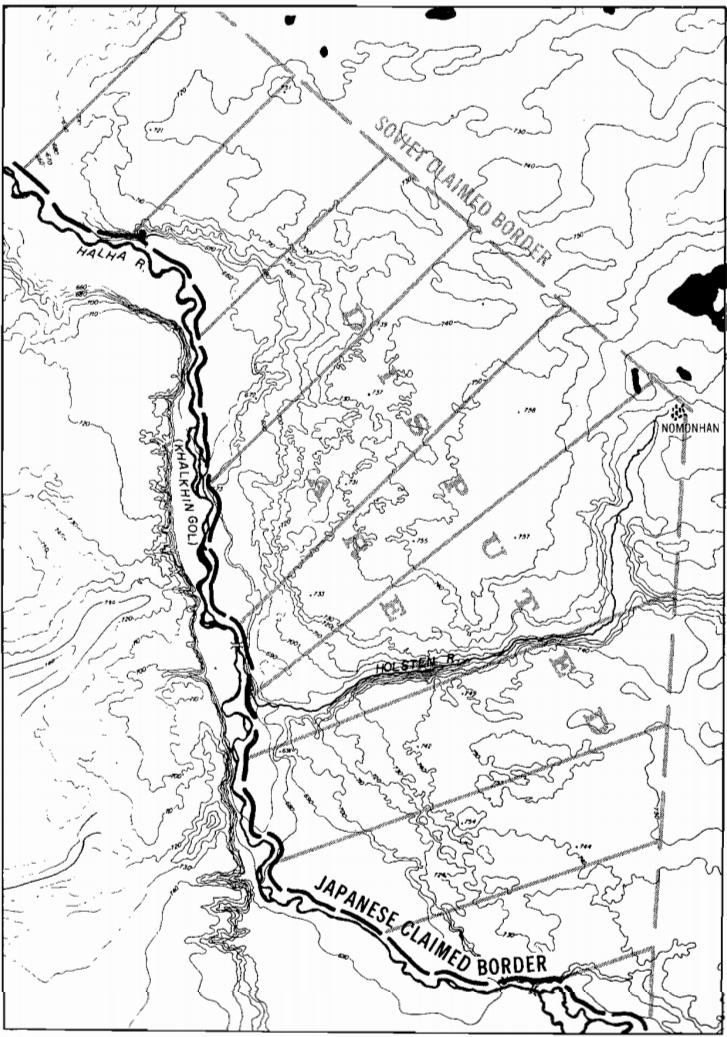
Japanese and Manchukuoans were referring to the Chinese Republic GHQ maps, printed in 1918, where the river Khalkhyn-Gol (Halha) itself is shown as the border. Thus everything to the east of the river was considered a righteous Manchukuoan territory by Japanese and their allies.
Soviets and Mongolians were referring to the map dated 1887 used to settle the border conflict between Outer and Inner Mongolia. This map was signed by Manchurian Emperor himself and it was showing the border to be 20-25 km to the east of the river. As this was the state border recognized by the Mongolian People Republic, no doubts Soviet GHQ maps printed in 1935 were also showing this line as the border and considered that territory a righteous Mongolian land.
The difference between these two views upon the border line is well visible here (from "Nomonhan: Japanese-Soviet Tactical Combat, 1939" studies by Edward J. Drea).
This chunk of lifeless steppe never played any actual strategical importance to either of sides, nor had it any natural resources.
But, given you have two militaristic expansionist regimes, whose geopolitical ambitions are too broad for their natural ethnic and political boundaries, when you put them at the ambiguously and poorly drawn thousands-kilometres-long border, then at some point what seemed to be yet-another-border-incident have to escalate into a full-scale border war.
IJA perspective
Briefing
Commander of Japanese 23rd Infantry Division (旭兵団, Kyokuhei-dan or "Sunrise Division"), LtGen Komatsubara, is determined to teach Outer Mongolians the lesson they have long deserved. Following the series of border incidents, where Mongolian troops were repeatedly crossing the border and attacking Manchukuoan border guards, his 23rd Division - being the only major Japanese military force in the region - now has to perform a retaliatory action.
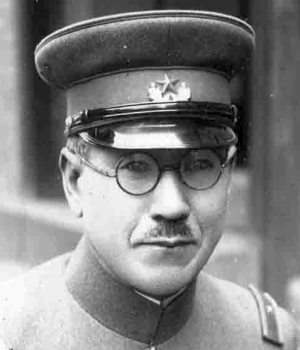
LtGen Komatsubara, CO 23rd Infantry Division
Situation at the border was gradually deteriorating for last few months, and started getting even worse over past few weeks. The particularly troublesome incident happened on May 12th. Previous day, Manchukuoan horsemen after a seven-hour long battle have driven out yet another group of 30 Outer Mongolian intruders. But on May 12th, the affair was said to have become more serious. Presumably reinforced from neighboring garrison, Mongolians again crossed the border in sizeable numbers (100-200 horsemen with LMGs and HMS).
As the area defense commander, Komatsubara intended to destroy the intruders by committing the main body of his recon regiment under LtCol Azuma, reinforced with two infantry companies with some logistical and air support from Kwantung Army. The task force was preparing to leave on May 13th.
May 15th Azuma's battlegroup arrived to the area, just to find out that the enemy has already evacuated back to the western bank of the river. Finding no enemy to fight, Azuma had to pull off.
But just two days later scouts have reported Outer Mongolians crossed the river again.
Furthermore, few days later new intelligence revealed that Mongolian troops have built a bridge over the river, thus switching from occasional intrusions into establishing a solid foothold at the eastern bank. Enemy troops also started constructing a semicircle defensive positions at Manchukuoan territory.
This development was outraging and completely intolerable.
Considering this new data, Komatsubara has decided to conduct another retaliatory action, but with a bigger force and more ambitious task. Now, this time their goal would be not just to drive intruders back again, but rather to destroy the enemy's bridgehead completely and wipe out Mongolians from the eastern bank, inflicting as much damage to their troops and equipment as needed to prevent such kind of incidents in future.
Plans and OoB
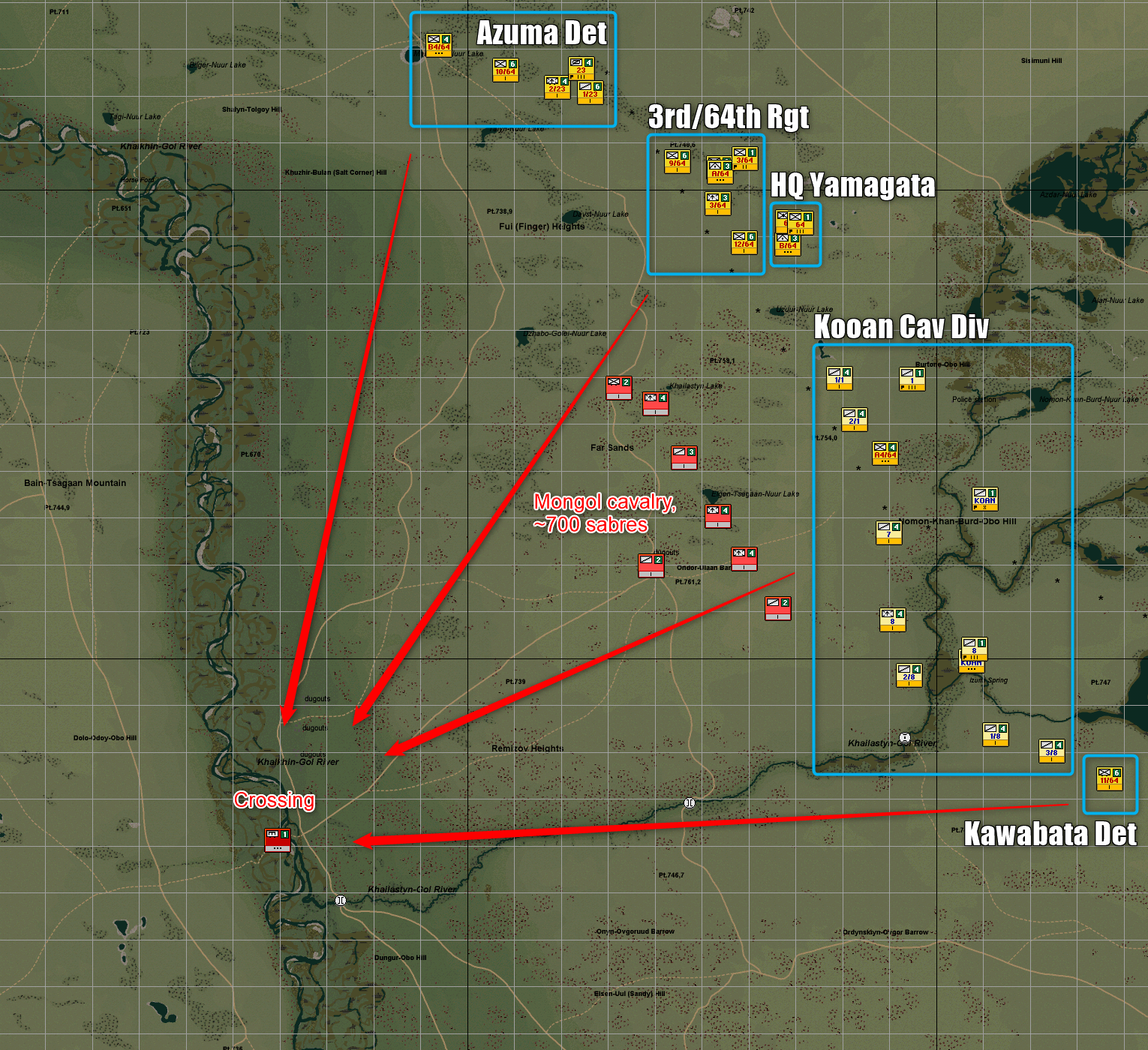
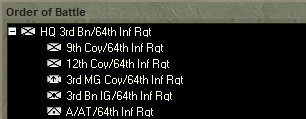
- Maj Fukumura's 3rd Bn/64th Inf Rgt (minus 10th and 11th Coys) had to conduct the main push and attack enemy defenses in south-western direction. In-game it is reinforced with a 37mm ATG platoon (half of the regimental batery).
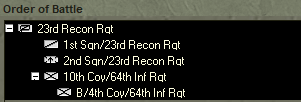
- LtCol Azuma's 23rd Recon Regiment (a cavalry squadron, motorized support company) had to capture the crossing, enveloping the enemy from the north and cutting their escape routes. In-game it is reinforced with Capt Gotō's 10th Coy and 2Lt Asada's platoon (from 4th Coy), who historically operated close to or together with Azuma.
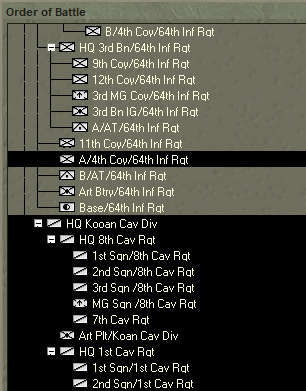
- Manchukuo Kōan Division (elements of three cavalry regiments, supported with a platoon of Japanese 4th Coy/64th Inf Rgt) has to attack in western direction, pinning enemy down and not allowing it to retreat to the crossing.
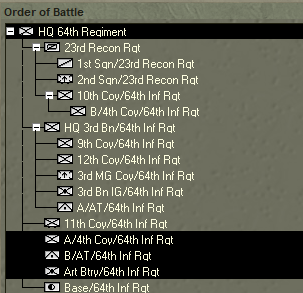
- 1Lt Kawabata's 11th Coy/64th Inf Rgt (truck-mounted) has to conduct the deep enveloping at the south, preventing enemy from fleeing south
- The overall command and artillery support is performed by Col Yamagata, HQ 64th Regiment (75mm pack gun battery and an 37mm ATG platoon - another half of the regimental ATG battery).
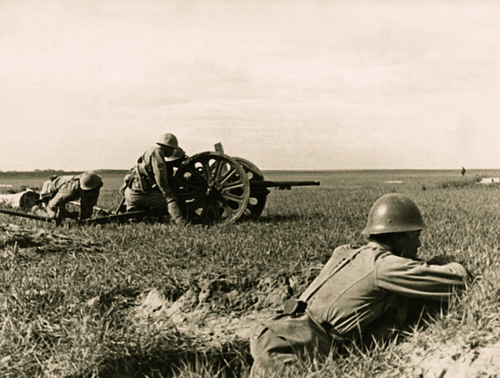
37mm Type 94 AT gun
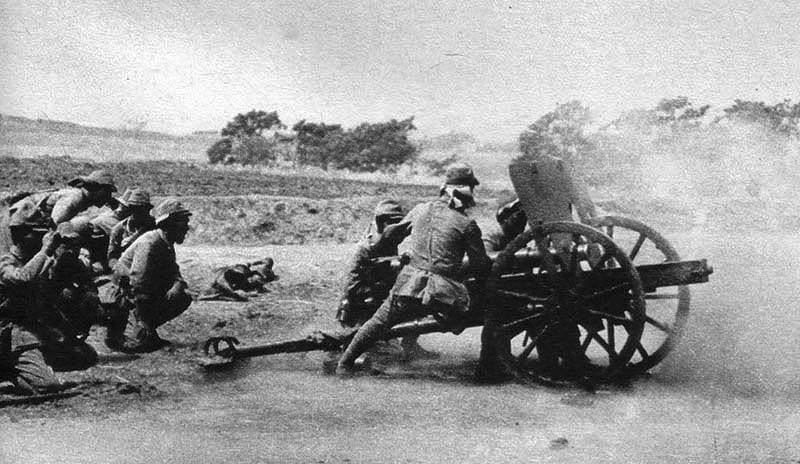
75mm Type 41 pack gun (regimental piece)
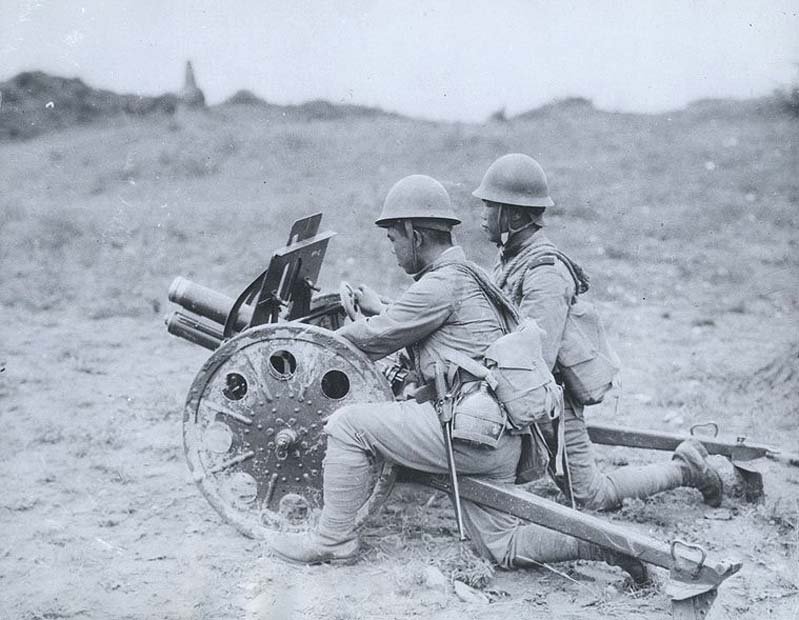
70mm Type 92 battalion gun
Since surprise was impossible on the steppes in daylight, the assault forces were to move forward stealthily during the night and jump off at dawn on the 28th of May.
It was expected to face ca. 200 enemy soldiers to the north of Khailastyn-Gol river and another 200 to the south of it. Together with reserves and may be some Soviet elements this would total ca. 700 horsemen and soldiers, who are far inferior to IJA units.
Also, 2-3 enemy armored cars and at least two artillery pieces were observed at the western bank near the crossing, but Japanese battlegroup had a battery of ATG and a battery of regimental artillery to deal with these.
No significant Soviet involvement was anticipated, due to the long distance to major Soviet garrisons; but Japanese did not think very high of Soviet combat worth either.
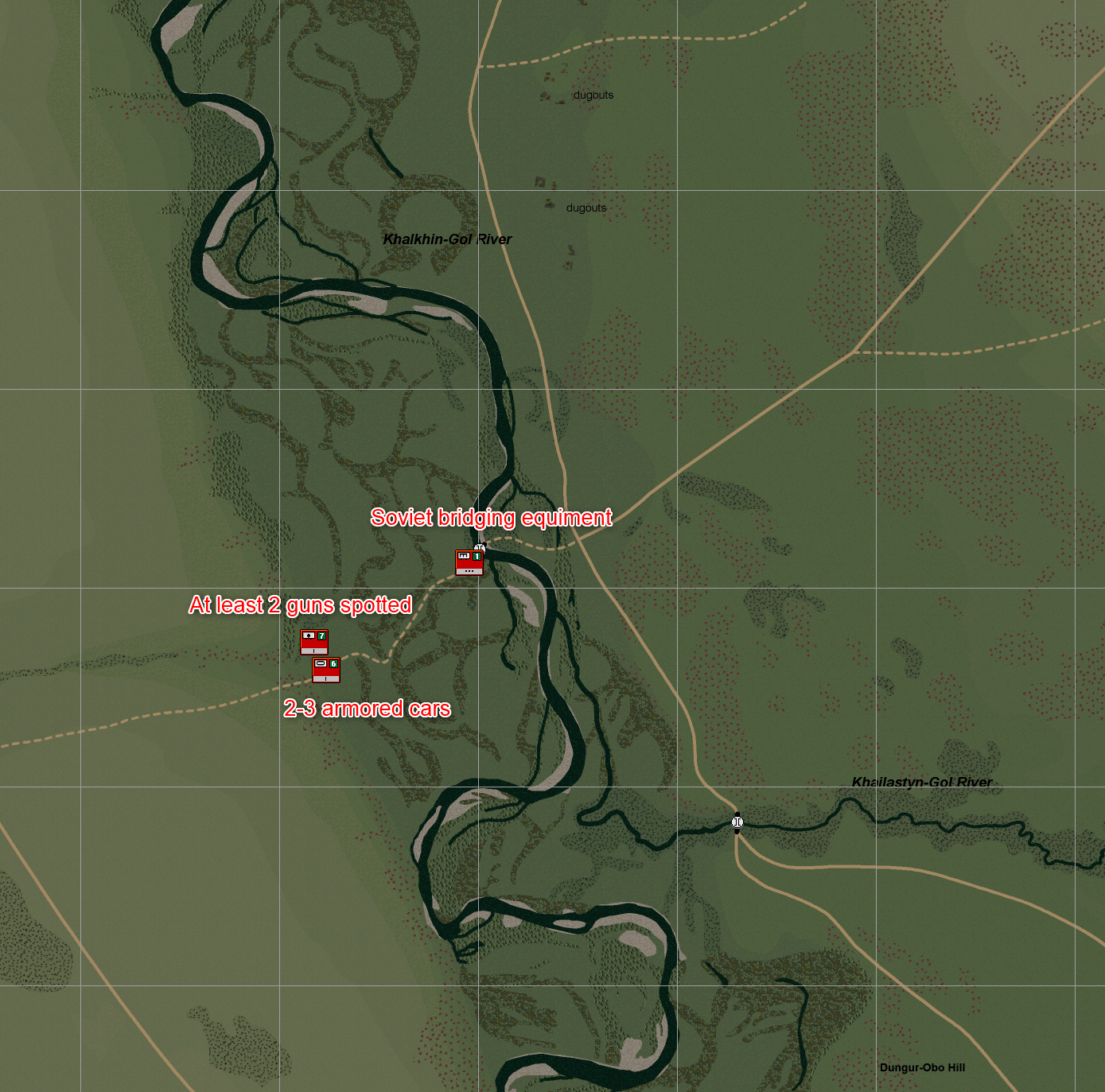
A close-up view of the crossing
Japanese counted 1600 men in total, supported with another half thousand of Manchukuoan horsemen, totalling more than 2000 people.
These were supported with a battery of 4 37mm AT guns, battery of 4 75mm regimental guns and a platoon of 2 70mm battalion guns.
Manchukuoan cavalry division possessed another regimental gun platoon.
Not only Japanese troops have 2-3 more people in the field, but also they surely are of a much greater combat worth than the enemy.
Despite the fact, that 23rd Division was a rather "green" formation created just about one year ago, still lacking equipment and training, everyone in the Division including Komatsubara believed firmly that it is already far superior to anything Mongolians or Soviets could muster.
As Coox nicely summarized it:
"On paper, Japanese plan looked beautiful: separate advance and joint attack, thereby catching the fleeing enemy in a sack by double envelopment. The regiment commander had only to strike with a battalion of IJA regulars and the foe would flee. The main concern was how to prevent the enemy from esaping; there was no anticipation that he would stand or counterattack. Azuma exuded particular confidence because he had reached the Halha without effort, in the face of motley Mongolian horsemen, less than two weeks earlier. When Maj Tsuji Masanobu arrived at division HQ for liaison duty on 28 May, he found Komatsubara waiting for good news from the front. No one seemed at all worried in Hailar."
Tanks in the Fog (of War)
The type and the count of Japanese armor engaged in May is an interesting topic on its own. Also it is a good illustration of how annoying and puzzling the research of Khalkhyn-Gol battles sometimes can be.
There are couple of sources dealing with the topic, but the information they provide is contradicting and confusing. Here they are listing numbers from largest to smallest:
- The "Japanese Studies on Machuria, Volume XI, Part 3: Small Wars and Border Problems, The Nomonhan Incident" by HQ USAFFE and Eighth U.S. Army (1956). This study is based primarily on Japanese sources and claims 23rd Recon Rgt was possessing one light armored car company of about thirteen vehicles. Later it mentions 10 tankettes were lost in the battle.
- L.Ness in his "Rikugun: Guide to Japanese Ground Forces, 1937-1945" (2015) says that armored reconnaissance company had twelve tankettes.
- M.Kolomiets in his "Stalin's undeclared war: Tanks at Khalkhyn-Gol" (2013) says that Azuma's detachment possessed 10 Type 94 TK tankettes.
- S.Shishkin in his "Khalkhyn-Gol" (1954) estimates Japanese forces to have 1 tank and 6-8 armored cars.
- A.Bykov (commander of a Soviet Battlegroup, you'll meet him in person in the next chapter) in his 1948 testimony says that two Japanese armored cars were knocked out by artillery fire at Azuma's HQ (so this means there should have been at least two armored cars in total).
- A.Coox in his most detailed "Nomonhan: Japan against Russia, 1939" (1985) says Azuma only had a single tankette at his regimental HQ; this data is based upon more detailed Japanese post-war studies, than USAFFE.
- Coox also mentions up to 10 tanks stationed in Hailar for field tests, but he is sure that these did not participate in May incident.
I've tried to double-check the topic in the Soviet archival documents, which provided the following additional information:
- May 16th (when Azuma's Regiment arrived to the scene for the first time), Mongolian scouts have reported one tank and seven armored cars.
- May 19th, Mongolian scouts have reported one gun-armed armored car.
- May 28-29th, during the battle itself, there were several combat reports, providing wild range of numbers, varying from as few as just 2-4 tanks, up to massive armored force of a full battalion (1-2 tank companies and 1 armored car company).
- May 30th, summary report mentions 4-6 armored cars supporting the attack of a mixed cavalry-motorized group along the river (which is definitely Azuma's regiment).
- Interrogation of a POW Cpl Tada, MGunner of 2nd Coy, 23rd Recon Rgt, who said 2nd Coy had an armored platoon consisting of 6 armored cars.
- Summary report, June 4th, mentions 6 armored cars and 1 tank (but these numbers are likely an aggregate of Tada's interrogation and 1 actual destroyed tankette discovered at Azuma's HQ).
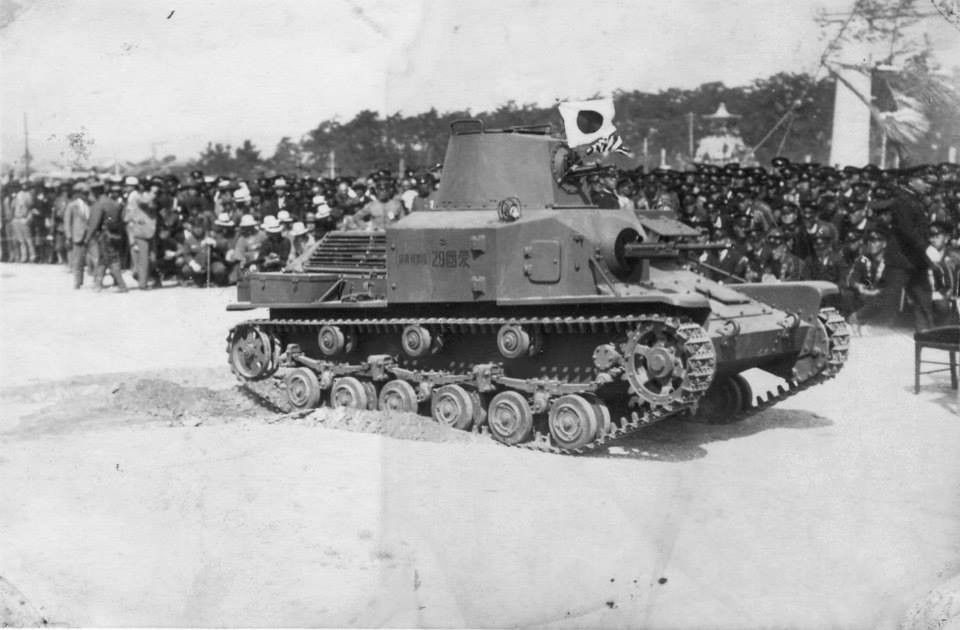
Type 92 Jyu-Sokosha
So what is the truth, what is the correct answer? I must admit I don't know. You can decide it by your own what the "truth" is, but my considerations were as following:
- The only thing we can be sure of: there was definitely just one Type 92 tankette at Azuma's HQ. This is stated by the most credible author - Coox - and is also confirmed by several Soviet sources: scout report of May 16th, June summary report and, finally, Shishkin (who've probably used June summary as the source, though). Soviet troops has captured that sole destroyed tankette after the battle, and this is the only material "evidence" of Japanese armor in May we know of.
- I'm pretty sure figures presented by USAFFE study, Ness and Kolomiets (10-13 tankettes) may have been an authorised/planned number of tankettes, but not the assigned numbers; Coox also thought so. In particular, 10 tankettes mentioned by Kolomiets may be related to 10 tanks in Hailar mentioned by Coox. I find it also highly unlikely that as much as 10 tankettes were destroyed, because such a high figures are never mentioned anywhere in Soviet first-hand sources, who remained in control of the battlefield at Azuma's HQ and would certainly spot such an epic scene of 10 destroyed tankettes. Kolomiets mentions two tankettes destroyed, but I believe it is just his very liberal interpretation of Bykov's testimony (Kolomiets believes that there were 10 tankettes in total, Bykov says two armored cars were destroyed by artillery, Kolomiets interprets it as if 2 tankettes were destroyed).
- Mongolian or Soviet soldiers may have been misidentifying trucks for wheeled armored cars, so we should not seriously consider any scouting or combat reports mentioning armored cars.
- The biggest mystery is Tada's interrogation. He mentions there were 6 armored cars - which corresponds well with Soviet observations, but no other Japanese source would agree that there were any wheeled armored cars in 23rd Division at all. I think we should rather trust Japanese sources in this question. So I make a painful decision to ignore Tada (it was very tempting to add some more armor to IJA in-game, than just a single tankette).
In the end my decision was to keep just a single Type 92 tankette in Azuma HQ. I'm well aware this contradicts with many other sources, but at least now you know my reasons.
I don't care that much about Ness, USAFEE or Kolomiets and their 10-13 tankettes - it's pretty obvious they are giving an authorized and not actual strength (Coox actually mentions 10 tanks in Hailar, which probably also inspired Kolomiets, but he is sure these did not participate in battle).
What really worries me is Tada's interrogation and these 6 armored cars he mentioned, I have no explanation to that - was he lying to his capturers, was he mistaken, or was he right and we all are mistaken, so may be there actually were 6 armored cars as he (and Soviet combat reports) said? I don't know.
So let me know in comments if you have some opinion on this, but don't forget to bring along either some new credible sources or really well-thought arguments.
That's all folks, see you next time at the opposite bank of Khalkhyn-Gol.
Oh, and we will be briefly visiting Moscow too, lol. To be continued,
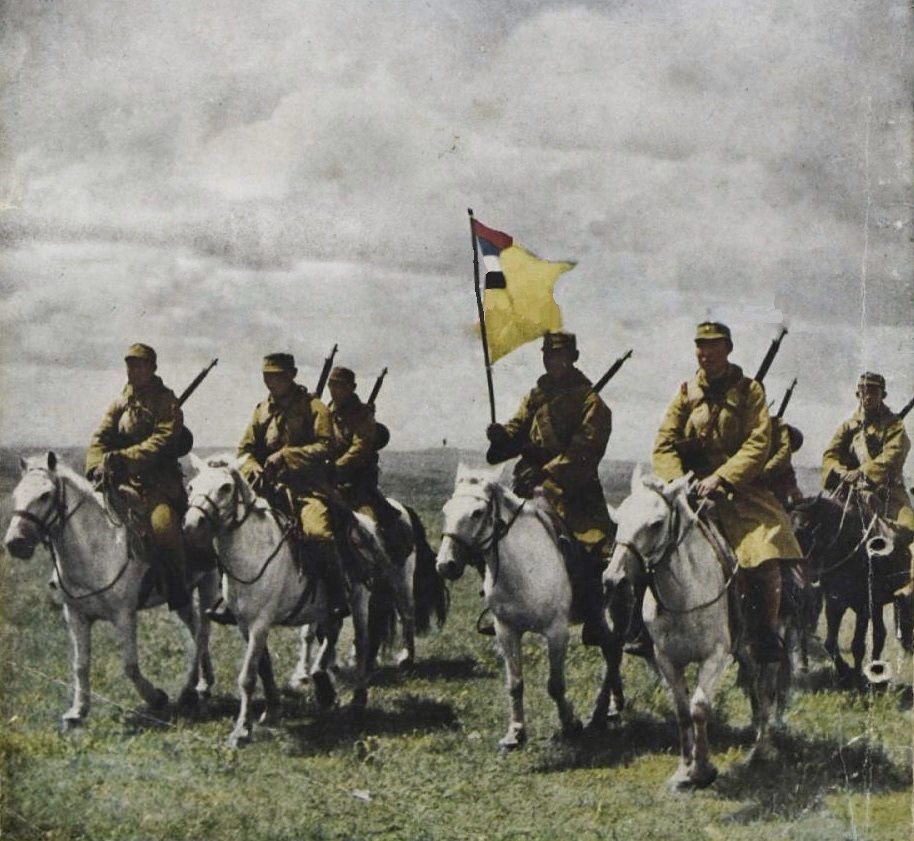
Manchukuoan cavalry